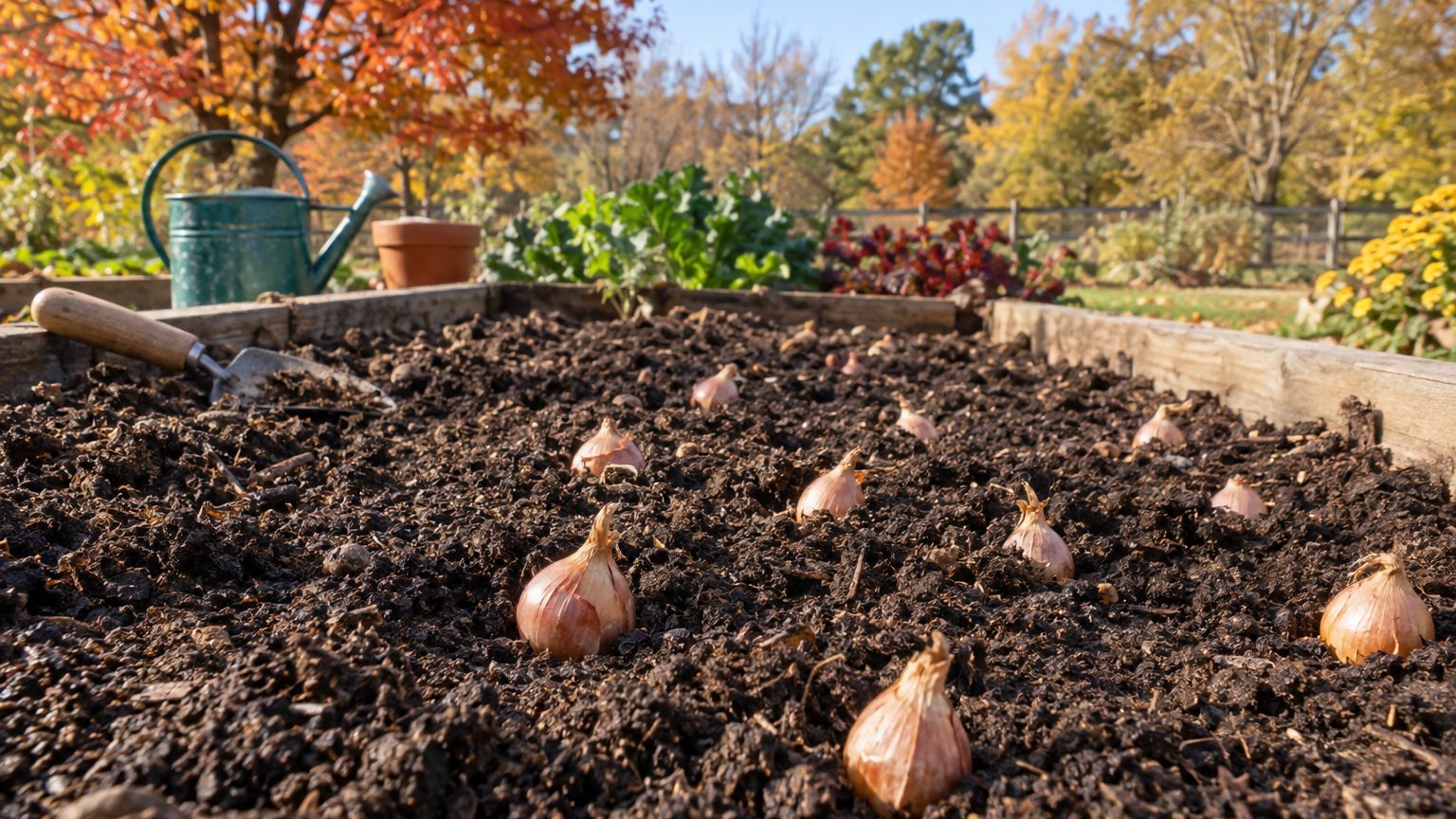

Plant shallots in Missouri from late October into November for the biggest bulbs, or in early spring as soon as the soil can be worked. The Kansas City reference station puts the last spring freeze between April 6 and April 20, and the first fall freeze between October 18 and October 29. Shallots shrug off most of that cold. What matters more is how much time they get before summer heat arrives.
The short answer for Missouri
Plant in fall, from late October into November, once the first fall freeze window of October 18 to October 29 has arrived or passed. If you miss that, plant in spring as soon as the soil is workable, which in Missouri usually means March or early April, before the last spring freeze window of April 6 to April 20 has closed. Fall planting is the stronger choice because roots establish over winter and the plant is already growing when spring warms up.
Those frost dates come from NOAA’s 1991-2020 Climate Normals for Kansas City International Airport (MCI). They describe probability, not a calendar promise. Specifically, the range marks the 30 to 70 percent band of odds for a 32°F freeze. Inside that window, a freeze is a coin flip or close to it. Outside it, the odds tilt one way or the other, but never to zero.
| Planting | When (Kansas City reference) | Anchor |
|---|---|---|
| Fall | Late October through November | First fall freeze window: October 18 to October 29 |
| Spring | March to early April, as soon as soil is workable | Last spring freeze window: April 6 to April 20 |
One caution on the numbers. MCI sits well north of the city, so the downtown station runs about five days earlier in spring, and southern Missouri is milder still. Treat these dates as a Kansas City anchor, not a statewide line.
The winter figure is reassuring. The mean daily minimum of the coldest month at Kansas City is 19.5°F. That is an average of the cold nights, not the record low, but it shows a typical January night is cold without being brutal for a dormant bulb underground. For the full growing method, see Growing Shallots in Missouri, and for cultivar choices, The Best Shallots to Grow in Missouri.
What will not work here
September planting fails. Missouri’s fall stays warm well past the calendar start of autumn, and bulbs set in the ground that early push top growth they cannot afford. With first freezes not arriving until the October 18 to October 29 window, a September planting has weeks of mild weather to sprout long green tops, and those tops then take the winter’s first hard knocks. Wait for cooler nights.
Late spring planting fails too, and more quietly. The frost-free stretch here runs roughly six months or a bit more, from the April 6 to April 20 window to the October 18 to October 29 window. That sounds generous, but shallots do not use the whole stretch. They bulb up in response to lengthening days and warming weather, and Missouri heat tends to arrive fast. A bulb set out in late April has little time to build leaves, and leaves become bulb size. The result is small, thin-skinned shallots that look more like pearl onions.
Counting on the last frost date as a green light is another mistake. Shallots do not need to wait for it. Waiting until April 20 “to be safe” wastes the cool weeks they like best. The tops tolerate light frosts, so a surprise 32°F night in April is rarely a problem for established plants.
Fall planting without mulch can fail in the colder parts of the state. Freeze and thaw cycles can heave shallow bulbs out of loose soil, leaving them sitting on the surface with exposed roots. A few inches of straw or shredded leaves over the bed after the ground cools helps, and you pull it back in early spring.
Humidity punishes tight spacing. Missouri summers are muggy, and crowded shallots hold moisture in the clump, which invites rot and fungal trouble as the tops fall over. Give each bulb room, and plant them with the tip just at or slightly below the soil surface rather than buried deep. Heavy clay, common across much of the state, makes the problem worse if water sits around the bulb. Raised rows or a bed amended with compost drain better.
Finally, planting too late in fall fails if the ground is already frozen. Bulbs need a few weeks to root before the soil locks up. If November is nearly gone and the ground is still workable, plant anyway and mulch heavily. If it is frozen solid, hold the bulbs in a cool, dry place and plant in spring.
What changes across Missouri
Missouri is not one garden. The USDA Plant Hardiness Zone Map (2023 edition, built on 1991-2020 normals) places the state anywhere from 5b to 7b. That is five half-zone steps, and the system rests on a single variable, the average annual extreme minimum temperature. So there is no single answer for the state. The dates above fit the Kansas City reference station, and gardeners elsewhere will shift them.
In the north, expect colder winters and a slightly later spring. Fall planting should still happen, but go toward the earlier end of the window, so roots settle before the ground freezes hard, and mulch more generously. Spring planting is likely to start a little later than it does farther south, and the temptation to rush it by a week or two is usually worth resisting only if the soil is wet.
In the south, the logic reverses. Freezes arrive later and spring comes sooner, as the caution on the dates points out. Fall planting can slide deeper into November, and spring planting can start in early March. The risk shifts from cold damage to heat, because warm weather arrives sooner and cuts the bulbing window short. Southern gardeners who plant in spring get less margin than northern ones.
Which zone applies to you is something to look up, not guess. The USDA Plant Hardiness Zone Map lets you enter a ZIP code and read the answer directly. Your own yard may also sit a half zone off from the county around it, thanks to hills, city heat, or a low spot where cold air pools.
Where to check this for your own county
Start with University of Missouri Extension. It is the state’s land-grant extension service, with county offices staffed by people who know local soil, local pests, and local weather. Look for two things there: a planting calendar for onions and shallots that reflects your region, and any variety trials run in or near your county. A cultivar that does well in a trial a few counties over is a far better bet than one that merely sounds good in a catalog.
When you search the site, try “shallots,” “onions,” “bulb crops,” and “fall planting” as separate terms. Shallots are sometimes folded into onion guides, and the planting advice there will often note regional timing. If your county office has a horticulture specialist or a Master Gardener helpline, ask which dates they use and whether their local experience matches the Kansas City anchor on this page.
Be clear about what this page is. It is a state-level overview built on one reference station’s frost probabilities and a statewide hardiness range. A county recommendation beats it every time, because county advice reflects local trials, local soil types, and decades of observation. This page does not have a Missouri extension shallot calendar to quote, so it does not pretend to. If the extension’s dates differ from the ones here by a week or two, go with the extension’s.
Checking this against your own garden
Your own observations outrank every date above. Three are worth watching, and none require equipment.
Soil warmth by feel. In fall, grab a handful from planting depth. If it feels distinctly cool and not warm, the soil has caught up with the season. In spring, soil that crumbles in your hand rather than smearing or forming a wet ball is ready. A bed that dries and warms first tells you where your earliest ground is.
Early greening nearby. Chives, wild onions, and other hardy plants break dormancy as the soil wakes up. When they start to show green in your yard, shallots are safe to plant. If chives in one corner emerge a week ahead of the rest, you have found a warmer pocket.
The first true leaves. Once planted, watch how fast green shoots appear and grow. Fall plantings should show little or no top growth before winter, and a few inches of green before the cold is a sign you planted early. In spring, slow emergence usually means cold or wet soil.
Keep notes for a season or two. Dates you write down yourself will teach you more than any statewide table.
Common questions
Can I plant shallots in Missouri in spring instead of fall?
Yes. Plant as soon as the soil is workable, usually March or early April, even before the April 6 to April 20 last-freeze window closes. Expect somewhat smaller bulbs than from fall planting, because the growing time before summer heat is shorter.
Will a freeze kill shallots I planted in fall?
Rarely. Dormant bulbs underground handle winter well, and the Kansas City mean minimum for the coldest month is 19.5°F. The bigger risks are early sprouting from September planting and heaving in unmulched ground.
Do the frost dates on this page apply across all of Missouri?
No. They come from the Kansas City International station. Downtown Kansas City runs about five days earlier in spring, and southern Missouri is milder still. Hardiness zones across the state range from 5b to 7b on the USDA system.
What does the frost date range actually mean?
It is the 30 to 70 percent probability band for a 32°F freeze, drawn from NOAA’s 1991-2020 Climate Normals. A freeze can still occur after the spring range or before the fall range, so treat the dates as odds, not deadlines.
One last detail: shallots set in November often show no growth above ground until late winter, so a bare bed in January does not mean the planting failed.