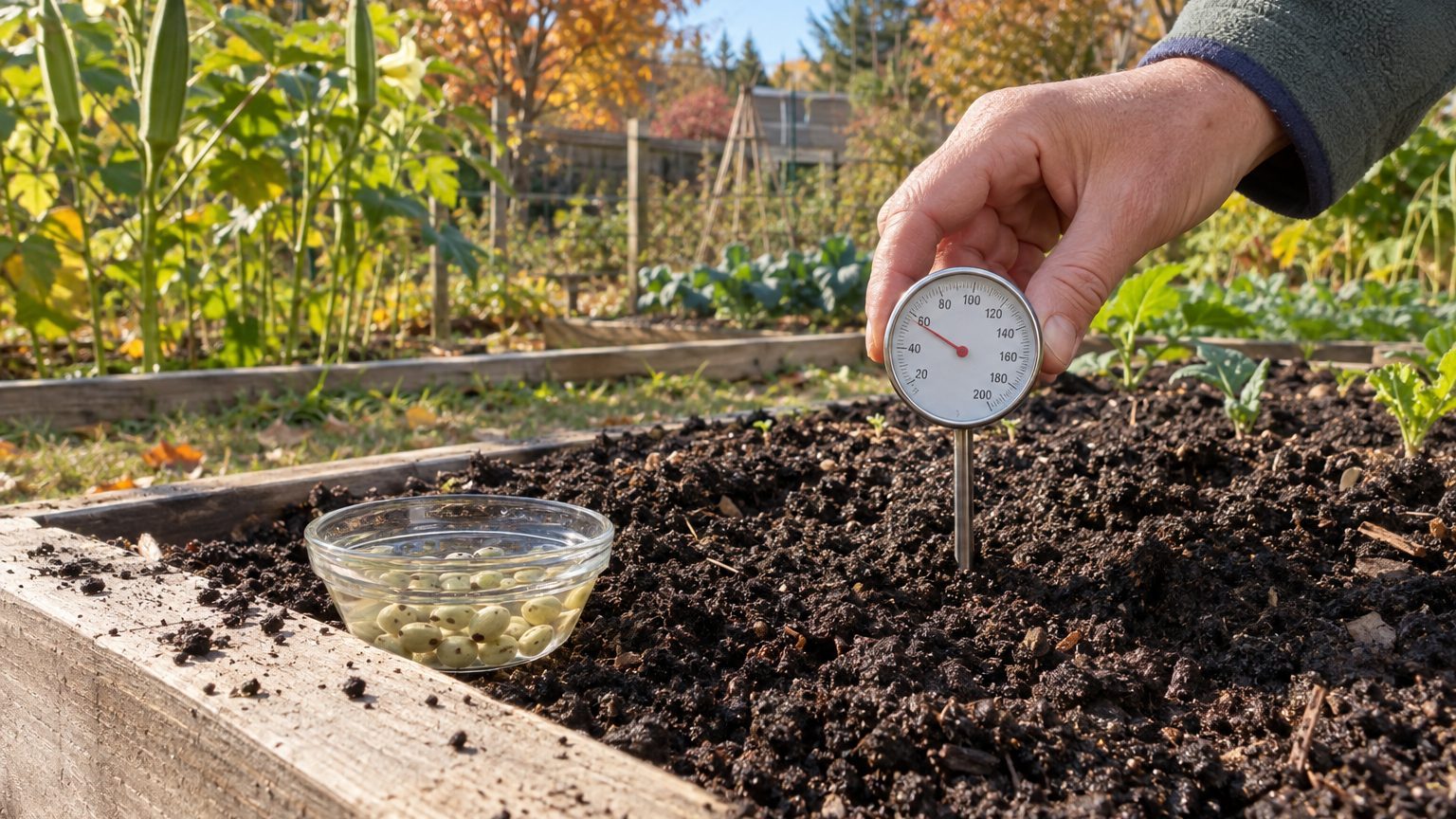

Okra seed comes up reliably when the soil is at least 65°F (80 to 95°F is better), the seed has been soaked or nicked to get past its hard coat, and it’s planted about ½ to 1 inch deep in soil that stays damp but never soggy. Under those conditions, expect sprouts in 5 to 10 days. In cool ground, the same seed can sit for three weeks and then rot without ever showing itself. Nearly every okra germination failure traces back to cold soil, a dry seed bed, or old seed.
This page covers the sprouting stage only. For the full season, from first leaf to pods, see Growing Okra: Heat, Daily Picking, and the Slime Question.
Soil temperature decides everything
Okra is a tropical plant that happens to be grown in Ohio and Minnesota. Its seed behaves accordingly. Below about 60°F, the seed barely moves. Between 65 and 70°F it germinates, slowly and unevenly. Somewhere around 85 to 95°F, it takes off. That spread is the reason a row sown on a warm May weekend can outrun a row sown three weeks earlier.
Air temperature is a poor guide. A 75°F afternoon means little if the top 2 inches of soil are still holding 58°F from a cold night. A basic soil thermometer, usually under $15 at a hardware store, removes the guesswork. Push it 2 inches down in the morning, when the soil is at its coolest, and check for three or four mornings in a row. If it reads 65°F or better and the forecast has no cold snap, sow.
Calendar dates vary widely. In the Gulf states and much of the Southeast (Texas, Louisiana, Georgia, Alabama), soil typically reaches the mark in April, and sowing can continue into early summer. In the Midwest and Northeast, it often means mid-to-late May, two to three weeks after the last frost date. Gardeners in northern states like Minnesota, Michigan, and Maine have a tighter squeeze, since many okra varieties need roughly 55 to 65 days from sprouting to first pods, and often the plants need a head start indoors. More on that below.
There are ways to cheat the thermometer. Clear or black plastic laid over the bed for a week or two before planting can raise the soil several degrees. Black plastic mulch left in place does the same through the season, and planting through slits in it works well in short-summer regions. Raised beds warm earlier than ground-level beds, partly because they drain faster. Wet, cold clay is the worst place to put an okra seed.
Soaking, nicking, and testing the seed
Okra seed is round, dark, and tough. The coat is hard enough that a share of any packet will be slow to take up water, and those seeds are the ones that sprout late or not at all. Two simple treatments fix most of that.
Soaking is the easy one. Drop the seed in a cup of lukewarm water and leave it 12 to 24 hours. Many growers do it overnight and plant the next morning. Stop at 24 hours, though. Seeds left for days in standing water start to ferment and lose the oxygen they need. And once soaked, they shouldn’t dry out again, so plant them the same day into moist soil.
Nicking works better on stubborn or older seed. Rub each seed briefly on a sheet of coarse sandpaper or a metal nail file, or make a tiny nick in the coat with a sharp knife, until you see a slightly lighter spot. Keep clear of the small pale scar where the seed was attached to the pod, since the embryo sits close to that end. The point is to open a door for water, not to damage what’s inside. Nicking and then soaking is the combination some gardeners swear by for seed that’s several years old.
Seed age matters more than most people expect. Okra seed stored cool and dry usually stays viable for about two to three years, and sometimes up to five, but the germination rate drops each year. A half-used packet from three summers ago may be fine or may be mostly duds. Rather than gamble, run a quick test:
- Count out 10 seeds and lay them on a damp paper towel.
- Fold the towel, slide it into a zip-top bag, and keep it somewhere warm, around 75 to 85°F.
- Check after 7 to 10 days and count the seeds that have split and sent out a white root.
Eight or more out of ten is a good packet. Five out of ten means sow twice as thickly and thin later. Two or three means buy fresh seed, which costs a couple of dollars and saves a month of waiting on a bed that never fills in.
Sowing in the garden bed
Okra resents being moved, so direct sowing is the default where the season is long enough. Prepare the bed before the seed goes in. A loose, well-drained soil with a pH between 6.0 and 6.8 suits it, and the details of amending ground for it are covered in What Okra Wants From the Soil. A seed bed that’s been raked fine, with no clods and no crust-prone surface, gives the sprouts a clear path up.
Plant seeds ½ to 1 inch deep. Use the shallow end in heavy soil and the deeper end in sandy soil that dries quickly. Put two or three seeds in each spot, spacing the spots about 6 inches apart in rows roughly 3 feet apart. When seedlings are 3 to 4 inches tall, thin to one plant every 12 to 18 inches, depending on the variety. Snip the extras at the soil line with scissors instead of pulling them, which would disturb the roots of the one you’re keeping.
Moisture is a balancing act at this stage. The seed bed should stay evenly damp from sowing until the sprouts show, which usually means a light watering every day or two in warm, dry weather. A thin layer of straw or fine compost over the row slows evaporation and keeps the surface from baking into a crust, which is a real problem after a hard rain on clay soils. Once the plants have a few true leaves, shift to the less frequent, deeper schedule explained in Watering Okra: Deep and Infrequent.
Starting seed indoors for short seasons
Where summers are short, an indoor start buys a few weeks. Sow 3 to 4 weeks before the plants will go outside, no earlier. Okra seedlings grow fast and get leggy and root-bound if they wait too long. Use individual pots, ideally biodegradable ones or containers deep enough for the taproot, since okra sulks for a week or more after root disturbance.
Warmth does most of the work. A seedling heat mat set to hold the soil near 80°F can cut germination time noticeably, and bright light afterward, either a sunny south window or a grow light a few inches above the plants for 14 to 16 hours a day, keeps seedlings stocky. Harden them off over about a week, then transplant once nighttime temperatures stay above 55 to 60°F and the garden soil has passed the 65°F mark. Setting them out earlier tends to stall growth, and a stalled okra plant can take weeks to restart.
When nothing comes up
Ten days of bare soil is not yet cause for alarm if the weather has been cool. At 65°F, okra can take two weeks or longer. At 75°F and above, a gap of that length starts to look suspicious, and the usual culprits are worth checking in order.
Start by digging gently where you sowed. Seeds that are swollen but firm are still working on it. Seeds that are mushy, dark, or smell sour have rotted, which points to cold, waterlogged soil and calls for resowing after the ground warms and drains. If you find hollowed-out seeds or a small pale maggot, seed corn maggots are the likely cause. They are most active in cool, wet spring soil with a lot of fresh organic matter, and waiting for warmer weather usually outruns them.
Sprouts that emerge and then collapse at the soil line, with a thin, pinched stem, are the classic sign of damping off, a fungal problem tied to cool, soggy conditions and crowded seedlings. Thinning, easing off the water, and improving airflow help. Indoors, use clean pots and fresh seed-starting mix rather than garden soil.
A crusted surface is another quiet killer. After heavy rain, some soils seal over and the seedlings run out of strength before they break through. A light rake across the top or a gentle sprinkle to soften the crust can rescue a row. Cutworms, which clip young seedlings overnight, are stopped by a collar of paper or cardboard pushed an inch into the soil around each plant.
Resowing is cheap and fast in the right weather. In most of the country, a second sowing made two to three weeks after the first still has time to produce pods. In the South, sowing a second wave in June or even July is a common way to have fresh plants when the first ones get tall and tired.
One last nuance: okra seed saved from your own healthiest plants, dried fully on the stalk and stored in a cool, dry place, often germinates better the following year than a packet of unknown age, because you know exactly how old it is and how it was kept.