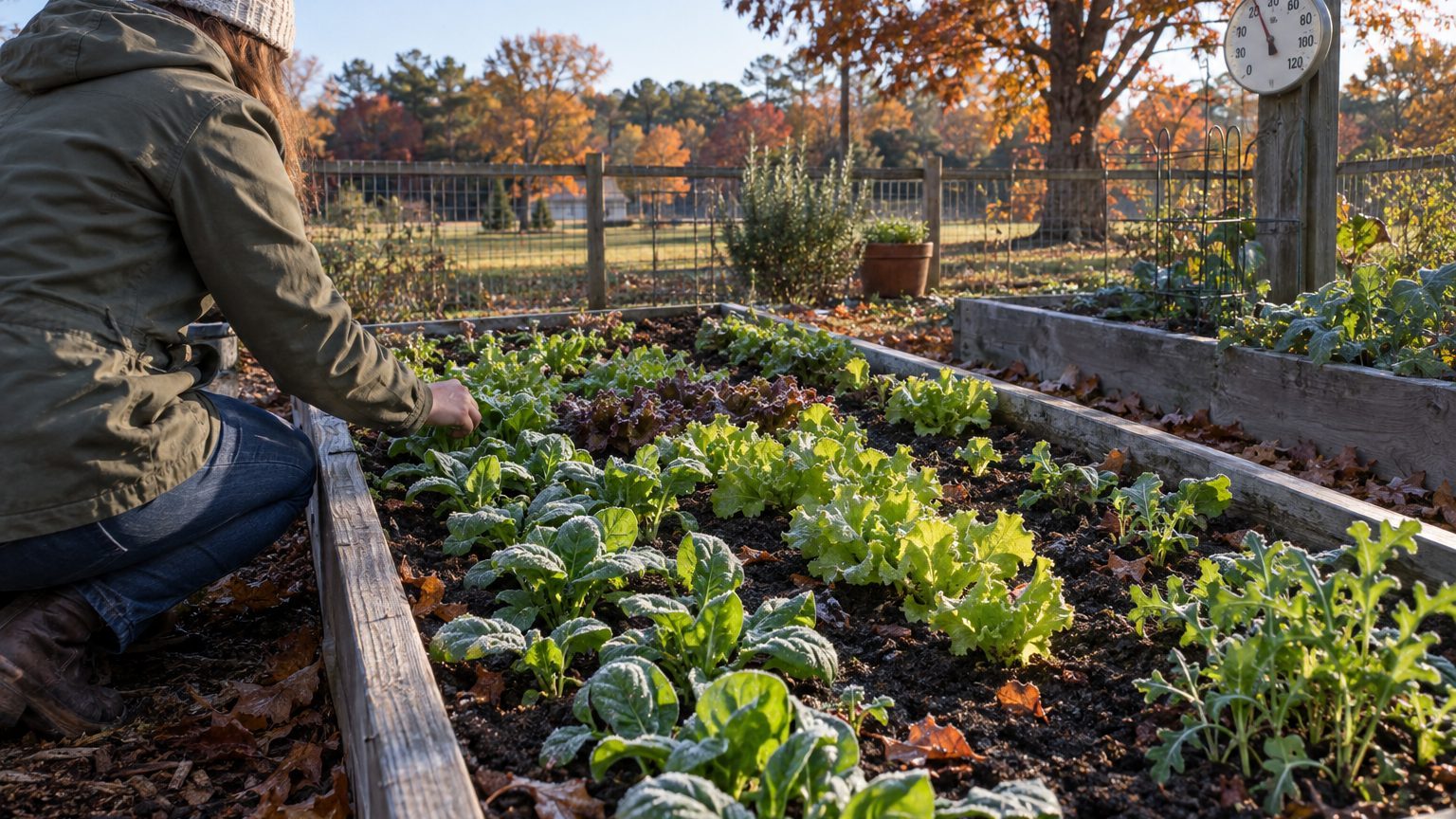

Sow winter salads in Missouri before the first fall freeze, which the Kansas City reference station puts between October 18 and October 29. Spring sowings open as the last freeze window closes, April 6 to April 20. Those dates are odds, not promises. With today at October 10, the fall window is about a week from opening, so outdoor sowing for this season is nearly over.
The short answer for Missouri
The dates come from the NOAA NCEI 1991-2020 Climate Normals, and they describe a probability, not a deadline. Each range is the stretch of days when the chance of a 32°F freeze sits between 30 and 70 percent. In any single year, a freeze can arrive before the range or after it.
| Measure | Kansas City reference | What it tells you |
|---|---|---|
| Last spring freeze | April 6 to April 20 | 32°F freeze probability, 30-70% band |
| First fall freeze | October 18 to October 29 | 32°F freeze probability, 30-70% band |
| Coldest month, mean daily minimum | 19.5°F | Typical overnight low, not the record low |
In fall, you count backward. Winter salads need to do most of their growing while days are still long, because growth slows to a crawl once freezes arrive. So the sowing happens ahead of the October window, not inside it. Take the number from the seed packet and subtract it from October 18, the early edge of the range. Choosing the early edge builds in a margin for an early freeze.
Spring works the other way around. Hardy greens can go in as soon as the soil is workable, and they will probably meet a few more frosts, since the last-freeze range runs to April 20. Tender types should wait until that range has passed. The The Best Winter Salads for Missouri page sorts varieties by how well they take that kind of cold.
One caution on the numbers. The reference station, Kansas City International (MCI), sits well north of the city. Downtown runs about five days earlier in spring, and southern Missouri is milder still. Treat these dates as a starting point for Kansas City, not as a statewide rule. For the wider crop picture, Winter Salads for Missouri Gardens covers the basics.
What will not work here

Sowing inside the frost window and expecting full heads. A seed sown in the last days before the October 18 to October 29 range gives you a seedling heading into winter, not a harvest. Gardeners often make this mistake in the fall, when a sunny, mild afternoon in early October feels like permission to start. By then the clock has already run.
Leaving tender lettuce uncovered all winter. The coldest month averages a daily minimum of 19.5°F at the Kansas City reference. An average low of 19.5°F means plenty of nights fall below that figure. Soft-leaved heading lettuces in open ground will not make it through that without protection. This is not a Gulf Coast garden, where winter salads can sit outside from November to March without a second thought. Advice written for the Deep South or the mild Pacific coast will fail here.
Trusting the spring date too literally. April 6 to April 20 is the band where the odds of a freeze are between 30 and 70 percent, which is close to a coin flip. A gardener who sets out tender seedlings on April 7 because that’s the “last frost” has misread what the number says. Hardy greens shrug off that risk. Tender ones need a cover on hand, or a later start.
Copying one calendar everywhere in the state. The downtown Kansas City station runs about five days earlier than the airport in spring, and southern Missouri is milder than both. A date that works at the airport may be a week off in your yard, in either direction.
Some questions fall outside the frost calendar. It has no figures for Missouri summer heat or rainfall, so it will not claim that a particular watering schedule fails or that close spacing invites disease. Those are real questions for late-summer sowings, and your county extension office is the place to ask them. What the numbers here do establish is narrower. The season for growth is bounded by fall freezes in the second half of October, and the winter is cold enough to punish anything that is not truly hardy.
What changes across Missouri
Missouri does not have one answer. The USDA Plant Hardiness Zone Map (the 2023 edition, built on 1991-2020 normals) places the state in zones 5b to 7b. That is five half-zone steps from top to bottom, a wide spread for one state. The USDA system rests on a single variable, the average annual extreme minimum temperature. It tells you whether a plant survives the coldest night of the year. It does not tell you when the first fall freeze arrives, and that is the date that governs when to sow.
The dates use Kansas City as the reference. Other parts of the state differ. Readers in northern Missouri should expect the cold to arrive earlier in fall and linger later in spring, so the sowing window shifts earlier in fall and the spring start shifts later. In southern Missouri the page’s own caution applies: it is milder still, so frosts come later in fall and leave earlier in spring. The page does not have a day count for either shift, and it will not invent one.
Elevation and terrain matter inside a single county too. Cold air drains downhill and pools in low spots, so a garden in a hollow can freeze while a hillside a quarter mile away stays clear. Hilltops lose the shelter of valleys but dodge the pooling. Neither is automatically better, which is why local observation is worth more than any map.
To find your own zone, use the USDA Plant Hardiness Zone Map and look up your ZIP code. Do not guess from a neighbor’s tag at the garden center. Then remember what the zone measures. It sets the hardiness ceiling for perennials and for crops you hope to carry through winter, and it leaves the sowing dates to the frost calendar.
Where to check this for your own county
University of Missouri Extension is the state’s land-grant extension service, and it runs offices at the county level. Start there. Two things are worth looking for. The first is a local planting calendar for fall and spring vegetables, ideally one written for your region rather than the whole state. The second is a list of varieties trialed in your county or a nearby one, because a variety that performed well in a trial in your soil and weather beats a catalog promise.
If you cannot find a published calendar for your county, call or email the local office and ask which fall-sown greens have done well there. Extension staff field these questions every autumn and usually know what has survived recent winters.
A county recommendation beats a state one. It uses a single reference station, Kansas City International, and the caution about that station is real: it sits well north of the city, and the rest of Missouri differs from it.
What it offers is the frost probability from NOAA and a method for counting back from it. The county office can tell you whether those numbers hold where you live.
Checking this against your own garden
Your own observations outrank every date above. Three are worth tracking, and none needs equipment.
- Soil by feel. Push your hand a few inches into the bed in the morning and hold it there. Cold, wet soil that clumps into a ball is not ready for spring seed. In fall, soil that still feels warm and dry means late-summer sowings may struggle to germinate. A bed against a south-facing wall will feel different from an open one, which shows you the microclimate.
- First true leaves. Seedlings first show a pair of seed leaves, then the true leaves. If your fall seedlings have true leaves before the first freeze, they have a chance of carrying through under cover. If they have not, they are probably too small, and that tells you to sow earlier next year.
- The first blackened leaf. Note the day a frost-tender plant, such as basil or squash, takes frost damage. Compare it to the October 18 to October 29 range. If yours comes earlier, you garden in a cold pocket. If it comes later, you have a warm corner, likely near a house or paved area.
Write the dates down for a few seasons. A notebook entry or a phone note is enough. After three or four years, you will have a local frost calendar more reliable than any station average.
Common questions
Can I still sow winter salads in Missouri on October 10?
The first fall freeze window at the Kansas City reference starts October 18, eight days away. Seeds sown outdoors now will be small when freezes arrive. Hardy greens under a cover have a fair chance of surviving, but expect modest growth until spring. Otherwise, wait for the spring window.
Is the spring sowing window the same as the fall one?
No. The spring range, April 6 to April 20, marks the last 32°F freeze at 30-70% odds. Hardy greens can go in once the soil is workable, accepting some frost risk. Fall sowing is timed backward from the first freeze, so that plants have grown before the cold arrives.
Does my hardiness zone tell me when to sow?
No. The USDA zone is built on the average annual extreme minimum temperature, so it shows whether a plant survives the winter. Sowing dates come from freeze dates. Missouri spans zones 5b to 7b, so look yours up on the USDA map.
Do these dates apply to St. Louis or southwest Missouri?
The frost dates rest on the Kansas City reference station. That station, MCI, sits well north of the city, and downtown Kansas City runs about five days earlier in spring. Southern Missouri is milder still. The page has no figures for other cities, so ask your county extension office.