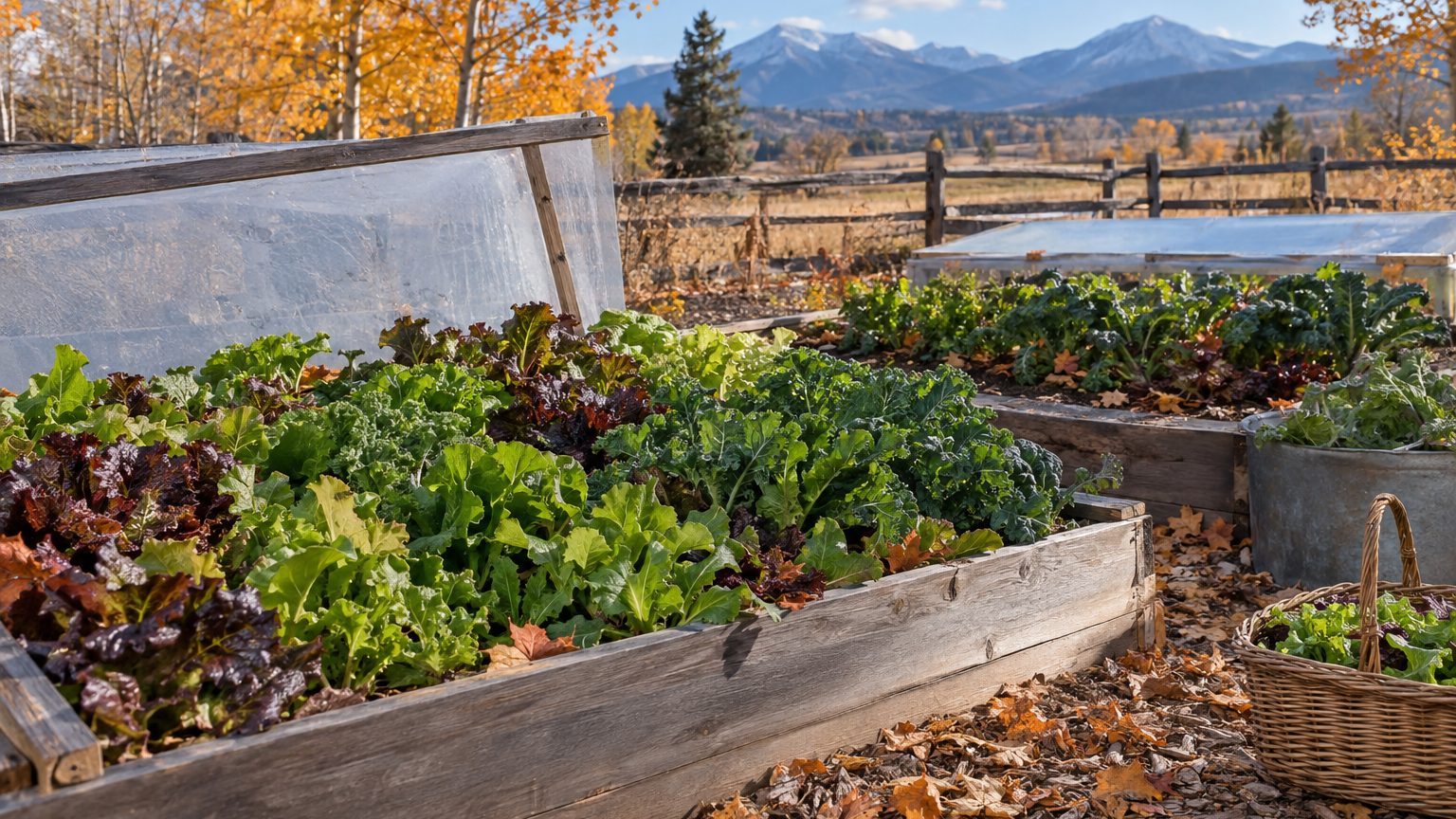

Missouri gives winter salads a long runway and a demanding winter. Kansas City International sees its first fall frost between October 18 and October 29. The mean nighttime low in the coldest month is 19.5°F. Humid summers make the late-summer sowing the shakiest step of all. Plan around soil temperature and first frost, not the spring calendar, and match each salad type to the cover it needs.
When the soil is warm enough in Missouri
The date most gardeners want is the last spring frost. At Kansas City International (MCI), NOAA’s 1991-2020 Climate Normals put it between April 6 and April 20, the band where a 32°F freeze carries a 30 to 70 percent probability. That is a probability, not a promise, and some years will break it either way.
Two cautions come with the station. MCI sits well north of the city, so the downtown station runs about five days earlier in spring. Southern Missouri is milder still. A gardener in the Ozarks or the Bootheel should not borrow the Kansas City dates unchanged.
Frost is also only a proxy. Seeds care about the soil, and soil warms after frost risk ends, not alongside it. Air can turn mild for a week in late March while the top few inches of a bed remain cold and wet. Sow into that and seed rots, or sits for weeks while the weeds get ahead of it. A cheap soil thermometer pushed in at seed depth, read in the morning for several days running, tells you more than any almanac date.
The question flips in fall
For a winter salad, the soil question matters most in late summer. A bed that was baking in August is still warm in September, and many salad seeds, lettuce above all, balk at germinating in hot soil. So the fall version of the question is whether the bed has cooled enough, and whether you can help it along with afternoon shade, a layer of mulch over the seed row, or a pre-sowing soak of the bed.
This page talks in types because it cannot source variety names for your county. Spinach-type rosette greens, lamb’s lettuce types, loose-leaf lettuce, and mustard-family leaves all have different soil tolerances. University of Missouri Extension publishes the varieties trialled in the state and the soil guidance that goes with them. Use it for names.
One note on method: everything here is grown in beds and containers, sown from seed you bought and cut from plants you tended. Nothing on this site involves gathering salad leaves from ditches, creek banks, or fields.
How long the season lasts here
Both ends of the window come from the same NOAA normals at MCI. The last spring frost falls between April 6 and April 20, and the first fall frost between October 18 and October 29. Pair the earliest spring date with the latest fall date (April 6 to October 29) and you get 206 days. Pair the latest spring date with the earliest fall date (April 20 to October 18) and you get 181. So the window runs roughly 26 to 29 weeks, depending on the year.
That is a generous stretch, and what it allows matters more than the number. A window this long permits a second sowing, even a third. A first planting of cool-season greens can come out in early summer, and a fall planting can go in after the worst of the heat. It also means a failed sowing is not a lost season. If germination stalls in a hot snap, you re-sow in two weeks and still have room.
The length also changes the transplanting question. In a short-season state, setting out started seedlings is often the only way to get a crop to size before the light fails, and that is worth the risk of disturbing roots. In Missouri, direct sowing usually has time to work. Transplants earn their place in one situation: the fall crop, when soil is too hot for seed to germinate well but you can start trays in a cool, shaded spot and move them out as the beds cool. Even then, handle the root ball gently and water in well.
A window of 181 to 206 days describes one station, not the state. The USDA Plant Hardiness Zone Map (2023 edition, built on 1991-2020 normals) lists Missouri as 5b to 7b, a wide spread that tells you the state is not uniform. Northern counties will run later in spring and earlier in fall than the figures here suggest, and the southern edge the reverse. Treat these dates as a starting point and adjust to your nearest local data.
For how to space the sowings across that window, the succession sowing guide on this site walks through the rhythm. For a wider comparison, Winter Salads: What Grows When Lettuce Will Not sets out the full crop list this page draws from.
Heat and water in Missouri
This page does not carry a count of days above 90°F or a summer rainfall total for Missouri, and it will not borrow numbers from memory. What can be said without them is the general pattern: Missouri summers are warm and humid, and that humidity, more than any single hot day, shapes how a fall sowing goes. Your University of Missouri Extension office can give you local heat and rainfall figures for your county.
Heat matters at one moment, sowing. Seed started in late summer faces hot soil and fast drying, and seedlings that do emerge can scorch or bolt. Humid air then adds a second problem, because leaf diseases spread quickly through crowded, damp foliage. Practices that help are plain ones: shade over the seed row until seedlings are established, spacing that lets air move, watering at the root in the morning so leaves dry by evening, and rotating beds so the same family does not follow itself.
The winter does the real sorting. The mean daily minimum of the coldest month is 19.5°F, taken at the Kansas City reference station from NOAA’s 1991-2020 normals. That is an average of the lows, not the record, so plenty of nights run colder. It decides what survives, as the table shows. The groupings reflect the usual pattern for each type, and local trials may shift an individual crop one row either way.
| Cold exposure | Types | What Missouri’s winter asks of them |
|---|---|---|
| Stand uncovered | Hardy rosette greens: spinach types, lamb’s lettuce types, claytonia | Usually hold through the average low, though a cover keeps leaves cleaner and growth steadier |
| Need cover to stay edible | Most lettuces, tender mustard-family leaves | A low tunnel or cold frame in the coldest weeks; uncovered leaves turn mushy or burn |
| Cannot manage | Basil and other warm-season herbs | Finish at the first frost; not winter crops here |
The first frost sets the other limit. At MCI it arrives between October 18 and October 29, and as daylight shortens through November, growth slows to a crawl. A sowing has to reach useful size before that point, because plants that are still seedlings when the light fails mostly sit and wait for spring. Count backward from the frost date and leave a cushion, then use the cover to hold what you have grown rather than to push new growth.
Missouri’s hardiness zone range, 5b to 7b in the USDA system, is built on the average annual extreme minimum and covers the whole state. Look up the zone for your own ZIP code rather than assuming the range applies to you.
Which winter salads suit Missouri
Choose by type first. Missouri’s long window gives you room to wait for the right moment to sow, so the earliest-maturing types are less urgent here than in a northern state. What the facts above do favor is a short list of criteria, in this order.
- Disease resistance. Humid summers and damp autumns make this the first filter. Look for resistance to leaf diseases on the seed packet or in extension trial notes.
- Heat tolerance at germination. A type that sprouts reliably in warm soil saves you the shade-and-mulch routine.
- Cold standing. With a coldest-month mean low of 19.5°F, the hardy rosette greens can anchor the winter bed, and the tender ones need a cover you are willing to manage.
- Airflow and root shade. Open-habit, loose-leaf types and wider spacing dry faster than tight heads, which counts in a humid climate.
There is no variety list here, and that is deliberate. A cultivar that does well in a Kansas City trial garden may sulk in the Bootheel, and a name pulled from a seed catalog tells you nothing about either. The only recommendation worth following comes from trials run where you garden. University of Missouri Extension is the place to find it, and your county office can often say which varieties local growers have actually seen through a winter.
Gardeners comparing climates may find it useful to read how the same crops behave elsewhere, in Winter Salads for Maryland Gardens and Winter Salads for Washington Gardens. Missouri’s colder winter nights sit closer to the Maryland picture than the mild Pacific one, though the humidity runs its own course.
Common questions
Can I sow winter salads in Missouri before the last spring frost?
Some cool-season greens tolerate it, but frost is only a proxy. Check the soil with a thermometer at seed depth and look up the crop’s soil range through University of Missouri Extension. Remember that the April 6 to April 20 band is for MCI, and your own site may differ.
Do I need a cover for winter salads in Missouri?
For most lettuces and tender leaves, yes. The coldest month averages a nighttime low of 19.5°F at the Kansas City reference station, and many nights run lower. Hardy rosette greens often manage uncovered, but a cover keeps them cleaner.
What hardiness zone is Missouri?
The USDA Plant Hardiness Zone Map (2023) puts the state at 5b to 7b. That range reflects the average annual extreme minimum and spans the whole state, so check the zone for your own ZIP code before choosing crops.
Where do I find varieties that suit my county?
Start with University of Missouri Extension and your county office. They hold the locally trialled varieties, which no general article can replace.