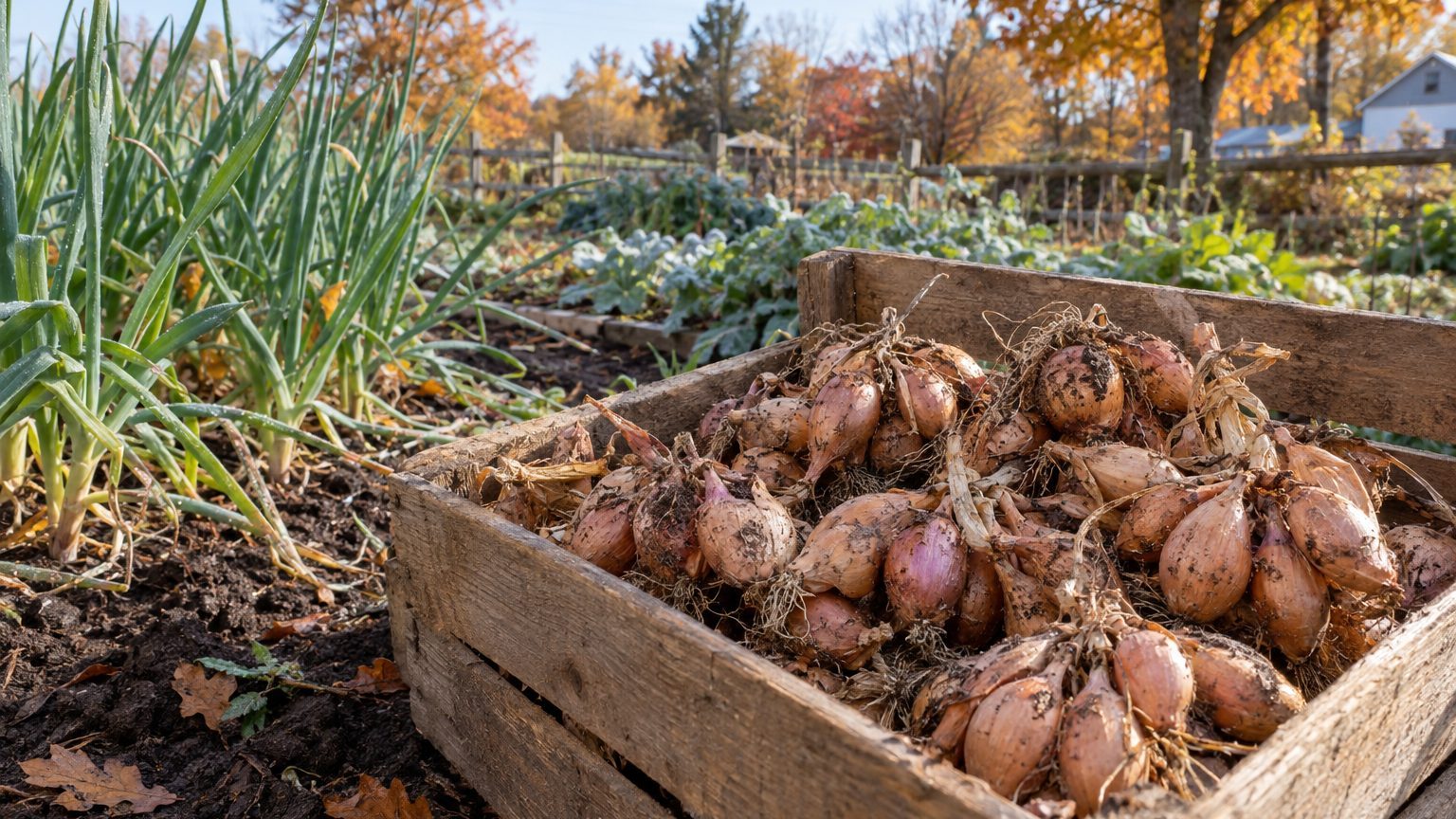

Choose by type, not by name. In Tennessee, shallots grown from bulbs and planted in fall do best, seed-grown shallots are a good second choice, and spring-planted sets are the fallback. The state’s long, mild-winter season gives each type a different job. This page sorts them by how well they fit.
The short answer for Tennessee
Start with the frost numbers, because they set the whole schedule. At the Nashville reference station, the last spring 32°F freeze falls between March 31 and April 12. Those dates are the band where the chance of a freeze is between 30 and 70 percent (NOAA NCEI 1991-2020 Climate Normals). They are a probability, not a promise, so a freeze after April 12 can still happen. In fall, the first 32°F freeze falls between October 28 and November 8 on the same basis. That leaves roughly seven months between the two bands.
Winter is the second number. The mean daily minimum of the coldest month in Nashville is 30.1°F, which is a cold month but nowhere near a killing one. Bulbs set out in fall can root and sit through that without much trouble. They then restart in late winter and have a head start on the heat that arrives in early summer.
The decision by type
| Type | When it goes in | Fit for Tennessee |
|---|---|---|
| Bulb shallots (multipliers) | Fall, around the first-freeze window | Best first choice. Roots in cool soil and bulbs up before summer heat peaks |
| Seed-grown shallots | Started indoors in winter, set out in early spring | Good second choice. Cheaper and cleaner, but needs a tight schedule |
| Spring-planted bulbs or sets | As soon as soil can be worked | Fallback. Works if planted early, loses ground if planted late |
This page does not have Tennessee variety trial results, so it will not rank individual cultivars by name. Within a type, buy what local suppliers stock for your area and ask what they have seen succeed. For exact dates, see When to Plant Shallots in Tennessee.
What will not work here
Late spring planting is the most common failure. Shallots size up in response to lengthening days and then finish in warm weather. If sets go in during late April or May, the plant has only a few weeks of cool growth before heat arrives, and the result is small bulbs or ones that never divide well. With a last-freeze band that ends April 12, there is no reason to wait past March unless the soil is a swamp.
Planting too early in fall also causes trouble. A bulb set out in August or early September, while soil is still warm, can send up a lot of top growth before winter. That is more tissue for a hard freeze to burn, and with the first-freeze band starting October 28, the sweet spot is closer to the cool end of fall than the warm one. This is why the Growing Shallots in Tennessee guide ties fall planting to soil temperature rather than a fixed day.
Humidity is the other trap. This page does not carry rainfall or humidity numbers for Tennessee, but anyone who has gardened here knows warm, damp summers are normal. Close spacing under those conditions traps moisture in the canopy and invites fungal disease, so giving each bulb room (around 6 inches in the row is a common starting point) works better than packing the bed. Heavy clay that stays wet is a related problem: bulbs sitting in soggy ground rot before they size up. Raised rows or a loosened bed help.
Finally, do not expect long storage from every type. Shallots harvested in a wet spell and cured on a humid porch will not keep as long as those cured in dry air. Pull them when the tops fall over and cure them somewhere airy and shaded, not in a closed garage.
What changes across Tennessee
Tennessee is not one garden. The USDA Plant Hardiness Zone Map (2023) puts the state across 5b to 8a, a spread of several zones, so no single answer fits every county. The zone system is built on one variable, the average annual extreme minimum temperature, which is why it says nothing about summer heat or rainfall. Check your own spot on the USDA map rather than guessing from a neighbor’s experience.
The frost dates above come from Nashville, and the source is clear that East Tennessee and the Cumberland Plateau run cooler and later in spring. A gardener on the Plateau or in the high country should expect the last spring freeze to arrive after the April 12 end of the Nashville band. The practical shift is to move spring work later, and to plant fall bulbs a little earlier so they have time to root before the ground gets truly cold.
At altitude and in the colder zones, mulch matters more. A few inches of straw over fall-planted bulbs buffers freeze-and-thaw cycles that can heave them out of the soil. In the warmer end of the state, mulch does a different job: it keeps the soil cooler and drier in early summer. Same material, opposite purpose.
Where to check this for your own county
A county recommendation beats a state one, and this page is the state one. The place to find the county version is the University of Tennessee Extension, which has offices across the state. Call or visit your county office and ask two specific things.
- The local planting calendar for shallots and other alliums, including fall and spring windows for your county.
- Which shallot varieties have been trialled or grown successfully in your county, and which have struggled with local disease pressure.
Agents often know things no state table can, such as which valleys hold frost late or which soils drain poorly. A question like “what did people in this county plant last fall, and how did it go?” usually gets a more useful answer than any chart.
One caution on sources. The reference calendars available to this page are lawn calendars from another state’s extension service, and they do not apply to shallots or to Tennessee. They are left out on purpose. For this crop, rely on your own county office.
Checking this against your own garden
Your own observations outrank every date here. Three signs are worth watching, and none needs a tool.
Soil warmth by feel. In early spring, push your hand a few inches into the bed. If the soil feels cold and sticky, wait. If it crumbles and feels cool rather than icy, roots can work. A bed that warms early tells you it is a sheltered or south-facing spot, and it can go in a week or two before the rest of the yard.
The first flush of growth. Notice when weeds and the first spring bulbs, such as daffodils, start up. That timing is your own microclimate calendar, and it shifts from one side of a county to the other. If your garden greens up late, your spring schedule runs behind the Nashville numbers.
The first true leaves. On seed-grown shallots, the first true leaves are the signal that seedlings are ready to harden off and move out. Leaves that stay thin and slow mean cool or low light, not failure. On fall-planted bulbs, green shoots showing in winter tell you the bulbs rooted well.
Write down what you see and when. Two seasons of notes will tell you more about your yard than any state table.
Common questions
Should I plant shallots in fall or spring in Tennessee?
Fall is the better first choice for most gardens, because bulbs root in cool soil and finish before summer heat. Spring planting works if you get sets in the ground as soon as the soil can be worked.
Can I grow shallots from seed in Tennessee?
Yes. Seed-grown shallots suit gardeners who start seedlings indoors in winter and set them out in early spring. They need a tight schedule, because late planting leaves little time before heat.
Will Tennessee winters kill fall-planted shallots?
Not usually. The mean daily minimum of the coldest month in Nashville is 30.1°F, and the state spans USDA zones 5b to 8a. In the colder zones, a few inches of straw mulch protects bulbs from heaving.
Which named variety is best?
This page does not have Tennessee trial data to rank cultivars. Ask your county office of University of Tennessee Extension which varieties have performed well locally.