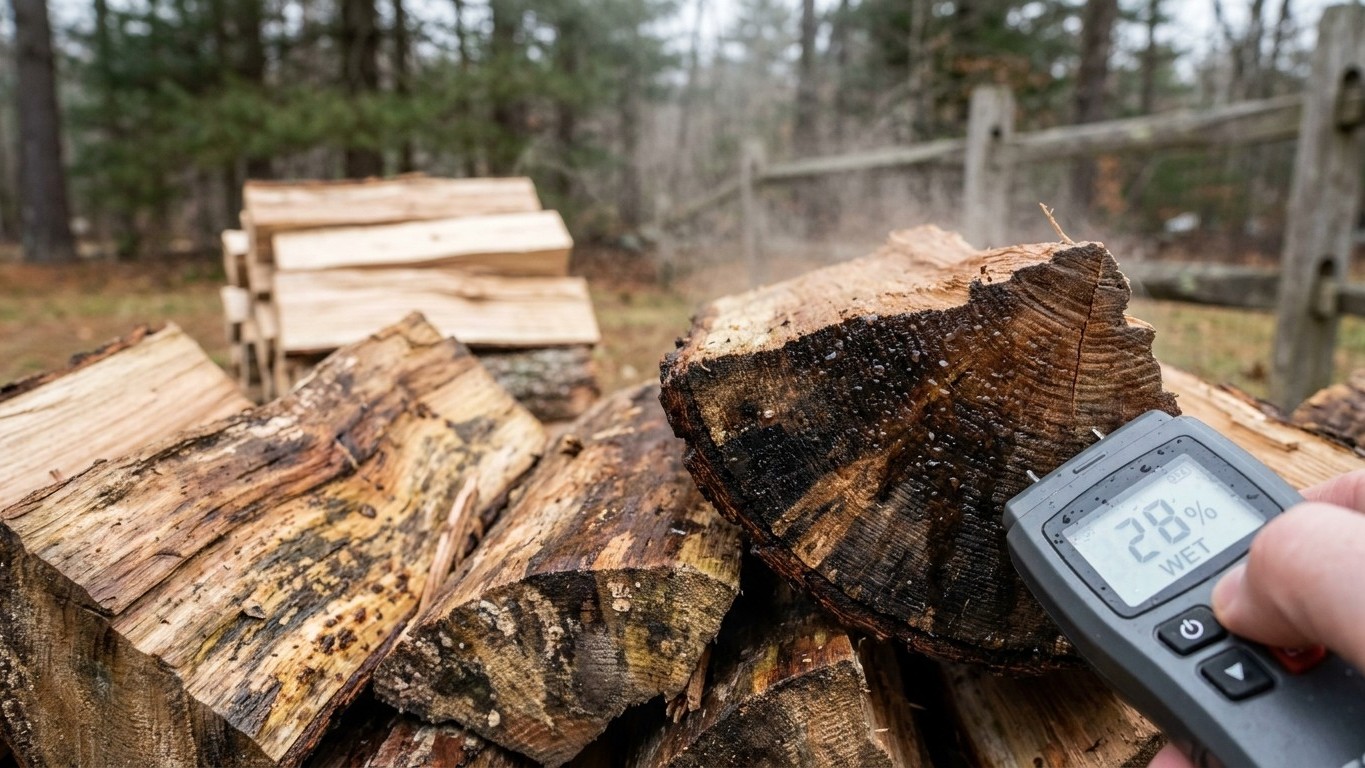

Nine times out of ten, a fire that dies within ten minutes is starving for one of three things: dry fuel, oxygen, or a hot enough base to keep burning. Wet or unseasoned wood is the top culprit, but a closed damper, oversized logs, or a poorly built stack can kill a fire just as fast. Fix the moisture problem first, then check airflow, and the ten-minute flameout usually stops happening.
Wet Wood Is the Number One Killer

Green or improperly seasoned firewood holds water inside its cell structure, sometimes 50 percent or more of its weight in moisture. Before that wood can burn, the fire has to boil off all that water first. That process eats up heat, stalls flame growth, and often smothers the young fire before it ever builds a coal bed. You’ll hear it hissing or sizzling at the ends of the logs, that’s steam escaping, not the sound of good combustion.
Properly seasoned hardwood should sit at 15 to 20 percent moisture content, according to guidance from the EPA’s Burn Wise program. Getting there isn’t quick. Oak, one of the densest common firewoods, typically needs 12 months or more of split, stacked, covered-top drying to reach that range. Ash and maple usually need 6 to 9 months. Softwoods like pine dry faster, often in 6 months, but they burn hotter and faster with more spark and creosote buildup, so most households mix them in sparingly rather than relying on them alone.
The only reliable way to know your wood is ready is a $15 to $25 moisture meter from a hardware store. Split a log fresh, press the pins into the freshly exposed face (not the bark), and read the number. Guessing by how long the wood has “been sitting around” is how most people end up burning wood that looks dry on the outside but is still wet at the core.
Kiln-Dried and “Seasoned” Labels Aren’t Always Accurate
Bagged firewood sold at gas stations and grocery stores often carries a “seasoned” label with no third-party verification behind it. Kiln-dried wood, sold in smaller bundles, tends to be more reliable because commercial kilns actively pull moisture out over a controlled cycle, but it costs noticeably more per BTU than wood you season yourself. If a bundle feels heavy for its size or the ends look pale and moist rather than gray and cracked, treat the “seasoned” claim with skepticism and test it before relying on it for an overnight fire.
Airflow Problems That Choke a Young Fire
Fire needs a steady supply of oxygen to keep converting fuel into heat. A damper that’s only partially open, a flue that’s too cold to draft properly, or a firebox packed too tightly with logs can all cut off that oxygen supply just as effectively as wet wood does.
Cold flues are a bigger problem than most people realize, especially on the first fire of the season or in an unlined masonry chimney. If the flue hasn’t warmed up, the column of air inside it doesn’t want to rise, and smoke or heat can actually stall or reverse instead of drawing upward. That stalled draft starves the fire of fresh air right when it needs the most oxygen to establish itself. Building a small “warming fire” with tightly rolled newspaper and a few thin sticks directly under the flue opening for two or three minutes before adding real fuel helps establish an upward draft first.
Dampers matter just as much once the fire is going. A damper closed more than halfway restricts airflow enough to smother a fire that hasn’t built a solid coal base yet. On wood stoves, check that air intake vents aren’t blocked by ash buildup, that’s a common issue that gets overlooked because the vents are small and easy to miss during routine cleaning.
Stacking Too Tight or Too Loose
Packing logs shoulder to shoulder in the firebox looks efficient but actually blocks the air gaps a fire needs to breathe between pieces. The opposite problem, a loosely built pile with too much space and not enough kindling, fails because there isn’t enough surface area catching flame at once to generate real heat. A tepee or log-cabin style stack with pieces of varying size, kindling at the base, then pencil-thick sticks, then finger-thick splits, then larger logs, gives the fire a clear path to grow while still letting air move through the gaps.
Wood Size and Species Mistakes That Sabotage a Fire
Throwing one oversized log onto a small starter flame is one of the most common ways a beginner fire dies. A log much larger than the existing flame simply absorbs the available heat without catching, cooling the fire faster than it can build. The rule of thumb: never add a piece of wood more than twice the diameter of what’s already burning well. Build up gradually from kindling to small splits to full-size logs instead of skipping steps.
Species matters too. Softwoods like pine, fir, and spruce ignite fast and burn hot initially, which is great for getting a fire established, but they burn through quickly and leave little coal bed behind. Dense hardwoods like oak, hickory, and locust take longer to catch but produce the long-lasting coal base that keeps a fire going for hours. A fire built entirely on quick-igniting softwood often flares bright, then collapses to nothing in under fifteen minutes once that initial fuel is consumed. Mixing softwood kindling with hardwood for the sustained burn solves this without requiring a total wood swap.
A Quick Diagnostic Before Your Next Fire
Before assuming your fire-building technique is the problem, run through a short checklist. Split a piece of your current wood supply and test it with a moisture meter, anything reading above 20 percent needs more seasoning time before it’ll sustain a fire well. Check that your damper or air intake is fully open until the fire is well established, then adjust down gradually rather than all at once. Confirm your kindling supply includes enough small, dry material, pencil-thick dry sticks, dry pinecones, or fatwood, to carry the flame through the first five minutes before larger splits are added.
If the wood tests dry and the airflow checks out but the fire still dies fast, look at your kindling ratio. Most struggling fires simply don’t have enough small fuel at the base. A good rule is roughly a double handful of thin kindling for every log you plan to add in that first round, giving the flame enough initial fuel to generate real heat before it has to tackle bigger pieces.
Storage conditions between splitting and burning matter more than people expect, too. Wood stacked directly on the ground pulls moisture back up from the soil even after months of drying, undoing a good part of the seasoning process. Raising the stack on pallets or rails, with only the top covered (not the sides, which need airflow to keep drying), keeps rain and ground moisture from creeping back into wood that was otherwise ready to burn.
One detail that trips up a lot of households: wood cut and split in spring won’t be ready by the time cold weather hits in October or November if it’s a dense hardwood. Seasoning schedules for oak or hickory really need to start in late winter of the prior year to be burn-ready by the following fall. If your current supply is falling short, mixing in a load of kiln-dried or well-seasoned softwood for this season while a hardwood batch finishes drying is a practical bridge rather than fighting green wood all winter.