
Billings, the reference station for this page, averages its first fall freeze between October 1 and October 14, and today is October 13. For many Montana gardeners the fall sowing window for winter salads has either just closed or is closing this week. Which salads are worth the effort depends on that short window and on a winter that gets properly cold.
The short answer for Montana
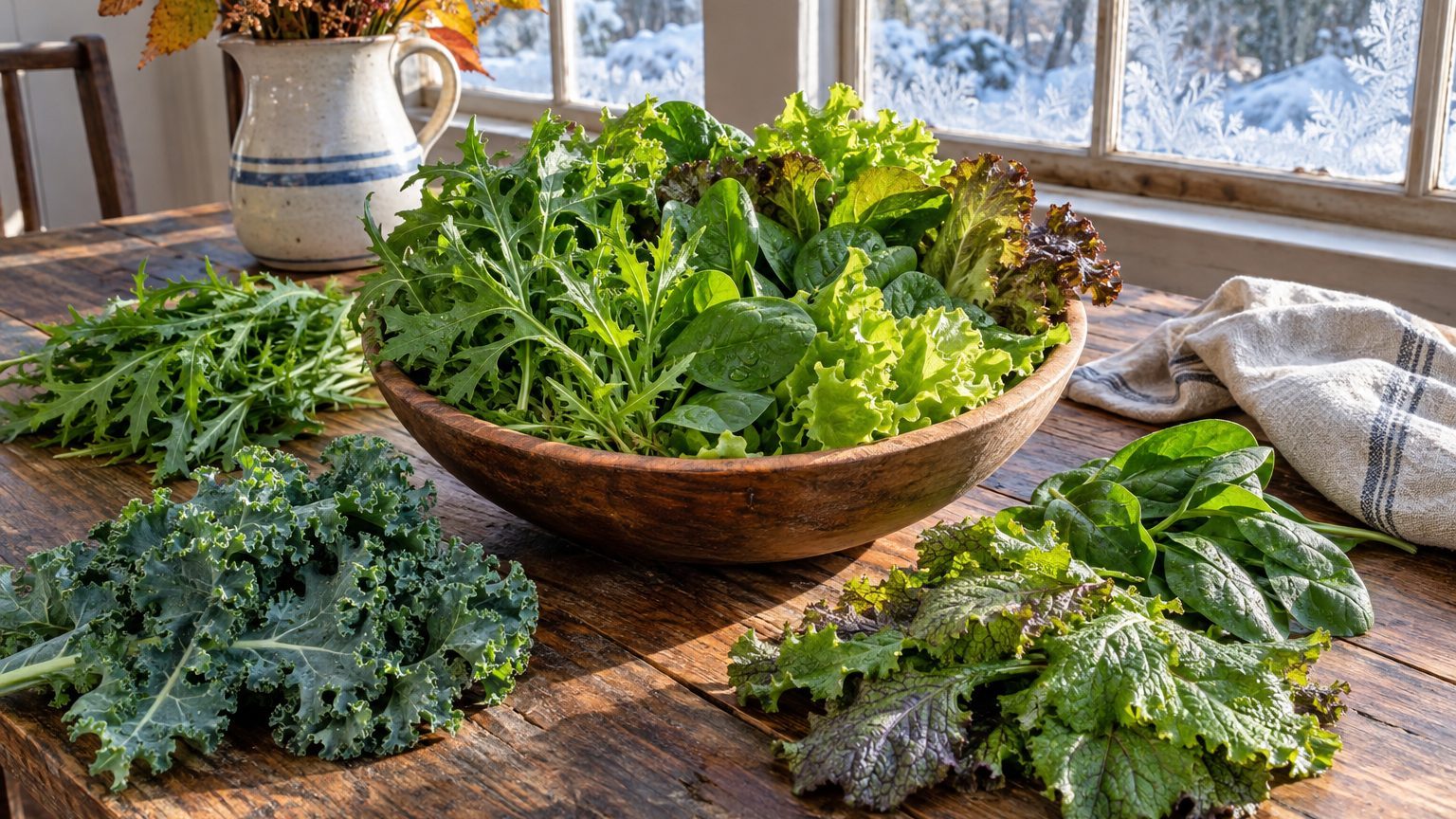
The best winter salads for Montana are the cold-tolerant leafy greens: spinach, mâche (also sold as corn salad), claytonia, kale and the hardier mustards. Grow them under cover, because the season is short and the winter is cold. Tender lettuce and heading chicories are a gamble here, and only baby-leaf types sown early in the fall tend to be worth trying.
Why the numbers point that way
NOAA’s 1991-2020 Climate Normals for Billings put the last spring freeze between April 29 and May 10, and the first fall freeze between October 1 and October 14. These are probability bands, not calendar promises. They mark the stretch in which the chance of a 32°F freeze runs from 30 to 70 percent. A freeze can still arrive before or after, and Billings is one of the milder valleys, so the real dates elsewhere in the state are often worse.
The winter figure matters more. The mean daily minimum of the coldest month at Billings is 17.9°F. That is an average, so many nights run colder. At that level an unprotected head of tender lettuce is finished, while hardy greens can sit through cold nights and resume growth when the weather eases. The strategy that works is to grow the plants to size in the fall, then hold them through winter under protection and harvest as conditions allow.
The decision by type
Sorted by what each group can be expected to do in a Montana winter, the picture looks like this:
| Type | Examples | Role in a Montana winter | Protection |
|---|---|---|---|
| Cold-hardy leafy greens | Spinach, mâche, claytonia | The backbone: best chance of holding through the cold months | Cold frame or low tunnel recommended for steady harvests |
| Hardy brassicas | Kale, tougher mustards, arugula | Reliable for fall and early-winter picking, then slow | Cover extends the harvest |
| Baby-leaf lettuce | Cut-and-come-again lettuce mixes | Fall salad bowl, sown early | Cover required once hard freezes begin |
| Heading types | Full head lettuce, radicchio, large endive | Marginal: too slow to finish in a short fall | Unheated greenhouse at minimum |
What will not work here
The slowest salads lose first. Heading lettuces, radicchio and large endive need many weeks to form a usable head. Sown at midsummer in Montana, they reach the October freeze window still half-grown, and then growth stalls as the light fades. A plant that is not near full size when the cold arrives will not catch up in December. Sowing dates for the types that can make it are laid out in When to Sow Winter Salads in Montana.
Counting on the frost window as a deadline
The October 1 to October 14 band at Billings is a probability range, not a finish line. Gardeners sometimes read it as “sow by then.” The reverse is closer to the truth: seeds need to be up and growing well before that band, because seedlings that are still tiny when the first hard freeze arrives sit idle through the winter. Anyone in a colder valley should assume the real cutoff falls earlier, since the reference city is the mild end of the state.
Covers that cook and beds that go dry
Protection brings its own problems. On a sunny winter afternoon, a sealed cold frame or plastic tunnel can overheat quickly and then drop hard at night. Montana’s habit of swinging from deep cold to a sudden thaw (the chinook winds along the eastern slope are the famous cause) makes those swings sharper. Vent covers on mild, sunny days or the plants cook, then freeze.
Water is the quieter failure. Plants under a cover receive no rain or snowmelt, and the dry Montana air pulls moisture out of the soil all winter. A gardener who waters on a fixed weekly schedule through summer can lose a bed this way. Check by hand instead: push a finger into the soil, and water lightly on a mild morning when the bed is dry below the surface.
Last, a hot late-summer bed is a poor seedbed for lettuce. Warm soil can stop lettuce seed from germinating at all, so the August sowing that seems efficient often produces a patchy stand. Spinach is even less forgiving. Shade the seedbed or wait for the soil to cool a little.
What changes across Montana
Montana does not have a single winter. The USDA Plant Hardiness Zone Map (2023, based on 1991-2020 normals) places the state anywhere from zone 3a to zone 6a. That spread is enormous, roughly the difference between northern Minnesota and parts of the mid-South in a single state. There is no one answer for a Montana winter salad, only a set of adjustments that depend on where you garden.
Reading the hardiness zone correctly
The zone number rests on one variable, the average annual extreme minimum temperature. It describes how cold the worst night usually gets, and it says nothing about season length, wind or snow cover. Billings, used here as the reference city, is a mild valley within that range. To find your own zone, use the USDA map and enter your ZIP code, rather than assuming the state-level range applies to your yard.
What a northern or high-elevation reader should shift
Mountain valleys elsewhere in Montana can frost in any month, which means even a summer-sown salad bed can take a hit. In a northern or higher garden, sow earlier than the Billings window suggests and lean harder on the hardiest types: spinach, mâche and claytonia over anything with a head. Use a heavier cover and expect harvests to pause for a stretch in midwinter rather than continue steadily. The general principles on this page and the parent guide, Winter Salads for Montana Gardens, hold across the state, but the dates move and the protection needed grows with the cold.
Where to check this for your own county
Start with Montana State University Extension, the state’s land-grant extension service. Its county offices serve gardeners directly, and they know the local microclimates in a way no state-wide page can.
What to look for there
Two things matter most. The first is the local planting calendar: the sowing and harvest dates that your county’s agents recommend for cool-season vegetables and greens. The second is the list of varieties trialled in your county or a nearby one. A variety that did well in a trial under local conditions is a better bet than a catalog’s general claim. Ask the county office whether anyone has tested season-extension covers in your area, since results from a cold frame in a windy basin may differ from those in a sheltered town lot.
Why the county beats the state
A county recommendation beats a state one, and this page is the state one. The frost dates here come from a single station in Billings, and the hardiness range runs from 3a to 6a. This page does not have a Montana-wide planting calendar built from county data, so treat the numbers here as a starting frame and let your county office refine them.
Checking this against your own garden
Your own observations outrank every date on this page. A frost band for Billings says little about a north-facing yard at higher elevation, but your bed tells you directly. Three signs are worth watching, and none needs an instrument.
Three things to watch
- Soil warmth by feel. Push your hand into the bed in the morning. Soil that feels cool and workable suits spinach and mâche seed. Soil that still feels warm like a sunny-day pocket is too hot for lettuce to germinate well. A bed that stays cold long after your neighbor’s has warmed is telling you about slope, shade or drainage.
- The first true leaves. Seedlings first show a pair of seed leaves, then the first true leaves. Note how many days that takes in fall. If it comes quickly, the bed has the growing energy to size up before the freeze. If true leaves arrive slowly, the plants will probably sit small through winter, and you should sow earlier next year.
- Where frost lands first. On a clear fall morning, walk the yard and see which patches are white and which are clear. The clear spots (near a south wall, a fence or a paved edge) are your warmest microclimate, and the best place for a cold frame.
What to do with what you see
Keep a few notes: the date of the first white morning, the date the seedlings made true leaves, and which bed held greens longest. After a season or two those notes will serve you better than any regional table.
Common questions
Can I grow lettuce outdoors all winter in Montana?
Not without protection. The coldest-month mean minimum at Billings is 17.9°F, and many nights run below that average. Hardy greens such as spinach, mâche and claytonia have a far better chance under a cold frame or low tunnel than any head lettuce does in an open bed.
What is the single best winter salad for Montana?
Spinach and mâche are the safest starting points because both tolerate cold and do not need to form a head. Claytonia is a strong third, especially for a covered bed.
Is the first fall frost date a deadline for sowing?
No. For Billings, October 1 to October 14 is the band where the chance of a 32°F freeze runs from 30 to 70 percent, based on 1991-2020 normals. Sow well ahead of it so seedlings are established when cold arrives. Colder valleys should plan on earlier dates.
Does a low hardiness zone rule out winter salads?
Not by itself. The USDA zone reflects the average extreme minimum temperature, and Montana spans zones 3a to 6a. A colder zone means tougher types, heavier cover and a longer pause in midwinter, but a well-placed cold frame can still produce greens. Your county extension office can say what has worked locally.