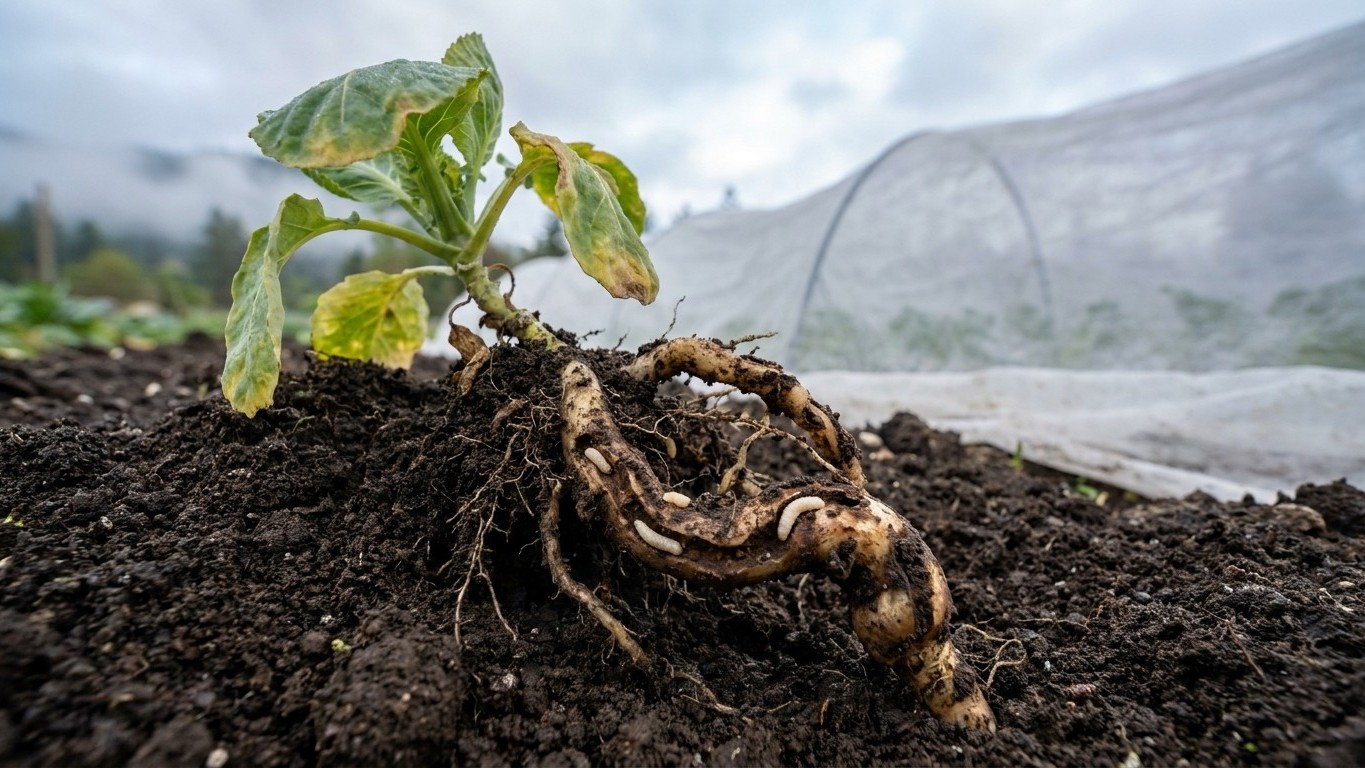

Sweet potato slips go into New Mexico gardens in late spring, after the last frost and after the soil has warmed. At the Albuquerque airport weather station, the last spring freeze falls between March 31 and April 12. The season that follows is long enough for one dependable crop. Summer heat is moderate, with 42.5 days at 90°F or above, and rain is scarce, so irrigation does most of the work.
When the soil is warm enough in New Mexico

The date most gardeners want is the day to plant, and the starting line is the last spring frost. NOAA’s 1991-2020 climate normals put the last 32°F freeze at the Albuquerque airport station between March 31 and April 12, the band where the odds of another freeze run from 30 to 70 percent. That is a probability, not a promise. Those are also reference-city numbers. Suburban and rural gardens usually see the last frost one to two weeks later, and more at elevation, so check your own county before you mark a calendar.
Frost is only a proxy. A sweet potato is a tropical root crop, and what it waits for is warm soil, which arrives after the frost risk ends rather than with it. Slips set into cold ground stall, and a stalled slip in wet, cool soil is an invitation to rot. A cold snap in the first weeks can set the plants back even without a freeze.
What to check before the slips go in
A soil thermometer settles the question better than any calendar. Read it in the morning, when the ground is at its coolest, because afternoon readings flatter a bed that chills overnight. Your state extension service, New Mexico State University’s College of ACES, can confirm the soil temperature to wait for in your area. A short checklist helps:
- Morning soil readings that hold steady for several days, not one warm afternoon.
- A ten-day forecast with no nights sliding toward freezing.
- A bed loosened deeply, since roots swell badly in compacted ground.
- Slips with healthy roots or shoots, hardened off for a few days outdoors.
One more point, because the grocery store muddies it. A sweet potato is not a yam and not a potato. It belongs to the morning glory family, not the nightshades, so it shares no rotation logic with potatoes, tomatoes or peppers. Treat it as its own group when you plan beds. For the basics of slips, curing and handling, see Growing Sweet Potatoes: Slips, Heat, and a Careful Cure.
How long the season lasts here
The same station puts the first fall freeze between October 29 and November 9. Counting from the later spring date (April 12) to the earlier fall date (October 29) gives 200 days. Counting from the earlier spring date (March 31) to the later fall date (November 9) gives 223 days. That is a generous frost-free stretch for a crop grown from transplants.
Gardens outside the city give some of it back. If your last frost runs one to two weeks later and your first fall frost one to two weeks earlier, you lose roughly two to four weeks. Higher ground loses more. The USDA Plant Hardiness Zone Map (2023) spans zones 4b to 9a across New Mexico, which tells you the state holds everything from mountain valleys with short summers to warm lowlands. Hardiness zones track winter minimums, so they matter less for a frost-tender annual than the actual frost dates do. Use the zone only to see where your garden sits on that spread.
What a long window allows
Cool spring soil does not count toward growth, so the useful season begins weeks after the last frost. Even so, a window near 200 days leaves room for a staggered second planting a few weeks after the first. It spreads the harvest and gives insurance if the first set struggles. Count backward from the first fall freeze using the maturity range on your slip supplier’s tag, remembering that the count starts at transplanting.
Where the window shrinks, at higher elevation or in a cold-air pocket, the first planting is the only one. The root check before planting matters more there. Look at what you are buying before you commit, because a slip with weak roots wastes the scarce early weeks.
Harvest before the first hard freeze. Frost blackens the vines, and roots left in cold ground can be damaged. Dig on a dry day, handle the roots gently because the skin bruises easily, and cure them somewhere warm and humid before storing. Never put sweet potatoes in a refrigerator or a cold cellar. Cold injury below their storage range is irreversible, and it is the most common way a good home harvest is ruined. Check roots as they sit, and treat a soft patch or a weeping spot as the end of that root.
Heat and water in New Mexico

At the Albuquerque reference station, 42.5 days a year reach 90°F or more. That is a count at one station, not a map of the state. It is enough heat that sweet potatoes are a routine crop in the warm lowlands, though well short of the scorching summers of the low desert. The Growing Sweet Potatoes in Arizona guide covers that hotter case.
Warm days are not the same as warm nights
Sweet potatoes want accumulated warmth, and warm nights count as much as hot afternoons. Dry high-desert air sheds heat quickly after sunset, so a day above 90°F can still be followed by a cool night. In gardens at elevation, the gap between the two is wider. Black plastic mulch over ridged beds warms the soil early and holds it warmer overnight, and the raised ridge drains well, which roots appreciate. Row cover over young plants helps in the first weeks. Gardeners near the warm end of the range may skip the plastic, since it can overheat the soil in midsummer.
Rain does not do the watering
Summer brings about 3.5 inches of rain across June, July and August, out of 8.8 inches for the whole year. June is the driest month at 0.57 inches, then July brings 1.64 and August 1.31. The driest month is when new vines are putting down roots and need the most help, so plan to irrigate from the first week. Drip lines or soaker hoses keep water at the root and the leaves dry.
The rain that does come arrives mostly as summer thunderstorms, which run off hard ground rather than soaking in. What matters for the roots is evenness. A long dry stretch followed by a soaking, or by heavy irrigation, can make roots swell fast and split. Water steadily, using a finger test to see how deep the dry layer goes, and keep the rhythm steady late in the season. Soil changes the answer: sand drains within the day and wants more frequent watering, while clay holds moisture for a week. A rain gauge on your own plot tells you what actually fell, which can differ a lot from the city numbers.
Where summers are cool and damp, such as parts of the Southeast or the Northeast coast, the problems flip to mildew, slow ripening and rot. Growing Sweet Potatoes in North Carolina covers a humid climate.
Which sweet potatoes suit New Mexico
Choose by type, and let your local extension office name the varieties. Cultivar names carry real weight with sweet potatoes, because a variety that does well in one place can fail a few counties away, and the only recommendation worth following comes from trials run near you. New Mexico State University’s extension service and your county office know what has done well in your elevation and soil. Ask them before ordering.
Matching type to your garden
Reasoning from the climate gets you most of the way to the right type. Where the season is short, at higher elevation or in a cold-air pocket, the earliest-maturing types are the sensible choice, along with plastic and ridges to gain warmth. In the warm lowlands, with a window near 200 days, you have more freedom, and you can choose on flavor, flesh color and storage habit. Where heat is intense, pick vigorous vining types that shade their own root zone. A bush or compact type suits small beds and containers, which also warm faster in spring.
Disease resistance is the first criterion in humid places. In New Mexico’s dry air it moves down the list, but healthy planting stock is still the main protection. Buy certified slips from a reputable supplier instead of sprouting roots from a grocery bag, since supermarket roots are often treated to resist sprouting and may carry disease. Give the roots loose, well-drained soil, since heavy clay produces misshapen roots, and keep the bed in its own rotation, away from potatoes and their relatives.
Common questions
When can I plant sweet potato slips in New Mexico?
Wait until the last frost has passed and the morning soil stays warm. At the Albuquerque airport station, the last spring freeze falls between March 31 and April 12, but gardens outside the city often see it one to two weeks later, and higher ground later still. Your county extension office can confirm the soil temperature to wait for.
Can I grow them at high elevation?
Sometimes, as a project. A shorter season and cool nights call for the earliest types, black plastic over ridged beds, row cover, and possibly containers. Check your county’s frost dates first, because the gap between the last spring frost and the first fall frost decides whether the roots have time to size up.
Is a sweet potato a yam or a potato?
Neither. It is a morning glory relative, not a nightshade, so it does not rotate with potatoes, tomatoes or peppers. The supermarket “yam” label is wrong. True yams are a different group of plants.
Can I store harvested sweet potatoes in the refrigerator or a cold cellar?
No. Cold below their storage range causes irreversible injury, often showing up as hard cores or decay weeks later. After curing, keep them in a dry, moderately cool indoor spot well above refrigerator temperature, and check them regularly. A soft patch or a weeping spot ends the question for that root, so discard it.