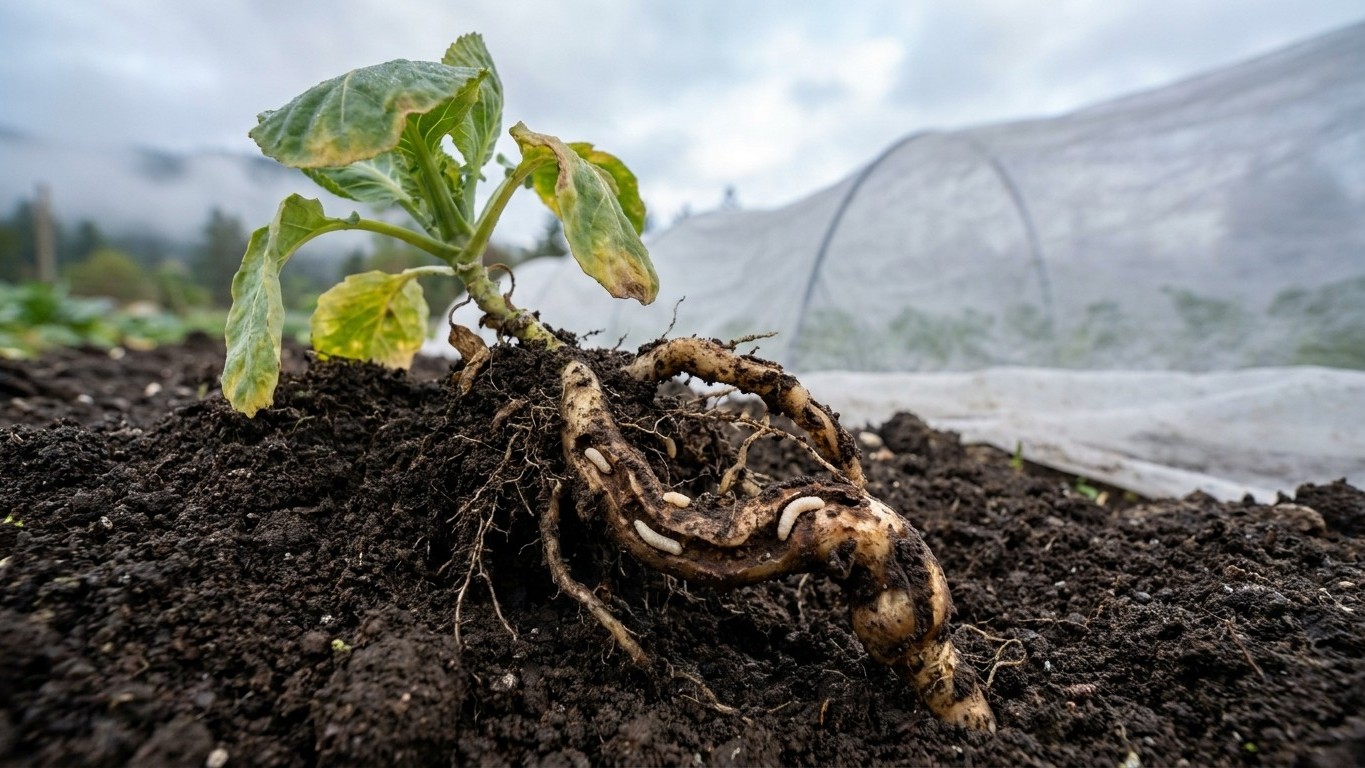

In Rhode Island, set sweet potato slips outdoors in late May or early June, once the soil at planting depth holds at 65°F or more. Frost at the Providence airport ends between April 7 and April 17, but the ground stays too cold for this crop for weeks afterward. Summers are mild, with only 9.4 days a year at 90°F or above, so black plastic, raised ridges and an early-maturing type pay off.
When the soil is warm enough in Rhode Island

Most gardeners start with the last spring frost. At the Providence airport weather station, the NOAA U.S. Climate Normals for 1991-2020 put the last 32°F freeze between April 7 and April 17, using the 30 to 70 percent probability band. Some years the last freeze comes later than that, and a few come earlier.
Sweet potatoes do not care about the frost date itself. They are tropical vines that stall in cool ground, and soil warms more slowly than air. By the time the frost risk has ended, the soil in a Rhode Island garden is usually still in the 50s. The planting date is set by the soil, which typically means late May at the earliest and often early June.
How warm does the soil need to be for sweet potato slips?
Push a soil thermometer into the ground in the morning, when the reading is lowest. Wait until the soil has warmed and settled, and until nights stay reliably mild. A slip set into colder ground sits still, and the cold, wet soil around it invites rot at the base of the stem.
Plant a bit later rather than a bit earlier. Slips set out in warm soil catch up fast, while slips set out into cold soil rarely recover the lost time.
Does the Providence frost date apply to my garden?
The dates above describe one airport station. Suburban and rural gardens typically see the last spring frost one to two weeks later than the reference city, and more than that at higher elevation or in a frost pocket at the bottom of a slope. Check with your own county’s gardeners and keep your own notes from year to year.
The USDA Plant Hardiness Zone Map (2023 edition) puts Rhode Island between zones 6a and 7b. Coastal and inland gardens fall at opposite ends of that range. Hardiness zones measure winter lows, though, and sweet potatoes are grown as an annual here, so soil temperature tells you more than the zone does.
One more point of confusion. A sweet potato is not a potato, and the “yam” on a supermarket label is usually a sweet potato too. It belongs to the morning glory family, not the nightshades, so the disease and rotation rules for potatoes and tomatoes do not apply to it.
How long the season lasts here
The reference station has a little over six months between the mean last spring freeze (April 7 to April 17) and the mean first fall freeze (October 24 to November 3). That is the span for hardy crops, and sweet potatoes cannot use all of it. The usable stretch starts when the soil passes 65°F in late May or June and ends when autumn nights turn cold, so it is considerably shorter than the frost-free calendar suggests.
Rural and suburban gardens usually see the first fall frost one to two weeks earlier than the airport. Count on that when you plan, because the vines have to finish sizing up roots before the cold arrives.
Is there room for a second planting of sweet potatoes?
No. The window is long enough for one planting, set out as soon as the soil is ready, and a second round of slips in July would meet the fall cold with small roots. Staggered plantings work for lettuce and beans. They do not work for a crop that needs nearly the whole warm season.
Since the first planting is the only one, check each slip before it goes in. Look for a firm green stem and a few white roots, with no dark or soft patch at the base. A weak slip costs you the season, and a replacement set out in July will not catch up. The Growing Sweet Potatoes: Slips, Heat, and a Careful Cure guide walks through starting and judging slips in more detail.
When should sweet potatoes come out of the ground in Rhode Island?
Dig before the soil turns cold. A light frost that blackens the vines is a signal to harvest promptly, not to wait. Handle the roots gently, because the skin bruises easily, then cure them in a warm, humid spot as the general guide describes.
Never store sweet potatoes in a refrigerator or a cold cellar. Chilling injury below their storage range is a common way a good crop is ruined after harvest. Keep them somewhere cool but not cold, and inspect them regularly. A soft patch or a weeping spot ends the question, and that root should be thrown out. A root that looks sound is not proof that it is safe to keep.
Heat and water in Rhode Island

The Providence reference station averages 9.4 days a year at 90°F or above (NOAA 1991-2020 normals). That is a count at one station, not a description of the whole state, but it points clearly to a mild-summer climate. Sweet potatoes want accumulated warmth and warm nights, and Rhode Island gives them in modest amounts. Growing them here is a small project, not a routine.
Gardeners in Kansas see far more hot days, and the crop is routine there (see Growing Sweet Potatoes in Kansas). Even Growing Sweet Potatoes in Iowa starts from hotter summers than the Ocean State. Rhode Island growers have to build the warmth themselves.
How do you warm the soil for sweet potatoes in a mild summer?
Three tools do most of the work:
- Black plastic laid over the bed before planting, which warms the soil and keeps rain from cooling it.
- Raised ridges, which drain faster and heat up sooner than flat ground.
- Row cover over young plants during cool spells.
Without that help, a cool, damp summer brings slow vines, roots that size up late, and rot in cold, wet soil. Crowded foliage that stays wet is also prone to mildew and leaf spots, so give the plants room and airflow.
How much rain do sweet potatoes get in a Rhode Island summer?
Providence normals show about 10.3 inches of rain across June, July and August: 3.81 in June, 2.91 in July and 3.59 in August. July is the driest month, and the year totals 47.5 inches. In a normal summer that is plenty, and sweet potatoes tolerate dry spells better than most vegetables once their vines cover the ground.
Rain alone does not settle the watering schedule. On sandy soil, an inch of rain drains away within the day, and the bed may need water every few days in July. Clay holds it for a week, which is where rot becomes the worry. A single heavy thunderstorm mostly runs off, especially on a slope, instead of soaking in.
Even moisture matters most late in the season. A long dry spell followed by a deluge can make the swelling roots split. Water deeply during dry weeks, then ease off before harvest. A rain gauge on your own plot tells you what the station normals cannot.
Which sweet potatoes suit Rhode Island
Rhode Island’s climate points to three traits. A short usable season favors the earliest-maturing types, which size up before autumn cold. Mild summers favor types that tolerate cooler nights. Humid air and wet soil make disease resistance the first thing to look for.
| Rhode Island condition | Type to look for |
|---|---|
| Short usable season | The earliest-maturing type sold as slips |
| Mild summer, few 90°F days | Compact vines that warm up quickly under plastic |
| Humid air, wet soil | Types described as resistant to soil rots and wilt |
Buy certified disease-free slips from a reputable supplier. Slips from the supermarket or from last year’s roots can carry disease into your bed, and the soil diseases that follow are slow to clear.
A sweet potato that thrives in Georgia or the Carolinas can sulk through a New England summer, and the varieties worth buying are the ones trialled in local soil and weather. The University of Rhode Island Cooperative Extension is the place to ask which ones have done well, and the Master Gardener volunteers there can tell you what has worked in your county.
Common questions
Can I plant sweet potato slips right after the last frost date?
Usually not. The last freeze at the Providence reference station falls between April 7 and April 17, and the soil is still too cold then. Wait for 65°F at a 4-inch depth, typically late May or early June.
Is black plastic worth it in Rhode Island?
In most years, yes. With only 9.4 days at 90°F or above at the reference station, summers are mild, and plastic warms the soil early. It also keeps heavy rain from cooling the bed and slows weeds.
Can I rotate sweet potatoes after potatoes or tomatoes?
Rotation with potatoes is not a concern. A sweet potato is not a nightshade and does not share their diseases. Rotate sweet potatoes away from their own previous spot, because soil diseases build up when the crop is repeated.
Where should I store sweet potatoes after curing?
Keep them cool but never cold. A refrigerator or cold cellar causes permanent chilling injury. Check the roots regularly, and discard any with a soft patch or a weeping spot.