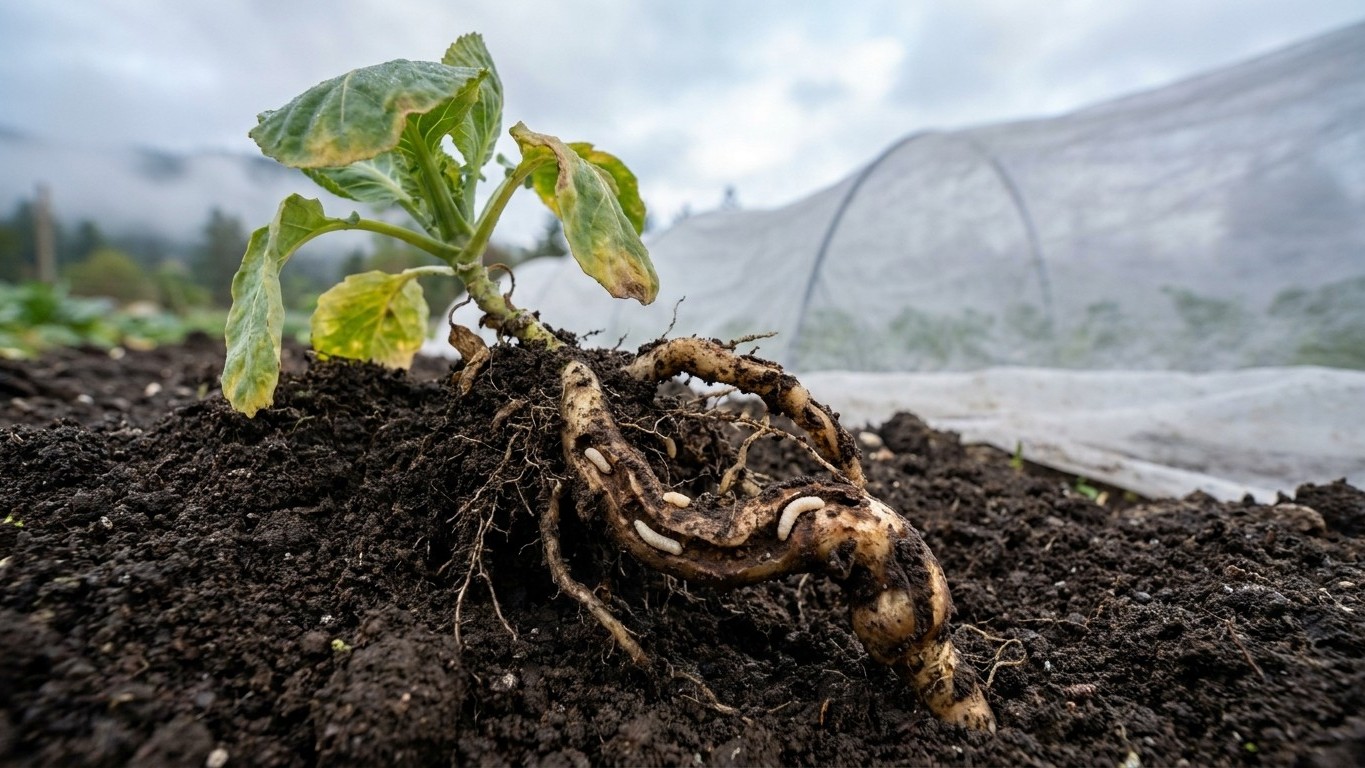

Plant sweet potato slips in California from mid-spring into early summer, once the soil is warm. Frost sets the date only in some places. On the coast and in Southern California, no freeze occurs in an average year, so soil warmth decides. In the Central Valley, the northern counties and the Sierra, freezes still happen, and slips go in only after the last one has passed.
The short answer for California
Set slips outdoors from mid-spring through early summer, when the ground at planting depth feels warm and nights have stopped being cold. Where freezes occur, that means after the last spring freeze. Where none occurs, soil temperature is the only limit.
A frost date is a probability of freeze, worked out from 30 years of daily records: the chance that a reading of 32°F or lower lands on or after a given day. At the mean last spring frost, about half of all years still see one more freeze. That is why gardeners add a week or two before planting a tender crop like sweet potato, which a light frost can blacken.
For Los Angeles, the NOAA reference station (1991-2020 Climate Normals), the answer is simple. No freeze occurs in an average year, and the daily records show zero days at or below 32°F across 30 years. The station lists 365 frost-free days, so there is no last or first freeze date to count from. Never carry that result to the rest of the state. Northern California, the Central Valley and the Sierra all freeze, and each needs its own date.
How long does a sweet potato need before harvest?
Plan on roughly 90 to 120 days from transplanting the slips, depending on the variety. Slips set out in mid-May reach 90 days in mid-August and 120 days in mid-September. Slips are the rooted sprouts, and they can be grown from a sweet potato kept in a warm, moist spot about six to eight weeks before planting. In places with fall freezes, count forward from your planting date to make sure the crop finishes first. The full growing guide, Growing Sweet Potatoes in California, covers the rest of the season.
What will not work here
Planting by the calendar in winter or very early spring fails, even in frost-free country. No freeze does not mean warm. Sweet potatoes are a heat crop, and slips set into cool coastal soil sit idle, and may rot if the bed is also wet. Wait until the soil feels warm to the hand, not just frost-free.
Can you plant sweet potatoes in winter in California?
Not outdoors. The roots will not grow in cold ground, and in the freezing regions the slips will not survive at all. A winter window is useful for one job only: sprouting your slips indoors so they are ready when the soil warms.
Heat is the other limit near the coast. The Los Angeles reference station averages just 2.4 days a year at 90°F or higher. Summers there are mild, so the soil warms slowly, and the slowest-maturing varieties may not size up well before cool weather returns. Coastal gardeners do better with quick varieties and with warm spots such as a south-facing bed beside a wall. Our guide to the best sweet potatoes to grow in California sorts varieties by type.
Does a dry summer change how you water sweet potatoes?
It does, because no rain is coming to help. The reference station gets about 0.1 inches across June, July and August combined: 0.08 in June, 0.04 in July and 0.0 in August. Its 12.2 inches for the whole year falls almost entirely in the cooler months. Every drop the crop gets from planting to harvest comes from your hose or drip line.
Fresh slips need frequent, light watering for the first couple of weeks until they root. After that, a deep soak works better than frequent sprinkles. Sandy ground drains within the day and needs water more often than clay, which holds it for days. Some water districts restrict watering days or hours, so check yours before building a bed that depends on steady moisture. Drip lines under a mulch layer use less water than overhead spray. Keeping the soil evenly moist, then easing off in the last few weeks before harvest, also helps prevent split roots.
What changes across California
California has no single sweet potato calendar. The USDA Plant Hardiness Zone Map (2023 edition, built on 1991-2020 normals) places the state anywhere from zone 5a to 11a. That is a wide range of zones, each step a difference in the average coldest night of the year. A gardener in the mountains and one in San Diego are working with different climates entirely.
Hardiness zones rest on one variable, the average annual extreme minimum temperature. Because sweet potatoes are grown as an annual, the date of the last freeze and the warmth of the soil matter more to them than the zone number does. The zone still shows how cold your area can get and so how much you need to shift the schedule.
| Area | Freeze risk | What to adjust |
|---|---|---|
| Coast and Southern California | None in an average year at the Los Angeles reference station | Plant when soil warms; favor quick varieties; water through the dry summer |
| Central Valley and northern counties | Freezes occur | Wait until after the last spring freeze; harvest before the first fall one |
| Sierra and high elevations | Freezes occur, with a shorter season | Plant later, start slips ahead, choose the earliest varieties |
How should northern and high-elevation gardeners adjust?
Move planting later, toward late spring or early summer, and pick varieties that mature early so the roots finish before fall cold. Starting slips indoors earlier buys a few weeks. Black plastic or raised beds warm the soil faster. To find your own zone, enter your ZIP code on the USDA map, since it varies block to block in hilly country.
Where to check this for your own county
Your county office of University of California Agriculture and Natural Resources is the best next stop. The university’s Cooperative Extension has advisors and Master Gardener volunteers in many counties, and they know your local soil, fog patterns and freeze history. Everything above is a statewide picture, and a county recommendation beats it every time.
What should you look for on the county page?
Look for these items:
- A local vegetable planting calendar that lists sweet potatoes or other warm-season crops by month
- Sweet potato varieties trialled or recommended in your county
- Average last spring freeze and first fall freeze dates, where your area has them
- Local watering guidance or restrictions for summer vegetable beds
If the calendar lists tomatoes, peppers or melons, use their planting window as a guide. Sweet potatoes like the same warm soil. When a county source and the statewide advice differ, follow the county.
Checking this against your own garden
Your own observations outrank any date in a calendar. Three things to watch need no equipment, and each tells you something about your own microclimate.
Soil warmth by feel. Push your hand into the bed about 4 inches deep in mid-morning. If it feels cool, wait. A bed that feels warm weeks before your neighbor’s, perhaps against a south wall or on a slope, is a spot where you can plant earlier.
New leaves on the slips. Within a week or two of planting, healthy slips push out new leaves. If they stay limp, turn purple or do not grow, the soil is still too cool or too wet. A fast start means the site holds heat well.
How long fog or shade lingers. Watch the bed on a summer morning. Where fog or shadow clings until noon, the soil warms slowly, and you should favor quicker varieties and a later, shorter harvest window.
At about 90 days, ease a few inches of soil from the edge of one plant and check root size, keeping the vine in place. If the roots are small, give the crop more time. It can wait up to the 120-day mark, as long as no freeze threatens.
If you follow the almanac, here is when to plant sweet potatoes by the moon. It is a tradition, not a proven method.
Common questions
Can you plant sweet potatoes in California in winter?
Not outdoors. The soil is too cold for rooting even where frost never comes, and freezing regions will kill the slips. Use winter to sprout slips indoors.
Do sweet potatoes need frost protection in California?
It depends on where you garden. Along the coast and in Southern California, no freeze occurs in an average year at the Los Angeles reference station. The Central Valley, northern California and the Sierra do freeze, so wait until after the last spring freeze.
How many days from planting to harvest?
Roughly 90 to 120 days from setting the slips, depending on variety. Cool coastal summers may push a crop toward the longer end.
Should you plant slips or a whole sweet potato?
Plant slips. Sprout a sweet potato in a warm, moist spot, then twist off the rooted shoots when they are several inches long and set those in the ground.