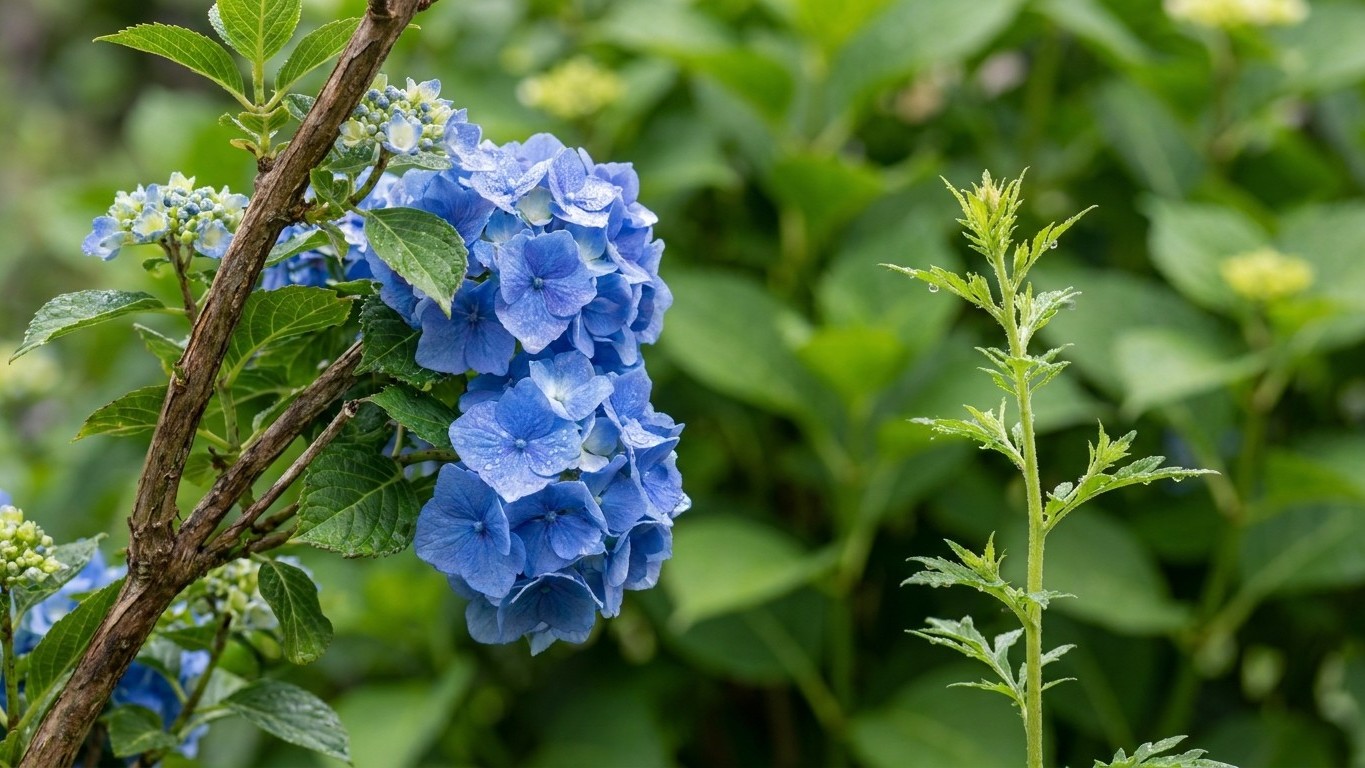

Nearly every garden hydrangea survives a Hawaii winter, because the cold that kills them elsewhere never reaches the places people garden. What decides the outcome is whether a plant keeps its leaves and still blooms through warm days, strong sun and months of rain. Bigleaf types such as ‘Ayesha’ and ‘Nikko Blue’ cope best. Panicle, smooth and oakleaf hydrangeas, bred for cold-winter country, cope worst. Here are the cultivars ranked, a way to test one in your yard, and what shifts from island to island.
What this comes down to in Hawaii
Where people garden, a Hawaii winter never freezes, so cold does not kill hydrangeas here. Honolulu, the reference city, shows zero days per year at or below 32°F in the NOAA NCEI Climate Normals. Frost touches only the high summits of Mauna Kea, Mauna Loa and Haleakala.
That removes the usual worry, and a new set takes its place: how many cool nights a site gets, how much hot afternoon sun the plant takes, and how wet and windy the spot is. The USDA Plant Hardiness Zone Map rates only the average annual extreme minimum temperature, and it runs from 9a to 13a across the islands. A zone number on a nursery tag tells you very little here. The list below runs from the best fit to the poorest. For the basics of planting and care, see growing hydrangeas in Hawaii.
Ayesha
A bigleaf with cupped, lilac-like florets that is often grown in mild-winter gardens. It tolerates warmth better than most mopheads and is a sensible first try below the cool uplands. Give it shade after midday.
Madame Emile Mouillère
An old white bigleaf that gardeners in warm regions have relied on for decades. The blooms fade to a soft pink-green late in the season. It takes warm nights better than many newer introductions.
Nikko Blue
The classic blue mophead, and the one most people picture when they think of Hawaii hydrangeas. It does best where nights cool off and rain is steady. At sea level in full sun it leafs out well but blooms sparsely.
Endless Summer
A rebloomer that flowers on both old and new stems. That helps in a climate where a single flush of buds can be disrupted by heat or by pruning at the wrong time. It still wants cool nights to set heavy bloom.
Limelight
A panicle hydrangea built for cold winters. In warm low country it tends to grow tall and floppy with thin flower heads. A cool, rainy upland spot gives it a far better chance.
Annabelle
A smooth hydrangea with big white globes that expects a real winter rest. Without one it often stays leggy and flowers poorly. It is a gamble anywhere below the cool uplands.
Snow Queen
An oakleaf hydrangea that relies on cold dormancy and, in most regions, drops its leaves for winter. Hawaii seldom provides that rest, so it is the poorest match on this list.
Working it out for your own garden
How can you tell if your site suits a hydrangea?
Without frost dates to count back from, the method rests on site clues. The Honolulu station has no frost season at all, so there are no frost-free days to tally. Check three things instead.
First, nights. If you reach for a sweater in the evening during the cooler months, or mist and cloud settle over the yard, bigleaf types have a fair chance. Second, sun. Morning light with shade from early afternoon on is the pattern hydrangeas tolerate best, and a windbreak helps because strong trades shred the large leaves. Third, drainage. After a heavy downpour the soil should drain within hours, since roots that sit in water are a bigger danger than any temperature.
One more shortcut: look over the fence. An established hydrangea within a few blocks, living through the same rain and wind, is better evidence than any catalog.
Will a given cultivar bloom where you live?
Take ‘Nikko Blue’ in an upland garden with cool nights, steady rain and morning sun. Bigleaf hydrangeas form their flower buds on the stems grown the season before. As growth slows in the cooler, wetter months, the plant sets those buds and keeps the stems through the winter. By the next season, fat rounded buds at the stem tips mean the plant passed the test.
Plant the same cultivar in a dry, hot leeward lowland yard with full afternoon sun. It grows plenty of leaf, the edges scorch brown, and few buds form. The plant is alive and still fails the test.
Now a cultivar that needs more cold. ‘Annabelle’ in that same cool upland garden may do better than it would at sea level. But it still expects a true winter rest, so thin growth and a weak flower show are common. A long-chill cultivar passes only where the nights stay cool for long stretches, which is a narrow band of the islands.
If you are unsure, buy one plant in a one-gallon pot and trial it for a full year before committing to a row. A year of watching tells you more than any label.
What changes across the state
Hawaii is not one climate. Temperature falls steadily as you climb the volcanic slopes, and rainfall depends on which side of an island you stand on. Trade winds push moisture up the windward (northeast) sides, giving them frequent cloud and rain. Leeward sides sit in the rain shadow and run drier, sunnier and hotter.
Those two forces, elevation and exposure, matter more than which island you live on. The reference figure here comes from Honolulu, a warm, mostly leeward, low-elevation city. Cooler, wetter places differ, sometimes a lot.
| Setting | What the weather does | Hydrangeas that fit |
|---|---|---|
| Cool, rainy uplands | Cooler nights, frequent cloud and rain | Bigleaf mopheads, rebloomers, and with luck a panicle |
| Mid-elevation windward slopes | Mild, wet, breezy | Bigleaf types with wind shelter |
| Warm leeward lowlands | Hot, sunny, drier | Shaded bigleaf types only, with irrigation |
| Dry coastal flats | Heat, salt and strong wind | None worth the effort |
Places such as Volcano and Waimea on Hawaii Island, Upcountry Maui, Kokee on Kauai and the Koolau uplands above Honolulu are where hydrangeas are most at home. Frost reaches the highest summits, but those are not gardens. Treat the coolest garden elevations as the best case and the warm coast as the hardest.
The mistakes this state punishes
Shopping by mainland hardiness labels is the biggest one. A tag that says “hardy to a very low temperature” describes a plant that wants a long, cold rest, and the cultivars with that label are the ones most likely to sulk here. Match the plant to the site’s warmth and rain, since cold is not part of the equation.
Planting a bigleaf in full sun at sea level is the second. The leaves scorch, the plant wilts every afternoon, and the buds stay small. Morning sun and afternoon shade is the fix. If you only have a hot spot, put something else there.
Wet-season drainage catches people next. Heavy soil that holds water for days invites root problems and leaf spots, especially in a sheltered corner with little airflow. Raise the bed, add coarse material to the soil, and open up the canopy around the plant.
Wrapping plants for a winter freeze is a mistake with a mainland habit behind it. Frost cloth and heavy mulch against the stems trap moisture and do nothing useful in a climate that never freezes. For what a Hawaii winter actually calls for, read Protecting Hydrangeas Through a Hawaii Winter.
Last, pruning bigleaf types in the wrong month removes next season’s flower buds, which sit on last season’s stems. The right window depends on the type; When to Prune Hydrangeas in Hawaii lays it out.
Checking this against your county
A statewide answer is a starting point. Your own valley, ridge or coastal flat can differ from Honolulu by a wide margin. The University of Hawaii CTAHR Cooperative Extension offices know the local rainfall, elevation and soil patterns, and they can tell you which cultivars have done well near you. For the broader picture of planting and care, return to growing hydrangeas in Hawaii.
Common questions
Do hydrangeas need frost protection in Hawaii?
No. No freeze occurs in inhabited areas, so frost cloth and wrapping have no use. Wet-season drainage and wind shelter matter more.
Can you grow hydrangeas at sea level?
Yes, with limits. Shaded bigleaf types such as ‘Ayesha’ can live there with regular water. Expect fewer and smaller blooms than in a cool upland garden.
Why does my hydrangea grow leaves but never flower?
Too few cool nights is the usual cause, and too much shade or heavy nitrogen feeding can add to it. Pruning at the wrong time also removes buds on bigleaf types. Check the pruning timing before you change anything else.
Do hydrangeas go dormant in Hawaii?
Where nights stay cool, bigleaf types slow down and may shed some leaves. In warm lowlands they stay leafy all year and bloom poorly. Cultivars that need a hard dormant rest, such as ‘Snow Queen’, are the ones that struggle.