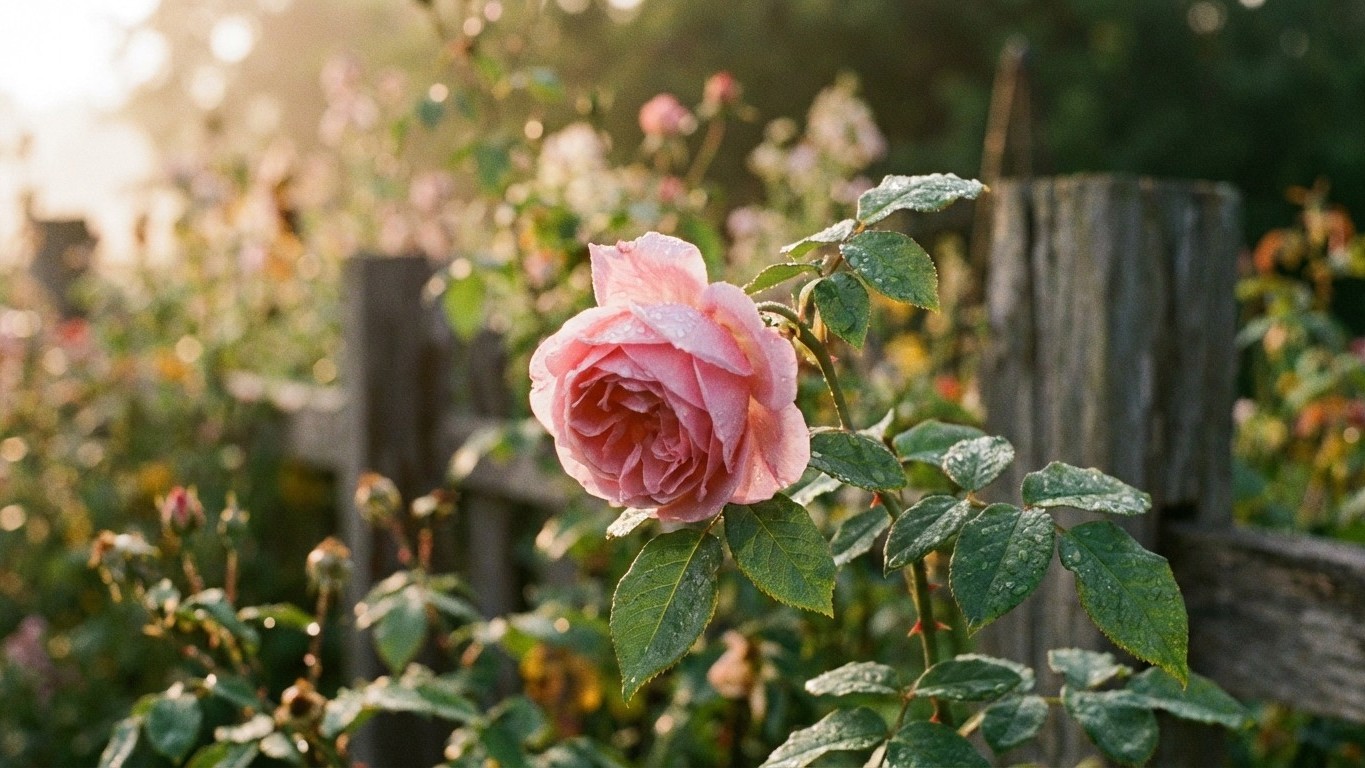

Grafted roses in Colorado need winter protection almost everywhere except the mildest low-elevation pockets. The protection is a mound of soil over the base of the plant, added after a run of hard freezes, usually in November on the Front Range plains. Mound earlier and the plant keeps growing. Skip it and the graft union, the knob where the named variety joins the rootstock, can die. That loss matters more than any cane damage. For the basics of care, see growing roses in Colorado.
Do roses need winter protection in Colorado?
It depends on the zone, and Colorado spans a wide range of them. The USDA Plant Hardiness Zone Map runs from zone 3b to 7b across the state. That system rests on one measurement, the average annual extreme minimum temperature. The USDA hardiness zone range for the area is 3b to 7b. A rose in the coldest mountain valley and one in the warmest low-elevation spot are living in different climates.
Denver, at 5,280 feet on the plains, is the useful reference point for the Front Range. The reference station there averages a last spring frost between May 1 and May 11 and a first fall frost between September 30 and October 12. Those are the dates at which freezing becomes about as likely as not. Mountain towns run much shorter seasons and can frost in July. The western slope follows its own pattern.
Cold alone seldom kills a dormant rose on the plains. The harm comes from dry wind, warm spells in January and February that wake the plant, and then a sharp freeze that follows. A mound keeps the crown at a steadier temperature through those swings.
| Situation | Mound? |
|---|---|
| Hardy own-root shrub rose, warmest low-elevation spot (zone 7b end of the range) | Usually no |
| Grafted hybrid tea, floribunda, or grandiflora on the Front Range plains | Yes |
| Any grafted rose in the colder mountain zones | Yes, and check with the county office about added cover |
| Tender climbers and tree roses anywhere in the state | Yes, and they need more than a mound |
If you are still choosing plants, Roses That Hold Up in Colorado covers which ones tolerate the cold with little help.
When to start, and what triggers it
A run of hard freezes sets the timing, and the calendar only gives a rough guide. A rose has to go fully dormant before it is covered. Mound it too early and the warm soil under the pile keeps the plant growing, which sends up soft shoots that the next freeze kills.
On the Front Range, the first fall frost arrives between September 30 and October 12. That frost is only the first warning. Leaves may blacken and the plant may still hold on to some growth. Wait several weeks past it, until nights stay well below freezing for days in a row and the top inch of soil stiffens by morning. In Denver that usually falls in November. Mountain towns reach that point weeks earlier, and low-elevation valleys can be later.
Dormancy looks like this: the leaves have yellowed or dropped, no new red growth is showing at the tips, and the canes have stopped swelling around the buds. Take a few days to watch the forecast too. A warm stretch in the 50s can follow the first hard freeze, and that is a poor moment to cover a plant.
Before the mound goes on, finish the fall cleanup. Rake up fallen leaves and spent petals from around the base, since old leaves hold fungal spores that would sit against the crown all winter. Water the plant well while the soil is still workable, because Colorado winters are dry, and a rose heading into freeze with dry roots fares worse than one that went in moist.
How to mound, and how deep
What you are protecting is the graft union, not the canes. On a grafted rose, that swollen joint near the base holds the buds that produce the next season’s growth. If the canes die back to the union and the union lives, the rose recovers. If the union freezes, the plant that comes back is usually the rootstock, often a plain rose that bears no resemblance to the one you bought. So bury the graft union under a mound of soil, heaped into a cone around the base. Shape it so snowmelt sheds off rather than pooling around the stems.
Material matters as much as depth. Use bagged soil or compost brought in from elsewhere, not soil scraped from around the plant. Digging beside the rose exposes the shallow roots, leaves a trench that collects water and freezes hard, and often brings up soil that carries disease from the bed. Bagged material is clean, loose, and sits there without harming anything.
| Material | How it performs |
|---|---|
| Bagged topsoil or garden soil | Clean, easy to shape, and holds its form through winter |
| Compost, bagged or finished | Works well; mix with soil if it is very fluffy and drains fast |
| Soil dug from around the plant | Exposes roots and leaves a trench; avoid |
| Straw or shredded leaves alone | Holds moisture against canes and invites mice; better used over a soil mound than instead of one |
Gather the canes loosely and tie them with soft twine before heaping soil, so they cannot whip around in the wind and loosen the crown. Trim only the longest canes that would snap in storms. Save the real pruning for spring, since the timing differs by variety. When to Prune Roses in Colorado walks through it.
The mound stays on until the worst of the cold is over. In spring, take it off in stages over a couple of weeks, working the soil away gently, so new growth is not scorched by sun or nipped by a late freeze. Denver’s last spring frost falls between May 1 and May 11, and even after the mound comes off, frost can still arrive. Keep a sheet or bucket on hand for the first few weeks.
What does not work in this climate
A few popular tricks do more harm than good on the Colorado plains and in the foothills. The winter sun here is bright and strong, even on cold days, and that changes how every covering behaves.
- Plastic wrapping holds moisture against the canes and heats up in the sun. The plant wakes up inside, then freezes again at night. Canes wrapped in plastic often come out moldy or rotted.
- Rose cones left sealed turn into small greenhouses on a sunny January afternoon. If you use one, cut vent holes or lift it on warm days. Even then, a cone over a bare crown protects less than a soil mound does.
- Mulch piled while the ground is still warm keeps the soil from cooling and the plant from going dormant. It also gives mice and voles a snug place to nest next to the crown, which is a risk with any thick covering.
The common thread is warmth and trapped moisture. Roses survive cold well when they are dormant. They fail when a covering convinces them winter is over.
Skipping winter water is a quieter mistake. Colorado winters are dry, and even dormant roots lose moisture. During dry, mild spells when the soil is not frozen, give the rose a slow drink. Without it, canes dry out and shrivel, and watering roses during dry winter spells is the step most gardeners forget.
Checking this against your own county
The dates above come from Denver, so treat them as a starting point. A few hundred feet of elevation, or the other side of a ridge, can shift your freezes by weeks. A town at 7,000 feet will mound earlier than one on the plains, and the western slope runs on its own timetable. Colorado State University Extension has county offices across the state, and the staff there know local frost patterns and what has survived nearby winters. Contact your county extension office before settling on a date or a depth, especially if you garden above the Front Range plains.
Common questions
Do I need to cut the canes back before mounding?
Only the tall ones that would catch the wind. Tie the rest loosely together and leave the main pruning for spring, once you can see which canes lived.
Can I use leaves or straw instead of soil?
Soil does the job best. Leaves and straw hold moisture and give rodents a nest, and they blow off in the wind. They work as a top layer over a soil mound but should not replace it.
Do own-root roses need a mound?
Often not. With no graft union to lose, an own-root rose that freezes to the ground can regrow from its own roots. Tender types and young plants in colder zones still benefit from cover.
What if a warm spell hits after I mound?
Leave the mound alone unless the thaw lasts for weeks. Soil holds cold longer than air, so the crown stays dormant. If the weather turns very dry, water the mound lightly while the surface is unfrozen.