
Spinach in New York gets eaten by five kinds of feeder: slugs and snails, chewing insects, sap-feeding insects, leaf tunnelers, and browsing animals. Each one has its own season inside the frost-free window. At the New York City reference station, the last spring frost falls between March 23 and April 3, and the first fall frost between November 14 and November 27. Upstate and the Adirondacks frost later in spring and earlier in fall. The symptom on the leaf tells you which feeder you are dealing with.
Which pests attack spinach in New York
Cornell Cooperative Extension, through its county offices, is the service that documents vegetable pests for New York gardeners. Its guidance is where a species name comes from. A gardener standing over a ragged leaf needs something simpler first, which is the way the damage was made. Match the feeding pattern first, then ask the county office for the species name.
Which feeders actually eat spinach leaves?
Five groups account for nearly everything that shows up on a leafy green bed:
- Slugs and snails, which rasp holes and leave dried slime trails.
- Chewing insects, which cut holes or eat leaf edges.
- Sap-feeding insects, which cluster on leaf undersides and leave curled, puckered, sticky leaves.
- Leaf tunnelers, whose larvae eat the tissue between the two leaf surfaces and leave pale trails or blotches.
- Browsing animals, which clip leaves or whole plants, often overnight.
Extension offices name the specific insects in each group and tell you which are active in your county this season.
Which listed pests can you ignore on a spinach bed?
State pest lists run long, and most of the entries have nothing to do with a leaf crop. Borers of tree trunks and bark insects live in wood, so a spinach row is no use to them. Insects of fruit orchards feed on blossoms and fruit. Pests that specialize in tomato or potato foliage want those plants and pass over spinach. Pantry and grain insects only matter after harvest. If a bulletin points you to one of these, you are reading the wrong page for a spinach problem.
When each one shows up, and what it does first
Spinach is a cool-season crop. It grows best where temperatures stay at or below 75 F, and seed germination drops once the soil goes above 80 F. Those two numbers shape the calendar. Seedlings go in as soon as the soil can be worked around the last spring frost window of March 23 to April 3, and they meet the cool-weather feeders first.
What happens in a cool spring?
Slugs and snails come first, because they like cool, damp ground. The earliest symptom is a seedling that is notched or simply gone, with a dried silvery trail on the soil or the leaf beside it. Browsing animals work the same weeks. The first sign is a row that was full yesterday and is clipped to stubs this morning.
What changes as the weather warms?
Leaf tunnelers, chewers and sap-feeders build up as the days warm, usually a few weeks after the seedlings are up. Tunnelers show first as pale, winding streaks or blotches that you can see against the light. Chewers leave holes. Sap-feeders show up as curled leaves with a sticky film, and the insects themselves sit on the undersides.
Warmth brings a second problem that looks nothing like an insect. The longest day at the reference city has 14 h 56 of daylight, and long days plus warmth trigger flowering. A cool summer does not cancel that. Plants that bolt turn bitter whether or not an insect touched them. The details are in Will Spinach Bolt Early in New York?. The city also averages 12.2 days a year at 90 F or higher, and a spinach bed in that heat is stressed, which makes every bite more costly.
What about the fall crop?
The fall sowing is held back by warm soil, not by cold. Plant so the crop matures before the heat arrives, and wait for the soil to cool below the 80 F germination drop. Seedlings that emerge in early autumn meet whatever late-summer insects are still active, so the first weeks need the most watching. Slugs return as nights turn damp. Feeding slows as the first fall frost window of November 14 to November 27 approaches at the reference station. Sowing dates are covered in When to Sow Autumn Spinach in New York.
Telling the damage apart from everything else
Plenty of spinach trouble has no insect behind it. Heat, thirst, a hungry soil and a hailstorm can each leave marks that look like feeding. The table lists common symptoms, the usual suspects, and the sign that separates them.
| Symptom | Possible causes | What separates them |
|---|---|---|
| Ragged holes, edges eaten | Slugs, snails, chewing insects | A dried slime trail points to slugs or snails. No trail means look for insects on the leaf at dusk. |
| Pale winding streaks or blotches | Leaf tunneling insects, a leaf disease | Hold the leaf to the light. A tunnel with a larva inside is feeding. Spots with rings or fuzzy growth underneath point to disease. |
| Older leaves turning yellow, no holes | Nutrient shortage, water stress | Even yellowing from the bottom of the plant, with no insects found, rules out feeding. |
| Wilting at midday | Heat, dry soil | Leaves that perk up by evening or after watering were short of water. |
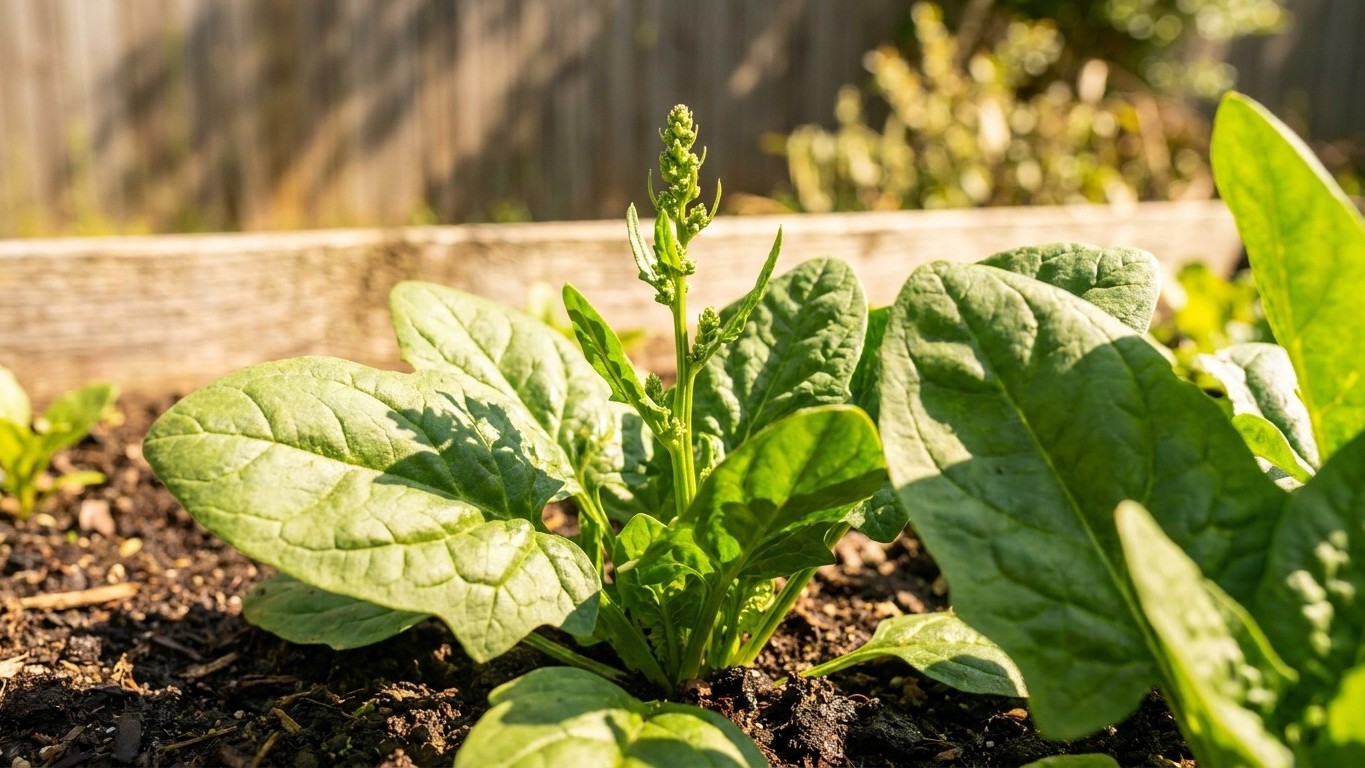
| Tall center stalk, narrow leaves, bitter taste | Bolting | A stalk rising from the center of the rosette. No insect makes that. |
| Torn or shredded leaves on one side of the bed | Hail, wind, tools | Damage all facing one direction, with no slime, droppings or insects. |
Several of these overlap on a single plant, and a leaf can have a tunneling insect and a nutrient shortage at once. Take a leaf or a clear photo to the county extension office before you treat anything. Extension staff can look at the sample and say what it is. A guess from a distance can send you after the wrong cause.
What actually works here, and what is a waste of time
Spinach has a short season in New York. It goes in after the soil thaws and has to be harvested before the heat arrives, or sown late enough in summer for the soil to cool. Timing does more work than any product, and a physical barrier does more than a spray.
What works?
Floating row cover keeps flying insects from laying eggs on the leaves, and that protects the crop from chewers, sap-feeders and tunnelers. The cover goes on the day you sow, with the edges buried or weighted down. Put on after the first holes appear, it only seals the pests in. In a warm spell, check the temperature under the cover, because it can push the bed past the 75 F growth ceiling.
For slugs and snails, clear boards and plant debris from beside the bed, water in the morning so the surface is dry by night, and collect them by flashlight at dusk. Browsing animals call for a fence, and it has to be in place before the seedlings are up, because animals learn where the food is. Sowing early in spring and at the right soil temperature in fall also helps, since a crop that grows fast and clean gives pests less time.
What is a waste of time?
Spraying a leaf after the larvae are tunneling inside it does little, because the insect is already protected by the leaf tissue. Reaching for whatever is left in the garage is worse. A product labeled for roses or tomatoes may not be registered for leafy greens, and registration is set state by state. Which products are registered for spinach in New York is a question for the county extension office. Waiting until a third of the leaves are damaged is also a mistake, because a spinach planting does not have the weeks to recover.
Where to check this for your own county
Your county’s Cornell Cooperative Extension office is the right place to ask. Staff there know what is feeding on vegetables in that county this month, and they can tell you what is registered for use on spinach in New York.
Pest pressure changes inside the state. A feeder that is common near the coast may be rare in the Adirondacks, and the reverse also happens. The frost dates in this article come from the New York City reference station. Upstate frosts later in spring and earlier in fall, so the whole calendar shifts, and so does the timing of the insects tied to it. What is documented for the state does not tell you what is in your yard. For the full season, see Growing Spinach in New York.
Before you call, gather a sample leaf, a clear photo of the underside, and your sowing date. The sowing date tells the office which life stage of the pest you are likely facing. Look up your county’s office before the next sowing, so the question about row cover is answered before the seeds are in the ground.
Common questions
Is it insects or bolting when spinach turns bitter?
Bitterness comes with heat and bolting. Spinach is at its best at or below 75 F, and long days plus warmth trigger flowering. Look for a stalk rising from the center of the plant. Insect feeding leaves holes, trails or sticky leaves, and it does not make a flower stalk.
Does a cool summer upstate protect spinach from bolting?
Not reliably. Long days trigger flowering on their own, and the longest day at the reference city has 14 h 56 of daylight. Cooler weather helps with heat, but it does not shorten the day.
Can you eat spinach with insect damage?
Leaves with a few holes can be washed and used. Trim off tunneled patches and discard any leaf that is slimy or rotting. If you are unsure what caused the damage, a county extension office can look at a sample.
How long does harvested spinach keep?
Two weeks is the ceiling, and only at 32 F with very high humidity, according to the UC Davis Postharvest Technology Center. A home refrigerator runs warmer, and at 41 to 50 F spinach yellows within days. Keep it at the back of the bottom shelf instead of in the door, and plan to use it quickly.