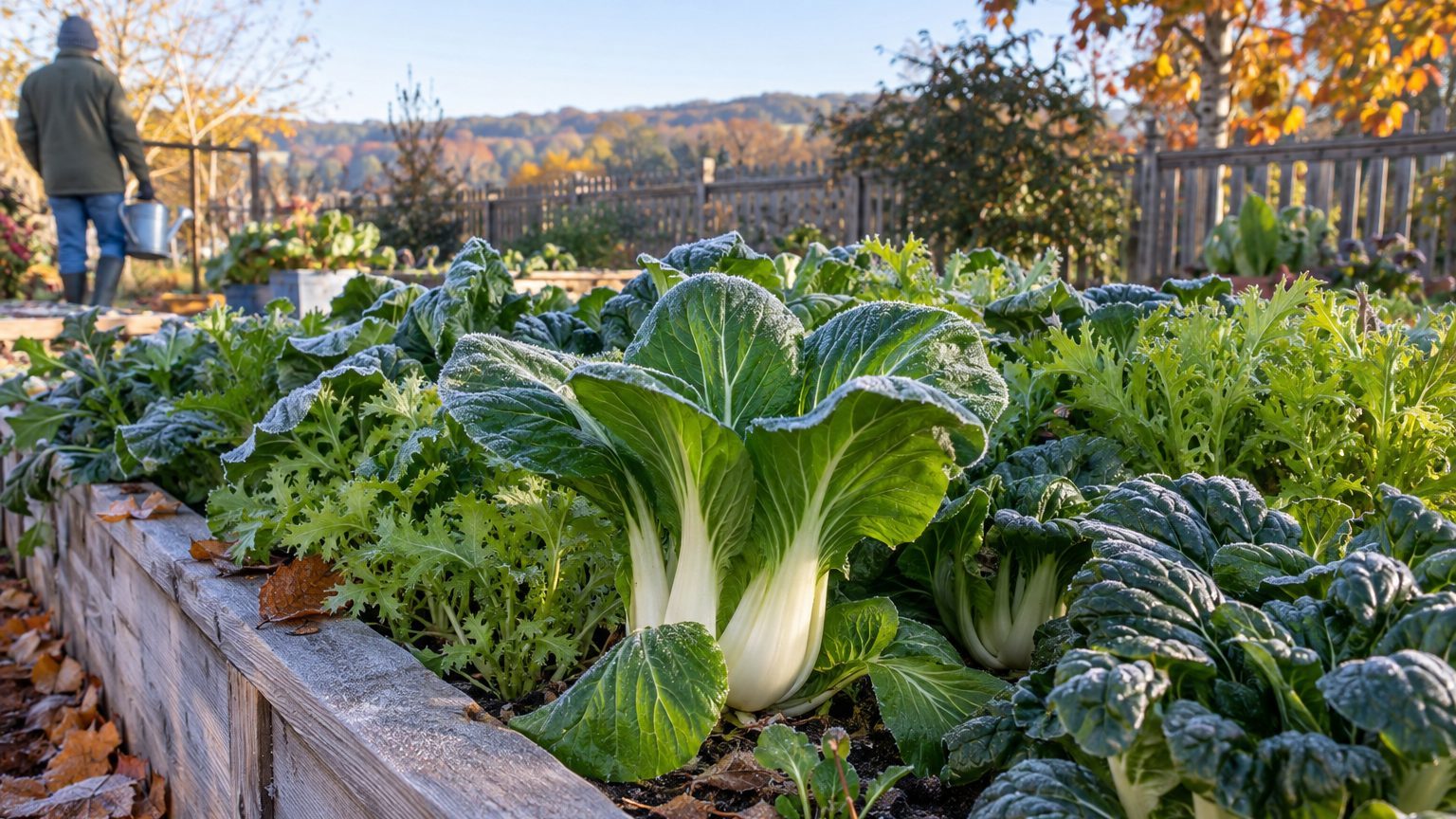

Asian greens taste sweeter after a few frosty nights because the plants turn stored starch into sugar to keep their cells from freezing. The leaves lose some of their bite and eat crisper and milder. Pick too early and you get the sharper version. Wait too long, or let a hard freeze hit the tender types, and you lose the crop. The sweet spot sits between those two.
What is actually going on
Cold response is the mechanism to understand. When temperatures slide toward freezing, a plant senses the drop and changes its chemistry. Enzymes break down starch stored in the leaves and stems into simple sugars, and the plant makes other dissolved compounds too. That matters because sap loaded with sugar freezes at a lower temperature than plain water, and the sugars help shield cell membranes when ice forms in the spaces between cells. The plant is protecting itself. You just happen to taste the result.
How long does it take for greens to sweeten?
Sweetening builds over days of cold weather. A single frosty morning after a warm week does little. Plants harden gradually as cool days and cold nights stack up, and the sugar level climbs along with that hardening. A sudden plunge after a spell of warmth catches leaves unprepared. They get the damage without the sweetness.
Frost itself is the sharpest signal, but cool days in the 40s and 50s matter too. A fall that cools slowly gives the best flavor, because the plant has time to adjust and keeps growing while it sweetens.
Why do the leaves taste milder, too?
The sharp, peppery bite of mustard-family leaves comes from sulfur compounds that are released when you chew. Those compounds do not vanish in the cold. What changes is the balance. With more sugar in the tissue, the same bite tastes rounder and less harsh. Cold-grown leaves also tend to be thicker and crunchier, so a bok choy stalk or a tatsoi rosette picked after frost feels different in the mouth as well as on the tongue.
Roots follow the same logic. Turnips and rutabagas store energy underground, and cold pushes more of it toward sugar. Both are brassicas, which comes up again below.
In the garden
The amount of cold you need depends on the type of green. Tender-leaf types such as tatsoi and mizuna, along with most mustard greens, take light frost easily and are among the hardiest of the group. Heading and thick-stalked types such as napa and bok choy sweeten with cold too, but they have less margin when the temperature drops further. The page on Which Asian Greens to Grow, and How They Differ sorts these by habit. For the varieties that have been trialed in your area, your state extension service is the right source.
| Condition | What it does for flavor | What goes wrong |
|---|---|---|
| Cool days and nights, then light frost near freezing | Sugar starts to build and leaves firm up | Harvest at the first chilly morning and the greens still taste much like summer ones |
| Several nights of light frost in a row | Peak sweetness in the hardy leaf types | Picking or handling leaves while they are still frozen bruises them, and they turn dark and slimy |
| Hard freeze, in the mid-20s °F or colder | The hardiest types often hold, especially under row cover | Heading and thick-stalked types turn translucent and mushy, then rot |
| Sowing so early that plants mature in warm weather | None, since the cold arrives after the crop is done | Plants bolt, and the leaves turn tough and bitter before any frost |
| Sowing so late that plants stay small | Small plants sweeten fine | Growth slows as days shorten, and the cold stops the crop before it reaches a useful size |
Why does this call for a later sowing?
Spring crops race against heat. Fall crops run the other way, and you want the plants to reach size just as the weather cools. That means sowing later than feels natural, in the stretch when summer is still hanging on. For crops sown straight into the ground, the days on the seed packet count from sowing. Add extra time on top, because growth slows as the days shorten. Count back from your average first fall frost and leave a cushion.
Seedlings that come up in warm early fall are a magnet for flea beetles, so Shot Holes in Young Asian Greens is worth a read before you sow. Turnips and rutabagas are brassicas, so they share their pests and diseases with cabbage, kale and mustard. A bed that held any of those last season has not been rotated for them.
Anything you pull ahead of a hard freeze, heads and roots especially, needs a close look before it goes into storage. Check for a soft patch, a weeping spot or a moldy crown. Any one of those ends the question, and the piece goes to the compost pile. A root that looks sound on the outside can still be failing inside, so look and feel it all over.
What it depends on where you are
The chemistry is the same everywhere. A hardened brassica leaf holds more sugar than a summer one, and a hard freeze damages tender types in every state. The timing is local. Season length, summer heat and summer rainfall all change when to sow and how much cold your crop will actually meet.
How do season length and summer weather change the plan?
Where summers are hot and humid, fall cools slowly, so sowing happens late and the plants may sweeten on cool nights without ever seeing a hard freeze. Greens there can stand in the garden for weeks, and bolting and rot in the warm early weeks are the bigger worries. Where summers are short and falls arrive fast, the window to reach size is narrow, a hard freeze can come early, and a cold frame or row cover earns its keep. The same sowing date can be right in one garden and a month off in another.
Rainfall matters as well. Where late summer is dry, seeds need steady watering to come up in warm soil, and a missed week means a thin stand. Where fall is wet, slugs and rot follow the plants into the cool weather, and spacing for airflow starts to pay off. A stand that sweetened well one year can fail the next if the rain pattern changes.
The state pages on this site give the regional picture for your climate, and the main guide to Growing Asian Greens: Fast, Cold-Hardy, and Prone to Bolting covers the habits that hold everywhere. Your county extension office knows your frost dates, the varieties that have done well locally, and the pests active in your area. A call or a visit to the extension website will tell you more than any national rule of thumb.
The mistake that costs the most
The costliest error is pulling the whole crop the day the first frost shows up in the forecast. It feels like the safe move, and it throws away the thing the cold was about to do. Greens harvested before the frost taste like summer greens, with the same sharpness and none of the sugar. Most Asian greens, and especially the hardy leaf types, can take a light frost on the plant without harm. The gardener who rushes out with a knife has saved a crop from a threat it could have handled.
What should you do when the first frost is forecast?
Look at the forecast low and the type of green. For the hardy leaf types, leave them standing through a light frost and start picking a few days later, in the late morning after the leaves have thawed. For heading and thick-stalked types, watch the low. A light frost is fine, but a hard freeze is the signal to cover them with row cover or a sheet, or to cut them. Cut a few leaves each time rather than clearing the bed, so the rest keep sweetening.
If you do pull heads or roots ahead of a hard freeze, check each one before you keep it. A soft patch, a weeping spot or a moldy crown means it goes in the compost. Keep only firm, clean pieces and keep checking them, because looking sound today does not settle it for next week.
Common questions
Does chilling harvested greens in the refrigerator sweeten them?
No. The sugar buildup is a living response that happens in the plant while it is still rooted and working. Once a leaf is cut, it slowly uses up its own sugars, so cold storage keeps flavor from slipping but does not add sweetness.
Are greens safe to eat after they freeze solid?
Leaves that freeze and thaw, then stay firm, green and crisp, are fine to eat. Leaves that turn mushy, slimy, translucent or foul smelling have been damaged, and they should go to the compost. Wait for the thaw before you pick, since frozen leaves break and bruise when handled.
Do all Asian greens get sweeter with cold?
Most of the leaf and root types in this brassica family do, to some degree. The hardy leaf types show the change most clearly and survive the most cold. A plant that has already bolted turns bitter and tough, so cold will not rescue it.
Can I get the same effect in spring?
Only partly. Early spring cold can sweeten plants that overwintered or went in very early, but lengthening days and warming weather push the same plants toward bolting. Fall gives the best conditions, because days shorten and cold arrives slowly.