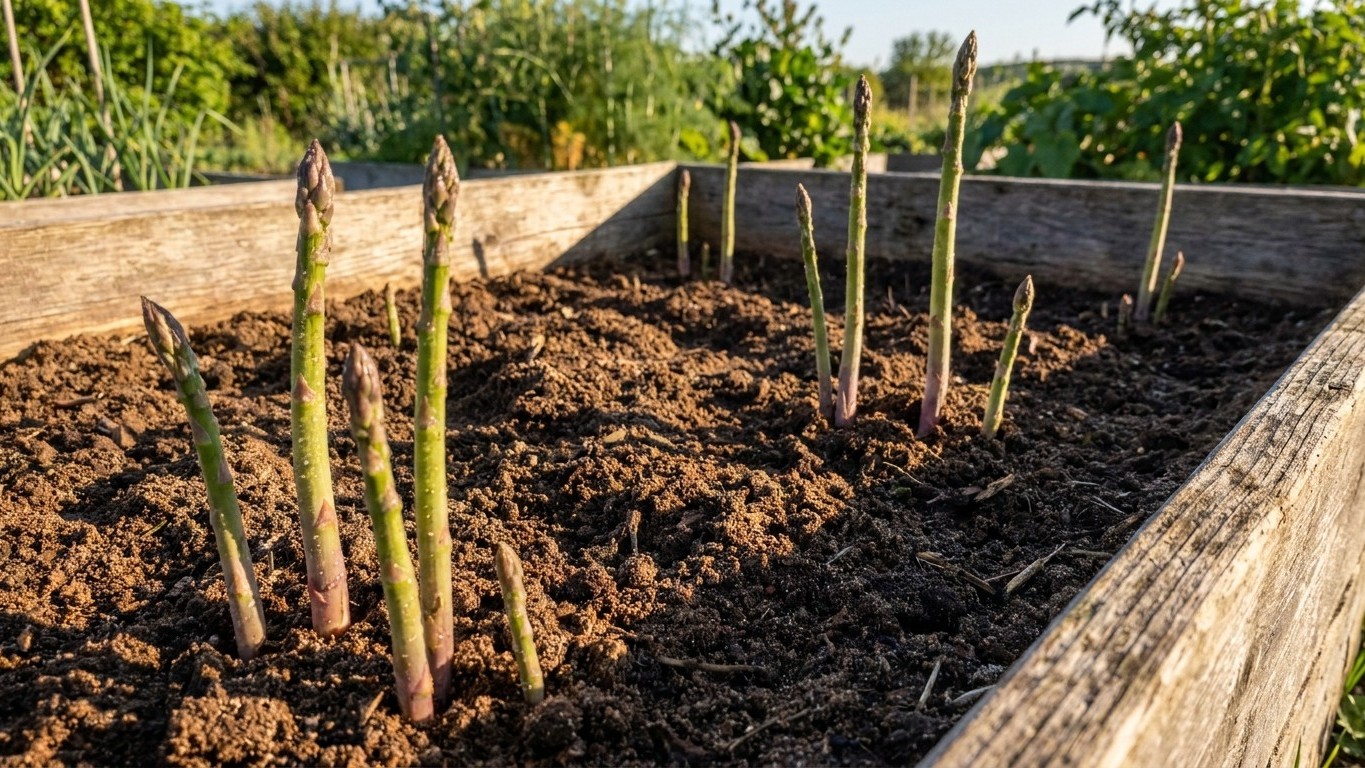

Three groups feed on asparagus in New York: chewing insects that go for the spears, insects that work on the fern after harvest, and larger animals that browse the bed. Each arrives at a different point in the season, and the damage looks different at each stage. Reading the symptom against the calendar narrows the culprit before anyone reaches for a spray bottle, and it keeps a young bed from losing the fern it needs to survive.
Which pests attack asparagus in New York
The county Cooperative Extension offices across New York document which insects and animals feed on garden asparagus in each part of the state. Much of what turns up on a long statewide pest list has no business in an asparagus bed. Borers that tunnel into tree trunks, pests of apples and stone fruit, and lawn grubs all belong to other plants. If a list puts them next to asparagus, treat them as background reading.
What remains are the feeders that go after soft, fast-growing shoots. Chewing insects take bites from spear tips and scrape the surface of the stem. Fern feeders strip or notch the feathery growth once spears have been allowed to open. Browsing animals, from rabbits to deer, clip spears or nibble young fern, and they leave a different edge than an insect does.
The stakes differ by the age of the bed. Crowns go in as 8-inch furrows in early spring, and the plants are not harvested until year 3. Until then every flush of fern is the crown’s only way to store energy for the following spring. Losing fern shortens the life of a planting meant to produce for 10 to 15 years, so the fern is the thing to protect early on.
Presence varies from one county to the next, and a yard that backs onto woods faces different visitors than one in the middle of a village. The county office can tell a gardener which feeders are active nearby this season.
When each one shows up, and what it does first
The calendar hangs on the last spring frost. At the New York City reference station (Central Park, in NOAA NCEI normals), the 32°F freeze probabilities put that date between March 23 and April 3. Central Park is a dense urban site, so upstate New York and the Adirondacks see the last frost later, sometimes by weeks. The sequence is more dependable than the date: spears come up as the soil warms past that frost window, fern follows once harvest ends, and everything else rides on those two events.
Spear season: the first thing to look for
Spears appear in the weeks after the last frost. The first sign of insect feeding is ragged scarring on the stem and chewed tips, usually on spears a few inches tall. Browsing animals leave something else: a spear cut off cleanly at an angle, often with the top missing entirely.
Young beds show a different symptom. Crowns planted in early spring can sit for weeks before shoots break the surface, and a row with gaps or only thin spears points to something happening at or below the crown. That could be insects, but cold, wet soil causes the same pattern, and it is the main reason to be careful before blaming a bug.
Fern season: what shows up after harvest
Spears are cut for a limited window once a bed is old enough: 4 weeks in year 3, 6 weeks in year 4, and 8 weeks after that. The end-of-harvest rule is a look, not a date: stop when most spears are thinner than a pencil. Once cutting ends, spears are left to open into fern, which becomes the feeding ground for the second group of insects. First signs include notched or stripped fern, discolored patches, and sparse growth on the side facing the sun.
Summer rain in New York is steady, with about 13.7 inches across June, July and August. June is 4.54 inches, July 4.6 and August 4.56. That is a figure for the reference station, not a forecast for any one yard, but it means fern often stays damp for long stretches. Damp fern invites trouble that looks like insect damage and is not, which is why the next section matters.
Telling the damage apart from everything else
A lot of what looks like insect damage is not. Cold, drought, a dull knife, wet soil and fungal disease all leave marks that get blamed on bugs. Before treating anything, find the animal or its droppings on the plant. If neither can be found, the cause probably lies elsewhere. The table lays out the common look-alikes and the single sign that separates each one.
| What you see | Common cause | What settles it |
|---|---|---|
| Spear tips blackened or limp after a cold night | Frost injury | Damage follows a night near or below freezing, spears are soft and water-soaked, no chewing marks |
| Spears cut cleanly at a slant, tops missing | A browsing animal | Clean angled cut instead of ragged bites, often several spears in one row affected on the same night |
| Scarred, scraped or chewed stems | A chewing insect | Insects or droppings on the plant, damage concentrated on tips and the sunny side |
| Yellowing fern across the whole row | Waterlogged crowns or end-of-season color | Dig a small test hole beside the row: soggy soil points to drainage, and yellowing in the fall is normal |
| Fern with rust-colored or dusty spots | Fungal disease | Spots rub off as powder and appear on both sides of the plant, with no animal present |
| Bent, split or crushed spears | Mechanical damage | Marks line up with where a foot, hoe or mower passed, with no sign of feeding |
A pattern across the bed also matters. Damage that appears evenly on every plant tends to come from weather or soil. Damage that clusters on one side, near a fence or beside a tree line tends to come from something living. Fungal problems often start in the lowest, wettest corner of a planting.
The Honeoye series, the soil USDA lists as representative of New York, is a well-drained loam to silt, with 26 percent sand, 19 percent clay and 55 percent silt. That describes the state’s typical ground, not any one backyard. Hill country, river bottoms and builder’s fill can behave very differently, and wet crowns cause problems that mimic pest damage. For drainage detail, see Will New York Soil Hold an Asparagus Bed for Fifteen Years? A county Cooperative Extension office can confirm a diagnosis from a photo or a sample when the table does not settle it.
What actually works here, and what is a waste of time
A physical barrier at the right moment beats a treatment. Fencing keeps browsing animals out before the first spear is cut, and it has to be in place early, since a single night can take a flush of new spears. Lightweight row cover can protect young shoots in spring, though it has to come off for harvest and for any pollination in a bed with female plants.
Timing does a lot of the rest. Cutting spears on schedule and then letting fern grow means the plant spends less time exposed in its most vulnerable state. Backfill the furrow gradually rather than all at once. Burying the crowns deep in a single pass smothers shoots and creates the cold, wet conditions that thin out a stand and get blamed on insects. Planting date matters too, and When to Plant Asparagus Crowns in New York covers it.
Cutting down browned fern once it has died back removes the cover that some feeders overwinter in. Checking the bed by hand in the weeks after planting catches a problem while there is still only a little of it.
Several common habits waste effort. Spraying on a schedule before anything has been identified treats a problem that may not exist, and it can harm the insects that keep fern feeders in check. Chasing every nibble in year one is also wasted energy, since a bed that isn’t harvested yet can afford a few lost spears. Stretching the harvest past the 4, 6 and 8 week limits to get ahead of a pest weakens the crown for years afterward.
Only the Extension office knows what is registered for home gardens in New York, so the question of what to apply, and when, goes to them.
Where to check this for your own county
Start with your county’s Cooperative Extension office, part of the Cornell Cooperative Extension network in New York. Staff there see what is moving through local gardens this season, and many counties run a garden hotline or an ask-an-expert form. Bring the photo, the age of the bed and the date the damage first showed up.
What is documented for the whole state does not say what is in one yard. A garden in the Adirondacks or the Finger Lakes sits on a different calendar than New York City, and its pests do too. The same goes for soil. The Honeoye series has a surface pH of about 6.3 and 3.0 percent organic matter, but only a soil test on your own bed gives your own numbers. A rain gauge on the plot settles the question of how wet the summer really is.
For the bigger picture of a bed meant to last, Growing Asparagus in New York covers the full cycle from crowns to the end of the harvest window.
Next step: this week, walk the bed once at dusk and once in the morning, photograph anything chewed or clipped, and send the pictures to the county Extension office before changing anything about how the bed is managed.
Common questions
Can I harvest asparagus in year two if the spears look healthy?
No. Asparagus is not harvested until year 3. Spears left to open in years one and two build the fern that feeds the crown, and cutting them early shortens the life of a bed that can otherwise produce for 10 to 15 years.
When do I stop cutting spears?
Stop when most spears are thinner than a pencil. Harvest runs 4 weeks in year 3, 6 weeks in year 4, and 8 weeks after that, and the pencil test tells you when to quit within those limits.
Does New York’s rainfall change which problems show up?
Summer rain is steady, about 13.7 inches across June, July and August at the reference station, so fern often stays damp. That favors problems that look like insect damage but come from moisture. Drainage and the soil in your own bed decide how much it matters.
Who tells me what is safe to spray?
Your county Cooperative Extension office. It knows what is registered for home gardens in New York. Ask before applying anything, and bring a photo of the damage and the age of the bed.