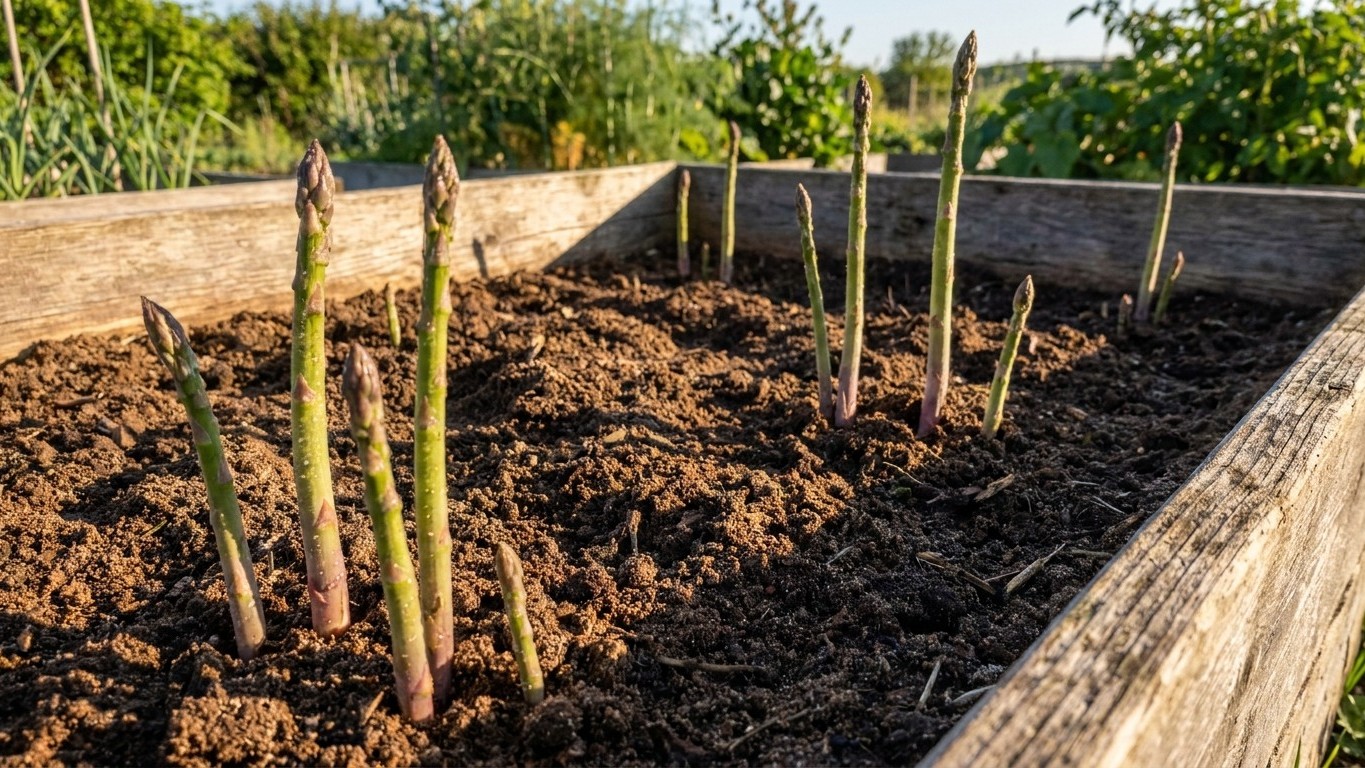

Asparagus has a short list of regular insect enemies, and the damage clusters in two windows: spring, when the first spears push up, and summer, when the ferns are growing. Beetles that chew spears and ferns do the most harm. Cutworms clip young shoots at the soil line. Aphids are a lesser nuisance. Most other insects in the bed are bystanders, and many “pest” symptoms turn out to be dry soil or disease. The sections below sort them by season and symptom.
Which pests attack asparagus in North Carolina
Four insects account for most of what eats asparagus here: the common asparagus beetle, the spotted asparagus beetle, cutworms and aphids. North Carolina Cooperative Extension, through its county centers, is the office that confirms which of them are active near you. A statewide list says what can occur, not what is in your row.
The common asparagus beetle is a slim, blue-black beetle with cream-colored markings on its wing covers. Adults and larvae both chew, and the adults glue small dark eggs to spears and ferns, standing on end like tiny pegs. The spotted asparagus beetle is orange-red with black spots. Its larvae develop inside the red berries that female plants set, which is one reason an extension agent may ask whether your plants are male or female. Varieties such as Jersey Giant and Jersey Knight are all-male and set no berries. UC 157 F1 and Purple Passion produce both sexes.
Cutworms are fat, gray-brown caterpillars that curl into a C when disturbed. They hide in the soil by day and feed at night, which is why the damage appears with no culprit in sight. They often come along with turf ground, so they matter most if the bed was cut out of sod. Aphids are small, soft insects that cluster on fern tips and branches. They suck sap and leave a sticky film. A healthy established bed usually tolerates them.
Soil matters too. The USDA NRCS lists the Cecil series, an old, heavily weathered Ultisol, as the representative soil of North Carolina. Its surface is sandy, at 68 percent sand, 13 percent clay and 20 percent silt, with about 0.8 percent organic matter, and it drains well. That is a good start for a bed meant to last, since asparagus is planted as crowns and produces for 10 to 15 years in soil that drains. It is also soil that dries fast, and drought stress is the great impostor in this crop. The state soil does not describe every yard, though, and a soil test tells you what your own bed has.
When each one shows up, and what it does first
Asparagus crowns go into 8-inch furrows in early spring, according to Utah State University Extension. NOAA NCEI climate normals put the last spring freeze at the Charlotte reference station between March 23 and April 5. The mountains run several weeks later, and the coastal plain runs earlier. Count your pest calendar from the day the first spears emerge, not from a date on the wall. Planting date and local warmth shift everything.
Cutworms come first. In the first weeks after shoots break the surface, the early sign is a missing shoot or a stem snipped clean at ground level. The cut piece may lie beside it or be dragged off. Scratch the top inch or two of soil near the stub in daylight and you may find the curled caterpillar.
Beetles follow as the soil warms and spears keep coming. Adults overwinter in plant debris and wake up when spears appear. The first thing you see is brown scarring or chewed patches on the spear, often with a bent tip, plus the small dark eggs. Larvae hatch a short time later and chew spears and then ferns, leaving a ragged, silvered look.
Through summer the ferns carry the plant. The three summer months bring about 12.1 inches of rain at the reference station, with July the driest at 3.74 inches (NOAA NCEI Monthly Climate Normals). Hot, dry spells are when aphids multiply on fern tips and when sandy ground starts to stress the plant. Spotted beetle larvae show up with the berries on female plants.
The calendar also depends on the age of the bed. Do not harvest at all until year 3. Then harvest lightly, and let the bed build strength from year to year. Stop when most spears are thinner than a pencil. In the first two years the ferns are the part that counts, because they feed the crowns, and chewed ferns cost you spears later.
Telling the damage apart from everything else
Many asparagus problems look alike from the porch. The table below separates the usual insect damage from the usual look-alikes. These are signs to look for, not a diagnosis, and a county extension office can confirm what you have.
| What you see | Insect cause | Look-alike | What settles it |
|---|---|---|---|
| Brown scars or chewed spots on spears | Beetle feeding | Hoe or knife nicks, wind scuffing in sandy soil | Insect damage comes with dark eggs or larvae. Mechanical damage has clean or sandy edges and nothing alive on it. |
| Shoot gone or cut at the soil line | Cutworm | Rodent or rabbit browsing | A cutworm leaves a ragged stub near the soil and a curled caterpillar nearby. Browsing usually takes the top and leaves a clean angle. |
| Ferns yellowing or browning in summer | Beetle larvae, aphid sap loss | Dry soil, rust, nutrient shortage | Check the soil first. Orange powder that rubs onto a finger points toward a fungal disease. Pale growth across the whole bed points toward a soil test. |
| Soft, sunken spears or poor emergence | Rarely an insect | Waterlogged crown, rot | Standing water or slow drainage after rain. |
Dry soil deserves the most suspicion in summer. Sandy ground can drain through in a day, so a normal-looking rainfall total can still leave the plant thirsty. Push a finger several inches into the soil before you blame an insect.
Nutrient problems are just as common. The Cecil series is naturally low in nutrients, per USDA NRCS, so a uniformly pale, thin bed with no insects on it is a question for a soil test, not a sprayer.
What actually works here, and what is a waste of time
Physical steps beat spraying in an asparagus bed. Pick beetles and larvae by hand and drop them into soapy water, since they fall off readily when you jostle the fern. Scrape off eggs with a thumbnail. During the harvest weeks, cut every spear, including thin ones, and take them out of the bed. A spear left standing becomes a nursery for the next generation of beetles. In late fall and winter, remove old fern debris, because that is where adult beetles overwinter.
Timing does more than any product on a short season. Find the pests in the first weeks after spears emerge and you will usually stay ahead of them. For cutworms, check at ground level early in the morning, hand-pick, and keep the soil surface free of leftover debris and weeds that give them cover. Backfill the furrow gradually across the first year, and use each pass to look over the soil surface for curled caterpillars. A light fabric cover on young plantings can keep beetles off ferns in the first two years. It has to go on before adults arrive and come off for any spear you plan to harvest.
Some common efforts are wasted. Spraying a harvested bed in the middle of the cutting season does not fix the damage already on the spears, and it puts a product on food you are about to eat. Spraying only on the day you notice a problem is late for cutworms, which work at night and hide in the soil. Cutting back ferns in summer to remove beetles starves the crowns. Overhead watering will not wash eggs off, because they are glued on.
Which products are labeled for asparagus in North Carolina is a question for North Carolina Cooperative Extension. Labels change, and the county agent knows what is registered for a home garden and what is not. Ask before you buy anything.
Where to check this for your own county
North Carolina Cooperative Extension has a county center, and the agents there deal with garden asparagus questions in their own area. Search for your county’s center, call it or stop by, and bring a sample. A few damaged spears or fern tips in a sealed bag, plus a photo of the whole row, are far more useful than a description.
Your county center can also run a soil test, which separates a nutrient shortage from an insect problem faster than any guess. Ask about drainage if your bed sits low or sits on fill, since the crop stays for 10 to 15 years.
Before you call, find the answers to three questions: when the first spears came up this year, what you saw first, and whether the bed is in year 1, 2 or past year 3. For planting dates and bed layout, see When to Plant Asparagus Crowns in North Carolina. For drainage questions, see Will North Carolina Soil Hold an Asparagus Bed for Fifteen Years?. The full overview is Growing Asparagus in North Carolina.
Common questions
Can I harvest spears that beetles have chewed?
Do not harvest in years 1 and 2 at all, whatever the damage. From year 3, harvest lightly and let the bed build strength from year to year. Light scarring on a spear is cosmetic, but trim any chewed spot before cooking, and remove spears with eggs on them from the bed.
When should I start looking for pests after planting crowns?
Start when the first shoots break the surface, which depends on how warm the soil gets after planting in early spring. In the Charlotte area the last spring freeze falls between March 23 and April 5, and shoots follow the warming soil. Check at ground level for cutworm stubs first, then for beetle eggs on spears.
Does the sandy soil change which pests I see?
Cecil soil is 68 percent sand and drains well, so it mostly changes how the plants react to stress. Fern yellowing in July, the driest summer month at 3.74 inches of rain, can come from dry soil as easily as from insects. Check soil moisture before treating for pests.
Who can tell me what is in my bed?
Your county center of North Carolina Cooperative Extension. Bring a sample and a photo, and ask what is registered for home garden asparagus in the state.
Sources : carteret.ces.ncsu.edu | stem.plantsforhumanhealth.ncsu.edu