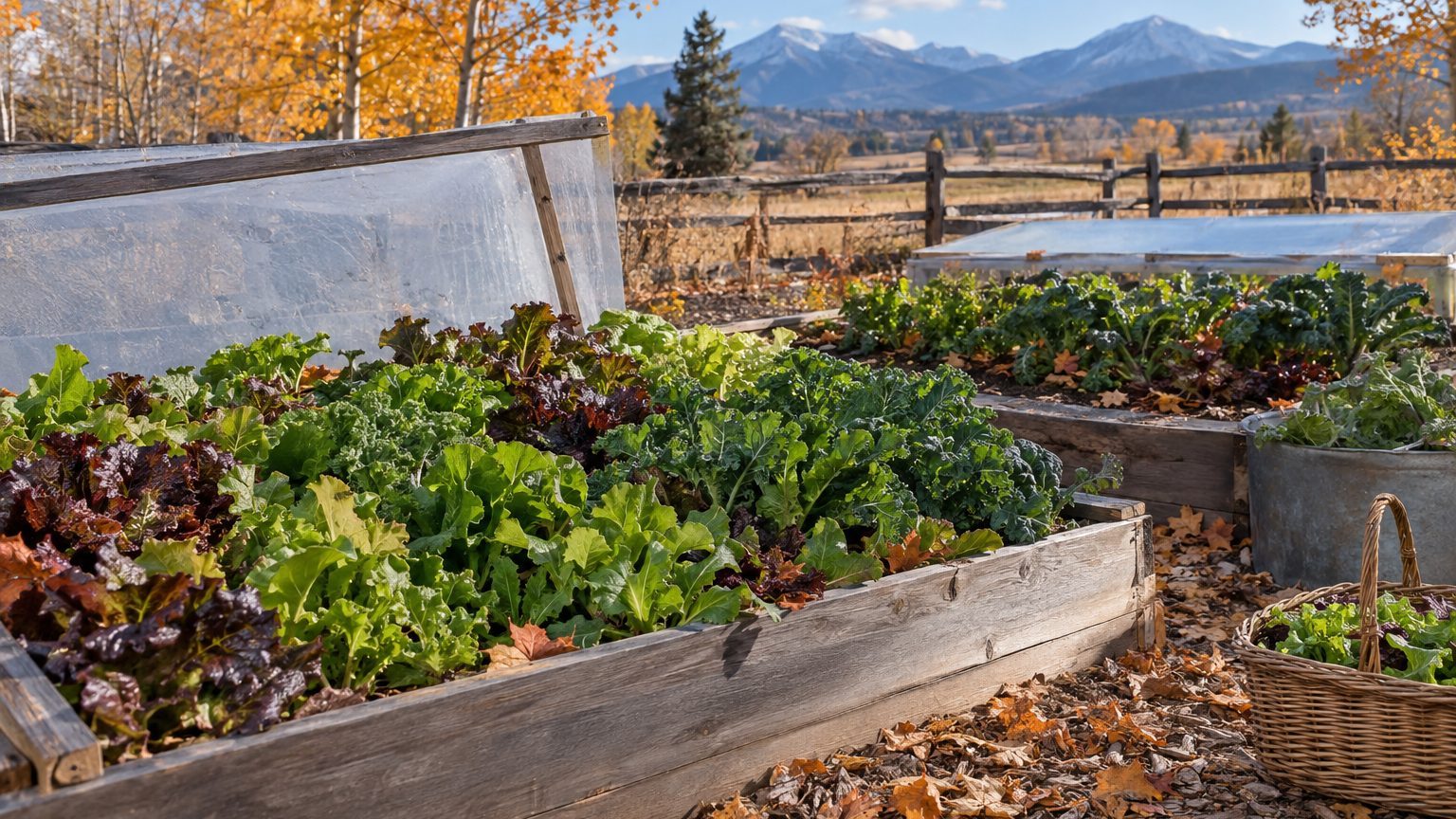

California winter salads usually fail in October, not January, because the seed goes into beds still holding summer heat. Lettuce sulks in warm soil and comes up in patches, and the seedlings that survive bolt or turn bitter before you cut a leaf. In Los Angeles the cold never gets a say in this. Push your hand into the bed at dawn and sow only when the soil no longer feels warm.
When the soil is warm enough in California

What the frost record says
The frost-date question has an unusual answer here. NOAA’s 1991-2020 climate normals for Los Angeles return no computable freeze date (the dataset flags it with code -666), and NOAA’s ACIS daily records show zero days at or below 32 F in 30 years. No freeze occurs in an average year at the Los Angeles reference station. That is a probability drawn from a record, not a promise, and it describes one place. Northern California, the Central Valley and the Sierra do freeze, so a gardener in Sacramento or Truckee cannot borrow this calendar.
A frost date is only a stand-in for what you actually need, which is soil temperature. In a cold-winter state you wait for the last spring frost to pass and then for the soil to warm behind it. Los Angeles has no frost date to wait for, so the stand-in fails, and the soil is the only signal left. Lettuce, spinach and several of the leafy mustards germinate poorly in warm ground, and a bed that has baked since June stays warm well after the calendar says fall.
Reading the soil instead
Check the bed early in the morning, when it is at its coolest, and check it at seed depth rather than on the surface. A cheap soil thermometer pushed in a few inches does the job. The seed packet or your county’s UC Agriculture and Natural Resources office will give the germination range for each crop, and you sow when the bed reads inside that range, not when a date arrives.
You can help the bed along. Water it deeply for several days, lay a board or shade cloth over it to keep the sun off, and pull the cover only when you are ready to sow. Sow in the evening so the seed spends its first night in cooling ground. If a heat spell is forecast, hold the seed packet back a week. Seed kept dry in a drawer loses nothing, and seed sown into a hot bed loses everything.
The crops differ in how much warmth they forgive, and the greens that tolerate warm ground better than lettuce are the reason the whole group is worth growing. You will find them sorted in Winter Salads: What Grows When Lettuce Will Not.
How long the season lasts here
The arithmetic
NOAA’s 1991-2020 normals list the frost-free season at Los Angeles as 365 days. Both the last spring freeze and the first fall freeze are absent from the record, so there are no two dates to subtract, and the window is simply the whole year. That number belongs to Los Angeles. The USDA Plant Hardiness Zone Map (2023 edition) runs from zone 5a to zone 11a across California, which tells you how much the state varies. In the colder zones the frost-free season is far shorter, and a first sowing there may be the only one.
A 365-day window is not a 365-day salad season. Heat shuts lettuce down in summer, and the short light of December and January slows every leaf crop to a crawl. The frost record removes one limit, the freeze, and leaves the other two standing.
What a full-year window allows
The first thing it allows is repeated small sowings. Instead of one long row that all matures in the same fortnight, you sow a short row every few weeks through the cool months and cut from each as it comes ready. Nothing ends the crop abruptly, so a failed sowing costs you a few weeks rather than a season. The succession approach works especially well here for that reason.
The second thing is a change in why you transplant. Where a short season forces you to start seed indoors to gain time, in Los Angeles you start seed in a shaded tray to escape heat, then set the seedlings out once the bed has cooled. Leaf lettuce, chicories and kale tolerate the move well, so the root check matters less than it would in a short-season garden. Arugula and other fast, tap-rooted greens are better sown where they will grow.
The third is patience with the calendar. Because nothing dies at a set date, you can sow late in the season and simply harvest smaller leaves as baby greens. Gardeners in states where a freeze does set the deadline plan the other way round, and you can compare that timing in Winter Salads for Georgia Gardens and Winter Salads for North Carolina Gardens.
Heat and water in California

The cold is not the limit
NOAA’s 1991-2020 normals put the mean daily minimum of the coldest month at 49.1 F at Los Angeles. That is an average night in the coldest month, not a record low, and it sits well above freezing. Growth slows on cool nights, but the leaves do not blacken. Inland valleys and foothill sites run colder, so check your own minimums before you put the row cover away for good.
The same reasoning applies to the last sowing date. In a freeze state, the first fall frost sets how late a sowing can still reach useful size. Here no frost does, so the light does. A sowing made after the days have shortened sits small for weeks, and you are better off sowing earlier in fall and cutting young.
Heat and water do the deciding
Watch your own garden for hot days and summer rain, and check with your local county extension office for local figures. Your local county extension office can point you to the figures for your area, and it is worth asking. What you can rely on without a number is the pattern: southern California summers are dry, the rain arrives in the cooler months, and early fall can still deliver heat waves that scorch tender seedlings.
Almost all the water your salad gets will therefore come from you. Water districts set their own watering rules, and they change from year to year, so read your district’s current rules before you plan an irrigation schedule. A few habits keep water use low and the crop steady:
- Run drip line or a soaker hose, so water lands on the root zone and not the leaves.
- Mulch the bed once seedlings are up to slow evaporation.
- Water in the morning, so foliage dries before night.
- Shade newly set transplants with cloth during a warm spell.
Near the coast the problem flips. Fog and damp nights bring downy mildew and slugs to lettuce beds, and leaves that stay wet after dusk are where trouble begins. Airflow between plants matters more than extra water, so thin seedlings early and keep the beds free of weeds.
Which winter salads suit California
The right choice depends on which of your two problems is bigger, heat or dampness. Sort the crops by type and match them to your garden.
| Type | Where it fits | Watch for |
|---|---|---|
| Loose-leaf lettuce | Cut-and-come-again rows in cool months | Bolting and bitterness in warm spells |
| Arugula, mizuna, mustard greens | Fast baby leaves from repeated sowings | Bolting when the weather warms |
| Spinach | Cooler beds once the soil has cooled | Poor germination in warm soil |
| Chicories (escarole, endive, radicchio) | Gardens with swings between warm days and cool nights | Bitterness, which suits some cooks and not others |
| Kale and chard as baby leaf | Sturdy, long harvests in exposed spots | Aphids in mild weather |
| Corn salad (mâche) | Cool corners and containers | Slow growth and small leaves |
Choosing for heat or for damp
If your bed gets afternoon sun in fall, favor the chicories, kale and chard, which stay sound where lettuce goes limp, and put lettuce and spinach on the shadier side of a taller crop or fence. Give each plant room, because crowded rows hold humidity. If you garden near the coast, disease resistance becomes the first thing you read on a seed packet, ahead of flavor. Look for the mildew resistance the packet lists, and keep rows open to the breeze.
Containers suit this list well. A pot can be moved into shade during a heat wave and out into the sun as nights cool, which a bed cannot do. Everything here is grown in beds and containers from seed or nursery transplants, and none of it should be gathered from the wild.
Why no lettuce varieties are named
California runs from coastal fog to desert heat to mountain snow, and a lettuce that thrives in one place will bolt in another. The varieties trialed near you are the only recommendation worth following. Ask UC Agriculture and Natural Resources, the state’s university extension service, or your county office, which knows what has been tried in local soil and local fog.
Common questions
Can I sow lettuce during an October heat wave in Los Angeles?
You can, but you will waste seed. Wait until the heat breaks and the bed has cooled, then sow. If you cannot wait, shade the bed and water it deeply first, and sow in the evening.
Does this timing work in Sacramento or the Sierra foothills?
No. The frost facts here come from Los Angeles, where no freeze occurs in an average year. The Central Valley and the mountains do freeze, so their salad calendars run on frost dates and their local extension office is the place to get them.
Can I grow winter salads in pots on a south-facing patio?
Yes, with care. South-facing pots heat quickly in early fall, so start seedlings in shade and move them out as the weather cools. Use a container deep enough to hold moisture, and check it daily, since pots dry out faster than beds.
My lettuce keeps turning bitter. Is it still worth eating?
Bitterness usually means the plant is bolting from heat or age, and it will not improve. Cut what is still tender, pull the rest, and resow in cooler soil. Cutting leaves young and often delays it.