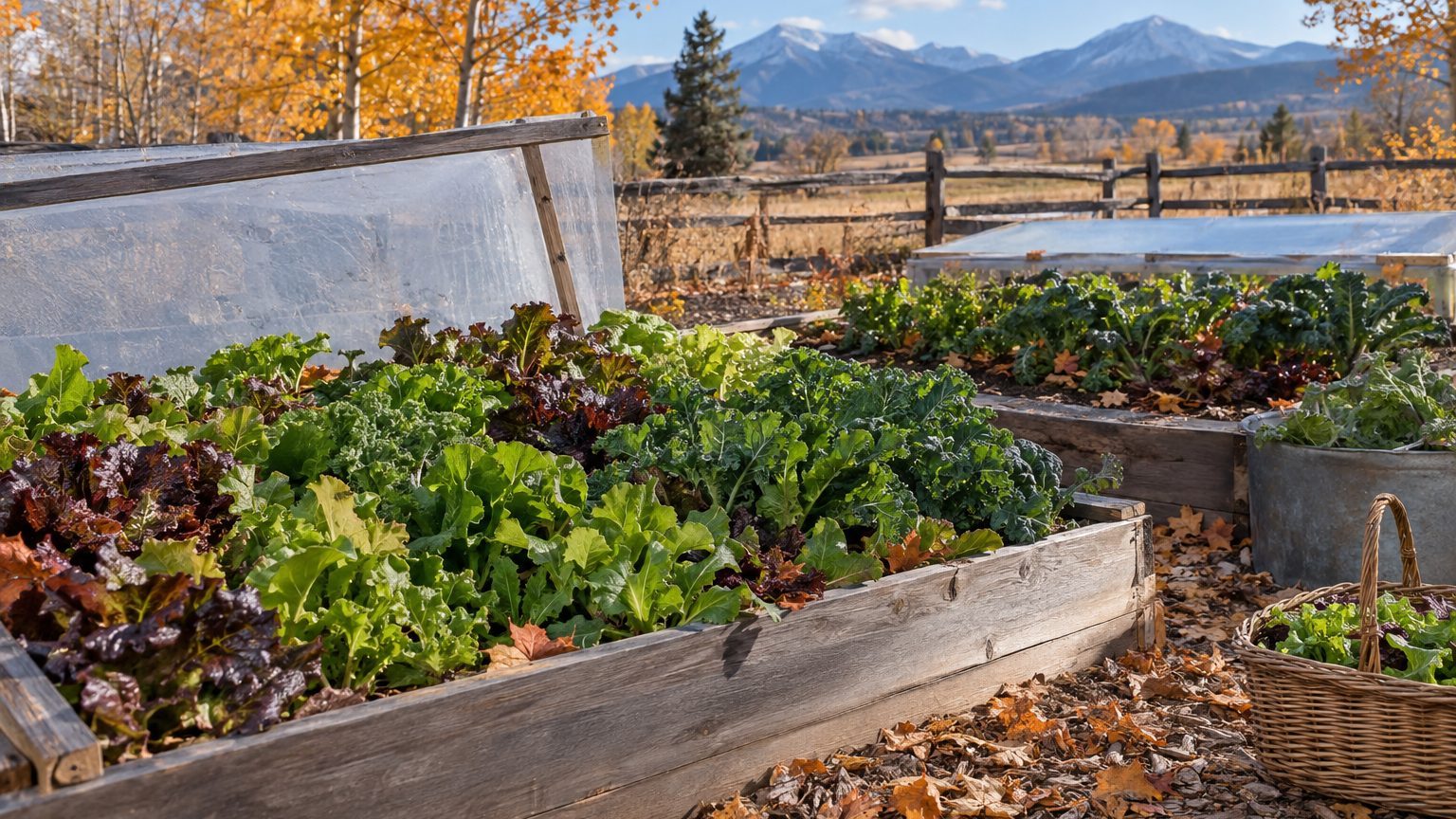

In North Carolina, winter salads are sown in late summer and fall, then cut through the cold months. The anchor date is the first fall frost, October 30 to November 8 at Charlotte, and the long season on either side of it leaves room for two sowings. Heat at sowing time and humidity-driven disease cause more trouble here than winter cold does, and the sections below take them in that order.
When the soil is warm enough in North Carolina
The date gardeners ask about is the last spring frost, and for Charlotte it is March 23 to April 5. That range comes from the NOAA NCEI U.S. Climate Normals 1991-2020, using the band where the probability of a 32F freeze sits between 30 and 70 percent. It is a probability, not a promise, so a late freeze in mid-April can still happen.
Charlotte sits in the Piedmont. The Blue Ridge mountains to the west run several weeks later in spring, and the coastal plain runs earlier. Check which of the three you garden in before you copy any date from this page.
The frost date is also only a stand-in. Seeds care about soil, not air, and soil warms after the frost risk has passed, not at the same moment. A bed can be frost-safe on paper and still be cold and wet enough to rot a seed or stall a seedling. A cheap soil thermometer pushed a couple of inches into the bed tells you more than the calendar does.
For winter salads the soil question runs both ways. In spring, the cool-season greens (lettuce, spinach, arugula, mizuna, mâche, claytonia, endive and chicory types, baby kale) go in as soon as the bed is workable, and the frost date tells you when the early risk is behind you. In late summer, the opposite problem shows up. Soil that is still hot from July can keep lettuce-type seed from germinating well. Sowing into a bed shaded for part of the afternoon, watering it lightly each day until the seedlings are up, and sowing in the evening all help with that.
The first fall frost works as the closing date. It falls October 30 to November 8 in the same NOAA Charlotte normals. Count backward from it, using the days-to-maturity printed on your seed packet, and add a cushion, because growth slows as the days shorten. That count tells you the last sensible sowing date for each type.
Varieties matter more than types here, and this page cannot name them honestly. The cultivars that have been trialled in your county, and that perform in your soil, are listed by NC State Extension. Your local county center can tell you what has done well in the mountains, the Piedmont or the coast. This page grows salad in beds and containers, and that is the only way it covers it.
How long the season lasts here
Subtract the dates and the numbers are clear. From the late end of the spring frost range (April 5) to the early end of the fall range (October 30), the window is 208 days. From the early spring date (March 23) to the late fall date (November 8), it is 230 days. So a Charlotte gardener has roughly seven months between frosts, give or take, depending on how the probabilities fall in a given year.
What a window that long allows
Seven months is generous. It allows two real sowings of a cool-season salad crop: one in early spring, and one in late summer for fall and winter cutting. In a colder place, the first sowing would be the only one. Here, a gardener can sow a short row, wait a couple of weeks, and sow another, so the bed never delivers everything at once and then bolts.
It also changes the transplant decision. Where the season is short, starting lettuce, endive or kale in trays and moving them out saves weeks, and the root check is worth paying. Where the window is long, direct sowing costs you nothing in time, and it spares roots that dislike being disturbed. Mâche, claytonia and arugula are better sown in place. Heading types and kale transplant easily and can be held in trays through a hot spell until the bed cools down.
One caution: the frost-free window is a number for tender plants. Hardy winter greens keep growing past that first frost, and some give their best cutting after it. What the 208 to 230 days measure for winter salads is how long you have to get plants to a decent size before the light fades and growth slows. For how to space those sowings, see the succession sowing guide on this site. The parent piece, Winter Salads: What Grows When Lettuce Will Not, covers the broader logic.
Mountain gardeners should expect a shorter window than 208 days, since the spring frost comes weeks later there. Coastal gardeners get a longer one. I have not put a number on either, because the source behind this page is a Charlotte station and a guess would be only that.
Heat and water in North Carolina
This page does not carry a count of days above 90 F for Charlotte, or a summer rainfall total, so it quotes neither. What can be said without them is qualitative. Piedmont summers are hot and humid, and that shapes two moments in the winter-salad calendar: sowing in late summer, when soil heat can stall germination, and the weeks of warm, damp weather that favor leaf diseases like mildew. A cool, damp summer brings the same diseases in a different form, along with slow ripening, which is what the British Columbia winter salad page deals with. For a plains state where heat arrives differently, see Winter Salads for Oklahoma Gardens.
Once summer is behind you, though, the cold does the deciding. At the Charlotte reference station, the mean daily minimum of the coldest month is 31.8 F (NOAA NCEI Climate Normals 1991-2020). That is the average low on an ordinary January night, not the record low. It sits just below freezing, which means a typical night is a light freeze rather than a hard one, and the unusual cold snap is what you plan for.
Across the state, the USDA Plant Hardiness Zone Map 2023 runs from 5b to 8b. That system rests on a single variable, the average annual extreme minimum temperature, and the spread is wide: the mountains are far colder than the coast. Treat 31.8 F as a Piedmont figure, not a statewide one.
Sorted by what that winter does to them, the types fall into three groups:
| Group | Types | In a Piedmont winter |
|---|---|---|
| Usually stand uncovered | Spinach, mâche, claytonia, kale, many chicory types | Expect them to hold through typical nights, with tougher leaves in a hard freeze |
| Need a cover to stay edible | Lettuce, arugula, mizuna, tender endive | Row cover or a low tunnel on the coldest nights keeps leaves from frost damage |
| Cannot manage | Basil, cucumbers, other warm-season salad crops | Finished at the first frost |
That table is a general guide, not a hardiness rating for any cultivar. A cover here means a lightweight fabric over hoops, or a cold frame, placed ahead of a forecast freeze and pulled back on mild days so the plants do not overheat.
The first frost also sets the limit on late sowing. Count back from October 30 to November 8, as in the first section, and sow early enough that plants reach a cuttable size before the days shorten. A seedling that is still tiny in December will sit and wait for spring, which is not useless, but it is not a winter harvest.
Which winter salads suit North Carolina
Choose by type, matched to the facts of the place. The state has one long season, humid summers and winters that hover around freezing in the Piedmont, so the criteria are fairly clear.
| What North Carolina brings | What it favors |
|---|---|
| Humid weather, in late summer and spring | Types and varieties described as disease-resistant, planted with room for air to move |
| Hot soil at late-summer sowing | Types that germinate reliably in warmth, given afternoon shade and steady moisture at the root |
| Piedmont winter lows near freezing | Hardy greens for open beds, tender ones under cover |
| A shorter mountain season | The earliest-maturing types, sown promptly |
Humidity puts disease resistance first on the list. Wet leaves in warm weather invite mildew and rot, so wide spacing, drip or soaker watering at the root instead of overhead, and watering in the morning so foliage dries by evening all count for more than any single trait on a seed packet. Rotating beds from year to year, so the same family does not sit in the same soil, is the other practice that helps.
For hot sowing conditions, think airflow and shade at the root. A bed that gets afternoon shade, or a bit of shade cloth over a late-summer sowing, keeps soil cooler during germination. Mulch between rows holds moisture and keeps splashing soil off the leaves.
This page names no varieties, and that is deliberate. A variety recommendation only means something if it has been grown and compared in conditions like yours, and this page has no trial data. NC State Extension and the county centers publish what has been tested in the mountains, Piedmont and coast. A cultivar that does well in Asheville may struggle near Wilmington, and the reverse is just as true.
Common questions
When should I sow winter salads in North Carolina?
Work backward from the first fall frost, October 30 to November 8 at Charlotte. Take the days-to-maturity on the seed packet, add a cushion for slowing growth, and that gives you the last sowing date for each type. Late summer into early fall is the usual range, but the exact day depends on your location and the crop.
Do I need a row cover for winter salads here?
For hardy types such as spinach, mâche and kale, often not in the Piedmont, where the coldest month’s mean daily minimum is 31.8 F. Lettuce and similar tender types do better with a cover on the coldest nights. Mountain gardens, in colder zones, will want more protection.
Do the Charlotte frost dates apply to the mountains and the coast?
No. Charlotte is in the Piedmont. The Blue Ridge runs several weeks later in spring and the coastal plain earlier, so the 208 to 230 day window shifts accordingly. Your county extension office can tell you the local dates.
Can I grow winter salads in containers?
Yes, and it is a good way to put greens near the kitchen door. Pots dry out faster than beds and swing more with the weather, so water them more often and expect roots to chill faster on a freezing night. Move them against a wall or under cover when a hard freeze is forecast.