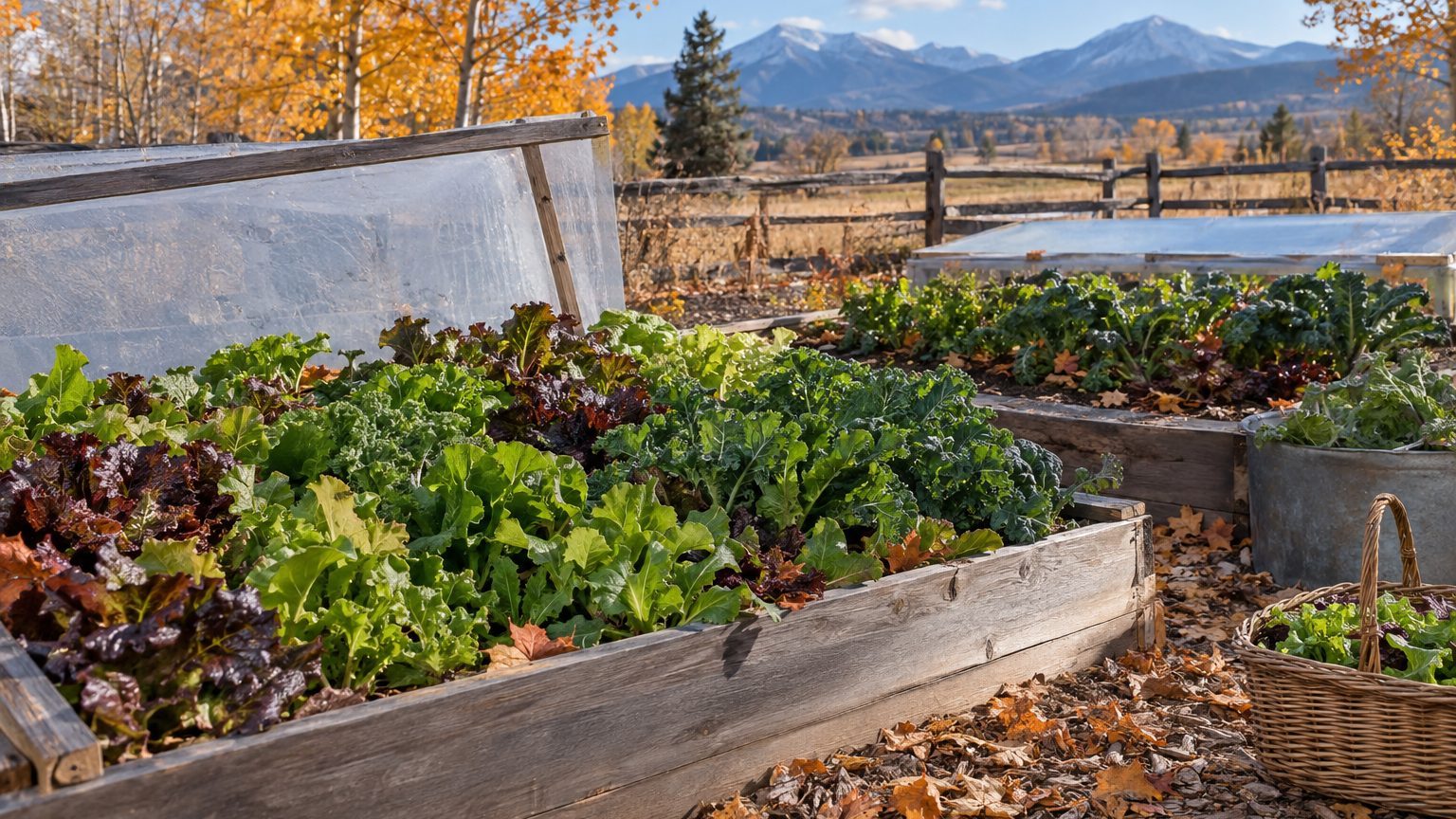

Connecticut’s winter salad beds are sown in late summer and early fall, not in winter, and the harvest carries on through the cold months under a light cover. Nothing you sow after the light fades will grow much before spring. Find a sunny bed that drains well, note your own first fall frost, and sow the hardy greens while the soil is still warm.
When the soil is warm enough in Connecticut

NOAA’s 1991-2020 climate normals for Bridgeport put the last spring freeze between April 2 and April 12, using the 30 to 70 percent probability band for a 32F reading. Bridgeport sits on Long Island Sound and is the mildest part of the state, so inland and northwest Connecticut freeze later in spring. That range is a set of odds, not a promise, and a freeze after it is possible in any year.
Treat the frost date as a stand-in. Salad greens respond to soil, and soil trails the air. It warms after the frost risk ends, not on the same day. A cheap soil thermometer pushed an inch or two down at sowing depth tells you more than the calendar does. For the exact soil temperatures each crop wants, ask your extension office and read the seed packet.
Spring: a quick first sowing
Cool-season greens are the ones you can sow early. Spinach, mâche, arugula and the small mustard greens will sprout in soil that would rot a bean seed. Once the ground has thawed, drained and crumbles in your hand, you can sow them, and the spring frost range is a reasonable guide to how much protection young seedlings might need. These sowings give you salad in spring. They are not your winter crop.
Late summer: the sowing that feeds winter
The winter harvest comes from seed sown when the ground is at its warmest. For a Connecticut garden that turns the soil question upside down. The risk is soil that is too hot, not too cold. Lettuce seed in particular can refuse to sprout in hot soil, so water the row well before sowing, shade the bed with a board or cloth until seedlings show, and sow in the evening. Spinach and mâche are also happier once the soil has cooled a little, so a bed that stays hot in late August can wait a week.
Work backward from your first fall freeze. Bridgeport’s normals, covered below, give a range, and inland gardens will see it sooner. You want plants at a cuttable size before the days shorten and growth slows to a crawl. Our overview, Winter Salads: What Grows When Lettuce Will Not, lists the crops that suit this schedule. The varieties that have actually been trialled in Connecticut soil are a matter for your extension service.
Everything here is grown in beds, raised boxes and containers. Buy seed, sow it, cut it. That keeps the crop clean and lets you control the bed, which matters when you are covering it for months.
How long the season lasts here
NOAA’s 1991-2020 normals for Bridgeport give a first fall freeze between October 28 and November 10. Set that against the last spring freeze of April 2 to April 12 and the frost-free stretch runs from roughly 200 days, counting April 12 to October 28, to roughly 220 days, counting April 2 to November 10. Those are the two extremes of the ranges, so the real figure in any year falls somewhere between them. Inland Connecticut, where freezes come earlier in fall and later in spring, has a shorter window than the coast.
What roughly 200 to 220 days allows
That is long enough for two sowings in the same bed, and for a third if the first is a quick crop. A spring sowing of arugula or a small mustard gets cut and cleared by early summer. The bed then takes a fall sowing of hardier crops with time to spare. Winter salads are a succession, not a single event. Stagger the fall sowings at intervals so that not every row reaches cutting size at once and not every row is at the same stage when the first hard freeze arrives. The details of spacing those sowings belong in a succession sowing guide.
The window also settles whether transplanting is worth the effort. Because the season is this long, direct sowing is enough for the hardy greens, and it spares them the root check that comes with moving a seedling. Transplants earn their place in one situation. Lettuce, endive and escarole germinate poorly in hot ground, so you can start them in trays in a shaded spot, then set them out gently as the weather cools. Handle the plugs by the root ball, plant them at the same depth they grew, and water them in.
The window is not the harvest
A frost-free count measures how long tender plants grow. It does not measure how long your salad lasts. Hardy greens keep living, slowly, after the first freeze, and a cover keeps the leaves in edible condition. Still, the light matters more than the thermometer once late fall arrives. As days shorten, growth stalls, and a plant that has not reached cutting size by then mostly waits for spring. Count on your late sowing reaching harvestable size while the first freeze is still ahead of you, and treat everything that follows as holding, not growing.
Gardeners in colder places run the same subtraction against much shorter windows. The pages for Winter Salads for Wyoming Gardens show how different the answer can be when the dates change, and that comparison is useful even if you never grow there. In Connecticut, the longer stretch means you can afford to be patient with a late-August sowing and wait for the soil to cool.
Heat and water in Connecticut

NOAA’s climate normals list both for stations across the state, and you should look up the one nearest you. What you can plan for without them is the pattern. Connecticut summers are humid, with hot spells that come and go, and rain that arrives often enough to keep foliage wet. For a winter salad grower the trouble is rarely heat that kills plants. It is humidity and damp leaves, which bring downy mildew, leaf spots and slugs into a late-summer sowing.
A cool, wet summer does the same damage more slowly. Seedlings sit in cold, saturated ground and grow poorly, and the disease pressure is higher. Water at the base with a soaker hose or drip line in the morning, so foliage dries before night, and space the plants so air moves between them.
The cold decides what stands
Winter hardiness is settled by cold. NOAA’s 1991-2020 normals put the mean daily minimum of the coldest month at 24.4F at Bridgeport. That is an average night low, so individual nights run colder, and inland and northwest Connecticut run colder still. The USDA Plant Hardiness Zone Map (2023) places the state at 6a to 7b, a wide range that reflects those differences. Cite your own town’s zone, not the whole range, when you buy plants.
An average night low below freezing means the beds will freeze repeatedly. That sorts the crops into three groups.
- Stand uncovered: mâche, spinach, claytonia and hardy kale, in most winters.
- Need a cover to stay edible: lettuce, arugula, mizuna, tatsoi, endive and escarole.
- Cannot manage without protection: the tenderest baby lettuce on an exposed inland bed.
Cover means a floating row cover over hoops, a low tunnel, or a cold frame. Vent it on mild, sunny days. Trapped moisture under a closed cover rots leaves faster than frost does. The Northwest Territories are a far more severe case, and Winter Salads for Northwest Territories Gardens shows what happens when even the hardy types need more than a cover to survive.
Late-summer sowing checklist
- Soak the row before you sow, and shade the bed until seedlings appear.
- Sow in the evening, when the soil is cooler.
- Use drip or a soaker hose in the morning, not an overhead sprinkler at night.
- Thin early so that air moves between plants.
- Put hoops in place before the first freeze, and add the cover as nights turn cold.
Which winter salads suit Connecticut
Choose by type, and let the cold and the damp be your criteria. Bridgeport’s frost window is long enough for a spring crop and a fall crop. The coldest-month low means cold tolerance is what separates the crops, and the humid summers make disease resistance the first thing to check on the packet. That includes downy mildew resistance for lettuce and spinach, where the seed company lists it.
| Type | In a Connecticut winter | Notes |
|---|---|---|
| Mâche (corn salad) | Stands uncovered in most winters | Small rosettes, slow to grow |
| Spinach | Stands uncovered, better with a cover | Look for mildew resistance on the packet |
| Claytonia | Very cold tolerant | Low, tender leaves, cut young |
| Kale, baby leaf | Stands uncovered | Sweeter leaves after cold nights |
| Arugula, mizuna, tatsoi | Cover keeps leaves in good condition | Fast, good for the early fall sowing |
| Endive, escarole, radicchio | Cover needed as nights freeze | Start in shade if the ground is hot |
| Lettuce | Needs a cover throughout | Most prone to damp-weather disease |
Which varieties do well in Connecticut
The varieties that do well in a Connecticut winter depend on the coast, the hills and the local soil. The right list comes from trials run in this state. A name I could not source would send you to the wrong seed, and you would find out in February. UConn Extension is the place to ask for the varieties trialled where you garden, and its local offices can speak to your county’s conditions.
Take that answer to the seed catalogue and read the packet for the disease resistance codes and the sowing window. Then match what you find to the cold you actually have. A coastal bed near Bridgeport can stand more than a hilltop in the northwest corner, where you should lean toward the hardiest types and plan on a cold frame from the start.
Common questions
Can I sow winter salad greens in January in Connecticut?
Not outdoors in open ground. Frozen soil will not germinate seed reliably, and even protected plants grow very little in midwinter light. The sowing you make in late summer and early fall is what you harvest in winter, and anything sown in midwinter is better started indoors for spring.
Do I need a cold frame, or is row cover enough?
Row cover over hoops is enough for the hardy types on a coastal bed. The average coldest-month night low at Bridgeport is 24.4F, according to NOAA’s 1991-2020 normals, and colder inland sites do better with a cold frame or a double layer. Whichever you use, ventilate it on mild days.
Why did my winter greens turn slimy under the cover?
Trapped moisture is the usual cause. Leaves that go under a cover wet, or that stay closed up through a warm, sunny spell, rot faster than they freeze. Water in the morning, open the ends on mild days, and remove any yellowing leaves as soon as you see them.
Do the Bridgeport frost dates apply to my yard in Litchfield County?
No. Bridgeport is the mildest station in the state, so northwest and inland Connecticut freeze earlier in fall and later in spring. Put a min-max thermometer at bed height and record the first and last freezes in your own yard for a season or two, then use those dates in place of the NOAA range.