
In the Northwest Territories, outdoor sowing of salad greens starts after the last spring frost, which averages May 25 at Yellowknife A, and only once the soil has thawed and warmed. The mean coldest-month night of -29.5 °C rules out leaving greens in the ground through January. Cold-hardy types grow well through the short summer and into the first frosts. Winter harvests belong indoors.
When the soil is warm enough in Northwest Territories
The date most gardeners want is May 25. That is the average last spring frost at the Yellowknife A station (climate ID 2204100), from Environment and Climate Change Canada’s 1981-2010 climate normals. It is an average, so in one year out of two the last frost falls later than that. Treat it as the middle of a window, not a safe date. A frost date is a probability, not a promise.
The date is also a proxy. Salad greens care about the soil, and soil warms after frost risk ends, not at the same moment. Cold ground slows germination, and seed sown into it can sit for weeks or rot. Frost is simply the figure that weather stations publish. Soil temperature is what a gardener can measure with a cheap probe thermometer pushed a couple of inches down.
One station is not the whole territory
The figure comes from Yellowknife, and the Northwest Territories is not one climate. Communities farther north or at higher elevation run weeks behind it. Canadian normals also cover 1981-2010, while the US figures elsewhere on this site cover 1991-2020, so comparing a Yellowknife date with a US one means comparing slightly different decades.
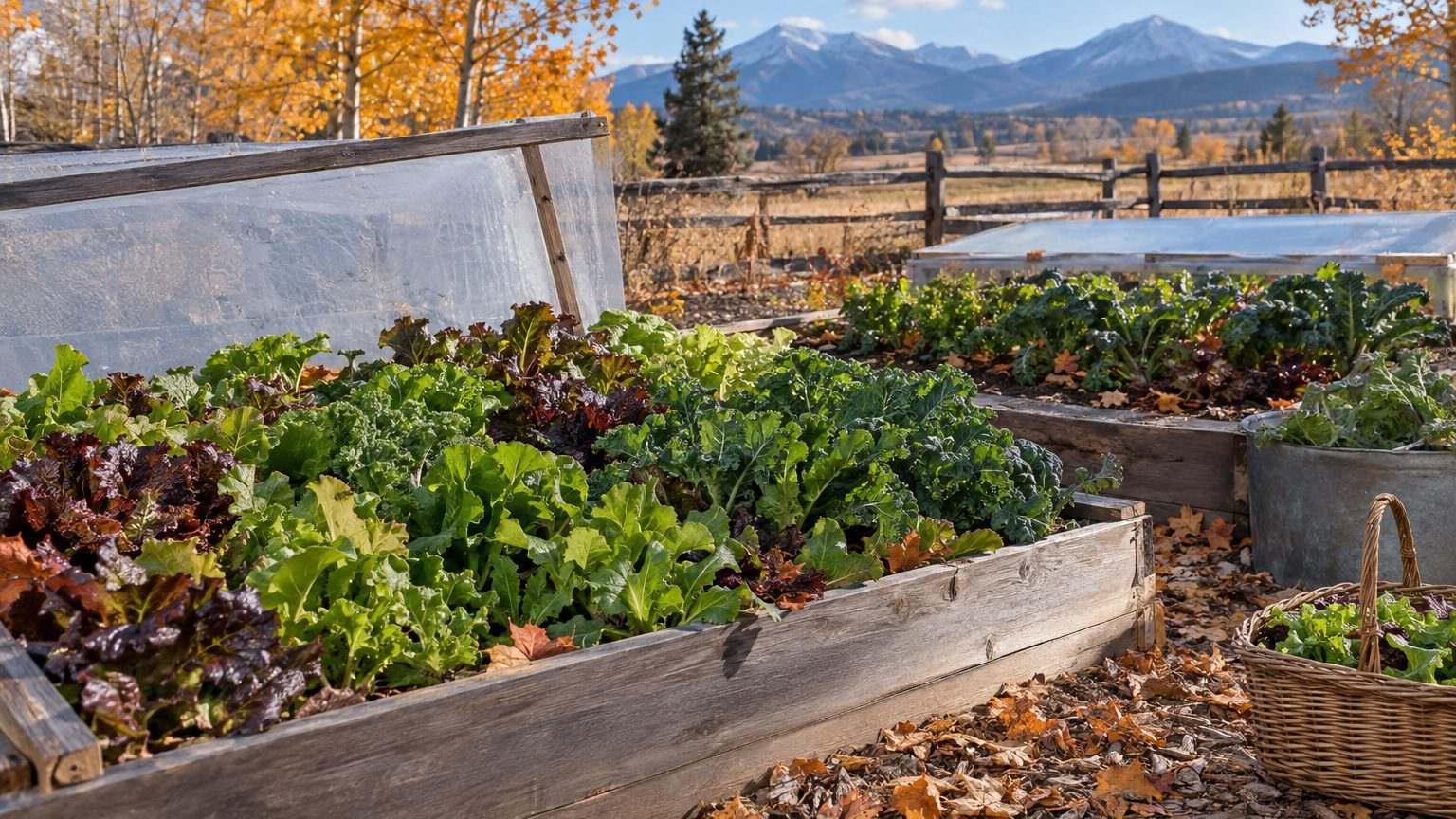
What does this mean for the calendar? Start with the cold-tolerant types, such as spinach, arugula, mustard greens and kale, rather than waiting for every frost scare to pass. They shrug off a light frost once they are up. Hold back anything tender until the average date has passed. Raised beds, dark soil and a layer of clear plastic or row cover over the bed warm the ground earlier than open soil does, which is worth a lot where the season is short. The garden has to be a bed or a container. Salad greens are sown and cut here, not gathered from the land.
For the varieties that have been trialled in northern conditions, go to the Government of the Northwest Territories’ agriculture services. Territorial advice beats any list a general page could print.
How long the season lasts here
The first fall frost at the same station averages September 18. Count from May 25 to September 18 and you get 116 days. Both dates are averages, so the real window shifts by a week or two in either direction from year to year. And 116 days is the frost-free stretch, not the stretch in which the soil is warm. The usable window for salad greens is somewhat shorter at both ends.
The window can decide how many sowings you get. A long window would allow a second and third sowing, with lettuce coming on as the first batch bolts. A window of 116 days at best permits a first sowing, then perhaps one more, and the second has to be made early enough to reach cutting size before frost. In practice the first sowing is the main crop, and a late-June or early-July follow-up of fast, cold-hardy greens is the only realistic second round. For the spacing of those rounds, see the succession sowing guide on this site.
The short window also changes the transplant question. Starting seedlings indoors gains weeks, which matters when the outdoor season is this brief. But salad greens such as lettuce and spinach resent root disturbance, and a check at transplanting costs part of the time you were trying to save. In a short season, direct sowing of the quick types often wins. Transplants make sense for slower crops like kale, set out under cover, with root balls kept intact.
Day length also bears on all this. Summer light at this latitude is long, and long days push spinach and many lettuces to bolt. That makes the cooler, shorter days of late summer a better time for leafy crops than midsummer. The September 18 frost date marks the end of that run. For a broader view of what to sow when lettuce will not cooperate, see Winter Salads: What Grows When Lettuce Will Not.
Heat and water in Northwest Territories
This page has no verified count of days above 90 °F (32 °C) and no figure for summer rainfall for the territory, and it will not make them up. For a gardener in Yellowknife the more useful point is that summer heat is not the limiting factor here. Cold is.
The mean daily minimum of the coldest month at Yellowknife is -29.5 °C (-21.1 °F). That is the average night low in the coldest month, not a record, so some nights run colder still. Natural Resources Canada places Yellowknife in Canadian hardiness zone 1b. That is the Canadian system, which uses seven climate variables and does not convert to a USDA zone.
At -29.5 °C, no salad green stands uncovered. Spinach and kale tolerate frost, but a frost is not a month at that temperature, and the soil is frozen as well. An unheated cover buys a few degrees, not thirty, so even a cold frame is not a winter solution at this latitude. Winter salad here means growing indoors, in a heated greenhouse, under lights, or on a windowsill. The outdoor season is for the months between thaw and frost.
The first frost sets the other limit: how late a sowing can still reach useful size before the light fails. Light falls quickly through September and October at this latitude, and growth slows well before the cold ends it. A sowing that goes in after mid-July is a gamble, and one that goes in in August is better used under cover.
If a summer turns cool and damp, the trouble is not heat stress. Expect slow ripening, mildew on crowded leaves, and fungal disease where foliage stays wet. The answer is practical: wide spacing, beds that drain, watering at the root in the morning, and clearing debris. Cool nights mean water evaporates slowly, so water only when the soil is dry a finger-length down.
Which winter salads suit Northwest Territories
A short season favours the earliest and fastest types. Cold-hardy greens such as spinach, arugula, mustard greens and corn salad germinate in cool soil and are ready to cut within a short window. Heat tolerance matters little here, so shade at the root is not the priority. A damp season makes disease resistance the first criterion, which is why seed descriptions that mention mildew resistance are worth reading carefully.
| Type | Why it fits a short, cold season | What to watch |
|---|---|---|
| Spinach | Germinates in cool soil and tolerates light frost | Bolts in long summer days |
| Arugula and mustard greens | Fast, cut-and-come-again leaves | Flea beetles in some seasons |
| Leaf lettuce | Quick to harvest, easy to resow | Mildew in damp, crowded beds |
| Kale | Handles frost into fall | Needs a head start under cover |
This page does not name a single variety, and that is deliberate. The varieties worth growing are the ones trialled in northern conditions, and no verified trial list came with this page. A name copied from a seed catalogue written for a warmer climate could waste a short season. The territorial agriculture services are the right place to ask what has performed locally.
Look at the same question in other northern places. Winter Salads for Nunavut Gardens deals with a shorter and colder case, while Winter Salads for Colorado Gardens shows how different the choices get when the cold is not the main constraint.
Common questions
When should I sow salad greens outdoors in the Northwest Territories?
After the soil has thawed and warmed, which comes after the average last frost of May 25 at Yellowknife A. Hardy types can go in first. Because May 25 is an average, frost may come later in about half of years, so keep a cover handy.
Can any salad greens stay outdoors through winter?
Not at these temperatures. The coldest-month mean daily minimum at Yellowknife is -29.5 °C, and the ground is frozen. Winter salads in the territory are grown indoors or in heated structures, and outdoor beds are for the summer window.
Does hardiness zone 1b tell me what to plant?
Only roughly. Zone 1b is in the Canadian system, which uses seven climate variables and does not convert to a USDA zone. It describes perennial survival, and salad greens are grown as annuals in a short window, so frost dates and soil temperature matter more.
Where do I find varieties that work locally?
Ask the Government of the Northwest Territories’ agriculture services. Varieties trialled in your own region are the only recommendation that carries weight, and this page does not have that list.