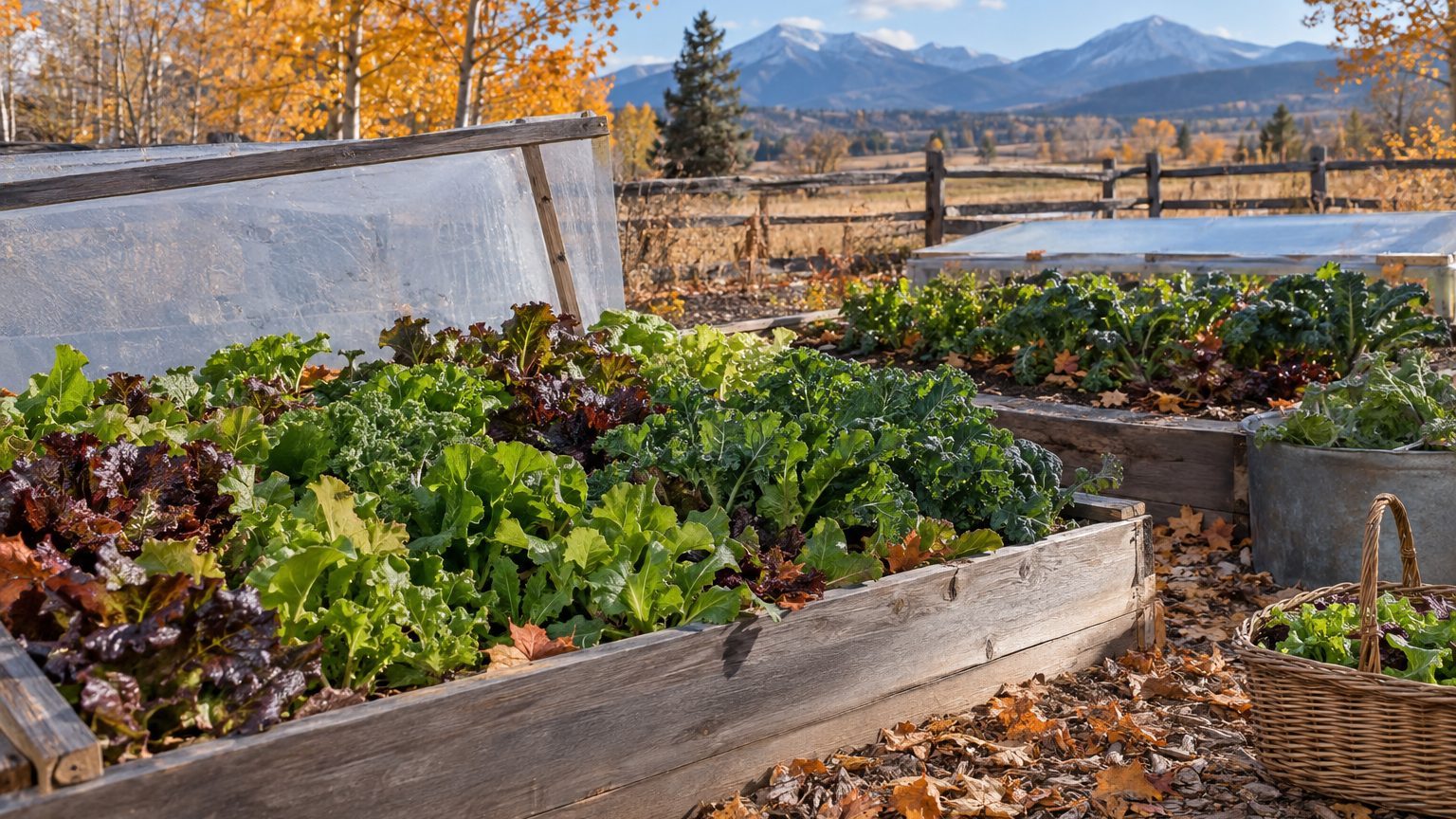

Florida’s winter salad season is set by latitude. In Jacksonville a hard freeze can flatten a bed of lettuce, but in Orlando or Miami the same months are the easy, productive stretch of the year. You sow when the summer heat finally lets go of the soil, and you keep sowing through the cool months. Before you plant anything, find out whether your county gets a freeze in a normal winter, and if it does, set aside a roll of frost cloth first.
When the soil is warm enough in Florida

NOAA’s 1991-2020 climate normals for the Jacksonville airport station put the last spring freeze (32°F, in the 30 to 70 percent probability band) between February 16 and March 7. That is a north Florida figure from an inland site, and like every frost date it is a probability. A cold night after the range is still possible. It does not describe Orlando or Miami, where freezes are so rare that the date is meaningless. Even at Jacksonville, three of the thirty falls in that record saw no freeze at all.
Frost is a stand-in for soil temperature
A seed responds to the soil, not the calendar, and the soil warms after the frost risk ends, not with it. Air temperature swings overnight while the top few inches of a bed change slowly. That is why a frost date is only a proxy. A soil thermometer pushed two inches down first thing in the morning tells you what the seed feels.
In Florida the proxy runs in an unusual direction for salad growers. In north Florida, the end of the freeze range marks the close of the easy season. Once the soil warms, lettuce and spinach bolt quickly, so sowings of cold-tolerant greens belong in the cool weeks before the range, not after it.
The more common Florida problem comes in fall. Late-summer soil stays hot long after the nights cool, and lettuce seed sown into hot soil often refuses to sprout. If the bed still feels warm at midmorning, wait, or shade it and sow in the evening. Arugula, mustard greens, kale and collards are more forgiving than lettuce and spinach, so they make the safer first sowings while the ground is still holding summer.
Central and south Florida run on an inverted calendar. Frost is not the gate there. Heat is, at both ends of the season. Sow when the soil cools in fall and stop worrying about spring frost.
Your county office at UF/IFAS Extension knows which ones have been trialled near you. Ask them before you buy seed.
How long the season lasts here
At the Jacksonville airport station, NOAA’s 1991-2020 normals put the first fall freeze between November 26 and December 13. Set that against the last spring freeze of February 16 to March 7 and the freeze-free stretch works out like this:
- Shortest case: March 7 to November 26, roughly 264 days.
- Longest case: February 16 to December 13, roughly 300 days.
So the frost-free window is somewhere near 260 to 300 days, which is most of the year. Both ends are probabilities, so treat the result as a range and not a promise. The remainder, roughly two to three months, is the stretch in which a freeze is a real possibility in north Florida.
What a long window allows
A window this long removes the pressure of a single sowing. Salads do not run on the freeze calendar anyway. They begin when the heat breaks, well before the first freeze, and they carry on past the last one. That gives you room to sow again every couple of weeks through fall and into late winter, so one bad sowing costs you a row and not the season. The rhythm of those repeat sowings is laid out in Winter Salads: What Grows When Lettuce Will Not.
It also changes the transplant question. In a short season a transplant that stalls from root check can cost the whole crop. Here you can afford to lose a few, and you can go the other way as well. In September and October, when the soil is too hot for seed to sprout, start seedlings in cell trays in shade and set them out when they have real leaves. Handle the root ball as little as you can.
Compare that with Nunavut, where the first sowing is often the only one and every week counts. Winter Salads for Nunavut Gardens shows what happens when the window is the scarce resource. In Florida the scarce resource is a stretch of cool, damp-free weather, and you plan around that instead.
Central and south Florida
Do not subtract those dates for Orlando or Miami. A frost-free year there means the salad season is the winter, roughly the cool months, and the hard stretch is summer. The practical limit at the far end is heat and rain in late spring, not a freeze in fall. The county extension office can give you sowing dates for your own area. Those dates matter more than any figure measured at Jacksonville.
Heat and water in Florida

Your nearest NOAA climate normals station or your county extension office will have the figures for your area. What holds across the state is that summers are hot, humid and wet, and that this is what you are waiting out. Wet heat rots lettuce and breeds fungal disease long before it kills it, so the salad season only starts once the air dries and cools.
What the winter cold decides
Once you are in the cool season, the cold decides what you can grow. NOAA’s 1991-2020 normals for Jacksonville give a mean daily minimum of 42.9°F in the coldest month. That average hides the single bad night, and it is the bad night that damages leaves. The USDA Plant Hardiness Zone Map (2023) runs from zone 8b to 11b across the state, and that range shows how different the far ends of Florida are.
In practice the crops sort themselves into three groups:
- Watch the plants and cover them if a hard freeze is forecast.
Floating row cover or frost cloth over hoops is enough for the middle group in north Florida. Pull it back on sunny mornings so heat and moisture do not build up under it.
Water, humidity and the light that is left
Because leaf wetness is the real threat, water at the base, in the morning, ideally by drip line or soaker hose, so leaves dry before evening. Space plants for airflow. On the sandy soils common in Florida, water drains fast, so mulch the row and check moisture by hand, not by the calendar. Winter tends to be the drier half of the year, and beds need real irrigation then. Other humid Gulf states share the disease pressure, and Winter Salads for Louisiana Gardens shows how damp winters change the plan.
The first fall freeze also sets a limit on late sowing, at least in north Florida. Days shorten fast after autumn, and a salad sown just before the freeze range of November 26 to December 13 grows slowly in the low light. Count backward: give a crop several weeks to reach cutting size before the light fades. Cut-and-come-again greens that you harvest young work best for late sowings.
Which winter salads suit Florida
Choose by type. A humid climate makes disease resistance the first thing to look for. Heat favors plants given airflow and shade at the root. Cold matters mostly at the northern end of the state, where cold-tolerant types earn their place. Varieties that suit a Jacksonville bed do not necessarily suit a Homestead one.
| Type | Cold | Heat and damp |
|---|---|---|
| Kale and collards | Stand uncovered in most winters | Handle humidity better than lettuce |
| Mustard greens and arugula | Tolerate light frost, cover for hard freezes | Bolt quickly as spring warms |
| Loose-leaf lettuce | Needs cover on hard-freeze nights | Prone to rot in wet weather, needs space |
| Spinach | Tolerates light frost | Bolts fast when days warm |
| Endive and escarole | Fairly tolerant of light frost | Airflow reduces disease |
Why no cultivars are named
A name without that data would be a guess, and gardeners spot a guess quickly. Florida stretches across several climates, and a variety that thrives in the panhandle may struggle in the southern peninsula. The UF/IFAS Extension county offices know what has been tested near you. That answer is worth more than any list on a general page.
When you talk to them, ask about disease resistance first, then bolt tolerance. Grow everything in beds or containers, never gathered from the wild, so you know exactly what you are eating. Container-grown salad has one further advantage in north Florida: you can move the pots under shelter on a freeze night.
Common questions
Can I grow winter salads in Miami or Orlando?
Yes, and winter is the easy season there. Central and south Florida are effectively frost-free, so the Jacksonville freeze dates do not apply. Your county extension office can give you local sowing windows.
Should I remove frost cloth in the morning?
On sunny days, yes. Cloth left in place traps warmth and moisture, which invites rot in a humid climate. Pull it back once the temperature rises and put it on again in the evening if another freeze is forecast.
Why did my lettuce seed not come up in October?
Check the soil temperature before sowing. Shade the bed with cloth, keep the surface damp, and sow in the evening. Or start seed in trays in a shaded spot and transplant later.
Is my USDA hardiness zone enough to plan a winter salad bed?
No. The USDA Plant Hardiness Zone Map (2023) is built only on the average annual extreme minimum temperature, and Florida runs from 8b to 11b. It says nothing about humidity, summer heat or how wet the season is, and those decide whether a salad crop stays healthy.