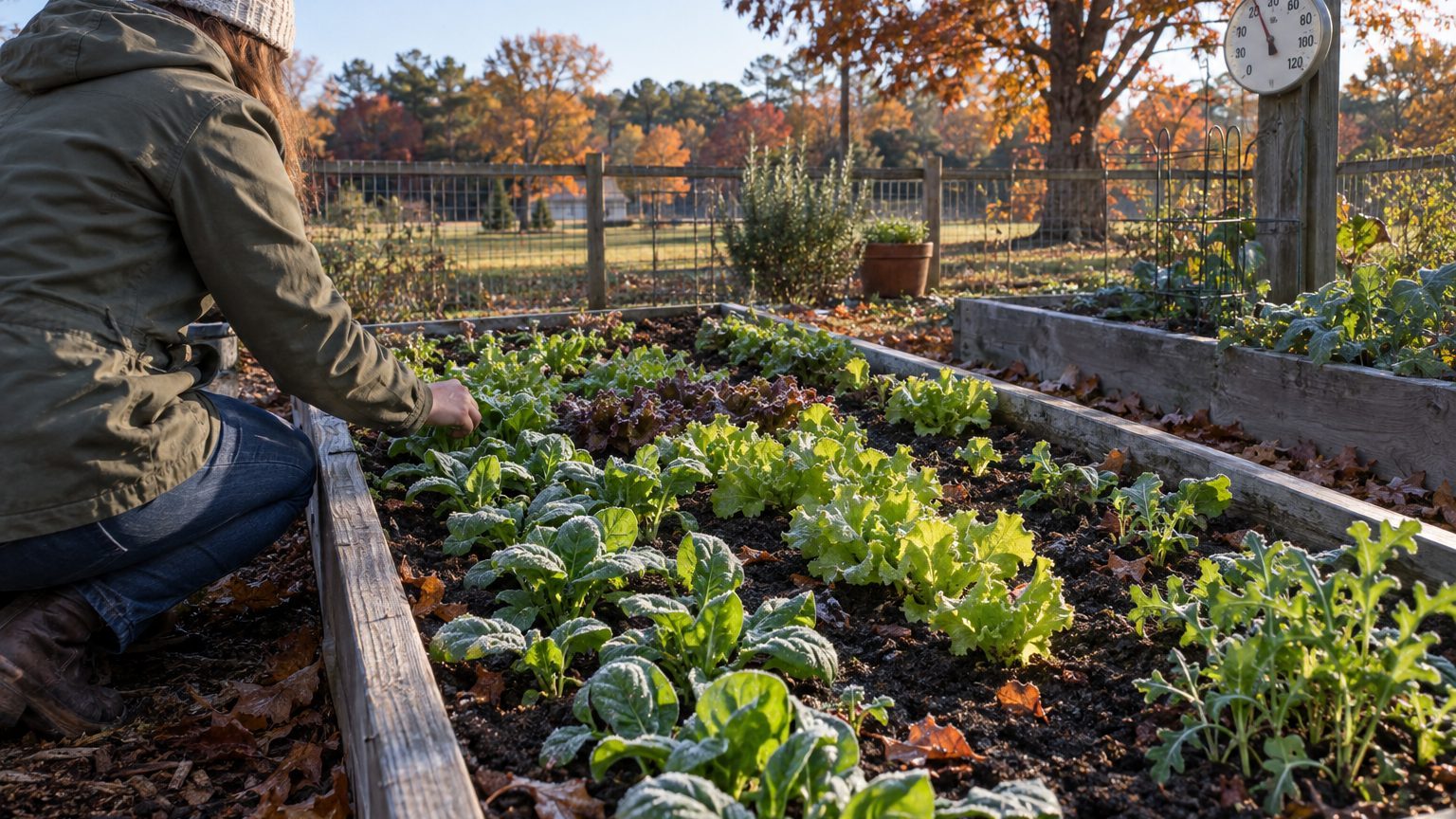

Sow winter salads in New Hampshire from late August to mid-September, counted back from the first fall frost. At the Manchester reference station that frost arrives between October 13 and October 26. Greens should be close to full size before November, when the days get too short for much growth. After that, cold frames and low tunnels hold the harvest through winter, and a second sowing opens in late winter.
The short answer for New Hampshire
The sowing window for a winter harvest runs from late August to mid-September, with the earliest dates for gardens in the north and at elevation. Put the slower leaf types in first (spinach, mache, claytonia) and the quick ones last (arugula, mizuna, baby lettuce). The dates come from counting back six to eight weeks from the first fall frost.
That frost date comes from NOAA’s 1991-2020 U.S. Climate Normals for the Manchester reference station. The last spring frost falls between April 16 and April 27, and the first fall frost between October 13 and October 26. Each range is the band where the chance of a 32°F freeze runs between 30 and 70 percent, so any single year can land outside it. An airport station also runs warmer than most gardens. Suburban and rural plots typically see the last spring frost one to two weeks later and the first fall frost one to two weeks earlier, and elevation widens the gap.
Daylight sets the deadline more than temperature does. As the days shorten in late autumn, growth nearly stops. Plants sown on time reach harvest size before that point and then sit in the garden like a stocked pantry. Plants sown late stay seedlings all winter. The coldest month at Manchester averages a daily minimum of 17.1°F, which is cold enough to kill unprotected tender lettuce but manageable for hardy greens under cover.
When do you sow winter salads for a winter harvest?
Work in three passes, adjusting each for your own frost dates:
- Late August to early September: spinach, mache, claytonia and other slow, hardy greens.
- Early to mid-September: arugula, mizuna, tatsoi and leaf lettuce, ideally where a cold frame or tunnel can go over them in October.
- Mid-September onward: only fast baby-leaf crops, and only if you can cover them.
Can you sow winter salads in late winter?
Yes. Hardy greens sown under cover in late February and March produce a spring cut before the main season starts. Outdoors, wait until the soil is workable. Spinach, arugula and mache tolerate frost, so the April 16 to April 27 band is no barrier to them. Variety choices are covered in The Best Winter Salads for New Hampshire.
What will not work here

A fall sowing made after the middle of September fails in most of the state. The first fall frost can arrive earlier than the reference-city figure in a cold garden, and the plants have only a few weeks of decent light left. A bed sown October 1 produces seedlings the size of a thumbnail by Thanksgiving, and they stay that size until March.
Slow, heading crops are the other casualty. Full-size head lettuce, cabbage and big bunches of kale need more weeks of growth than a late-summer sowing leaves. Baby leaves of the same plants work fine. Cut small and often, and the short window stops being a problem.
Unprotected tender lettuce will not make it through a stretch of nights near the January average low of 17.1°F. Mache and claytonia shrug off cold that kills romaine, but even the hardy types do better under a row cover inside a cold frame or low tunnel, which adds a few degrees of shelter and keeps wind and ice off the leaves. Leaving a bed bare all winter works only for the toughest spinach, and even that sulks after a hard, snowless cold snap.
The opposite problem shows up in August. Lettuce seed germinates poorly when the soil is hot, and a bed in full sun after a warm week can be too warm for the seed to sprout. Sow in the evening, water the row before and after, and shade it with a board or burlap until sprouts appear. New Hampshire summers are humid enough that damp, crowded seedlings invite damping-off and gray mold, so thin to the spacing on the packet and open the frame on mild days.
Snow load is the winter-specific risk. A low tunnel with thin hoops can flatten under a wet foot of snow, and a cold frame lid left closed on a sunny 40°F day can cook the plants inside. Vent the frame on mild afternoons, and brush heavy snow off tunnels before it freezes into a crust.
What changes across New Hampshire
The state has no single answer. The USDA Plant Hardiness Zone Map (2023 edition, built on 1991-2020 normals) runs from zone 3b to zone 6a within New Hampshire’s borders. That spread is based on one variable, the average annual extreme minimum temperature, and it covers a lot of ground between the northern mountains and the warmer parts of the south and coast.
A reader in the north or at altitude should shift everything earlier. Move the late August sowings toward the middle of that month, drop the last fast sowings entirely, and put covers on sooner, since frost can come earlier than the reference-city figure. Plan on heavier protection too: a cold frame with an added row cover, or a tunnel with a second layer, handles nights that a single layer will not.
Gardens in warmer southern valleys and near the coast have more room. The September sowings are safer there, and unprotected hardy greens last longer into the fall. Even so, the frost dates for the Manchester reference station describe an airport, and a garden on a hilltop or in a cold hollow a few miles away can differ by a week or two in either direction.
Nobody can read their own zone off a state article. Look up your location on the USDA Plant Hardiness Zone Map, which takes a ZIP code, and treat the result as a rough guide to how far north or south of the Manchester figures to shift. Zone numbers describe winter cold only, so the frost dates for your area still decide the sowing calendar.
Where to check this for your own county
The best local source is University of New Hampshire Extension, the state’s land-grant extension service. Its gardening pages and county offices carry guidance written for New Hampshire conditions, and staff and Master Gardener volunteers answer questions from home growers.
Look for two things there. The first is the local planting calendar, which gives sowing and transplanting dates tuned to a county’s frost dates. The second is the list of varieties trialled in your county, which tells you which greens actually performed in New Hampshire soil and weather. A variety that thrives in a southern-county trial may struggle in the colder north.
A county recommendation beats a state one. Everything above is a statewide picture, built from one reference station and a zone range that spans several climates. Where a county calendar and the Manchester dates disagree, follow the county.
For a broader overview of fall and winter greens in the state, see Winter Salads for New Hampshire Gardens.
Checking this against your own garden
Your own beds outrank every date above. Three observations tell you how your microclimate compares with the reference figures.
First, feel the soil. In late August, push your hand into the bed an inch or two down in the afternoon. If it feels hot and dry, lettuce seed will sit unsprouted, so shade the row or wait a few days. Cool, moist soil that you can hold your hand in comfortably is ready for sowing. A bed that cools sooner than your neighbor’s tells you your fall comes early.
Second, count true leaves. Seedlings show a pair of seed leaves first, then the true leaves that look like the mature plant. By early October, greens should have several true leaves. If they are still at one pair, the bed is running behind and needs cover now, or a sowing a week or two earlier next year.
Third, watch the tender plants for the first blackened leaves. When basil, squash or zinnias turn black overnight, note the date and compare it with October 13 to October 26. A garden that blackens earlier is a frost pocket, which means earlier sowing and earlier covers. A garden that blackens later, perhaps beside a south-facing wall or a stand of trees, has a few extra weeks to spare.
Common questions
What is the last date to sow winter salads in New Hampshire?
Mid-September is the practical cutoff for most gardens, and only for fast baby-leaf crops under cover.
Do winter salads need a cold frame in New Hampshire?
Hardy greens such as mache, claytonia and spinach will survive some of the season outdoors. A cold frame or low tunnel protects them from wind, ice and the coldest nights, which average a daily low of 17.1°F in January.
Can I sow winter salads in spring as well?
Yes. Sow hardy greens under cover in late February and March, or outdoors once the soil is workable. They tolerate the frost that typically ends between April 16 and April 27 at the reference station.
Do the frost dates apply to my garden?
They describe the Manchester airport station. Suburban and rural gardens typically see the last spring frost one to two weeks later and the first fall frost one to two weeks earlier, and more at elevation. Check your county with University of New Hampshire Extension.