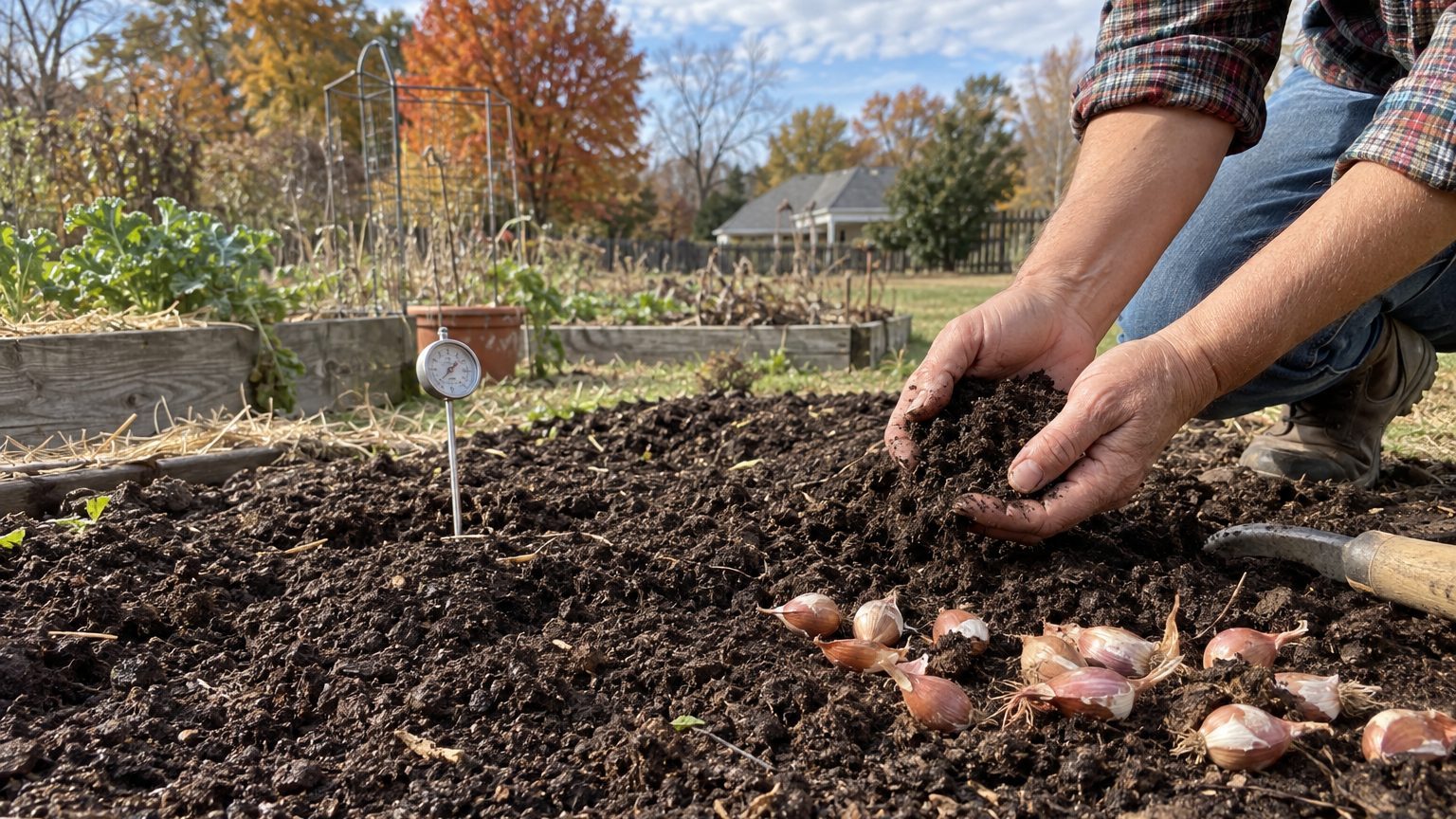

Shallots in Nova Scotia go in the ground in spring, as soon as the soil crumbles in your hand. At Halifax Stanfield, the average last spring frost is May 7. Autumn planting works only in mild, well-drained coastal gardens, because freeze-thaw cycles and wet soil punish small sets. Cool, damp summers make disease the main worry, not heat.
When the soil is warm enough in Nova Scotia
Start with the date everyone asks about. Environment and Climate Change Canada’s 1981-2010 climate normals put the average last spring frost at Halifax Stanfield International Airport on May 7. That is a midpoint. In one year out of two, the last frost falls later. Northern and upland districts, including much of Cape Breton and the Cobequid hills, run weeks behind a coastal airport station.
The frost date stands in for what shallots really care about, which is soil. Frost risk ends first, and the ground warms and drains afterward. A late, cold spring can leave soil soggy well past the calendar date, so use a simple test. Pick up a handful from planting depth and squeeze it. If it breaks apart, the bed is ready. If it holds a slick, glossy ball, wait a few days.
Can you plant shallots before the last frost?
Sets tolerate a light frost once they have rooted, so planting a little ahead of the May 7 average is a reasonable gamble in a sheltered bed. Early planting gives roots time to establish before the long days of early summer trigger bulbing. The risk is a cold, saturated bed. A set sitting in cold mud rots before it roots. A raised bed or a sloped site drains sooner and earns you a week or two.
What about planting shallots in autumn?
Autumn planting follows the same logic as garlic. The garlic guides on this site cover timing, mulching and depth in detail, and most of that carries over. Shallots differ in one way. A set is smaller than a garlic clove and has less in reserve, so frost heave can push it out of the ground more easily. Where winters here swing between thaw and freeze, spring planting is the safer call. Gardeners on the mildest, best-drained coastal sites can try autumn, with a loose mulch and a spare handful of sets for gaps in spring. The Growing Shallots: One Bulb In, a Handful Out guide covers the general method.
How long the season lasts here
The reference station has about 164 frost-free days between the mean last spring frost (May 7) and the mean first fall frost (October 18). Both dates are averages, so in half of all years the first frost arrives earlier than October 18. Gardens inland or at elevation get a shorter window.
That window is workable for shallots, but it is not generous. A shallot set planted in spring has the whole summer to size up. A crop that has to ripen, bend over and cure before wet autumn weather sets in does not benefit from a late start. The first planting is the one that counts most.
A second planting is still worth considering, but for a different reason than in warmer provinces. Staggering a few plantings two weeks apart spreads out your harvest of fresh green shallots. Later plantings will not size up like the first. Treat them as a source of green tops and small bulbs, and put your main effort into the first sowing. The succession sowing guide on this site lays out how to space those plantings.
The window also shapes the choice between sets and transplants. Sets are small bulbs and skip the seedling stage, so they suit a short season. Growing shallots from seed in flats only pays off if you start them indoors early. Seedlings carry a root check at transplanting, meaning a few days of stalled growth while roots recover. With about 164 frost-free days and a cool spring, that pause costs more here than it would in a long-season garden. For most home growers, sets planted straight into the bed are the better bet.
Growers in colder places face the same arithmetic with a shorter window, as in the Growing Shallots in Minnesota guide.
Heat and water in Nova Scotia
Heat is not what limits shallots here. Maritime summers run cool and humid, and the hot spells that stress crops in the continental interior are brief and uncommon. The usual worries about root-zone heat and midsummer scorch matter little. What a cool, damp summer brings instead is slow ripening, mildew on the leaves and rot at the neck. Fog and long stretches of wet weather keep foliage damp and bulbs slow to finish.
Several practices reduce that pressure.
- Space plants wide enough that air moves between the leaves.
- Water at the base, early in the day, and stop watering once the tops begin to yellow.
- Grow in raised or well-drained beds so the root zone never sits saturated.
- Keep alliums out of the same ground for several years. Garlic, onions, leeks and shallots share diseases, so the rotation advice in the garlic guides applies to all of them.
Winter is the other half of the question. At Halifax, the mean daily minimum of the coldest month is -10.4 °C (13.3 °F). The city sits in Canadian hardiness zone 6b, which comes from Natural Resources Canada’s system and does not convert to a USDA zone. A mean is not the lowest reading, and cold snaps drop below it. The more serious risk for autumn-planted sets is wet ground that freezes, thaws and freezes again. Sets rot in cold water or heave upward and dry out.
Spring planting avoids most of that, and it is the safer default across the province. A milder, well-drained coastal garden can grow the larger, earlier bulbs that autumn planting is known for. Compare the Growing Shallots in Connecticut guide, where a gentler winter changes the calculation.
Humid summers also make curing harder. Once the tops fall over and dry, lift the bulbs and let them dry in a shaded, airy spot out of the rain. Before storing, check each bulb. The neck should be thin and dry, the skins papery, and the base firm and clean. A soft neck or a moldy base ends the question. Discard that bulb, because a sound-looking bulb is not proof it is safe to store or eat.
Which shallots suit Nova Scotia
Choose by type, and let the climate set your priorities. The short window favors the earliest-maturing types, and sets over seed-grown plants for the reason given above. The humid summers make disease resistance the first criterion. Look for types with a reputation for standing up to leaf mildew and neck rot, and plant clean, certified stock rather than bulbs saved from a diseased bed. Heat tolerance, which matters in the Deep South, barely figures here.
Color and shape are matters of taste. Red, yellow and gray types differ in flavor and in how they store, but those differences count only after the crop has survived a wet summer. Pick an early type first, then the flavor you want.
Performance in Nova Scotia shifts between the Annapolis Valley, the South Shore, the Northumberland coast and the highlands, and a name that does well in one district may stall in another. The only recommendation comes from local trials. The Nova Scotia Department of Agriculture is the place to ask which varieties have been grown and tested near you. Local garden centers and Atlantic Canada seed growers also tend to stock types that have proven themselves in regional conditions.
A final habit to build in: replant from your own best bulbs only when they are clean. Save the firm, dry, healthy ones, and never replant a bulb that showed soft spots or mold at the base. Disease that rides along in planting stock follows you into next year’s bed.
Common questions
When should I plant shallots in Nova Scotia?
In spring, as soon as the soil crumbles instead of clumping. At Halifax Stanfield the average last frost is May 7, but half of years run later, and inland districts run weeks behind.
Can I plant shallots in the fall here?
Only in mild, well-drained coastal gardens. Freeze-thaw cycles and wet soil make rot and heaving real risks for small sets, so spring is the safer default. Use a loose mulch if you try autumn.
Do hot summers hurt shallots in Nova Scotia?
Rarely. Summers here are cool and humid, so the bigger concerns are mildew, neck rot and slow ripening. Wide spacing, base watering and good drainage matter more than shade.
How do I know if cured shallots are safe to store?
Check each bulb for a thin, dry neck, papery skins and a firm, clean base. A soft neck or a moldy base means discarding the bulb. Looking sound is not enough to call a bulb safe.