
Collards grow well in Connecticut as a spring crop and even better as a fall crop. Plant in early spring as soon as the ground can be worked, sow again in midsummer, and expect the leaves to sweeten after the first frosts. Winter decides how long the harvest runs: on the coast, picking can stretch into early winter, while inland beds usually end at a hard freeze.
When the soil is warm enough in Connecticut

When is the last spring freeze?
At the Bridgeport reference station (USW00094702), the NOAA NCEI 1991-2020 Climate Normals put the last 32 F freeze between April 2 and April 12, using the 30-70% probability band. Any single spring can fall outside that range. Bridgeport sits on Long Island Sound and is the mildest part of the state. Inland and northwest Connecticut freeze noticeably later in spring, so gardeners there should push every date in this section back.
Collards themselves shrug off light frost. A hardened-off seedling can take a cold night in April without much complaint. The frost date matters for a different reason: it is the best calendar stand-in for soil conditions, and soil follows air temperature with a delay. The soil warms after the frost risk ends, not with it, so a bed can be frost-free on paper and still cold and soggy a few inches down.
Cold, wet soil is where direct-sown seed stalls. Seeds sit, germinate unevenly, and some rot before they sprout. Transplants set into the same bed hold their leaves but make little root growth until the ground loosens up and drains.
How do you tell the bed is ready?
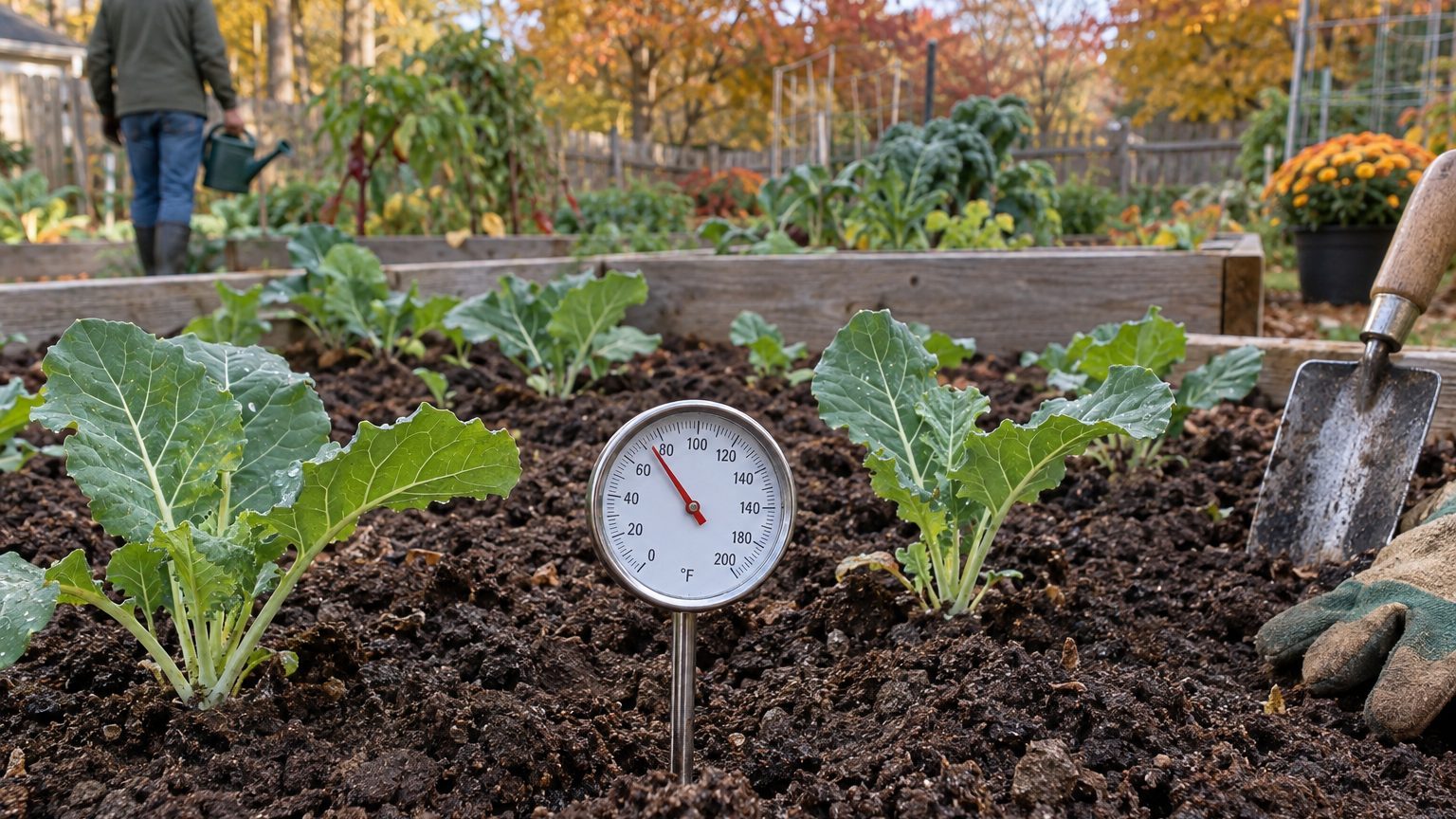
Start with a handful of soil from the planting depth. Squeeze it. If it forms a sticky ball that stays packed, wait. If it crumbles when poked, it is ready. A cheap soil thermometer pushed in a few inches gives a second reading, and a week of steady numbers beats a single warm afternoon.
Raised beds and south-facing slopes dry out and warm up first, which can put them a week or more ahead of flat, shaded ground in the same yard. Heavy clay, common in parts of the Connecticut River valley, is the slowest to come around.
For transplants, start seed indoors a month or so ahead of the planting window, and harden the plants off over several days before they go outside. Set them out during the Bridgeport window of April 2 to 12 on the coast, or later inland, and keep a sheet of row cover handy for nights that dip hard. Direct sowing follows the same soil test, usually a little after the transplants go in.
Frost dates are odds, so treat them as a guide and let the weather in your own yard make the final call.
How long the season lasts here
Can you plant collards twice in Connecticut?
Yes. The same station shows the first fall freeze between October 28 and November 10. The Bridgeport station’s last spring freeze and first fall freeze give a long frost-free stretch, but inland and northwest Connecticut freeze noticeably earlier in fall and later in spring. That is a long window by northern standards, and it is the reason collards fit this state so well.
A long window leaves room for two plantings. The first goes in during early spring and gives leaves by early summer, before July heat toughens them. A second sowing in midsummer matures into the cool weather that collards like best, and it is often the better-tasting crop of the two. Check the seed packet for days to maturity, count backward from your local first-freeze date, and add extra time, because growth slows as days shorten and nights cool.
Inland gardeners work with a shorter window than Bridgeport, since their last spring freeze comes later and their first fall freeze comes earlier. The fall crop still works, but the midsummer sowing has less slack. Sow it on the early side, and do not wait for the weather to feel like fall.
Are transplants worth it with a long season?
Where the window is this generous, direct sowing works fine for either planting, so transplants are a convenience, not a requirement. They earn their place in the midsummer planting, when seed sown into hot, dry soil can be slow to come up and seedlings need watering every day. Starting the fall plants in pots in a shaded spot and moving them to the bed once they are sturdy avoids that.
If you buy transplants, check the roots before you pay. Slide one plant out of its cell. White roots filling the soil lightly are fine. A dense, circling mass wound around the plug means the plant has been waiting too long, and it will be slow to settle in. Tease out circling roots before planting.
The Growing Collards: One Planting, Months of Harvest guide covers how to stagger sowings so leaves keep coming. Colder territories plan differently, and the shorter windows are laid out in Growing Collards in Wyoming and Growing Collards in Northwest Territories.
Heat and water in Connecticut

How do collards handle a Connecticut summer?
Summers bring stretches of hot, humid weather. How many days climb above 90 F depends on the station and the year, and the coast stays cooler than the inland river valleys and the Hartford area. Collards tolerate that heat better than most of their brassica relatives, but leaves grow tougher and stronger in flavor, and plants slow down in the hottest weeks.
Humidity is the bigger risk. Wet leaves and poor airflow invite fungal leaf spots and bacterial problems such as black rot, and cabbage worms and aphids build up in warm weather. A few practices make a large difference: space plants generously, water at the base rather than over the leaves, water in the morning so foliage dries by afternoon, and mulch to hold soil moisture steady and keep the roots cool.
Rotation matters here as much as spacing. Collards share their diseases and insects with cabbage, kale, broccoli and mustard, and turnip and rutabaga belong to the same brassica family. Moving collards into a spot where any of those grew last year rotates nothing. Rotate them out of the whole group for several years, and follow your garden’s crop rotation plan.
Watering is simplest when it is deep and regular. Collards need steady moisture, and swings between drought and downpour show up as tough, bitter leaves. A drip line or soaker hose under the mulch keeps the rhythm even through dry spells, and rain gauges are cheap enough to keep in the bed.
Do collards survive a Connecticut winter?
Collards live two different lives depending on how cold the winter gets. Where the coldest month stays mild, they are a standing crop, picked leaf by leaf through the cold months. Where it does not, they are an autumn crop that ends at the hard freeze. The winter low, not the summer, decides how this bed is planned.
At Bridgeport, the mean daily minimum of the coldest month is 24.4 F (NOAA NCEI Climate Normals 1991-2020). That is below freezing on an average night, so Connecticut sits in the middle. The state’s USDA Plant Hardiness Zone Map (2023) range runs from 6a to 7b, and that figure rests on the average annual extreme minimum temperature, so the bay-side coast and the northwest hills differ by a full zone or more.
In practice, the coast gives the best odds of picking late into the season with a row cover or low tunnel, while a sharp cold snap can still finish the planting. Inland, plan on harvesting until the first hard freeze and treating anything after that as a bonus. A light frost sweetens the leaves. A deep freeze with no protection turns them to mush.
Which collards suit Connecticut
How do you choose a type without a variety name?
Connecticut gives three clear criteria. The window is long, so the earliest-maturing types matter less here than in a cold territory, though they still help the spring planting get ahead of July heat. Summers are hot and humid, so plants with an upright, open habit that lets air move through the leaves are worth looking for. Humidity makes disease resistance the first test: seed descriptions that list resistance to black rot or leaf spot are worth more than any claim about flavor.
- For spring sowing, choose types listed as quick to mature and slow to bolt.
- For summer and fall plantings, favor types with an open, upright habit and disease resistance on the label.
- For a winter harvest on the coast, look for types described as cold-hardy.
Resist the urge to buy by a name you saw online. Variety performance is local. A type that thrives on the shoreline can struggle in the northwest hills, where soils, frost dates and disease pressure all differ, and seed catalogs write their claims for the whole country.
Where do you find varieties that have been trialed in Connecticut?
University of Connecticut Extension and your county office are the right place to ask. Their recommendations come from trials in the state’s own soils and weather, and that is the only list that carries real weight. Variety names are left out here for that reason: a name that was never tested in your region is a guess, and an error that gardeners notice the first time a row fails.
Local garden centers and seed swaps are the next best source, since the plants they stock have usually been through a Connecticut summer already. Ask what held up in the last wet August, and write down which plants kept their leaves clean. That note is worth more than the seed packet next spring.
Common questions
Can collards go in before the last frost?
Yes, as hardened-off transplants, once the soil is workable. They tolerate light frost, but a hard freeze can still hurt young plants, so keep row cover ready. At Bridgeport the last freeze falls between April 2 and April 12; inland it comes later.
Do collards survive winter in Connecticut?
Sometimes on the coast, rarely inland. The coldest-month mean daily minimum at Bridgeport is 24.4 F, so a mild winter with protection can keep plants alive longer. Inland, expect the first hard freeze to end the crop.
Should I start collards from seed or transplants?
Either works with a season this long. Seed is cheap and easy for the spring planting. Transplants are easier for the midsummer sowing, when hot soil dries fast. Check transplant roots for a tight, circling mass before you plant.
Does frost improve the flavor of collards?
Yes. Cold weather pushes the plant to convert starch to sugar, so leaves picked after a few light frosts taste milder and sweeter than summer leaves. The effect fades once a hard freeze damages the foliage, so pick before the leaves go limp.