
In Northwest Territories, collards work as a short, cool-season crop rather than the standing winter green they become farther south. The frost-free window runs from late May to mid-September at the Yellowknife reference station, and the brutal winter low rules out any overwintering in the ground. Plant after soil has actually warmed, harvest hard before the first fall frost, and choose a fast, cold-tolerant type.
When the soil is warm enough in Northwest Territories

The Yellowknife A station averages its last spring frost on May 25, according to Environment and Climate Change Canada’s 1981-2010 Climate Normals. That figure is a mean, not a guarantee: in roughly half of all years, frost arrives later than May 25, so treating it as a safe planting date is the single most common mistake gardeners make here. The number also describes one station, not the whole territory. Communities north of Yellowknife, or at higher elevation, run behind it by days or weeks, and a gardener in a colder pocket should watch their own soil rather than a calendar built on someone else’s town.
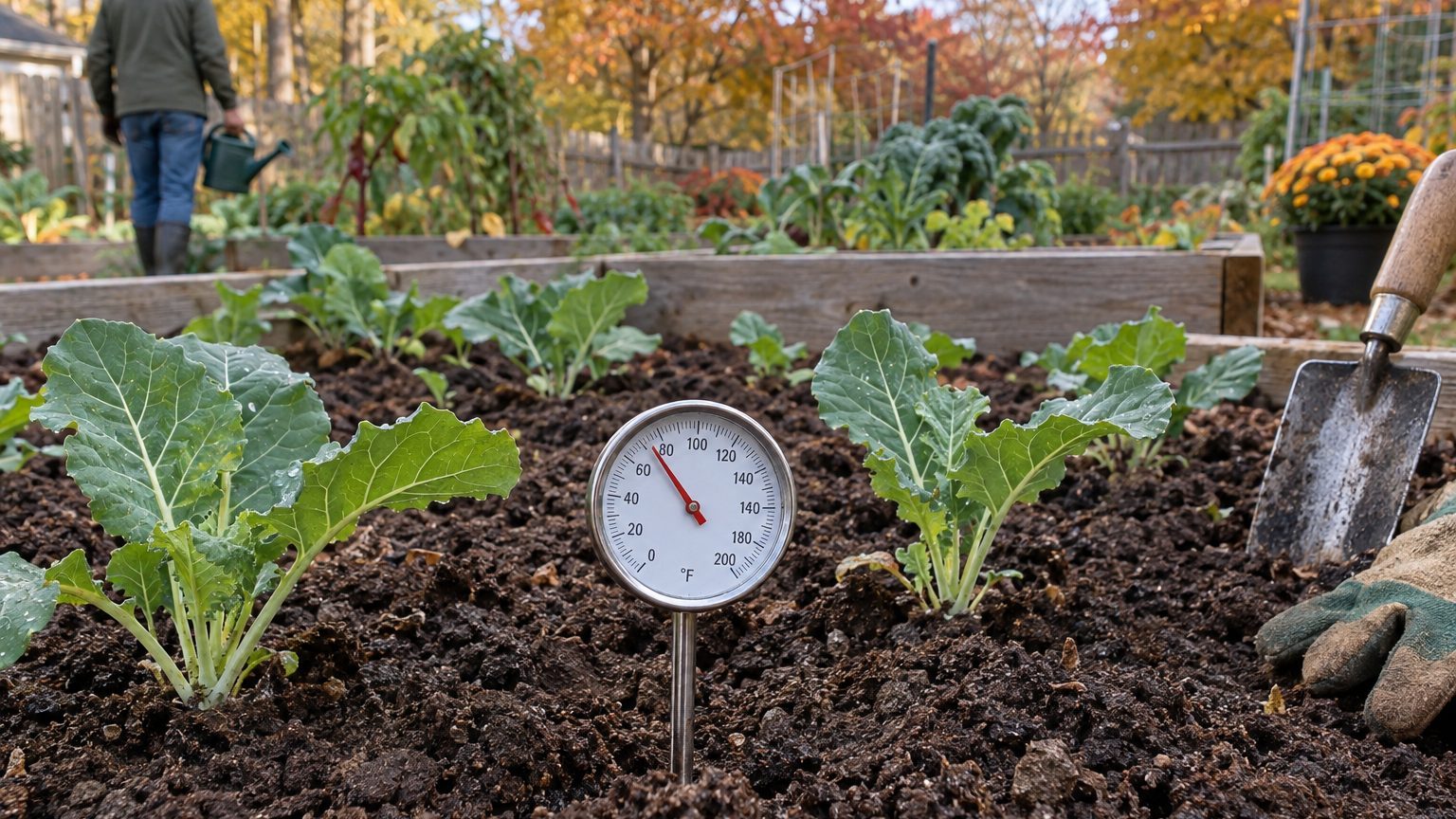
Frost date is only a proxy anyway. Collards don’t care about air temperature at 3 a.m., they care about soil temperature at root depth, and soil warms slower than air in a territory where the ground stays frozen for months. Waiting until a week or two after the average last frost, when the top few inches of bed have had time to warm through, gives seedlings a far better start than rushing them into cold, wet soil the day the frost risk statistically clears. A soil thermometer is a better tool here than a wall calendar.
Because collards are brassicas, the same family as cabbage, kale, mustard, turnip and rutabaga, they share pests and diseases with all of them. Planting collards where any of those crops grew the previous year, or vice versa, isn’t a rotation at all, it’s the same risk repeated. The full rotation logic, along with the rest of this crop’s care, lives on the main collards growing guide, worth reading before laying out beds for the season.
Skip cultivar names at this stage. What grows well in a Yellowknife garden hasn’t been tested the same way in Colorado or Nunavut, and this page has no local trial data to hand out a variety name responsibly. The Northwest Territories agriculture extension service, linked further down, is the source that actually knows what’s been trialled in-territory.
How long the season lasts here
Subtract the two average dates from Environment and Climate Change Canada, May 25 for last spring frost and September 18 for first fall frost, and the frost-free window comes to 116 days. That’s the theoretical maximum for anything grown outdoors without protection, and it already assumes both ends of the season behave close to average, which they won’t every year.
A window that size is workable for one full collard planting, started from transplants rather than direct seed, but it does not comfortably support a second sowing after harvest the way a longer southern season would. Direct-seeding also eats into that window twice over, once for germination in cool spring soil and again for the plant to reach usable leaf size before the first hard freeze in September closes things down. Transplants, started indoors or bought in, buy back several of those weeks.
This is also why the root-check habit that matters in longer-season regions barely applies here. There isn’t time for a second round of collards to sit in the ground long enough to develop the kind of root issues a gardener would need to inspect for later in the year, since the whole crop is coming out before or right at that September frost anyway. The main collards guide covers how succession planting works where the season allows it, useful context even if Northwest Territories itself isn’t the place to attempt a second round.
Gardeners moving between territories notice this fastest. A garden that ran two collard sowings in a longer window elsewhere needs to plan for exactly one crop here, timed tightly around those two average frost dates rather than stretched to fit a rhythm built somewhere warmer.
Heat and water in Northwest Territories

There’s no meaningful count of days above 90°F to report for this territory, and that absence is itself the answer: heat stress is not the limiting factor for collards in Northwest Territories, cold is. Summers here are short and cool, and a damp, cool stretch brings its own problems, slower growth, longer leaf-wetness periods, and better conditions for the fungal issues that hit brassicas everywhere they’re grown too close together with poor airflow.
What actually decides how this crop gets planned is the winter low. The coldest month at the Yellowknife reference station averages a daily minimum of -29.5°C (-21.1°F), and the territory sits in Canadian plant hardiness zone 1b, using the Natural Resources Canada zoning system built from seven climate variables, not the single-factor USDA scale used on this site’s American pages. Those two figures aren’t directly comparable across systems, but both point to the same fact: nothing overwinters in open ground here.
That single detail draws the line for collard growers everywhere in this cluster. Where the coldest month stays mild, collards become a standing crop, picked leaf by leaf from November into March. Where it doesn’t, and Northwest Territories is about as far from mild-winter conditions as this site covers, collards are strictly an autumn crop that ends at the hard freeze around mid-September. There is no picking through winter here, no cold frame trick that changes that math at -29.5°C. Compare it against a milder-winter garden, like the collard growing conditions in Colorado, and the difference in what “collard season” even means becomes obvious. At the harsher end, Nunavut shows how much further that same logic can be pushed.
Practically, this means the whole crop needs to be planned around a hard end date, not a gradual autumn taper. Get everything harvested, or at minimum brought under some kind of row cover for a final push, before that mid-September freeze risk becomes real rather than theoretical.
Which collards suit Northwest Territories
With a season this tight, the choice comes down to type, not brand name. Three broad categories matter for a garden here:
- Early, fast-maturing types bred for short northern seasons, which give the best odds of a full harvest before the September freeze
- Smooth-leaf types, which tend to shed cool, damp-season moisture better than heavily crinkled leaves and reduce the mildew risk that comes with a cool, humid summer
- Compact or dwarf-habit types, easier to cover quickly if an early frost threatens before the crop is finished
None of those categories point to a specific variety, and that’s deliberate. This page has no trial data for what actually performs in a Yellowknife or Hay River garden, and naming a cultivar without that evidence would be a guess dressed up as advice. The Northwest Territories agriculture extension service is the resource built for exactly this question, since it tracks what’s actually been trialled in-territory rather than what performs well somewhere with a four-month-longer season.
Remember the family connection too. Whatever type gets chosen, it belongs to the same brassica group as cabbage, kale, mustard, turnip and rutabaga, and it shares its pest and disease pressure with all of them. A bed that grew any of those crops last season carries the same risk forward for collards this year, regardless of which type gets planted into it.
Anyone gardening across more than one territory in this cluster will notice how differently that type-selection logic plays out. The priorities shift from earliness in a short northern season to disease resistance in a wetter one, and the main collards guide is the place to see how those trade-offs get weighed once the local climate facts are on the table.