
Collards can be grown in Hawaii in every month of the year anywhere people garden, because no freeze occurs in inhabited areas. The mainland calendar built on the last and first frost does not apply. Rainfall, elevation and whether a garden sits on the windward or leeward side of an island decide when to sow, how long the plants last and which type to choose.
When the soil is warm enough in Hawaii

Most collard advice starts with the last spring frost. Hawaii has none. NOAA’s 1991-2020 Climate Normals for station USW00022521 record zero days per year at or below 32°F, and every freeze percentile at 32°F and 36°F comes back flagged as not computable, because the threshold is never reached. You can see the data in the NOAA NCEI normals for that station. Frost does occur on the high volcanic summits of Mauna Kea, Mauna Loa and Haleakala, but nobody gardens there.
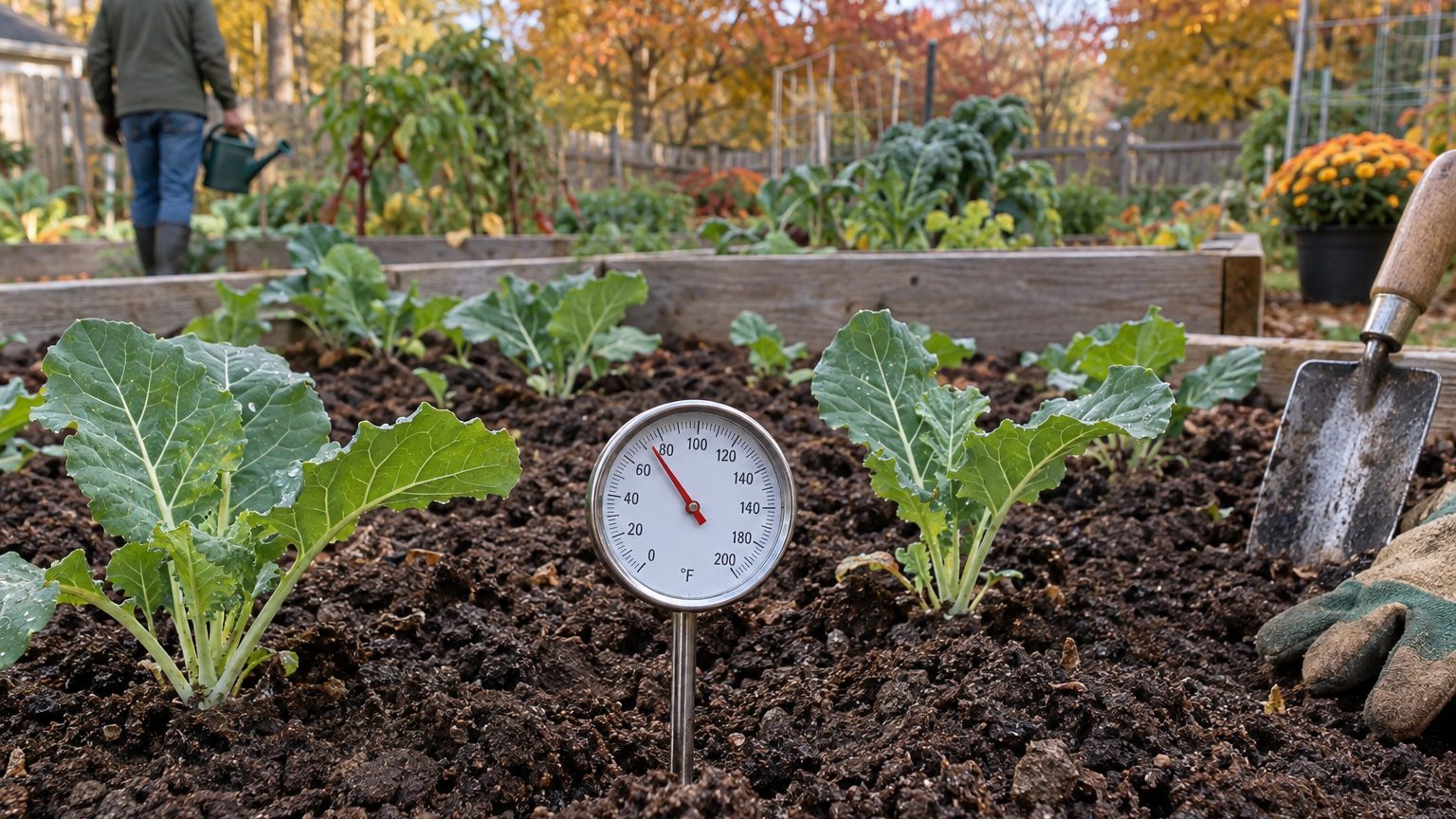
Mainland gardeners use the frost date because it stands in for the real signal, which is soil temperature. Soil warms after the frost risk ends, and a frost date only estimates the odds of that moment arriving. Hawaii skips the whole problem. At the Honolulu reference station, the mean daily minimum of the coldest month is 66.8°F. Soil in the lowlands stays mild through the night, so a collard seed does not sit in cold ground.
Can you sow collards in any month in Hawaii?
In the lowlands, yes. Warmth is not the limit, so the limits are other things: how hard the rain falls, how well the bed drains, and how much afternoon sun the seedlings take. A leeward garden in the dry months needs shade for young plants and steady water. A windward garden in a soaking stretch needs a raised bed or a mounded row so the roots are not sitting in water.
Higher up, the picture changes. Upland gardens run cooler, and growth slows with the temperature, so sowing there rewards patience. The USDA Plant Hardiness Zone Map (2023 edition, based on 1991-2020 normals) places the state across zones 9a to 13a. That range is wide because it covers sea-level coastlines and high slopes alike, so a zone number from a neighbor on the other side of the island may not match yours.
How do you tell a Hawaii bed is ready for collards?
Use your hands instead of a thermometer. Squeeze a handful of soil from a few inches down after the last rain. If it crumbles, it is ready. If it forms a slick ball that holds water, wait. Check drainage by digging a small hole, filling it with water and watching how fast it empties. Standing water left after watering means the bed needs compost worked in or a raised edge. Collards want fertile, loose soil with plenty of organic matter, and volcanic or heavily weathered soils often need amending to hold both moisture and nutrients.
How long the season lasts here
Frost-free days are the usual measure of a collard season, and here the count is the whole calendar. The reference station records no freeze in any year of the normals period, so no first fall frost ends the season and no last spring frost opens it. That makes this the opposite of a short-season garden, where the first sowing is the only sowing.
What a year-round window allows is a steady supply instead of a single crop. A collard plant can be picked leaf by leaf for a long time, but it does not stay productive forever. Stems lengthen, the lower leaves are gone, and new leaves come smaller and tougher. Sowing a fresh batch while the old plants are still producing means the older row can be retired without a gap in the kitchen. For the general method of spacing, picking and keeping one planting working, see Growing Collards: One Planting, Months of Harvest.
How often should you sow collards in Hawaii?
Small batches sown in succession work better than one big sowing. Plants coming along in staggered stages feed a household longer than many plants that all hit the same stage together.
Transplants make sense when the seedbed would take a beating from pounding rain or from pests, since a started plant gets past the most vulnerable stage in protected conditions. Before planting a nursery transplant, slide it out of its pot and look at the roots. White roots reaching the sides of the soil are fine. A dense, circling mat means the plant has sat too long, and it will be slower to establish than a younger seedling. Loosen the outer roots by hand, or choose a smaller, younger plant.
Heat and water in Hawaii

Collards are a cool-season crop that tolerates warmth better than most greens, and lowland Hawaii tests that tolerance all year. The warmth keeps plants growing but pushes the leaves toward toughness and a stronger flavor, and plants are quicker to run to flower. Mulch over the root zone keeps the soil cooler and slows evaporation. Afternoon shade cloth over young plants in the sunniest, driest gardens takes the edge off. Water deeply and less often rather than a little every day, so roots go down.
Rain is more varied than heat. A windward slope can be wet in every month, while a leeward coast may go weeks without a drop. The same collard variety that thrives in one bed can struggle in the other, so match your watering and bed shape to your side of the island. In a dry spot, drip irrigation or a soaker hose gives steady moisture without wetting the leaves. In a wet spot, raised beds and wide spacing do more good than any additional watering plan.
Do collards stand all winter in Hawaii?
Yes, and that is the biggest difference from the mainland. Where the coldest month stays as mild as it does here (a mean daily minimum of 66.8°F at Honolulu), collards are a standing crop. You pick the lower leaves one at a time through the cool months and, with care, much of the rest of the year, while the plant keeps adding new growth at the top. In a state with hard freezes the same plant is an autumn crop that ends when the cold arrives. Readers comparing notes with gardeners elsewhere will see the contrast in Growing Collards in Oklahoma, where a hard freeze closes the season, or in Growing Collards in Texas, where heat is the bigger concern.
What goes wrong with collards in warm, humid weather?
With no freeze to knock pests back, pressure builds all year. Caterpillars that chew holes in the leaves, aphids on the undersides and whiteflies are the usual trio. Floating row cover or fine insect netting over a young bed keeps the adults from laying eggs. Checking leaf undersides and removing egg clusters and caterpillars by hand catches most trouble early. If you need a spray, choose a biological caterpillar control labeled for vegetables and follow the label for timing and wait periods.
Warm, wet leaves invite disease. Black rot, which shows up as yellow wedges starting at the leaf edge with darkened veins, and various leaf spots spread in splashing water. Water at the base of the plant, give each plant room for air to move, and pull off yellowing lower leaves. Remove and bag badly infected plants instead of composting them. Rotation matters too. Turnips and rutabagas are brassicas, so they share their troubles with cabbage, kale, mustard and collards. Following one of them with collards in the same bed rotates nothing. Keep any brassica out of a spot that held another brassica for a stretch of seasons.
Which collards suit Hawaii
Season length drives variety choice in cold climates, where the earliest types win because the window is short. That logic does not apply here. With no freeze, the earliest-maturing type has little advantage, and a collard that holds up in heat, shrugs off humidity and keeps producing is worth far more. Three conditions decide the choice, and each points to a different kind of plant.
| Garden setting | Main concern | Type to favor |
|---|---|---|
| Dry leeward lowlands | Heat and water stress | Heat-tolerant, slow-to-bolt types with a loose, open habit, grown with shade and mulch at the root |
| Wet windward areas | Humidity and leaf disease | Types sold with disease resistance listed on the packet, spaced for airflow |
| Cooler upland gardens | Slower growth | Vigorous, quick-starting types, sown a little earlier in a sunny spot |
Open-habit, non-heading collards generally dry faster after rain than dense or crowded plants, which matters wherever leaves stay wet. When you read a seed packet or catalog, look for notes on heat tolerance, bolting resistance and disease resistance, and treat the disease note as the first criterion if you garden in a wet area. A plant that resists black rot and leaf spot will outlast a faster one that gets sick.
Why not name a specific collard variety for Hawaii?
Because the only recommendation that means anything is one tested where you garden. A variety that does well in one part of the islands can fail in another, since rainfall, elevation and exposure change from valley to valley. Mainland catalogs often rate varieties for conditions that look nothing like a Hawaii hillside. The University of Hawaii College of Tropical Agriculture and Human Resources runs the CTAHR Cooperative Extension service, and its county offices know which varieties have been trialed locally and which pest and disease problems are active in your area. Ask them for a short list suited to your elevation and side of the island. Then grow several types side by side and note which resists disease, which bolts first and which gives the most picking.
Common questions
When is the best time to plant collards in Hawaii?
In the lowlands, any month works, since no freeze occurs in inhabited areas. Choose the sowing time by weather: avoid the heaviest rain for new seedlings and give young plants shade in the driest, sunniest stretch. At higher elevations, favor the warmer months so growth does not slow in the cool.
Do collards need frost to taste good?
No. Cold nights make leaves a bit sweeter, but collards picked young and kept watered taste good without it. Heat and drought are what turn leaves tough and strong, so mulch, steady water and picking tender leaves make the biggest difference to flavor in Hawaii.
Should I start collards from seed or transplants?
Either works. Seed is cheaper and lets you sow in stages. Transplants help where heavy rain or pests threaten tiny seedlings. If you buy transplants, check the roots before planting, and avoid any plant with a tight circling mat or yellowing leaves.
Where can I find collard varieties that suit my part of Hawaii?
Contact the CTAHR Cooperative Extension office for your island. Staff there can tell you which types have been trialed in your elevation and rainfall zone, and what pests are active at the moment.