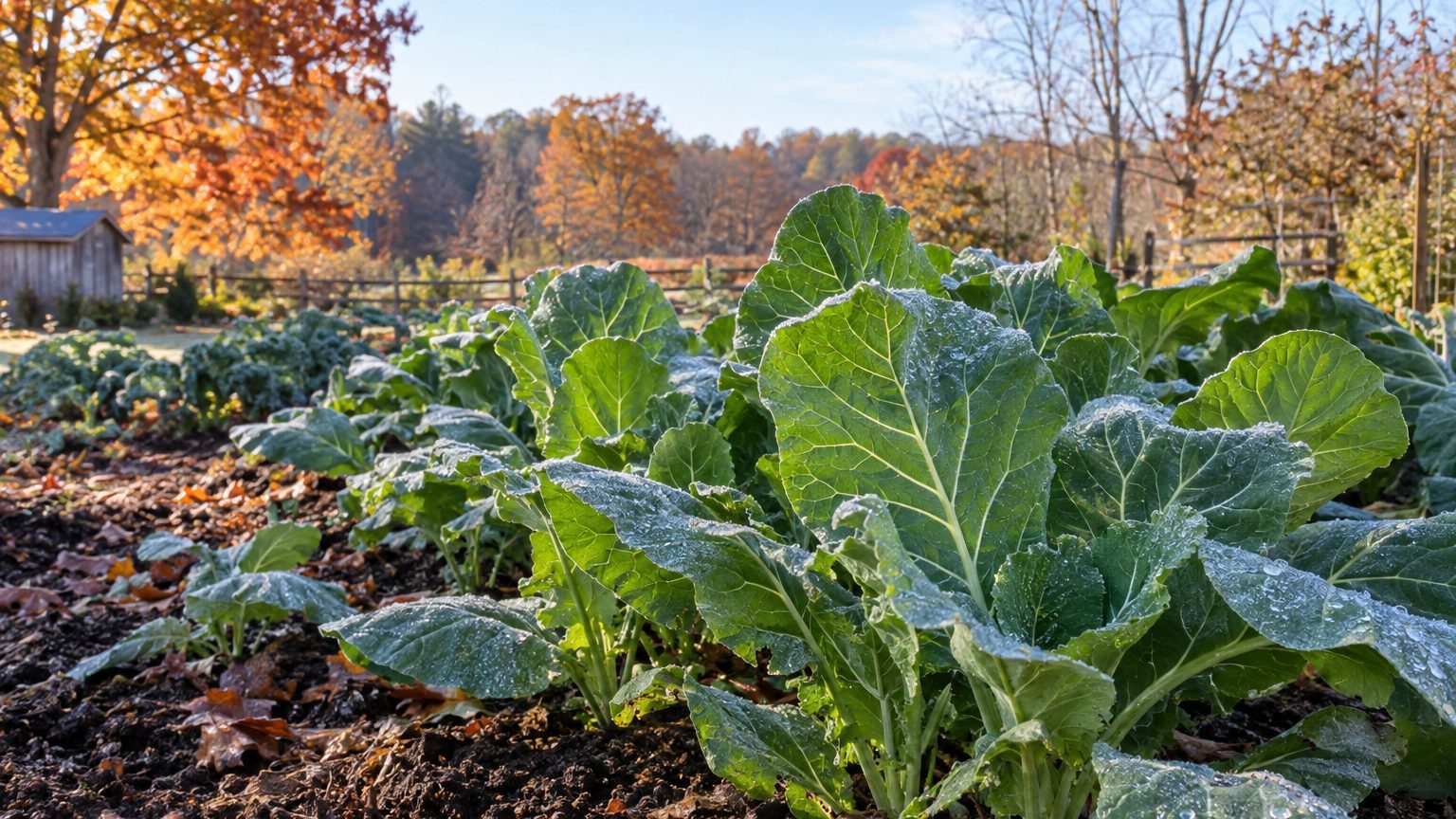

Illinois collard growers get two plantings a year: transplants from late March to late April for spring, and seeds or transplants from mid-June to early August for fall. The fall crop is the better one, because the leaves sweeten after frost. Both windows hang on two things, the last spring freeze and the first fall freeze, and both shift by a week or two depending on where you garden.
The short answer for Illinois
Set spring collard transplants outside from late March to late April, and start the seeds indoors from mid-February to early March. Sow the fall crop from mid-June to mid-July, with transplants going in through early August. For the full picture on this crop, start with Growing Collards in Illinois.
These dates come from the frost record at the Chicago reference station. The last spring frost there falls between April 11 and April 22, and the first fall frost between October 24 and November 3. Each range is the stretch where the odds of a 32°F freeze sit in a middle band of 30 to 70 percent. Any given year can land outside it. A freeze after April 22 happens, just less often, and a hard freeze before October 24 does too.
Gardens in the suburbs and the country usually see the last spring frost later and the first fall frost earlier than an airport station does, often by one to two weeks. Treat the Chicago dates as a reference point and move them for your own ground.
| Task | Window |
|---|---|
| Start spring seeds indoors | Mid-February to early March |
| Transplant hardened seedlings outside | Late March to late April |
| Direct sow in the garden for spring | Early to mid-April, once soil can be worked |
| Direct sow for fall | Mid-June to mid-July |
| Set fall transplants | Mid-July to early August |
When do you start collard seeds for spring in Illinois?
Count back from the day you want to transplant. Collards are a cool-season crop and handle a light frost once they have been hardened off over a week or so. A hard freeze in the low 20s is another matter, so keep a row cover or old bedsheet nearby for the late cold snaps.
When do you plant fall collards in Illinois?
Work backward from the first fall frost. Most collard varieties need a long season from transplanting to full-size leaves, so a transplant set out by early August has time to size up before the October 24 to November 3 range arrives. By mid-August the plants are too small to carry much leaf into the cold. Seeds sown directly in mid-June to mid-July have more runway, though they need steady moisture while July heat dries the surface soil. If you want help picking what to sow, The Best Collards and Greens for Illinois covers the choices.
What will not work here

Sowing outdoors in February fails. Soil in the northern half of the state is often frozen or sodden then, seed rots, and a March thaw followed by a hard freeze takes out whatever sprouted. Wait until the soil crumbles in your hand instead of forming a wet ball.
Sowing spring collards in May is the more common mistake. Plants that are still small when the heat arrives in July get hit by aphids, cabbage worms and bolting stress before they have given you a real harvest. If you miss the April window, skip ahead to the fall planting. A June-to-July sowing will out-produce a late spring one.
Illinois summers run hot and humid, and that shapes spacing. Crowded collards hold moisture in the canopy, and leaf spot and other fungal problems follow. Give each plant enough room so air moves between leaves. Water the soil at the base in the morning rather than overhead in the evening.
Summer dry spells also catch gardeners who water only when they remember. Collards need steady moisture from rain or a hose, and mid-summer stretches without rain can push that higher. Uneven watering leads to tough, bitter leaves. A layer of mulch, such as straw or shredded leaves, evens out the swings.
Can collards overwinter in Illinois?
Sometimes, but do not count on it. The mean daily minimum of the coldest month at the Chicago reference station is 18.8°F. That means many January nights are colder than that, and collards without protection often die back in the colder parts of the state. Mulch heavily, cover the row, and expect losses in the north. Farther south, plants have a better chance of surviving a mild winter and sending up fresh leaves in spring, though they will bolt soon after.
What happens if you plant fall collards too late?
Plants that are only a few inches tall when the first fall frost arrives stop growing as days shorten and the soil cools. You get a few small leaves instead of a bountiful harvest. The slowest varieties suffer most. Transplants set out after mid-August in the northern part of the state, and not much later farther south, are mostly a gamble. A cold frame or low tunnel can stretch the season by a few weeks, but it cannot make up for a planting that went in a month late.
What changes across Illinois
Illinois is not one climate. The USDA Plant Hardiness Zone Map (2023) puts the state across zones 5a to 7b, which spans three full zones. That is a wide spread, and there is no single answer for the whole state. The map is built on one variable, the average annual extreme minimum temperature, so it tells you about winter survival and says less about when spring warms up.
In the north, plan on the later end of every spring window and the earlier end of every fall window. Move spring transplanting toward mid-to-late April, and get the fall crop in the ground early enough that it has time to size up before frost arrives. Northern gardeners also face the hardest winters, so overwintering is a long shot there.
In the far south of the state, the calendar slides the other way. Spring planting can start earlier, and fall sowing can run later. Mild winters give overwintered plants a better chance, which means a second flush of leaves in early spring before the plants bolt.
Higher ground and open, windy sites run cooler than the low spots around them, and frost pockets in low areas get hit first in fall. Both are reasons to move your dates by a week or more. To find your own zone, use the USDA Plant Hardiness Zone Map and enter your ZIP code. Do not rely on a neighbor’s guess or a plant tag.
Where to check this for your own county
The best source for your exact dates is University of Illinois Extension. Look for your county office and the local horticulture staff, and ask for two things. First, a planting calendar for cool-season vegetables that reflects your county’s frost dates. Second, any information on collard and other brassica varieties that have been grown and evaluated in your area.
Local recommendations beat state ones. A county office knows which cold snaps have hit recently, which pests are active, and which varieties have held up in your soil. This article gives the state-level picture, anchored to a single reference station. It is a good starting point, and your county extension office can turn it into dates that fit your garden.
When you check a calendar, find out which frost probability it uses. Some give the average last frost, others the date after which a freeze is unlikely. The second is more cautious and suits tender plants better. Collards are hardier than most garden vegetables, so the average date works for them.
Checking this against your own garden
Your own observations outrank any date in print. Three things are worth watching, and none need equipment.
- Soil warmth by feel. In spring, push your hand into the bed. If the soil feels cold and clammy and clings in a ball, it is too early to sow. Beds that crumble and feel cool but not icy are ready. A south-facing bed by a wall will reach that point days before a shaded or low-lying one, which tells you how much earlier you can plant there.
- The first flush of male flowers. Watch the maples and other early trees near you. When their flowers open, the soil has begun warming in your neighborhood. In a cold pocket, that signal arrives later than on the open slope nearby. That gap is your microclimate.
- The first true leaves. On indoor seedlings, the first true leaves (the ones after the rounded seed leaves) are the cue that a plant is ready to harden off. Seedlings that develop them slowly in a cool window tell you to wait longer before transplanting. In the garden, young plants that stall after planting are telling you the bed is colder than you thought.
Write down what you see each year. Two or three seasons of notes on when the soil crumbled, when the trees flowered and when the first frost hit will give you a calendar that fits your yard better than any regional average.
Some gardeners also time this by the Moon: when to plant collard greens by the moon, as almanac tradition rather than fact.
Common questions
Can I direct sow collards in spring in Illinois?
Yes, in early to mid-April once the soil can be worked and is no longer sodden. Transplants usually give a better head start, since a spring crop has limited time before summer heat.
What is the last date to plant fall collards in Illinois?
Aim for transplants by early August at the latest, and direct sowing by mid-July. Plants set out after mid-August are usually too small when the first fall frost arrives in the range of October 24 to November 3 at the Chicago reference station, and earlier in colder gardens.
Do collards survive a frost?
Yes. A light frost does not hurt them, and many gardeners say the leaves taste sweeter afterward. A hard freeze in the low 20s or below can damage plants, especially young ones, so cover them when one is forecast.
Why are my collards bitter?
Heat and uneven watering are the usual causes, especially for spring plantings that stretch into July. Mulch, steady moisture and a fall crop that matures in cool weather all help.