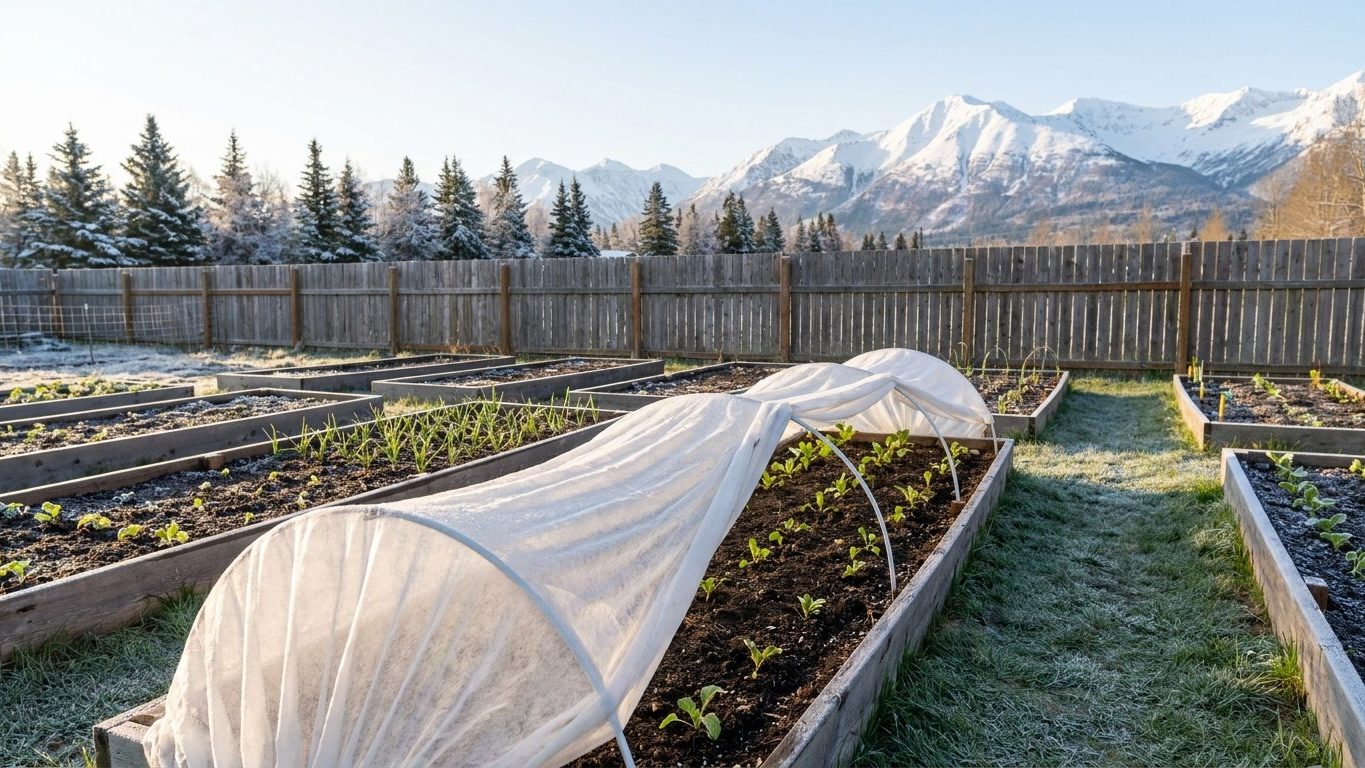

Cover tender plants on any evening when the forecast low gets near 32°F, in spring and again from October on. At Boston’s Logan Airport station, the first fall freeze lands between November 3 and November 14, and spring freezes hang on until April 1 to April 8. Inland towns and the Berkshires run earlier in fall and later in spring, so the forecast should outrank the calendar.
The short answer for Massachusetts
The Logan dates are built from the probability of a 32°F freeze, in the 30 to 70 percent band. On April 1 to April 8 a spring freeze is still a live possibility. The same goes for November 3 to November 14 in fall. They are averages for a waterfront urban station, the mildest spot in the state, so they mark the earliest you can relax, not a guarantee of safety. Between those dates, frost-free weather is the usual pattern but not a promise.
In practice the covering season splits three ways:
- Spring, tender crops: cover tomato, pepper and squash transplants on any night the forecast approaches freezing, and keep watching for a couple of weeks past the Logan dates if you garden inland.
- Fall, tender crops: cover on the first clear, calm night forecast near 32°F. Those are the nights that frost. Cloudy, windy nights are safer.
- Fall and winter, hardy crops: kale, spinach, lettuce and carrots shrug off light frost, so cover them when hard freezes arrive and you want to keep harvesting.
Put covers on in the late afternoon, while the soil is still holding the day’s heat, and take them off the next morning once temperatures climb. A cover holds in the warmth the ground already has. It adds only a few degrees, which is enough for a light frost but not for a deep freeze. For the full picture of how covers fit into the year, see Extending the Growing Season in Massachusetts.
What will not work here

Waiting for the Logan date will fail anyone outside greater Boston. A garden in the hills or the Berkshires can see a freeze a week or more past April 8, and an early fall freeze well before November 3. Planting tomatoes on the Boston date because “the frost is over” is a common way to lose a first transplanting.
A single sheet of lightweight row cover will not carry tender crops through winter. The mean daily minimum of the coldest month is 23.1°F at the Boston reference station, so ordinary January nights already sit well below freezing, and cold snaps go lower. That much cold takes a hardy crop, a low tunnel and often a second layer. Tomatoes, peppers and basil under any cover will not survive a run of 20s.
Covers also do not make plants grow in midwinter. Boston sits at 42.36 degrees north, and the shortest days give a little over nine hours of daylight. At that day length, spinach and kale mostly hold what they put on in fall and add little new growth. Sow or transplant for winter harvest early enough that crops reach size before the light fades, which means late summer to early fall. Anything started after that is a spring crop in waiting. Readers farther north or west should check their own latitude, since the figure belongs to Boston.
Plastic left sealed on a sunny day cooks plants. A closed tunnel in March or April sun can climb far above the air temperature within an hour or two, so vent it or pull it back every sunny morning. Heavy wet snow will flatten hoops too, so shake it off or use sturdy supports.
Finally, covering will not warm cold ground fast enough to justify early planting. Soil that is still chilly slows warm-season crops no matter what sits over them, so choose cover materials with the job in mind. Which Season Extenders Work in Massachusetts sorts out which material suits which task.
What changes across Massachusetts
The USDA Plant Hardiness Zone Map (2023 edition, based on 1991-2020 normals) places Massachusetts in zones 5a to 7b. That is a spread of several full zones inside one state, so no single answer fits every garden. Hardiness zones rest on one variable, the average annual extreme minimum temperature, so they tell you whether a plant survives winter, and they say less about when frost arrives. Even so, the spread signals how different the cold is from one corner of the state to another.
The Boston reference figure of 23.1°F for the coldest month’s mean minimum is a coastal number. Gardens in the Berkshires, in the hills of the north and west, and in inland valleys that collect cold air will run colder, with frost earlier in fall and later in spring. The Cape and islands run milder, as does anywhere the ocean moderates the air.
A reader in the north or at elevation should shift in two directions: begin fall covering earlier than the Logan dates suggest, and hold spring transplants back past April 8. How far to shift depends on the site. Low spots where cold air pools can frost on nights when the hilltop does not. Look up your own zone on the USDA map instead of guessing, then use the dates in this article as the mildest case.
Where to check this for your own county
Your state extension service publishes timing that is closer to home than any statewide guide. For Massachusetts, start with UMass Amherst Extension. Look there for a local planting calendar that lists frost dates and sowing windows for your area, and for vegetable varieties that have been trialed in your county rather than somewhere else.
That second item matters as much as the first. A variety that performs well in the Connecticut River valley may sulk in the Berkshires, and a trial result from your own county tells you more about it than a seed catalog. If a calendar lists cold-hardy crops for fall and winter covering, those are the ones to build your fall plan around.
A county recommendation beats a state one, because a state average blends coast, valley and hills into a single number. Treat the dates here as the starting range, then adjust to your county’s calendar. If the extension office has a local garden hotline or a master gardener program, ask them what the last frost looked like in your town last spring. Local memory is useful, and they usually have it.
Checking this against your own garden
Your own observations beat every date in print. Three are worth watching, and none needs an instrument.
Soil warmth by feel. Push your hand a few inches into the bed in the morning. If it still feels cold and damp, warm-season transplants will sit and stall, whatever the calendar says. A bed that warms to the touch earlier than your neighbor’s has a warm microclimate, perhaps from a south-facing wall or good drainage.
The first male flowers on squash. Squash and cucumber plants open male flowers before female ones. When the first flush appears, the plant is getting enough warmth to bloom, and covers can stay off except on cold nights. Later flowering than usual in a corner of your yard marks it as a cool spot.
The first true leaves. Seedlings first show seed leaves, then true leaves that look like the mature plant. Steady true-leaf growth means the bed has the warmth and light the crop needs. Slow, pale or stunted true leaves mean the spot is cold or shaded, and a cover, a later date or a better location may help. Keep notes from year to year. A few seasons of observations will pin down your garden’s frost dates better than any station.
Common questions
When should I cover tomatoes in the fall in Massachusetts?
Cover them on the first clear, calm night with a forecast low near 32°F, which can come earlier inland. At Logan the first fall freeze arrives between November 3 and November 14. If you want green tomatoes to ripen on the vine, cover on each cold night, but expect to harvest everything once a hard freeze is forecast.
Is the last spring frost date in Boston the safe planting date for the whole state?
No. April 1 to April 8 comes from Logan Airport, a waterfront urban station and the mildest spot in the state. Inland suburbs and the Berkshires frost later in spring, so tender transplants there need more time or covers.
Can row cover protect crops through a Massachusetts winter?
Only hardy crops, and usually under more than one layer or a low tunnel. The mean daily minimum of the coldest month is 23.1°F in Boston and lower in colder parts of the state. Growth also slows to a near stop in the shortest days, so covered crops hold more than they grow.
Which hardiness zone is Massachusetts?
The USDA Plant Hardiness Zone Map (2023) runs from 5a to 7b across the state. That is a wide spread, so check the map for your own location rather than relying on a state average.