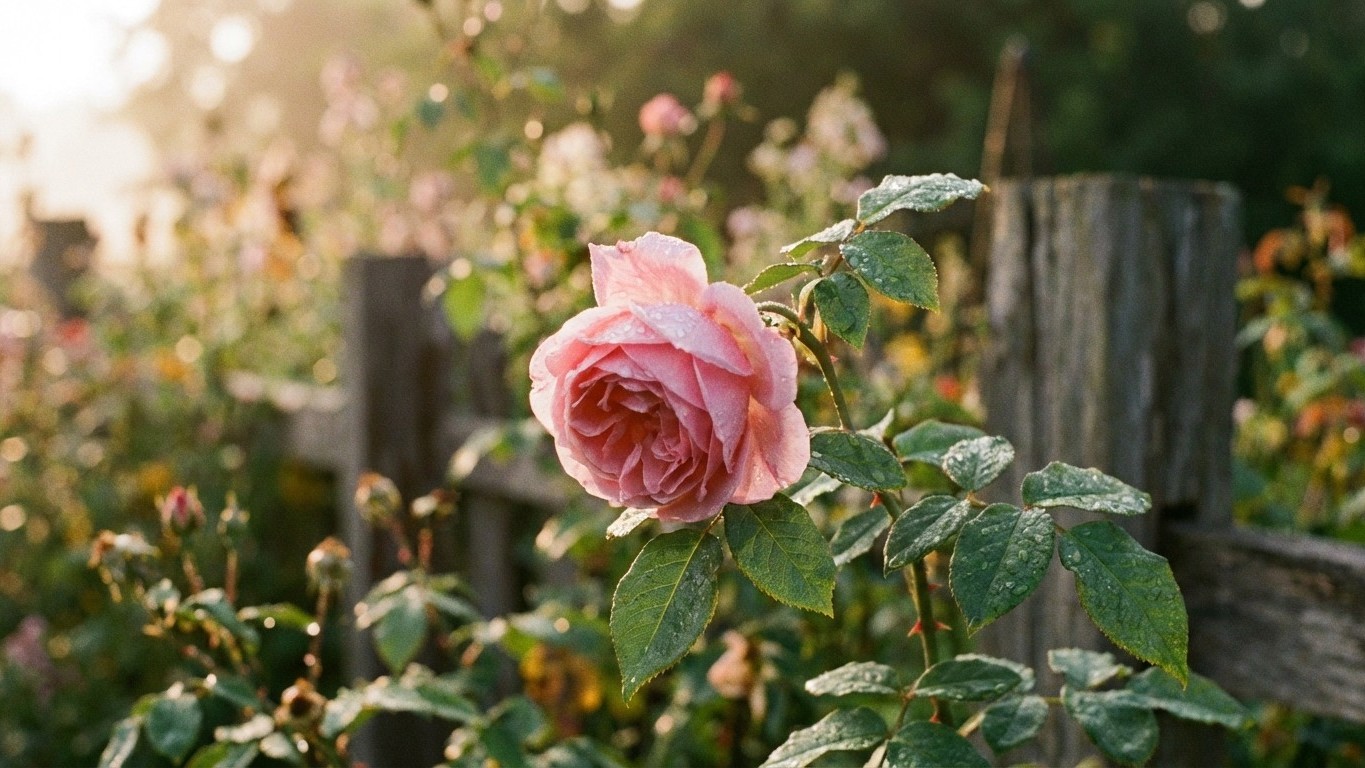

Black spot, powdery mildew and downy mildew are the three common fungal diseases of Ontario roses. Warm, humid summers, cool nights and damp springs and falls give each of the three a season. Rose rosette is a separate and far more serious problem, so it gets its own section below. For planting and general care, see growing roses in Ontario.
Which rose diseases Ontario’s climate brings
Southern Ontario has a humid continental climate. Summers are warm and muggy, spring and fall are cool and damp, and nights drop well below the daytime high even in July. That mix suits fungi. Each one below prefers a different slice of the weather, which is why a rose can look clean in June and ragged by August.
What causes black spot on roses in Ontario?
Black spot is the one most gardeners meet first. The fungus needs a film of water on the leaf for several hours to infect, and warm, wet summers supply that in rain, heavy dew and sprinkler spray. Splashing water carries the spores from the soil and from lower leaves up the plant. The spots are round and black with fringed edges, usually ringed in yellow, and they show on the lower leaves first. Badly hit leaves yellow and drop. The spores overwinter on fallen leaves and on canes, so in fall rake up and bag every fallen leaf instead of leaving them under the bush.
Why does powdery mildew show up on roses here?
Powdery mildew likes the swings between warm days and cool nights, with humid air hanging around the plant. Unlike most leaf fungi, it does not need wet leaves to infect, so it can show up in a dry spell. It forms a white, dusty coating on young leaves, shoots and flower buds. New leaves curl, turn reddish purple and stay small. Crowded plantings, walls and fences that block the breeze make it worse.
Is downy mildew common on Ontario roses?
Downy mildew is the least familiar of the three, and it favors cool, wet weather, the kind that settles in during spring and again in fall. It causes purplish red to brown blotches with angular, irregular edges, and leaves turn yellow and fall quickly. In damp conditions a gray fuzz can appear on the underside of the leaf. It is often mistaken for black spot, but the blotches lack the fringed edge and they spread fast. A bush can lose most of its foliage in a couple of weeks.
When each one shows up here
Around Toronto, the average last spring frost falls in late April to early May and the average first fall frost in mid to late October, depending on the station and the years averaged. Both are midpoints. In one year out of two the last frost falls later than the average spring date, and in one year out of two the first fall frost arrives later than the average fall date. Northern and upland parts of the province run weeks behind this Toronto station, and the disease calendar shifts with them. Toronto falls in zone 7a of Canada’s own hardiness system, which does not convert to a USDA zone.
What shows up in spring?
Roses leaf out from late April into May. The soft new growth is what downy mildew and early powdery mildew go after, especially when a cold, rainy stretch settles in. Watch for purple-brown blotches on the first leaves in May and early June, and for white dust on the tips of new shoots.
What shows up from midsummer to frost?
Black spot usually appears on lower leaves in June, then climbs the plant through July and August as warm humid weather and thunderstorms keep the foliage wet. Powdery mildew has a second push in late August and September, when the days are still warm but nights turn cool. Downy mildew can return in the damp weeks of October. Leaves keep dropping until frost.
| Disease | Weather that drives it | Usual months | First sign |
|---|---|---|---|
| Black spot | Warm, wet summers; splashing water | June to September | Black fringed spots with yellow rings on lower leaves |
| Powdery mildew | Warm days, cool nights, humid air | May and June, then late August to September | White dust on new shoots and buds |
| Downy mildew | Cool, wet weather | May to early June, again in October | Purple-brown angular blotches, fast leaf drop |
What this changes about spacing and watering
Roses cannot be made immune to these fungi, but the plant’s surroundings decide how long its leaves stay wet. Air movement and dry foliage are the first line of defence. Everything else, including sprays, only backs those two up.
How far apart should roses be in Ontario?
Plant hybrid teas and floribundas about 3 feet apart, and give shrub roses 4 to 5 feet. Keep every rose at least 2 feet from a solid wall or fence so air can pass behind it. A bed packed shoulder to shoulder holds humid air in the middle of the plants, and that is where powdery mildew starts. Prune out crossing canes so the center stays open. Choose a spot that gets morning sun, because early light burns off dew before fungi can use it. A bed under an eave or tight against a hedge stays damp far longer.
What time of day should you water roses?
Water in the early morning, roughly between 6 and 9 a.m. The leaves dry in the morning sun and breeze, so spores have little time to germinate. Evening watering leaves foliage wet through a cool night, which is the exact setup black spot and downy mildew want. Aim the water at the soil with a soaker hose or drip line, and give the bed about an inch a week in a deep soaking instead of a daily sprinkle. If an overhead sprinkler is your only option, run it early enough that the leaves are dry by midday.
A 2 to 3 inch layer of mulch also helps. It keeps rain from bouncing soil spores onto the lowest leaves. Pull it back a few inches from the base of the canes so it does not hold moisture against them.
Rose rosette: the one that means digging the plant up
Rose rosette is a virus spread by a microscopic mite that rides the wind from rose to rose. It has no treatment and no cure. It has been moving north and east through the US for decades and is established in states around the Great Lakes, and wild multiflora rose, which grows along fields and roadsides in southern Ontario, is a known host. Ask provincial agriculture staff what has been confirmed near you, and treat any suspect plant as rosette until a diagnostician says otherwise.
The signs are hard to mistake once you know them. Shoots come out in a dense, bushy tuft called a witches’ broom. New growth is red or deep burgundy and stays that color instead of turning green. Canes grow unusually thick and soft and carry a crowd of extra thorns. Leaves are small, crinkled and misshapen, and flowers are distorted or fail to open. A plant at this stage will not recover, and pruning off the damaged shoots does nothing, because the virus is already in the whole plant.
Do not wait to see if it improves. Dig the plant out, roots included, because root pieces left in the soil can sprout and carry the virus. Bag the plant in plastic before you carry it across the yard, and put it in the trash. Do not compost it or chip it. Check nearby roses and any wild roses close by, since the mites move between them.
Checking this against your own county
Ontario does not run county extension offices the way US states do. The province’s agriculture program, on the Government of Ontario agriculture and food page, is the place to start for current disease reports and diagnostic help. Local Master Gardener groups can also look at a leaf in person. Bring a few affected leaves in a sealed bag, plus photos of the whole plant, and have a suspect plant confirmed before you tear out a whole bed or buy a spray.
Common questions
Can black spot be cured once it starts?
Spots that have already formed stay on the leaf. Pick off and bag the worst leaves, fix the watering and airflow, and new growth can stay clean. A fungicide labeled for roses and permitted for home garden use in Ontario protects new leaves when applied before infection, so follow the label on timing and frequency.
Can I compost diseased rose leaves?
Home piles rarely get hot enough to kill black spot spores, so bag the leaves and put them in the trash or municipal yard waste if your town accepts it. Rose rosette plants should never be composted.
How do I tell downy mildew from black spot?
Black spot makes round black spots with fringed edges and a yellow halo, mostly on lower leaves. Downy mildew makes purple-brown blotches with angular edges and can show gray fuzz underneath in damp weather. It also strips leaves faster than black spot does.
Does powdery mildew kill roses?
Rarely. It distorts new growth and weakens a plant that gets it year after year, but a healthy rose usually survives. Better airflow and wider spacing cut it back, and heavily coated shoots can be pruned out and bagged.