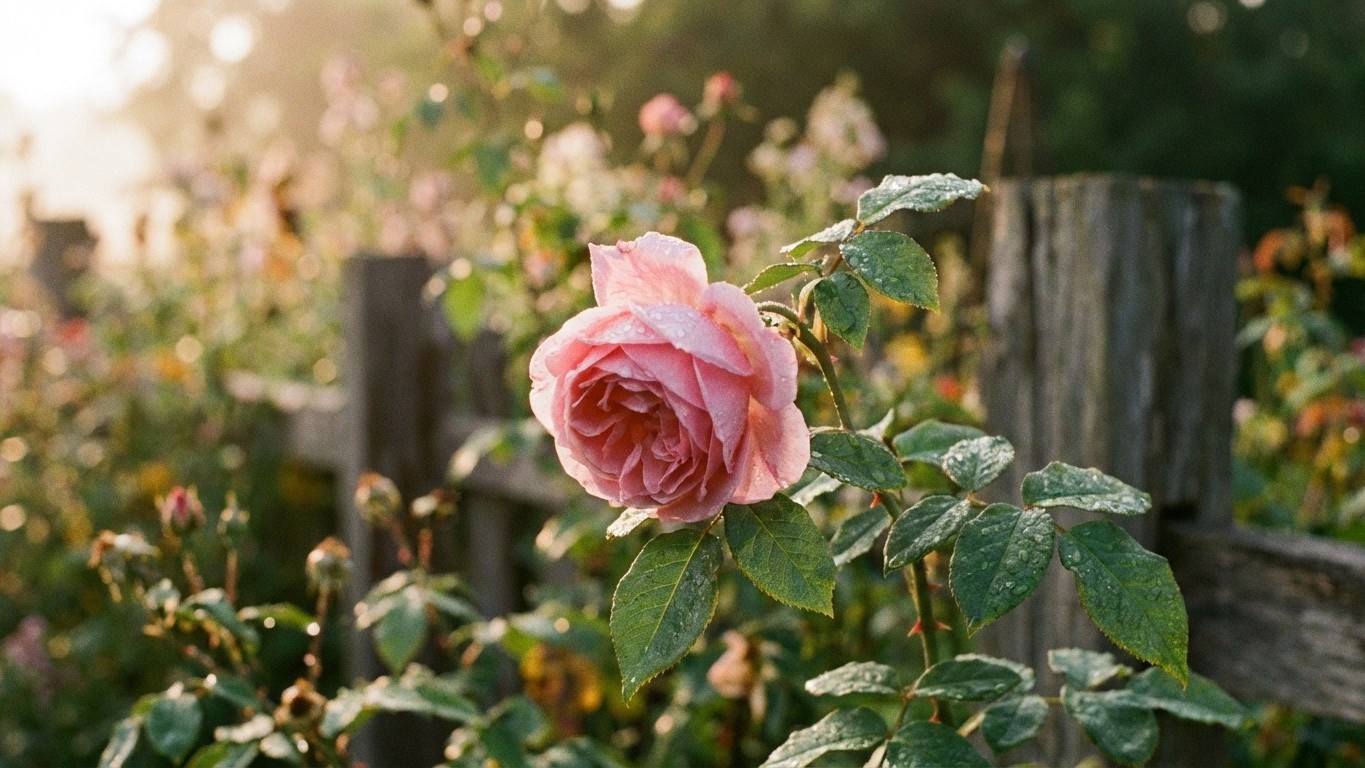

Rugosas, the Explorer series and a short list of tough shrub roses such as Knock Out come through Ontario winters with little help. Hybrid teas, tree roses and supermarket miniatures are the ones most likely to fail, even though garden centers sell them each spring. What separates the two groups is the wood. Roses grown from hardy stock on their own roots regrow true after a hard winter, while grafted, cold-tender ones lose their tops and sometimes the whole plant.
Which roses survive an Ontario winter
What does Canadian zone 7a mean for a rose bed?
Toronto, the reference city for southern Ontario, sits in Canadian hardiness zone 7a on Natural Resources Canada’s plant hardiness map. The Canadian system folds in seven climate variables where USDA uses one, and Natural Resources Canada states that there are no simple conversions between the two. A US grower’s tag reading “zone 5” gives you a loose hint about Ontario conditions at best.
Frost dates sketch the growing window. At the Toronto Pearson airport station, Environment and Climate Change Canada’s climate normals put the average last spring frost in late April and the average first fall frost in mid-to-late October. Those are midpoints. In about half of all years the last frost falls after the average date, and in about half the first fall frost arrives before it. Northern Ontario and the higher ground north of the lake run weeks behind the airport, so a garden there works from a different calendar.
Cold alone seldom kills a well-chosen rose. Drying wind, freeze-thaw cycles that heave crowns out of the soil, and a January with bare ground do more damage. A steady blanket of snow insulates the base of the plant, which is why the same variety can thrive in the snowbelts east of Lake Huron and Georgian Bay and struggle on a windy, open hillside closer to Toronto.
Which rose types clear a Canadian zone 7a winter?
At the cold end, rugosas and their hybrids are the safest bet. They are usually grown on their own roots, take wind and salt, and need no winter wrapping. The Explorer series was bred in Canada by Agriculture and Agri-Food Canada for Canadian winters, and the Parkland series from Morden, Manitoba was bred for harsher ones still. Species roses and old garden roses such as gallicas also hold up well.
Hybrid teas sit at the other end. Toronto’s Canadian zone 7a is mild enough that they often live through with soil mounded over the base. In colder districts the same plants die back to the ground or die outright. Floribundas and grandifloras fall in between, and modern shrub roses like Knock Out sit closer to the tough end. If you garden anywhere colder than the lakeshore, treat the hybrid tea as an experiment and the rugosa as the plan.
Named roses that hold up here
Which shrub roses are the toughest?
Knock Out is a rose many Ontario gardeners already know, and it earns its shelf space. It blooms on new wood and repeats from early summer into fall. A winter that kills the canes back toward the snow line costs you height but little flowering. It is an easy first rose near Toronto and a reasonable bet in colder districts.
Therese Bugnet came out of Alberta, bred by Georges Bugnet, and it behaves like it. The double, blush-pink flowers are fragrant, the reddish canes arch tall, and it asks for no wrapping. Hansa is a rugosa with double magenta-purple flowers, a strong clove scent and big orange-red hips in fall. It tolerates road salt, so it suits the edge of a driveway that gets plowed. F.J. Grootendorst, another rugosa hybrid, carries tight clusters of small red flowers with fringed petals and has the same no-fuss winter record.
Which climbers and compact Explorers hold up?
New Dawn is a pale pink, repeat-blooming climber that usually comes through southern Ontario winters with its canes left on the fence. In colder districts expect the tips to die back. In spring, wait for leaves before cutting out dead wood, because canes that look lifeless in April are sometimes alive below the damaged tip.
William Baffin and John Cabot are Explorer climbers with deep pink and red-pink flowers, and both are known for cold tolerance. Henry Hudson is a compact rugosa hybrid in the same series, with white blooms opening from pink buds, a good fit for a small bed. Champlain, an Explorer shrub with dark red flowers, rounds out the list for gardeners who want red.
| Rose | Type | Winter behavior in Ontario |
|---|---|---|
| Knock Out | Modern shrub | Dies back in colder districts, regrows and blooms on new wood |
| Therese Bugnet | Rugosa hybrid | No protection needed |
| Hansa | Rugosa | No protection needed, tolerates road salt |
| F.J. Grootendorst | Rugosa hybrid | No protection needed |
| New Dawn | Climber | Fine in the south, tip dieback in colder districts |
| William Baffin | Explorer climber | Bred for Canadian winters |
| Henry Hudson | Explorer, rugosa hybrid | Bred for Canadian winters |
Sold here, but not for this zone
Which roses on the garden-center shelf struggle in Ontario?
Garden centers buy from the same national growers, and plenty of stock arrives with a label written for a milder climate. Four kinds of rose on Ontario shelves need work to get through a winter:
- Hybrid teas such as Peace and Mister Lincoln. They are grafted, with large flowers on stiff canes, and in colder districts they lose the canes to the ground or die.
- Tree roses (standards). A grafted rose sits on top of a tall trunk, so the most tender part of the plant stands exposed to wind. Many are lost unless wrapped.
- Potted miniatures from grocery stores and gift displays. They are grown for the windowsill, and many are short-lived outdoors.
- Climbing hybrid teas. The long canes are hard to mound, and in a cold winter they die back hard.
English roses from the large breeders vary. Some do well in southern Ontario and others are borderline, so ask the nursery which ones it has seen come through locally.
How do you protect a tender rose through an Ontario winter?
Wait until a few hard frosts have passed and the soil has started to freeze, then mound soil about a foot deep over the base of the plant. Bring the soil in from elsewhere in the bed, because scraping it from around the roots exposes them. Mounding too early in a warm fall invites rot and gives mice a nest. In spring, pull the mound away as the soil thaws and the buds swell.
Tree roses need the entire top wrapped in burlap stuffed with straw, which is a bigger job than most buyers expect. For the climbing types, one honest option is to swap in an Explorer climber and skip the wrapping altogether.
What to check on the label before buying
What does the grade on a rose label tell you?
Grade is a measure of size at purchase. A bare-root rose sold as No. 1 has more and thicker canes than the lower grades, which have fewer, thinner ones. A heavier plant has more stored energy to push new growth after a rough winter. Potted roses are usually labeled by pot size instead, and a larger pot generally means a bigger root system. Grade tells you how strong the plant is today, and it says nothing about winter hardiness.
Why does own-root matter more the colder it gets?
A grafted rose has a swollen knob near the soil line, the graft union, where a named variety was joined to a vigorous rootstock. In a mild winter the union survives and nothing changes. In a harsh one the top can die, and the rootstock sends up shoots that carry different leaves and flowers than the rose you paid for. An own-root rose regrows from its own roots, true to its name, so even a plant killed to the ground comes back as the same variety. The colder the district, the more often that second chance gets used, so choose own-root plants when the tag offers the option.
Check which hardiness system the tag uses. US growers print USDA zones, which do not line up with Canadian ones. Look for a Canadian zone or ask the nursery staff. Rugosas and Explorer roses are typically sold own-root, and many shrub roses are too.
Checking this against your own county
A reference city is a starting point. Your own lot may sit a zone warmer beside a south wall or a zone colder in a frost pocket. Natural Resources Canada’s plant hardiness site lets you look up your municipality’s Canadian zone before you buy anything. For local winter-damage reports and what has worked in your area, the Government of Ontario’s agriculture and food pages point to provincial agriculture resources and contacts, and a local Master Gardener group or an independent nursery will know which roses came through the last hard winter. For soil, planting and pruning, see the full guide to growing roses in Ontario.
Common questions
What is the toughest rose for an Ontario garden?
Rugosas such as Hansa and F.J. Grootendorst, along with Therese Bugnet, are the most dependable. They need no winter wrapping and tolerate wind and road salt. Explorer roses such as William Baffin come next.
Can I trust the zone number on a rose tag?
Only if it is a Canadian zone. USDA numbers come from a different system, and Natural Resources Canada says the two do not convert. A tag with a USDA number is a rough hint.
Will a hybrid tea come back after an Ontario winter?
Near Toronto, in Canadian zone 7a, it often does when soil is mounded over the base after the ground starts to freeze. In colder districts expect dieback or loss, and plan to replace it.
Do rugosa roses need winter protection?
Generally not. They are the roses that Ontario gardeners can mostly leave alone. If a few cane tips die back, trim them in spring once the leaves open and you can see where the live wood ends.