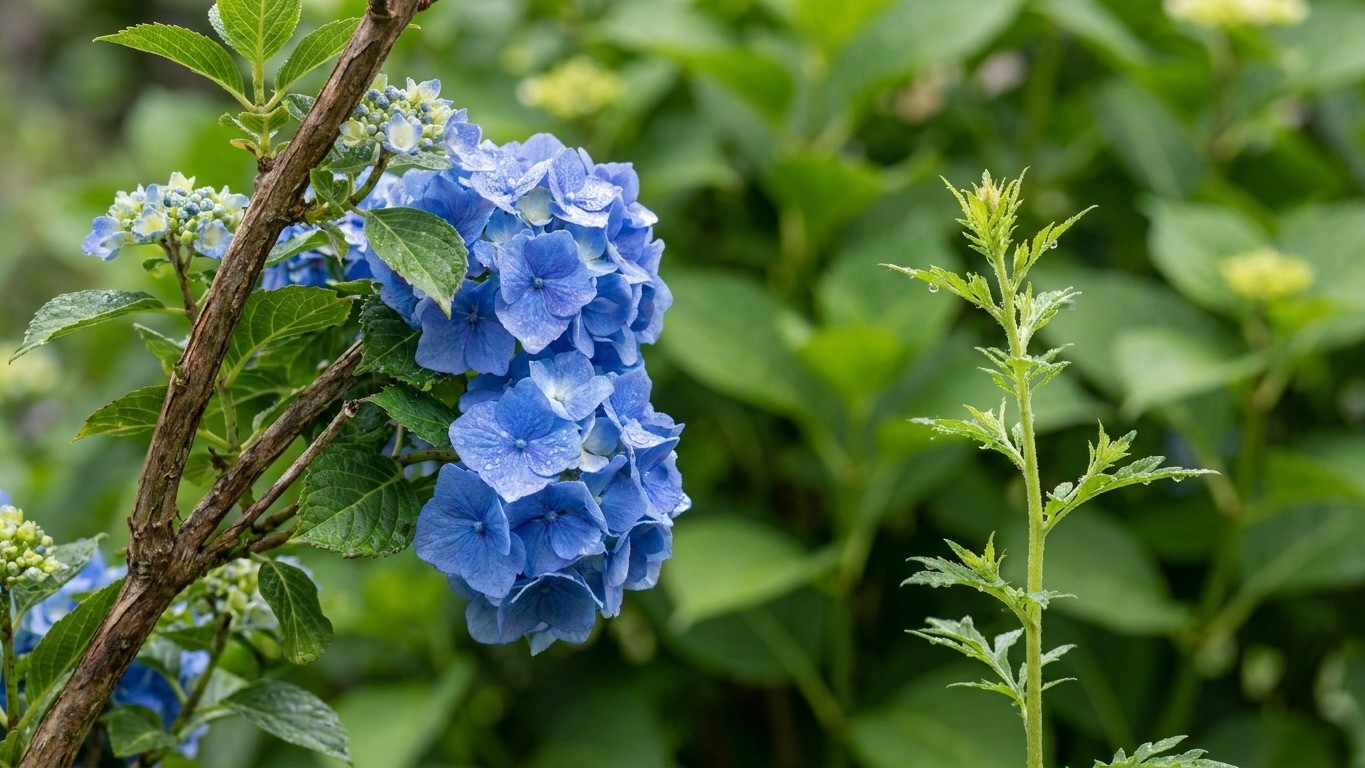

Utah gardeners prune hydrangeas at two different times, and the right one depends on the type. Panicle and smooth hydrangeas get cut back in late winter, before leaves open. Bigleaf, mountain and oakleaf hydrangeas get a light trim right after they flower, by about the end of July. Get it backwards and you cut off next summer’s flower buds. Your local frost dates decide where inside those windows the work falls.
What this comes down to in Utah

In Salt Lake City, the last spring freeze (32°F) typically arrives between April 12 and April 29, and the first fall freeze between October 18 and October 29, based on the NOAA NCEI 1991-2020 Climate Normals. Late-winter pruning of panicle and smooth hydrangeas belongs in the weeks before that April window, and summer pruning of the old-wood types has to finish early enough for next year’s buds to form before October. Between the mean last and first freeze the reference station has roughly six months frost-free.
Salt Lake sits in a mild valley, though. Most of Utah is higher and colder, and southern Utah is warmer, so treat those dates as a starting point you will shift for your own town.
Which hydrangeas bloom on old wood and which on new wood?
Bigleaf, mountain and oakleaf hydrangeas form their flower buds in late summer and carry them through winter on the stems that grew that year. Cut those stems in fall, winter or early spring and the flowers go with them. Panicle and smooth hydrangeas work the other way. They build flower buds on shoots that grow in spring, so a hard cut in March costs nothing. Familiar examples are Limelight (panicle) and Annabelle (smooth). Reblooming bigleafs such as Endless Summer flower on both old and new wood, which is why they forgive a mistimed cut better than a classic bigleaf does.
What is the pruning window for each type?
The table lays out the timing for the main groups. General care (soil, sun, water) is covered in the guide to growing hydrangeas in Utah.
| Type | Flowers on | When to prune |
|---|---|---|
| Panicle | New wood | Late winter, before leaf buds swell |
| Smooth | New wood | Late winter, before leaf buds swell |
| Bigleaf | Old wood (rebloomers: old and new) | Right after flowering, by about the end of July; remove only dead wood in spring |
| Mountain | Old wood | Right after flowering, light trim only |
| Oakleaf | Old wood | Right after flowering, light trim only |
Working it out for your own garden
A calendar date breaks the first time you move, or the first time a spring runs two weeks late. The frost window is a better anchor, because it moves with your garden.
How do you work out your pruning date from the frost window?
For panicle and smooth hydrangeas, start with your average last spring freeze. Plan to prune from about six weeks to about two weeks before it, and stop the moment leaf buds start to swell. Counted back from Salt Lake City’s April 12 to April 29 window, that lands from roughly early March into early April. A garden whose last freeze comes three weeks later shifts the whole window three weeks later.
For bigleaf, mountain and oakleaf hydrangeas, count back from your average first fall freeze instead. These shrubs need the late summer weeks to set next year’s buds, so finish trimming well before that freeze. At Salt Lake City, with the first freeze between October 18 and October 29, that puts the deadline around the end of July or the first days of August. If your first freeze comes three weeks earlier than Salt Lake’s, the deadline moves three weeks earlier too, to around the second week of July.
Take two shrubs in the same valley. A panicle hydrangea can be cut to knee height in mid-March and still bloom in August on new shoots. A bigleaf cut to knee height the same week will leaf out fine and flower very little, because the buds were on the stems you removed.
How do you tell live wood from dead wood in spring?
Old-wood hydrangeas leaf out late, often after the last freeze window has started, and bare stems in April tell you very little. Scrape a small patch of bark with a thumbnail. Green and moist underneath means the stem is alive. Brown and dry means it is dead. Wait until buds on the lower stems have broken, then cut each dead stem back to the first pair of live buds. If the whole top is dead and green starts low on the stems, cut just above where the green begins. If nothing is green above the soil, cut to the ground and watch for shoots from the crown.
What changes across the state
Utah runs from desert basins to high mountain valleys, and the USDA hardiness zone range (a system built on one variable, the average annual extreme minimum temperature) stretches from 4a to 9a. Hydrangea pruning follows that spread, because both the frost window and winter damage shift with it.
How does elevation change pruning time?
Higher ground has a later spring and an earlier fall. In mountain towns and on higher benches, the late-winter window for panicle and smooth hydrangeas slides later in the spring, and the summer deadline for old-wood types slides earlier. Cold air also pools in low spots, so a garden at the bottom of a slope can run behind one fifty feet higher. Gardens at the cold end of the range often lose the top growth of bigleaf hydrangeas in hard winters. There, bigleaf types act like shrubs that flower on new growth, and many bloom late or not at all. Panicle and smooth types are the safer choice, and their pruning timing is easy.
How does north versus south change it?
Southern Utah warms earlier and holds frost off longer. Shrubs break dormancy sooner, so late-winter pruning moves earlier, and the old-wood deadline moves later because the growing season runs well past Salt Lake’s. Heat brings its own concern, since a hard cut in a hot, dry stretch leaves exposed stems to scorch. Northern valleys such as Cache Valley run cooler than the Wasatch Front, so they follow the colder pattern above.
Small-scale effects matter too. A south-facing wall, a spot near the Great Salt Lake, or a sheltered courtyard can make a yard behave like one a zone warmer. A windy open lot behaves like one a zone colder. Judge by what your own shrubs do each spring.
The mistakes this state punishes

Utah winters swing between warm spells and hard freezes, and the pruning errors that hurt most are the ones that ignore that pattern.
- Cutting bigleaf hydrangeas back in fall to tidy the bed. The buds for next summer sit on those stems, and the dead-looking canes also shield the lower buds from winter cold. Leave them standing until spring.
- Pruning panicle hydrangeas during a warm February stretch. The shrub wakes up, pushes soft shoots, and a late freeze in the April window burns them. Wait until the weather has settled and buds are still tight.
- Judging old-wood hydrangeas by bare stems in early April. Many are alive and just slow. Do the scratch test and wait for buds to break before removing anything.
- Heavy pruning in late summer or fall. It prompts tender new growth that the first freeze, October 18 to October 29 at Salt Lake City, kills back. Stop pruning old-wood types by the end of July and leave panicle and smooth types alone until late winter.
The fix in every case is the same: identify the type first, then match the cut to the wood that carries the flowers.
Checking this against your county
A statewide guideline built on Salt Lake City is a starting point for your yard, and the dates will not match every county. Your county office of Utah State University Extension can tell you the average last and first freeze for your town and how local hydrangeas have fared over recent winters. Ask for their hydrangea guidance as well, since it reflects local soil and elevation. Then use the count-back method above to set your own pruning dates.
Common questions
Can I prune hydrangeas in fall in Utah?
Only to remove dead or broken stems. Fall cuts take off flower buds on bigleaf, mountain and oakleaf types, and on any type they can trigger soft growth just before the first freeze. Wait for late winter or, for old-wood types, right after bloom.
When should I cut back panicle hydrangeas?
In late winter, from several weeks before your average last freeze until leaf buds begin to swell. At Salt Lake City that is roughly early March into early April. Cutting stems back lightly keeps the shrub’s shape. Cutting them lower gives fewer, larger flowers.
My bigleaf hydrangea looks dead in April. Should I cut it down?
Not yet. Scratch a stem with a thumbnail and look for green. Old-wood types leaf out late, often well after the last freeze window opens. Once buds break on lower stems, cut the dead portions back to live buds.
Is it too late to prune in August?
For bigleaf, mountain and oakleaf hydrangeas, yes. New buds for next summer are already forming, and cutting now removes them. Panicle and smooth types can wait until the following late winter, and August cuts could encourage tender growth before the first freeze.