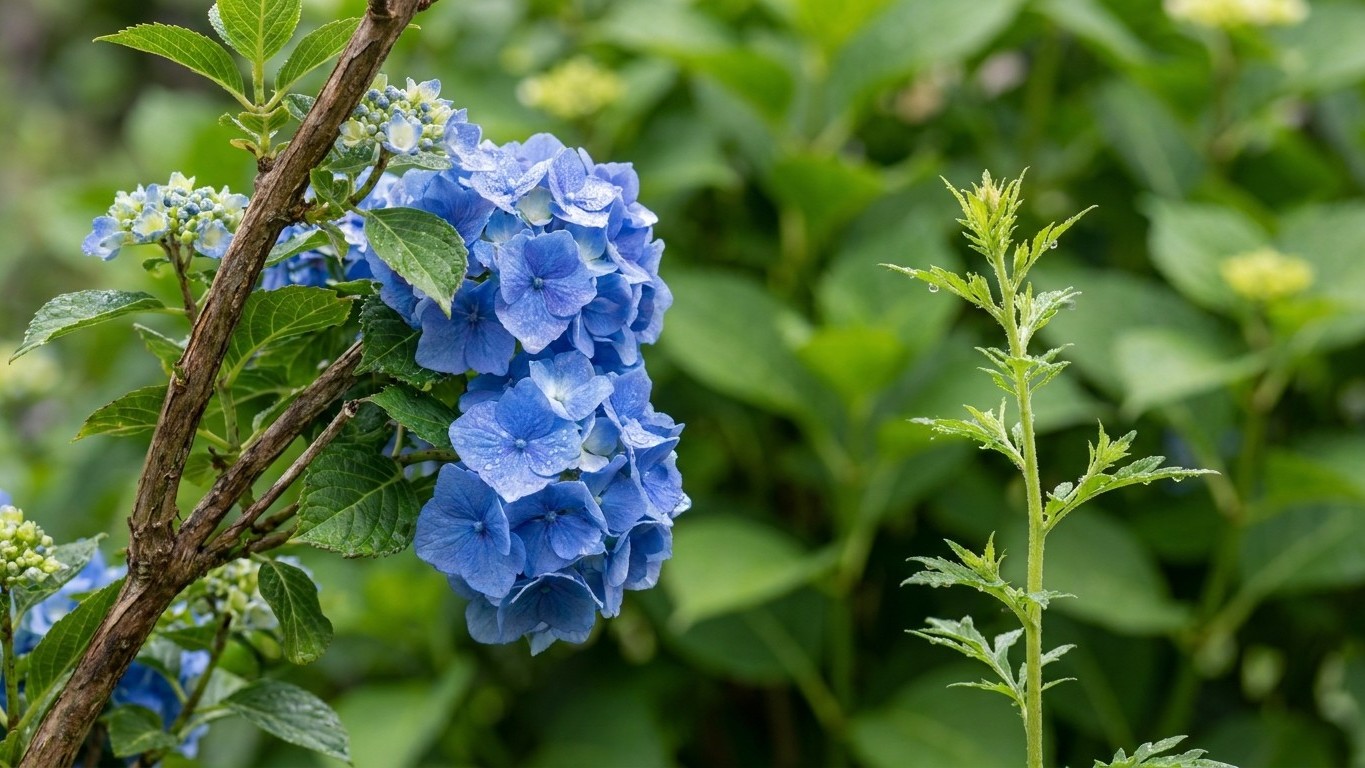

Prune hydrangeas by bloom habit first, then adjust for your local frost. Bigleaf and oakleaf types flower on old wood, so trim them right after the flowers fade in early summer. Panicle and smooth types flower on new growth, so cut them back in late winter before buds swell. Wait until spring leaf-out to remove winter-killed stems. A fall cleanup costs bigleaf and oakleaf hydrangeas their flowers across most of Texas.
What this comes down to in Texas
In Houston, where the last spring freeze falls between February 4 and March 1, late winter is the pruning window for hydrangeas that bloom on new wood. The weeks right after flowering are the window for those that bloom on old wood. The Houston range comes from NOAA NCEI climate normals for the IAH station (the 30 to 70 percent probability band for a 32 F freeze), and the first fall freeze at the same station falls between December 1 and December 19.
Those two ranges frame the pruning year. Bigleaf and oakleaf hydrangeas build next year’s flower buds on their stems during late summer and fall, and the buds sit on bare canes all winter. Any cut made from about August until spring takes some of those buds with it. Panicle and smooth hydrangeas form flowers on shoots that grow in spring, so a winter cut costs them nothing. The spring freeze range matters too, because pruning wakes a plant up. Cut too early in a warm spell and a late freeze can burn the tender new shoots.
Texas spans roughly USDA hardiness zones 6 through 10 (the USDA system, built on the average annual extreme minimum temperature). Houston sits at the mild Gulf end of that spread, so these dates are a reference point and not a calendar for the whole state. The next sections show how to shift them.
Which hydrangeas bloom on old wood and which on new wood?
The group your shrub belongs to sets the pruning date. This table covers the types most often sold in Texas nurseries.
| Type | Blooms on | Best time to prune | What to cut |
|---|---|---|---|
| Bigleaf (mophead, lacecap) | Old wood | Right after flowers fade, early to midsummer | Spent blooms, a few of the oldest canes |
| Oakleaf | Old wood | After bloom | Little beyond shaping |
| Reblooming bigleaf | Old and new wood | Light trim after the first flush | Dead stems in spring, spent flowers |
| Panicle | New wood | Late winter, before buds swell | Up to about a third of the height |
| Smooth | New wood | Late winter, before buds swell | Can be cut back hard |
Working it out for your own garden
A fixed calendar date breaks the moment you move or get an unusual winter. The method that holds up has two steps. Identify the pruning group, then place the cut relative to your own last and first freezes.
How do you tell which pruning group your hydrangea belongs to?
Start with the plant tag if you still have it. Without one, look at the flowers. Big round mopheads or flat lacecaps in late spring, often blue or pink, mean bigleaf. Lobed leaves shaped like an oak’s mean oakleaf. Cone-shaped clusters opening in midsummer and fading to pink or tan mean panicle. Big white globes on a floppy shrub in early summer mean smooth hydrangea. In winter, look at the bare stems. Plump buds along the canes and at the tips mean flower buds are already waiting, and cutting those canes removes the flowers.
Take a panicle hydrangea in Houston. The last freeze range is February 4 to March 1, and buds swell as the weather warms. The target is the weeks just before swelling, while the plant is still asleep. If a warm spell has already started the buds, panicles still tolerate the cut, because they regrow vigorously. Hold off on pruning only if a hard freeze is in the forecast.
Now take a bigleaf in the same city. It finishes flowering in late spring or early summer. Cut within a few weeks of the last flower fading and the shrub has the rest of summer and fall to set buds before the first freeze, which falls between December 1 and December 19. Wait too long and many of the buds you wanted are already gone. The old-wood rule is simple to state. The cut belongs after bloom and well before fall.
How do you tell dead stems from dormant ones?
Bigleaf hydrangeas leaf out late, often after neighboring shrubs are fully green. A cane that looks dead in March may be fine. Scratch the bark near the base with a thumbnail. Green and moist underneath means alive. Brown and dry means dead. Cut dead wood back to the first pair of live buds, or to the ground if the whole cane is gone. Do this once the shrub has shown its leaves for the year.
What changes across the state
Texas is not one climate. The Houston figures above describe a humid Gulf city, and hydrangea pruning shifts as you move away from it.
In the Panhandle and High Plains, elevation and distance from the Gulf bring colder winters and spring freezes that run well past Houston’s. Late-winter pruning of panicle and smooth types moves later by weeks. Bigleaf buds there are often killed by winter cold, so a spring cleanup frequently removes whole dead canes and the bloom can fail regardless of when you prune. North Texas sits between the two. It can see a warm, tempting February followed by a hard freeze, so it rewards patience before a late-winter cut.
The Hill Country has hot, dry summers and limestone soils. Plants there suffer more from heat stress after any summer pruning, so keep post-bloom cuts light and early. East Texas, with its humid, acidic ground, runs closer to the Houston pattern but a little cooler in winter. Farther south toward the Rio Grande Valley the winters are mildest and the freeze risk is smallest, though the summer heat is the bigger concern for old-wood types.
Microclimates matter inside a single metro area as well. Hobby airport in Houston runs milder than IAH, and a shrub against a south-facing brick wall wakes up earlier than one in an open yard. Watch your own plant’s buds. When the tips start to swell and green up, the pruning window for new-wood types is closing.
The mistakes this state punishes
The fall cleanup is among the costliest. Leaves drop after the first freeze and the shrub looks messy, so many gardeners cut it down. On a bigleaf or oakleaf that cut removes the flower buds. Leave the canes standing through winter. Remove only what is clearly dead, and do it after leaf-out.
A winter shaping cut on a bigleaf does the same damage. January and February feel like the time to prune everything, which is right for panicles and wrong for old-wood types. Check the type before you pick up the shears.
Another costly habit is pruning in a warm spell. Texas winters swing. A warm spell can swell buds, and a freeze afterward can burn new growth. If buds have already opened, cover the shrub with a sheet on freeze nights. Do not cut it back in response, because that leaves the plant with less to recover from.
Late-summer pruning is the fourth. Hot weather tempts people to trim leggy stems in August or September, but that removes buds just as they form. It also exposes inner stems to afternoon sun. If a bigleaf is too tall, trim a few of the oldest canes right after bloom instead, and accept a smaller shrub.
The last mistake is cutting a freeze-damaged shrub to the ground in January. Some of that damage is only to the tips. Wait for spring growth, then prune back to live buds.
Checking this against your county
The Houston dates are a starting point. Your county’s freeze dates and soil can move the right cut by weeks. Call or visit your county office of Texas A&M AgriLife Extension, where horticulture agents and Master Gardeners can tell you when local hydrangeas break dormancy. For the rest of the picture, including siting, soil, and care through summer, see our guide to growing hydrangeas in Texas.
Common questions
Can you prune hydrangeas in the fall in Texas?
Only deadheading and removing broken stems. Wait until spring leaf-out to judge which other stems are dead. Bigleaf and oakleaf hydrangeas have next year’s buds on their canes by fall, so cutting them back then costs flowers. Panicle and smooth types will survive a fall cut, but they do better pruned in late winter.
When should you cut back a hydrangea that froze?
Wait until the shrub has leafed out in spring, then remove stems that stay bare. Scratch the bark near the base to confirm. Green tissue means the stem is alive, though its buds may still have been damaged.
How far back can you cut a panicle hydrangea?
Trimming about a third of the height each late winter keeps a natural shape. Panicles also tolerate a much harder cut when a shrub has grown too large. They bloom on new wood, so the flowers still come, though the stems may be shorter.
What if you don’t know which type you have?
Do very little for one year. Remove dead wood in spring and spent flowers after bloom, then watch when it flowers and on which stems. That tells you the group, and you can prune on the right schedule the following year.