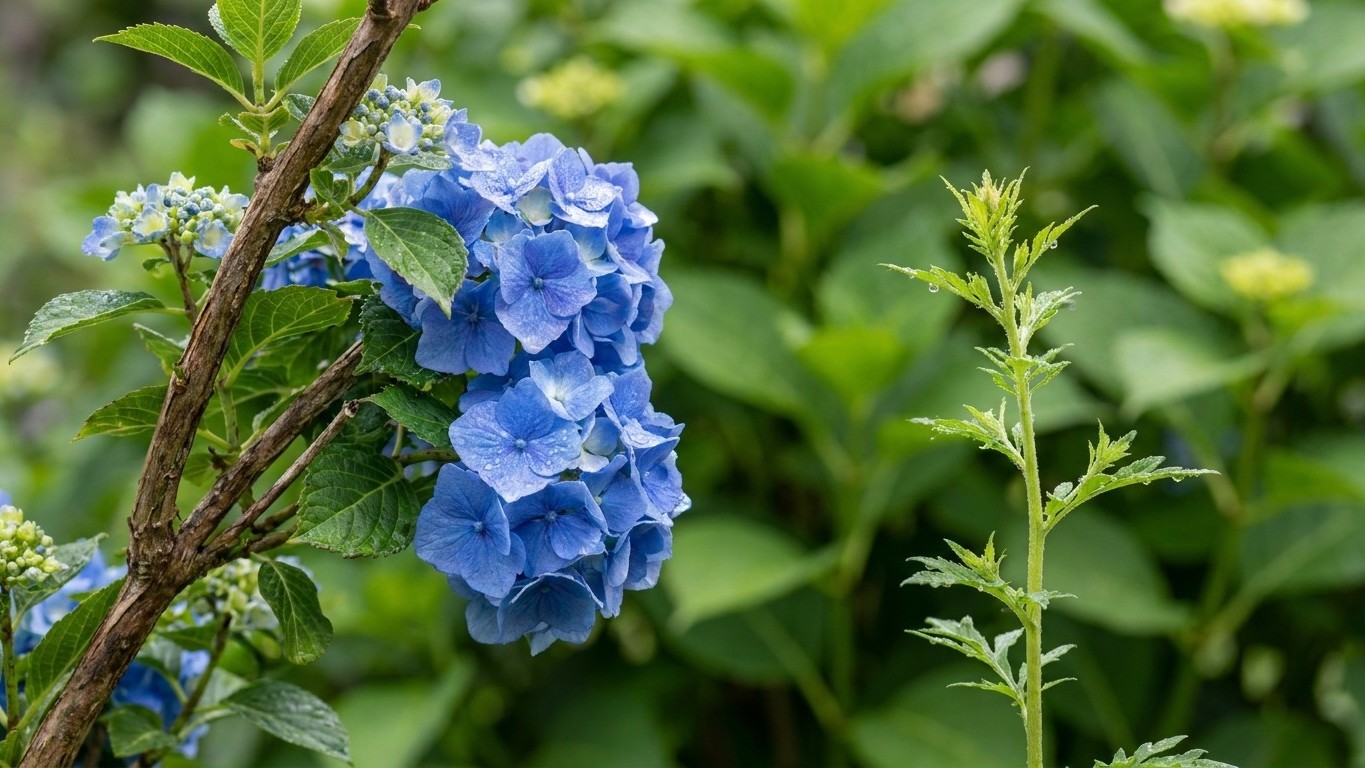

Virginia gardeners prune hydrangeas on two different calendars, and the plant’s type decides which one applies. Hydrangeas that flower on old wood (bigleaf, oakleaf, climbing) get pruned right after they bloom, by early August at the latest. Those that flower on new wood (panicle and smooth) get pruned in late winter, before growth starts. Cut the wrong group at the wrong time and you remove the flowers.
What this comes down to in Virginia

At Virginia Beach, the reference city for these dates, the last spring frost falls between March 20 and April 3, and the first fall frost between November 10 and November 24. New-wood hydrangeas are pruned in the weeks before that spring window, and old-wood hydrangeas are pruned in summer, well ahead of the fall one. Virginia Beach is the mild end of the state, so the Blue Ridge and southwest Virginia run weeks later in spring and earlier in fall.
The reason is where the flower buds sit. Old-wood types set next year’s buds on stems that grow this season. Any cut made between August and the following spring removes buds that are already formed. New-wood types grow fresh stems each spring and flower on the tips, so a hard cut in late winter costs them nothing.
Which hydrangeas bloom on old wood?
Bigleaf hydrangeas, both mopheads and lacecaps, are a common old-wood type in Virginia yards. Oakleaf hydrangeas, with their lobed leaves and cone-shaped flower clusters, follow the same rule, and so does climbing hydrangea. Reblooming bigleaf selections such as Endless Summer flower on old and new wood, which makes them more forgiving. But a hard cut still takes the early flush.
Which hydrangeas bloom on new wood?
Panicle types, including the widely sold Limelight, and smooth types such as Annabelle flower on the current year’s growth. They tolerate a late-winter haircut and often flower better for it, because the new stems come up strong enough to hold the heavy blooms.
| Type | Blooms on | When to prune |
|---|---|---|
| Bigleaf (mophead, lacecap) | Old wood, some rebloomers on both | Right after flowering, by early August |
| Oakleaf | Old wood | Right after flowering, lightly |
| Climbing | Old wood | Right after flowering, only to control size |
| Panicle | New wood | Late winter, before buds swell |
| Smooth | New wood | Late winter, before buds swell |
Working it out for your own garden
A date copied from a neighbor’s calendar breaks the first time you move or a cold year arrives. A better habit is to work from the frost window and the plant’s type, which gives you a range you can adjust.
How do you count backward from the frost window?
For new-wood types, aim to finish pruning three to four weeks before growth gets going. At Virginia Beach the last spring frost runs March 20 to April 3, so subtracting three to four weeks gives roughly the third week of February to mid-March. Because these plants flower on stems that haven’t grown yet, a frost after pruning only nips the first leaves.
Take Annabelle as a worked case. Cut it back in early March, and it sends up new stems through spring and opens its round white flower heads in early summer. Wait until late May to cut, and the plant is already in leaf. It still flowers, but later and on a plant that spent energy on growth you then removed.
For old-wood types, work back from the first fall frost instead, November 10 to November 24 at the same station. The new shoots that carry next year’s buds need time to mature before cold stops them. A classic mophead such as Nikko Blue, cut in late September, grows soft new shoots with no time to set buds. A cut in March removes the buds that were already set, and that season’s flowers are gone.
How do you tell which type you have?
Start with the flower. Round heads of tiny florets on a thick-leaved shrub point to bigleaf, a cone-shaped flower cluster to panicle or oakleaf, and a large white snowball on slender stems to smooth. Oakleaf leaves are lobed like an oak’s, which settles it. When the label is long gone, prune only dead wood and faded flowers for a full year, and note when the plant blooms and what the buds do in spring. That one season of observation tells you which calendar to follow.
How do you tell dead stems from live ones?
Bigleaf stems often look lifeless in March and leaf out in April or May. Scratch a small patch of bark with a thumbnail, and green underneath means the stem is alive. Brown and dry means it can go. Waiting until the plant shows leaves is the surest test.
What changes across the state
The USDA Plant Hardiness Zone Map, which rates zones by the average annual extreme minimum temperature, places Virginia in zones 5b to 8b. That spread is wide, and it explains why one pruning date does not work from Virginia Beach to the far southwest.
Elevation plays a large part. The Blue Ridge and southwest Virginia warm up weeks later in spring and cool earlier in fall than the coast, so the new-wood window slides later and the old-wood deadline arrives sooner. A mountain gardener who prunes a panicle hydrangea in the same week as a Tidewater gardener may be cutting into a plant still in deep dormancy, which is fine. But that same gardener should wait longer before judging bigleaf stems dead, since buds open late there.
Distance from the water matters too. Coastal Virginia has milder winters, and warm spells in late winter can wake bigleaf buds early, which then get caught by a later frost. In the Piedmont and the Shenandoah Valley, winters are colder than on the coast and shrubs break dormancy later. Cold air pools in low spots and valley floors, so a hydrangea in a hollow can lose old-wood buds while one on a slope nearby comes through untouched.
For the gardener, the practical shift is simple. The farther inland and higher up you are, the more you lean on new-wood types, and the more carefully you protect old-wood stems through winter by leaving them uncut.
The mistakes this state punishes

Tidying up a bigleaf in fall or winter is a costly error. The stems look scruffy, but they carry next year’s flower buds, and cutting them back removes those buds. The same applies to cutting in a warm spell in February. The shrub then pushes soft growth, and a late freeze burns it back.
Cutting bigleaf stems to the ground in March because they look dead is another common mistake. Often the lower buds are alive, and the plant would have flowered from them. Leave the stems until leaves open, then remove only what stays brown.
Pruning old-wood types too late in summer runs into the fall window. A shear job in September pushes tender shoots that never harden before the November frost, and it removes budded wood as well. Finish by early August, and if you miss the window, skip pruning that year.
On new-wood types, the mistake runs the other way. Waiting until the plant is fully leafed out in May delays blooming and wastes growth. And shaping any hydrangea like a boxwood hedge, with flat cuts across the top, removes flower buds on old-wood types and produces weak, crowded stems on new-wood ones. Prune each stem back to a pair of buds or a branch junction, and cut out a few of the oldest stems at the base each year to keep the plant open.
Checking this against your county
A state-wide figure is a starting point. The dates above come from Virginia Beach, and your own garden may sit weeks away from them. Your county office of Virginia Cooperative Extension can tell you the local frost pattern and what is normal for hydrangeas in your soil and elevation. For soil, sun, watering and everything else beyond pruning, see growing hydrangeas in Virginia. The frost windows come from the NOAA NCEI climate normals for the Virginia Beach station, which you can look up directly.
Common questions
Can I prune hydrangeas in fall in Virginia?
Panicle and smooth types can be cut in fall without losing flowers, though waiting until late winter leaves seed heads for winter interest and gives the stems some protection. Bigleaf, oakleaf and climbing types should not be cut in fall, because their buds for the next bloom are already set.
When do I cut back dead stems on a bigleaf hydrangea?
Wait until the plant leafs out, usually April or May, and the last frost window in your area has passed. Remove stems that remain brown and brittle, with no green under the bark when scratched.
How much can I cut off a panicle hydrangea?
A modest amount in late winter is a safe annual amount. A hard cut to a low framework produces fewer, larger flower heads. A light trim produces more, smaller ones on a taller plant.
Do reblooming hydrangeas need pruning?
Very little. Remove spent flowers and dead wood, and shape lightly right after the first flush in early summer. Heavy cutting in late winter still removes the early flowers on old wood, so keep any cutting minimal.