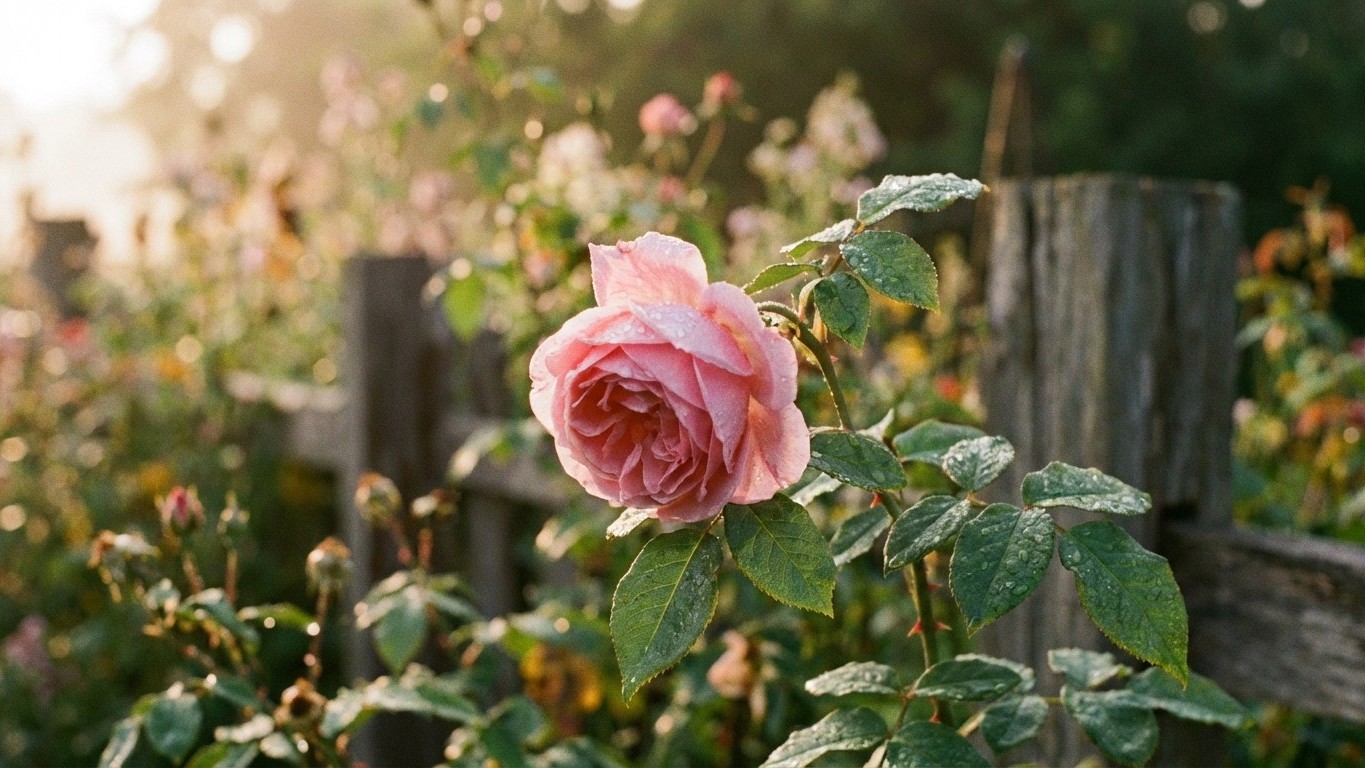

Roses along the Gulf Coast usually need nothing more than a frost cloth on a few nights. From North Texas through the Panhandle, the graft union (the knob where the named rose is joined to its rootstock) needs a mound of bagged soil or compost once hard freezes arrive. Where you sit between those two ends decides the job, and the weather sets the timing. For the basics of growing roses in Texas, start with the main guide.
Do roses need winter protection in Texas?
The state runs from USDA zone 6b to 10b on the current USDA Plant Hardiness Zone Map. That map is built on one number, the average annual extreme minimum temperature, so it tells you how cold the worst night of a typical year gets. A range that wide cannot give one answer. The Panhandle sits near the 6b end, while the Gulf Coast sits at the warm end.
At the warm end, the answer is no. Houston has a few freezes each winter, and a dormant, established rose handles them without help. If a night is forecast at or below 32°F after a mild spell, drape frost cloth over any soft new growth and pull it off the next morning. Mounding in that climate wraps the plant in a solution to a problem it does not have, and it adds moisture around a crown that is already sitting in humid air.
The picture changes as you move north and west, and it changes for a specific reason. A Texas norther can take the temperature from shirt-sleeve weather to a hard freeze in one afternoon. A rose that has been pushing growth in a warm spell gets caught with tender tissue. Further up, in the Panhandle and the colder parts of North Texas, freezes come weeks to months earlier than on the Gulf and last longer, with several nights in a row below 32°F. Cane tips die back, and in the worst winters the graft union goes too, which means the named rose is gone and only rootstock suckers come back.
A rough sort by region:
- Gulf Coast and the Houston area: no mounding, frost cloth on the odd hard-freeze night.
- Central Texas and the Hill Country: mounding is worth it for young plants and for roses in exposed spots, and in any winter with a long cold snap.
- North Texas and the Panhandle: mound every year.
Plant age matters too. A rose in its first or second winter has a smaller root system and a thinner crown, so give it protection one tier colder than an established bush in the same spot.
When to start, and what triggers it
The trigger is a run of hard freezes. A date on the calendar will not tell you. A rose has to be dormant before it is covered, meaning the leaves have yellowed and dropped, no new red shoots are pushing, and the canes have stopped growing. Cover it earlier and the buried stems stay warm and damp, keep trying to grow, and soften. That is the setup for rot.
For a sense of timing, take Bush Intercontinental Airport in Houston, one of the stations in NOAA’s most recent 30-year climate normals (1991–2020). The first 32°F freeze there falls somewhere between December 1 and December 19, a window that reflects a 30 to 70 percent chance. That is a range with real spread in it, and a given year can land outside it. Within the Houston area the range shifts too, because each weather station has its own normals.
Houston is the mild end of Texas, so those dates are not a statewide calendar. North Texas gets its first 32°F nights earlier, by weeks, and the Panhandle earlier still. In those colder areas the practical window for mounding opens as the cold sets in. Use your local first-freeze range, then wait for the plant to confirm it.
A simple routine works in any part of the state:
- Check the plant. If leaves are still green and new shoots are still extending, it is not ready.
- Check the forecast. A few nights in a row at or below 32°F, with no warm stretch behind them, means dormancy is close.
- Gather the material before the freeze, not during it. Frozen ground and a hurry make for a sloppy mound.
- Mound within a day or two of the plant going dormant, ahead of the coldest night in the forecast.
A warm December can undo the plan. If a mound is on and the weather turns 70°F for a week, the plant can wake up under it. In that case pull the top few inches back until the next freeze is in the forecast.
How to mound, and how deep
What needs protecting is the graft union and the lowest part of the canes. The tall canes can die back and the rose will still return, as long as the graft union stays buried and unfrozen. This is also why mounding works. A layer of loose material holds heat released from the soil, and the buried crown stays close to the temperature of the ground instead of the air.
Start by raking up fallen leaves and debris around the plant. Black spot, a fungal leaf disease, overwinters on dropped leaves, and burying them under a mound keeps the spores close to the crown. Tie the long canes loosely together with twine so wind does not whip them and loosen the roots. Do not prune hard now, because that comes later in the season (see When to Prune Roses in Texas).
Then pile the material around the base and over the lower canes. Aim for a mound high enough and wide enough at the bottom that it will not slump into the surrounding bed. Work it down between the canes with your hands so there are no air pockets against the graft union. An own-root rose, which has no graft, gets the same treatment, because the crown is the part that has to live.
What should you mound with?
Use bagged material: bagged topsoil, compost, or a mix of the two. Soil dug from around the plant has three problems. Digging cuts the shallow feeder roots that sit just outside the crown. It leaves a trench that fills with cold water against the plant. And bed soil carries spores and any disease from the growing season. In the heavy clay soils common across Central and North Texas, a mound of that clay also packs down and holds water, so the crown sits wet instead of insulated.
Bagged mixes are loose and clean, and they drain. They are also dry when you buy them, which matters for how well they protect. Keep the bags under cover until the day you need them. Shredded bark or pine straw over the top of the mound can shed rain, though it is not required.
What does not work in this climate
Three methods that look protective do harm in a Texas winter, and the reason is the same each time. Winter here swings between hard freezes and sunny afternoons, so anything that traps heat and moisture gets cooked by day and frozen by night.
Plastic wrapped around the canes is among the worst of them. Plastic does not breathe, so condensation collects on the inside, and on a sunny day the air under it warms quickly. The canes stay wet, the tissue softens, and fungal rot sets in. When the temperature drops that evening, the wet, soft tissue freezes harder than a dry dormant cane would have. Frost cloth, a breathable fabric made for this, does the job without the sweat.
Rose cones are foam or plastic covers that fit over the plant. They work when they are vented, and Texas winters ruin them when they are sealed. A cone left closed through a warm spell turns into a small greenhouse, and the rose wakes up inside it. New growth pushes out, and the next freeze kills it. If you use a cone, cut it open at the top and prop the cover up on warm days so heat can escape. A mound of bagged soil does the same job with less to manage.
Mulch piled around the plant while the ground is still warm has a different effect. Warm soil under a thick blanket stays warm and wet, which keeps the crown growing and invites rot at the base of the canes. A mulch layer also gives mice and voles a cozy nest right against the stems. Wait until the plant is dormant before piling anything, and then use the mound, not a loose heap of leaves or wood chips.
Checking this against your own county
Everything above comes with a range, and your own spot may fall outside it. Texas A&M AgriLife Extension has offices in nearly every county, and the staff there know the local freeze history, the soil, and which winters hurt roses most. Ask your county office for the average first and last 32°F dates for the nearest weather station, then plan your mounding around that range.
Elevation changes the answer even inside one county. Cold air drains downhill and settles in low spots, so a rose at the bottom of a slope freezes harder and earlier than one on a hilltop a few hundred feet higher. In the Hill Country and in West Texas, where the land rises and falls quickly, that difference can change how much protection you need. The NOAA station data behind the Houston dates is publicly available through NOAA’s National Centers for Environmental Information, and other stations can be pulled the same way.
Common questions
Should I cut roses back before a freeze?
Leave the main pruning for late winter. Cutting in fall can push new growth that a freeze then kills, and the standing canes give some shelter to the crown. Tie them together and remove only the long ones that could whip in wind. Timing for the real cut is on the page about when to prune roses in Texas.
When do I pull the mound off?
Remove it in two stages once the worst of the freezing weather is behind you. At Houston’s Intercontinental Airport the last 32°F freeze falls between February 4 and March 1, and colder parts of the state run later. Take the top off first, leave the rest for a while, then clear the crown completely. Swelling buds under the mound mean it is time.
Do potted roses need different care?
Yes. A pot exposes the roots to cold on every side, while a rose in the ground gets insulation from the soil around it. In areas with hard freezes, move pots against a south-facing wall or into an unheated garage or porch, and water them lightly now and then so the soil does not dry out completely.
Is frost cloth enough instead of mounding?
Frost cloth covers a single cold night well, and that is all most of the Gulf Coast needs. It does not hold ground heat around the graft union through several freezing nights in a row. Drape it to the soil, secure the edges, and take it off the next day once temperatures rise above freezing. In North Texas and the Panhandle, use it over a mound for extra cover on the coldest nights.