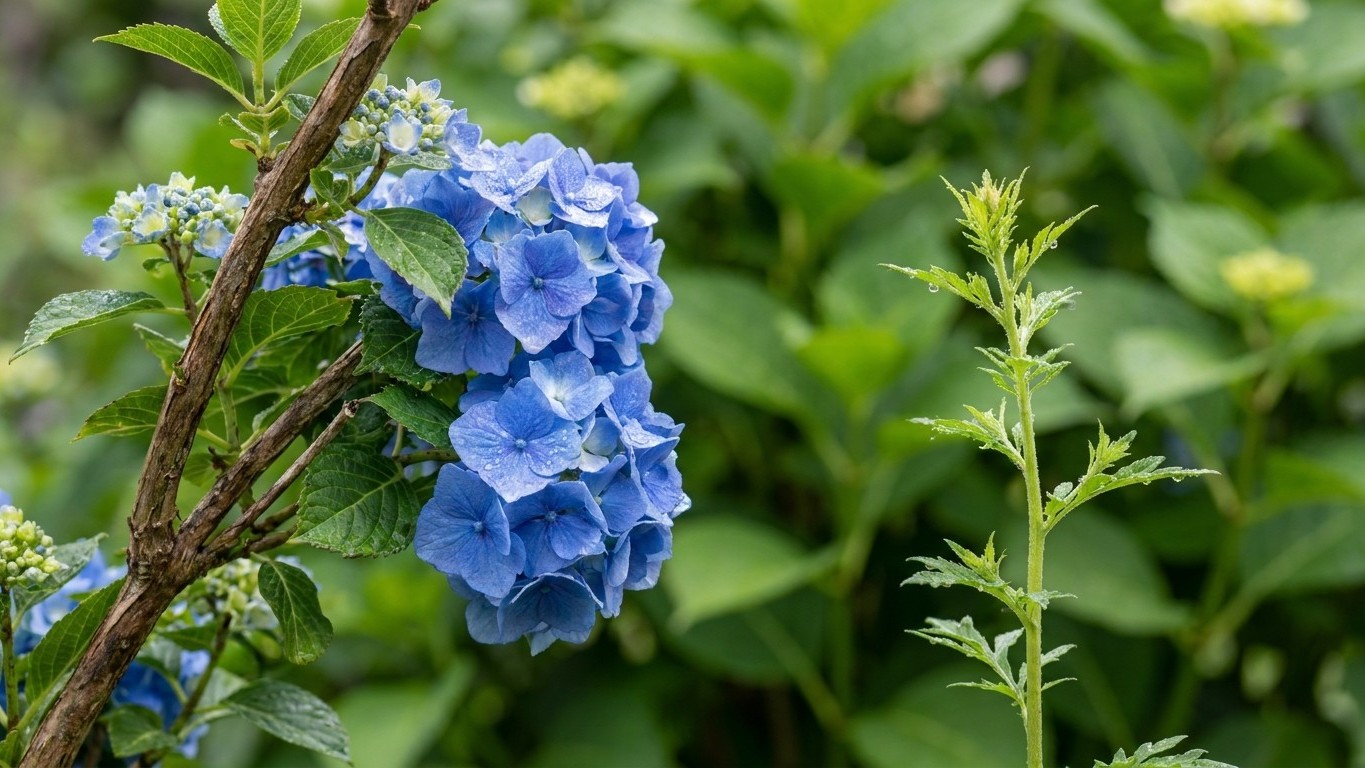

Panicle and smooth hydrangeas come through winter almost anywhere in Virginia, because they flower on wood that grows the same season. Oakleaf hydrangeas are nearly as dependable. Bigleaf hydrangeas are the gamble: the shrub lives, but flower buds set the previous summer can die in a hard freeze or a late spring frost, and the plant leafs out with no blooms. The group you pick matters more than the exact cultivar, and the frost calendar explains why.
What this comes down to in Virginia

At Virginia Beach, where the NOAA National Centers for Environmental Information climate normals for the NAS Oceana station put the last 32°F freeze of spring between March 20 and April 3 and the first of fall between November 10 and November 24, every hydrangea below survives winter in the ground. What varies is whether the flower buds do. A hydrangea that blooms on new wood rebuilds its flowers every spring, whatever January did. One that blooms on old wood carries next year’s buds through the whole winter and can lose them to one cold snap or one frost after the buds swell. Virginia Beach is the mild end of the state, so the Blue Ridge and southwest Virginia have less margin on both sides of the season. The cultivars run from the most forgiving of a short season to the most demanding of a long, unbroken one.
Annabelle
A smooth hydrangea (Hydrangea arborescens). It carries big white blooms from early summer on new wood, so a freeze that kills the stems to the ground costs only height. It suits every part of the state, though the heavy heads can flop after a summer storm.
Limelight
A panicle hydrangea (Hydrangea paniculata). Cone-shaped blooms open lime green in midsummer, fade to white, then blush pink as fall cools, all on new wood. Late spring frost may nip the young shoots, but the flowers are not formed yet, so nothing is lost.
Bobo is a compact panicle hydrangea. White blooms age to pink on new wood. It has the same cold tolerance as Limelight in a size that fits a foundation bed, which makes it a safe pick for mountain yards.
A bigleaf hydrangea (Hydrangea macrophylla). Blooms run blue or pink depending on soil pH, and the plant flowers on both old and new wood. If winter kills the old buds, it still blooms later in summer from fresh growth, which makes it a better bigleaf bet where winters bite.
An oakleaf hydrangea (Hydrangea quercifolia). White cones age to pink, and the leaves turn red-bronze in fall. It blooms on old wood, but its buds generally come through winter better than bigleaf buds. The usual loss is a hard freeze that follows a mild spell.
Nikko Blue is a classic bigleaf, blue in acid soil and strictly old wood. Along the coast and in the warmer Piedmont it blooms most years. Where winter or a late frost can reach the buds, the shrub leafs out green and flowerless.
Working it out for your own garden
Two questions sort any hydrangea: does it bloom on new wood or old, and how long are its buds exposed to freezing weather? New-wood bloomers need the shoots to grow and the flower heads to open before the first fall freeze. Old-wood bloomers need their buds to get through the whole stretch from fall to the last spring freeze.
Take Limelight at the reference station. New shoots start after the last freeze window of March 20 to April 3, so leaf-out lands in early to mid April. The blooms open in midsummer, around July. From July to the first fall freeze window of November 10 to November 24 is roughly four months of open flowers. A frost in April that blackens the shoot tips only sets the clock back a couple of weeks, and the plant still blooms with months to spare.
Now run Nikko Blue the same way. Its buds formed last summer and sit exposed from fall through winter. A warm spell in March swells them, and the last freeze is still as late as April 3 at the coast. That leaves a gap of several weeks in which one night at or below 32°F can kill them. Inland and in the mountains the gap is wider, because the last freeze comes later. A gardener there can plant the same shrub and see foliage every year with no flowers. Cutting old-wood hydrangeas at the wrong time removes the same buds, and When to Prune Hydrangeas in Virginia covers the timing for each type.
To use the method elsewhere in the state, swap the reference dates for the last and first freeze dates of your nearest weather station. Spring dates move later and fall dates earlier as you go up in elevation. Then check the plant tag. “Blooms on new wood” means winter cannot take the flower buds, “reblooming” means the plant can still flower from new growth if the old buds die, and “old wood” means you are betting on the weather.
A scratch test tells you what a bare winter shrub is doing. Scrape a bit of bark from a stem with a thumbnail. Green underneath means living wood, and brown and dry means dead. Do it again after leaves emerge in spring before cutting anything.
What changes across the state
Virginia stretches from the Atlantic coast to the Appalachian ridges, and winter severity follows that slope. The USDA Plant Hardiness Zone Map, which rates a place by its average annual extreme minimum temperature, runs from 5b to 8b across the state. The coldest zones sit on the high ridges of the southwest and the Alleghenies, and the mildest are on the Tidewater coast.
Elevation does most of the work. Each step up the Blue Ridge delays leaf-out, pushes the last spring freeze later and brings the first fall freeze earlier, so the stretch when old-wood buds are at risk grows by weeks. Valleys add their own trap: cold air drains downhill and pools at the bottom, so a low corner of a yard can freeze on a night when the slope above stays clear.
The coast has the opposite effect. The Atlantic and the Chesapeake Bay hold heat, which keeps winter minimums gentler and fall freezes later. That is why Nikko Blue and Endless Summer behave in Virginia Beach and Norfolk the way they do in the Carolinas. The Piedmont sits between the two, with winters cold enough in some years to take bigleaf buds and summers hot enough to make afternoon shade welcome.
In practice, gardeners in the mountains and the northern Shenandoah Valley should build around smooth, panicle and oakleaf types and treat bigleaf as an extra. Gardeners in Tidewater and the southern Piedmont can use all six, and a sheltered spot near a south or west wall adds a margin in marginal areas.
The mistakes this state punishes

A common mistake is putting a bigleaf in a cold pocket and expecting flowers. In the mountains and the cold Piedmont, an old-wood hydrangea can bloom one year and skip the next three. If you want a bigleaf there, pick a rebloomer such as Endless Summer The Original and accept that it may flower late.
The second is ignoring a freeze forecast after a warm spell. March can bring a week of 70°F days that swell buds, followed by a night in the 20s. When the forecast calls for a freeze after buds have started to open, drape the shrub with frost cloth or an old bedsheet that evening, and take it off the next morning. Don’t let plastic touch the leaves.
The third is cutting early. Stems that look dead in February may be alive, and a pair of pruners removes buds that would have opened in June. Wait until leaves appear, then trim only what stays bare.
The fourth is feeding late. Nitrogen applied in late summer pushes soft new growth that the first fall freeze, as early as November 10 at the coast and earlier inland, will kill back. Finish fertilizing by midsummer.
The fifth is leaving a young shrub unprotected. Roots of a newly planted hydrangea are shallow, and freezing and thawing ground can heave them. A 2 to 3 inch layer of mulch, kept a few inches back from the stems, keeps the soil temperature steadier.
Checking this against your county
The dates above come from one coastal station, so treat them as a starting point. Your county’s frost dates and winter lows can differ by weeks and by a full zone. Call or visit your local Virginia Cooperative Extension office for the freeze dates that apply to your address and for advice on which cultivars have done well nearby. For the rest of the growing basics, including site, soil and watering, see growing hydrangeas in Virginia.
Common questions
- Do hydrangeas die back in a Virginia winter? Smooth and panicle types often die back partway or to the ground in cold winters and regrow from the base in spring. Bigleaf stems can die to the ground too, which wipes out that year’s blooms on old-wood types.
- Which hydrangea is the most reliable in the mountains? Annabelle, Limelight and Bobo bloom on new wood. Oakleaf types such as Snow Queen are the next best choice.
- Will Endless Summer bloom after a hard winter? Yes, usually. It blooms on old and new wood, so if freezing kills the old buds it still flowers later from new growth.
- How do I know if a stem is dead or just dormant? Scratch the bark with a thumbnail. Green tissue underneath means it is alive. Wait for leaves to open before cutting anything off.