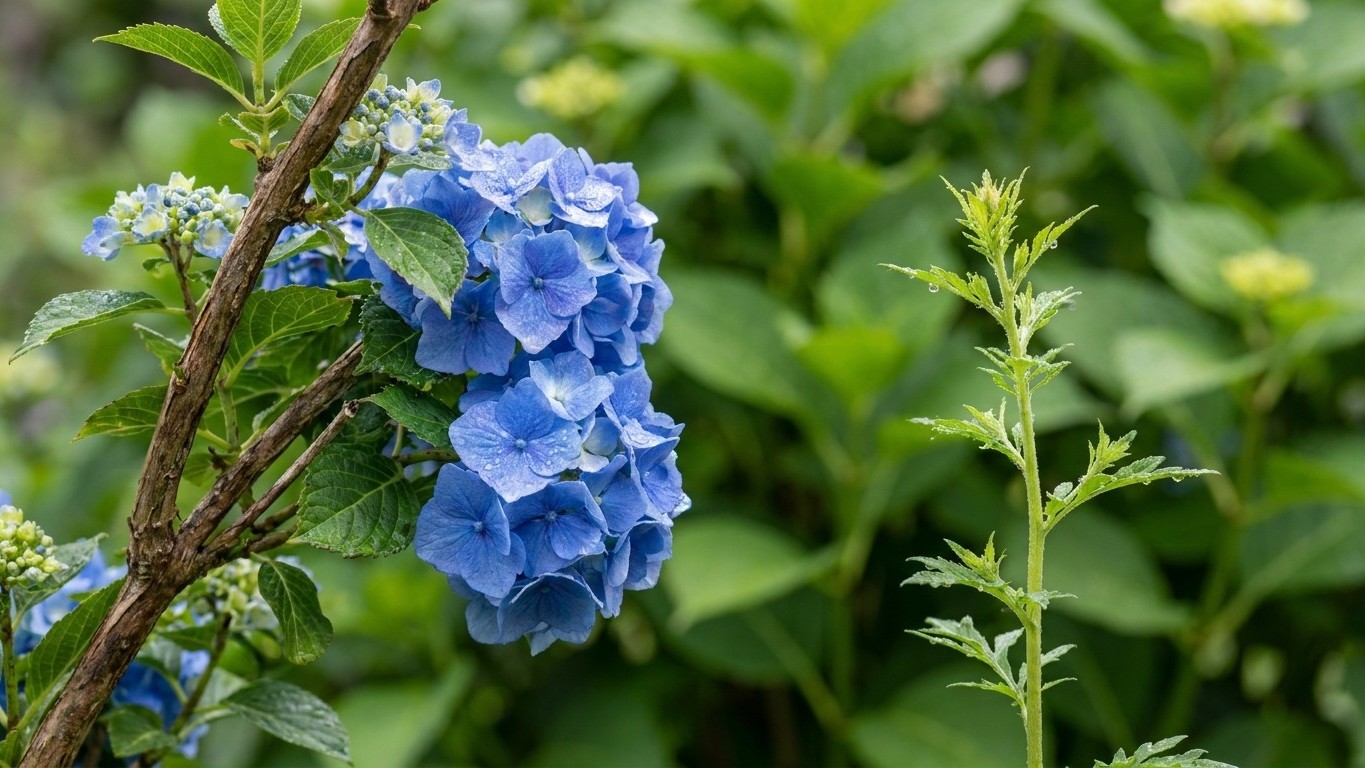

Wyoming winters rarely kill a hydrangea through cold alone. Wind, dry soil and midwinter thaws do most of the damage, and early fall frosts catch shrubs still growing soft stems. Panicle and smooth hydrangeas mostly need a deep mulch and a good soaking before the ground freezes. Bigleaf and oakleaf types, which carry next summer’s flower buds on old stems, need a wire cage, burlap and a careful spring uncovering.
What this comes down to in Wyoming

Winter protection here is three jobs: let the shrub harden off before the first fall frost, insulate the roots and buds through the cold months, and keep them covered until the last spring frost has passed. In Cheyenne, the reference city for the frost dates below, the average last spring frost falls roughly between May 7 and May 18 and the average first fall frost roughly between September 24 and October 5 (published dates vary with the probability level and station used), based on the NOAA NCEI climate normals. The station has roughly 130 to 150 frost-free days between those two windows, at roughly 6,000 feet, and frost can show up in any month at higher elevations.
That short season shapes everything about winter care. A hydrangea has to grow, set buds and stiffen its stems in barely four to five months, so any stem that is still green and soft when the first frost arrives is likely to die back. Fertilizer or pruning late in summer pushes exactly that kind of growth.
The USDA Plant Hardiness Zone Map, which rates a place only by its average annual extreme minimum temperature, runs from 3b to 6a across Wyoming. A shrub rated only to zone 5 is therefore beyond its rating in a large part of the state unless it is protected or sited well.
What you protect depends on where the plant makes its flower buds. Panicle hydrangeas (Hydrangea paniculata) and smooth hydrangeas (Hydrangea arborescens, the Annabelle type) flower on new wood. If winter kills their stems to the ground, they regrow and still bloom, provided the season allows. Bigleaf (Hydrangea macrophylla) and oakleaf (Hydrangea quercifolia) set buds in late summer on the stems that will carry flowers the following year. A frozen stem means a year with leaves and no blooms.
Reblooming bigleaf types also flower on new growth, so they give some color after a hard winter, though late in the season and with frost close behind. Which types hold up best is covered in Which Hydrangeas Survive a Wyoming Winter. The state guide on growing hydrangeas in Wyoming covers siting and care outside the winter months.
Wind adds a second kind of injury. Cold, dry air pulls moisture from stems while the roots sit in frozen ground and cannot replace it. Stems end up brittle and shriveled even when the temperature never dropped below what the plant can take. That is why a burlap windbreak and a thick mulch often matter more here than an extra layer of wrapping.
Working it out for your own garden
The calendar below works from the frost windows, so it can be redone anywhere. Take your own first fall frost range and your own last spring frost range, and count from them.
How do you set the fall schedule?
Stop fertilizing about eight weeks before the first fall frost. With a first-frost range of September 24 to October 5, that means stopping by early August, then watching the forecast as that window approaches. Shrubs fed after that date keep making tender shoots that the first frost kills.
Prune old-wood hydrangeas (bigleaf, oakleaf) right after they flower, which in a short season means July, and never after the same early-August cutoff. Cutting later removes buds already formed.
Water deeply through fall, up until the ground freezes. Winters are dry, and a shrub entering them with dry roots loses more stem to wind. Mulch only after the soil surface has started to freeze and stays stiff through the afternoon, usually a few weeks after the first frost range. Apply 6 to 8 inches of shredded leaves or straw over the crown. For bigleaf and oakleaf, set a wire cage as tall as the shrub, fill it with leaves or straw, and wrap the outside with burlap.
How do you set the spring schedule?
Work forward from the last spring frost range of May 7 to May 18. Pull mulch back from the crown when buds begin to swell, but leave the cage and burlap on until the range has passed. Averages mean frost after those dates is common, so keep frost cloth or a bedsheet ready for a clear, still night.
A worked comparison shows where the line falls. A smooth hydrangea like Annabelle flowers on new wood and needs only mulch. If every stem freezes, cut it back hard in spring and it blooms that summer.
A bigleaf rated for the warmer end of the map sits at the edge in the colder parts of the state. Its flower buds are the part most likely to fail, so it gets the cage, the burlap and the windbreak, and some years it will still give leaves and no flowers.
Flower color adjusted through soil pH, covered in Why Hydrangeas Are Pink in Wyoming, and How to Turn Them Blue, does not change any of this.
Before pruning in spring, wait for leaves. Panicle hydrangeas leaf out late, and bigleaf stems can look dead into early June. Scratch a bit of bark with a thumbnail: green underneath means living wood. Cut only what is brown and brittle after new leaves have shown you where the live wood ends.
What changes across the state
Wyoming has no large lake or coast to soften its winters, so elevation and terrain do the work. Cheyenne sits at about 6,000 feet, and the higher country around it and to the west has a shorter season still. Mountain towns can see frost in any month, so a hydrangea there has less time to harden off and a longer wait before the ground is safe from late frosts. Some gardens in those places can only grow the hardiest panicle and smooth types, and even those do better beside a south-facing wall.
Lower basins and river valleys, such as those in the Bighorn Basin and the northeast, run noticeably milder and give a longer growing season. The frost dates move by weeks between these places and the high plains, and the zone map follows, from 3b in the coldest spots up to 6a in the mildest. A gardener in a low, sheltered town can sometimes take chances with a bigleaf that would be foolish at 7,000 feet.
Terrain matters as much as altitude. Cold air drains downhill at night and pools in valley floors and low spots, so a garden at the bottom of a slope can frost earlier in fall and later in spring than a neighbor on the slope above. Snow cover varies too. Mountain valleys with a dependable snowpack insulate roots all winter. Wind-scoured plains lose their snow to drifting and leave the soil bare, which makes mulch there the main insulation. Chinook winds on the east side of the mountains can warm the air for days in midwinter, then drop back to hard cold. That thaw-and-refreeze cycle is the reason to keep mulch and cages in place after a warm spell, however spring-like it feels.
The mistakes this state punishes

The first is mulching or caging too early. After a warm October, shrubs are still active, and a thick mulch laid over unfrozen ground keeps the crown wet and gives mice a place to nest. Wait until the soil surface is frozen, then cover.
The second is feeding or pruning late. With a first frost that can arrive in the last week of September, new growth made in August has no time to harden. Stop fertilizer by early August and prune old-wood types right after bloom.
The third is letting the shrub enter winter dry. Wyoming winters are low in moisture, and frozen ground gives wind-stressed stems nothing to draw on. Water deeply until the ground freezes. On a mild winter afternoon when the soil is unfrozen and the air above freezing, a slow soaking helps, especially on exposed ground that has lost its snow.
The fourth is wrapping a shrub in plastic. Sunny winter days heat the inside, condensation collects, and buds break early before the next cold night. Use burlap and a loose leaf or straw fill, which let moisture out.
The fifth is uncovering on the first warm day in April. Buds swell within days of exposure, and a May frost then takes them. Keep the protection through the last spring frost range of May 7 to May 18, loosening it only gradually.
The last is choosing a plant that cannot make it. A long-season bigleaf expected to bloom like it does in milder climates will often come back as foliage only. Picking a new-wood bloomer for exposed sites protects the flowers in a way no wrap can.
Checking this against your county
The dates above come from a single station, Cheyenne, and the state spans several hardiness zones, so treat them as a starting point. Your own frost dates, snow cover and wind exposure decide the schedule. Your county office of University of Wyoming Extension can tell you the local frost range and which shrubs hold up in your valley or on your plain. For the rest of the picture, from siting to soil, the state guide to growing hydrangeas in Wyoming picks up where this article leaves off.
Common questions
Short answers to common questions after the first hard freeze.
Do panicle hydrangeas need winter protection in Wyoming?
Mature panicle hydrangeas rarely need more than a layer of mulch, because they bloom on new wood and regrow from the base if the stems freeze. Young plants in their first winter or two benefit from mulch over the crown and a windbreak on the exposed side.
When should hydrangeas be cut back?
Cut panicle and smooth types in late winter or early spring, before growth starts, taking out dead wood and shaping the rest. Leave bigleaf and oakleaf until you can see which stems have leafed out, then trim dead tips. Prune them for shape right after they flower, never in fall.
Can a hydrangea that looks dead in May still be alive?
Yes. Bigleaf stems and late-waking panicle types can show nothing until late May or into June. Scratch the bark of a stem, and if it is green underneath, wait. A shrub with brown, dry stems all the way down and no new shoots near the base by midsummer is gone.
How do you overwinter a potted hydrangea?
A pot offers roots almost no insulation, so move the container to an unheated garage or shed after leaves drop and the plant has gone dormant. Water it lightly now and then so the soil never dries out completely, and bring it back outdoors only after the last spring frost range has passed.