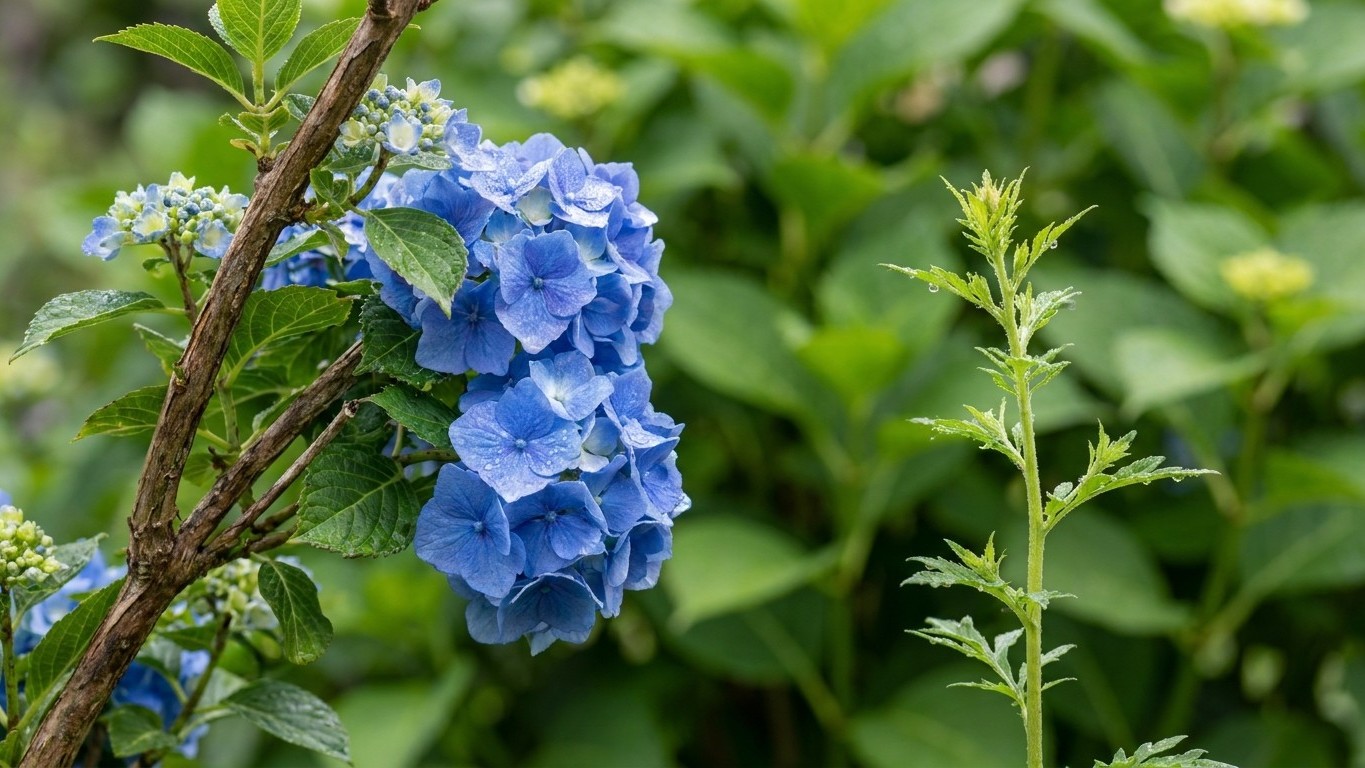

Most hydrangeas that are hardy to begin with come through a Virginia winter with a layer of mulch and a little patience. The exceptions are the bigleaf types, whose flower buds sit exposed on last year’s stems and can be killed by a cold snap or a late freeze. Protection comes down to three jobs: mulch the roots in fall as growth slows, shelter old-wood bloomers where winters run harsh, and keep cover handy until the last spring frost has passed.
What this comes down to in Virginia

Winter protection for hydrangeas runs between the first fall frost, November 10 to November 24 at NAS Oceana in Virginia Beach, and the last spring frost, March 20 to April 3 at the same station. Those ranges come from NOAA NCEI’s 30-year climate normals (the 30 to 70 percent probability band for a 32 F freeze) and describe the mild coastal end of the state. The Blue Ridge and southwest Virginia run weeks later in spring and earlier in fall, so the same job starts sooner and ends later there.
The USDA Plant Hardiness Zone Map rates the state from zone 5b to 8b, but that system uses a single variable, the average annual extreme minimum temperature. It tells you how cold the deepest night of a typical year gets. It says nothing about a February warm spell that wakes the buds, followed by a March freeze that kills them, and that sequence is a common cause of damage to hydrangeas here. Because the rating is a range across the whole state, your own zone depends on where you garden.
What needs protecting depends on where the plant sets its flower buds. Species that bloom on old wood form buds in late summer and carry them bare through winter. Species that bloom on new wood grow their flowers after spring begins, so a hard winter only costs them stem tips.
| Type | Where flower buds form | What winter does | Protection worth giving |
|---|---|---|---|
| Bigleaf (Hydrangea macrophylla) | Old wood, set in late summer | Kills buds in a hard freeze or after a late frost; plant often regrows but skips flowers | Mulch plus a leaf-filled wire cage in colder areas; frost cloth in spring |
| Oakleaf (H. quercifolia) | Old wood | Buds usually hold; late frost can still hit emerging growth | Mulch; frost cloth only after leaf-out |
| Panicle (H. paniculata) | New wood | Rarely harmed; late frost may nip new shoots | Mulch for young plants |
| Smooth (H. arborescens) | New wood | Stems may die back; regrowth blooms anyway | Little beyond mulch |
Which species make it through a given winter is covered in Which Hydrangeas Survive a Virginia Winter. Flower color is a separate matter and follows soil chemistry, as laid out in Why Hydrangeas Are Pink in Virginia, and How to Turn Them Blue.
Working it out for your own garden
Dates on a calendar fail the first time a winter runs early or late. A method built on your local frost window holds up, and you can rebuild it after a move. Start with the first fall frost range for your area, then count backward to set your fall deadline and forward from the last spring frost to set your uncovering date.
When should you mulch and shelter hydrangeas in fall?
Finish the work about two weeks before the first fall frost. At the coastal reference station that frost falls November 10 to November 24, so two weeks earlier gives October 27 to November 10 as the target for finishing. Inland, shift both ends earlier by whatever your local frost window runs ahead of the coast. If you are unsure, your county extension office can tell you how much earlier.
Within that window, spread 3 to 4 inches of shredded bark, pine straw, or shredded leaves over the root zone, and keep it a couple of inches back from the stems so the bark stays dry. For bigleaf plants in colder areas, set a wire cylinder a little taller than the shrub around them and fill it loosely with dry leaves or pine straw. Skip plastic, which traps moisture and heats up on sunny days.
Take a concrete case. A classic bigleaf such as ‘Nikko Blue’ sets its flower buds on old wood in late summer, so by late October the buds already exist and sit exposed until spring. A freeze in December or January seldom ends them on the coast, but a freeze after the buds swell in March will. That is why the shelter stays on until the end of the spring frost range. A panicle such as ‘Limelight’ blooms on new wood, so the same late freeze only costs it a few shoot tips, and it needs no cage at all.
How do you know when to uncover hydrangeas and whether they survived?
Start pulling mulch back from the crown when the last spring frost window opens, March 20 to April 3 at the reference station. Keep frost cloth or an old sheet nearby for a while past the end of that range, since a late frost is still possible on the coast. Mountain gardens add weeks to both ends.
To check for survival, scratch a thumbnail across a stem. Green tissue underneath means the stem is alive, and brown dry tissue means it is dead. Wait until leaves emerge on the live stems before cutting anything, because bigleaf stems that look dead in March often leaf out from the lower nodes later. Then cut dead wood back to a live bud or to the ground.
What changes across the state
Virginia stretches from the Atlantic coast to the Appalachian ridges, and the frost window moves with it. Elevation matters a great deal: air cools as you climb, so the Blue Ridge and the southwestern highlands get their first fall frost earlier and their last spring frost later than Virginia Beach. A garden in the mountains may spend weeks longer in the danger window than one near the Chesapeake Bay.
Water moderates the coast. The Atlantic and the Bay hold heat, which softens the deepest cold and delays the first fall freeze. The tradeoff is that mild coastal winters tempt buds to break dormancy early, so a late freeze can still catch them. In the mountains the problem runs the other way, since buds stay dormant longer but face deeper cold and drying wind.
Local terrain can matter as much as region. Cold air drains downhill on still nights and pools in valley bottoms, so a hydrangea in a low spot can see a freeze that a plant up the slope escapes. The Shenandoah Valley and other mountain valleys are classic examples. Piedmont gardens fall between the coast and the mountains, and suburbs near larger cities often run a little warmer than open country around them because pavement and buildings hold heat overnight.
Wind exposure is the quiet factor. The hydrangeas grown in Virginia are deciduous, but bare stems and buds still lose moisture on windy ridgelines in winter. A planting against a house wall, a fence on the windward side, or the east side of a building rarely needs the same cage that an open lawn planting does.
The mistakes this state punishes

Mulching too early traps warmth around the crown and delays dormancy. A shrub still growing in October is more exposed to the first frost than one that has slowed down, so wait until leaves begin to yellow and drop. Late nitrogen fertilizer does the same thing by pushing soft growth that frost cuts back.
Pruning bigleaf and oakleaf plants in fall or winter removes the flower buds they are carrying. Leave those stems alone until new growth shows, then take out only what is clearly dead. Smooth and panicle types bloom on new wood and can be cut in late winter without losing flowers.
Uncovering on the first warm day is a common error among coastal and Piedmont gardeners. A run of 70 F afternoons in February or early March does not mean the freezes are done, and the last spring frost range extends into the first days of April even at the mild end of the state. Pull the mulch back gradually, and keep the cage or frost cloth ready until the window closes.
Potted hydrangeas lose roots in a way that in-ground plants do not, because a pot freezes through from all sides. Move containers against a wall, into an unheated garage, or into a sheltered corner before the first fall frost range begins. Water them lightly now and then so the root ball does not dry out completely.
Checking this against your county
The frost dates here come from one coastal station, so treat them as a starting point rather than an instruction. Your county’s Virginia Cooperative Extension office can tell you how far your area’s frost window sits from the coast, and which parts of your county hold cold air. For the full picture on site selection, soil, and care across the season, see growing hydrangeas in Virginia.
Common questions
Four quick answers for once the first frost has arrived.
Do hydrangeas need covering every winter in Virginia?
Panicle and smooth hydrangeas do not, and oakleaf types rarely do. Bigleaf hydrangeas benefit from a mulch layer every year and from a leaf-filled cage in mountain areas or after a winter that has already killed buds once. Young plants of any type are more vulnerable than established ones, so give them mulch while they settle in.
Should you cut hydrangeas back before winter?
Leave bigleaf and oakleaf stems standing, because they carry next summer’s flower buds. Smooth and panicle hydrangeas can be cut in late winter, before new growth begins, since they bloom on new wood. Leaving the old stems through winter also gives the crown some protection from cold.
Can potted hydrangeas stay outside all winter?
Only in the mildest spots, and even there the roots are more exposed than in the ground. Move the pot to an unheated garage or up against a house wall before the first fall frost range, which begins November 10 at the coastal reference station and arrives earlier inland. Bring it back out gradually once the spring frost window has closed.
What should you do when frost is forecast after leaves have opened?
Drape a bedsheet or frost cloth over the shrub before dusk, reaching to the ground so it holds in soil heat, and prop it up with stakes if the leaves are tender. Remove it the next morning once the frost has melted. Plastic works only if it never touches the foliage and comes off at sunrise.