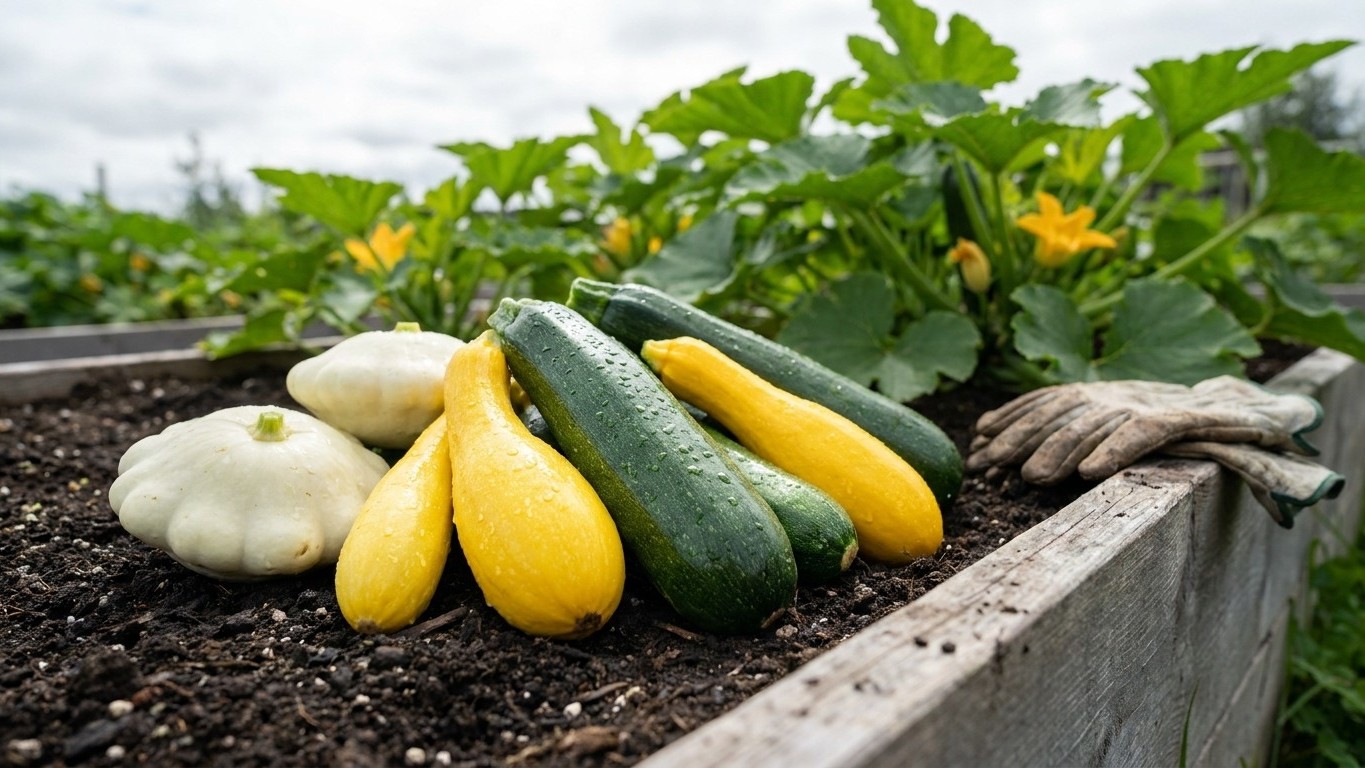

For Alabama’s long, hot growing season, fast-maturing bush-type zucchini and yellow crookneck squash beat slower vining varieties every time. The state’s heat load supports two or three plantings of a quick variety rather than one long haul with a slow one, which is the smarter play against both heat stress and pests.
The short answer for Alabama
Start with the numbers that actually decide this. The reference station for Alabama’s climate normals sits at Huntsville, where the last spring frost typically falls between March 19 and April 3, and the first fall frost arrives between November 2 and November 16. That’s a frost-free window stretching well past seven months. Layer on 58.5 days a year at or above 90F, and you’ve got a growing season that’s long on time but brutal on plants that sit in the ground too long during peak heat.
That combination points to one clear strategy: choose fast bush types over sprawling vine types. Bush zucchini and bush yellow crookneck or straightneck squash typically mature in the 45- to 55-day range. In a season this long, that means a gardener can plant in early spring, pull the first planting after squash vine borer or powdery mildew starts wearing it down, and put in a second or even third planting before the November frost window closes. A slower vining type that takes 65 days or more just sits in the heat longer, giving pests and disease more time to build up before the plant has even finished producing.
Here’s how the two broad types stack up against Alabama’s numbers:
| Type | Typical days to maturity | Fit for Alabama’s season |
|---|---|---|
| Bush zucchini / crookneck / straightneck | 45-55 days | Strong, allows succession planting around the 58.5 heat-load days |
| Vining / trailing summer squash | 60-70+ days | Weak, exposed to more of the hottest stretch and more pest pressure |
The practical move is to treat Summer Squash in Alabama as a rotating crop rather than a one-shot planting. Get bush-type seed or transplants in shortly after the local last-frost risk passes, expect a strong 4- to 6-week harvest window, then replant before the plants decline. That rhythm matches the length of the frost-free season far better than betting everything on a single slow-maturing variety that has to survive the entire stretch of 90-degree days in one go.
What will not work here
Three habits reliably fail Summer Squash in Alabama, and each one traces back to a specific number above. The first is relying on a slow, long-season vining variety as the only planting of the year. With 58.5 days a year hitting 90F or higher, a squash that needs 65 to 70 days to mature spends most of its life in the hottest part of the season. That’s exactly when squash vine borer larvae are most active and when powdery mildew spreads fastest through humid air. A fast bush type gets in and out before that pressure peaks; a slow vining type is still hanging on when it’s worst.
The second failure is watering on a weekly schedule and assuming that’s enough. Summer rainfall averages about 12.1 inches across June, July, and August, but it isn’t spread evenly. June brings roughly 4.06 inches and July about 4.49 inches, while August drops to just 3.55 inches, the driest of the three summer months. Combine that August dip with a summer’s worth of 90-degree days driving evaporation, and a squash bed watered once a week is running dry for days at a stretch right when the plants are stressed most. Squash with shallow roots and broad leaves lose moisture fast in that kind of heat, and inconsistent watering is a common cause of blossom drop and bitter fruit.
The third mistake is planting too close together because the plants look small at transplant time. Alabama’s June and July rainfall keeps humidity high through the peak of the growing season, and tight spacing traps that moisture around the leaves. That’s the setup powdery mildew and downy mildew need to take hold. Squash planted with real airflow between plants dries off faster after a rain shower or a morning dew, which matters more here than in a drier climate where the same spacing might be forgiving.
None of these are exotic failure modes. They’re the direct result of a season that’s long, hot, and periodically dry in a state where humidity doesn’t let up even when the rain does.
What changes across Alabama
Alabama is not one garden, and the hardiness zone range makes that plain. The state spans USDA zones 7a to 9a, according to the USDA Plant Hardiness Zone Map, a spread of roughly two full zones from the northern border to the Gulf Coast. That’s a meaningful difference in how early the ground warms in spring and how late it stays warm in fall, and it means there’s no single planting date that works everywhere in the state.
The frost dates cited above come from the Huntsville reference station, which sits toward the cooler, northern end of that range. A gardener in south Alabama, closer to zone 9a, should expect an earlier practical last frost and a later first fall frost than the Huntsville figures suggest, which stretches the usable squash season even further south. Someone gardening in north Alabama or at higher elevation in the state’s hill country, on the other hand, is closer to the Huntsville numbers or even a bit behind them, and should treat the given frost window as the more conservative end rather than the earliest possible planting date.
That difference matters most for the succession-planting strategy described above. A longer effective season in south Alabama supports a third planting of bush squash that a shorter northern season might not have time for before fall frost risk returns. It also affects how much slack there is for replanting after a failed batch: more slack near the coast, less in the north.
This page can’t tell an individual reader which zone their own yard falls into, that requires checking the map itself, not guessing from a county name or a nearby city. The zone range exists precisely because Alabama’s geography, from the Tennessee Valley to the Gulf Coast plain, produces real climate differences within one state’s borders.
Where to check this for your own county
The Alabama Cooperative Extension System is the source built for exactly this gap between a state-level answer and a county-level one. State climate normals, including the frost dates and heat-load figures used above, come from a single reference station. County extension offices work from local trial data and local grower experience, which is a different and more precise kind of information.
Two things are worth looking for once there. First, a local planting calendar specific to the county or region, which will reflect the actual frost pattern of that area rather than the Huntsville station used as this state’s reference point. Second, variety recommendations that have actually been trialled in Alabama conditions, extension offices often track which squash varieties held up against local pest pressure, including squash vine borer and pickleworm, both of which vary in intensity across the state’s different growing regions.
A county recommendation beats a state one every time, for a simple reason: it accounts for local soil, local pest pressure, and a microclimate this page has no way to see. This page works from state-wide normals and general variety types, which is useful for understanding the broad strategy, mainly bush over vine, and succession over single planting, but it isn’t a substitute for what a local extension agent knows about a specific county’s growing conditions.
Contacting the local office directly, or checking whether they publish a printed or online planting guide, is the next real step for anyone ready to move past general Alabama advice and into advice built for their own patch of ground.
Checking this against your own garden
Frost dates and heat-load averages describe what’s typical, not what’s happening in one particular yard this year. Three things a gardener can watch without any special equipment will say more about their own microclimate than any date on this page.
The first is soil warmth, checked by hand. Summer squash seed germinates poorly in cold soil, and a gardener can simply push a finger a couple of inches into the bed in early spring. Soil that still feels cold and damp, even after the calendar says the frost risk has passed, is a sign that a particular spot, maybe a shaded corner or a low-lying area that holds moisture, is running behind the general pattern for the region.
The second is the first flush of male flowers. Summer squash typically produces several male flowers before the first females appear, and a burst of male blooms is a reliable sign the plant has settled in and started active growth. If that flush comes noticeably earlier or later than expected for the local planting date, it’s a clue about how that spot compares to the general seasonal timing.
The third is the appearance of the first true leaves, the ones that look like actual squash foliage rather than the rounder seed leaves. Slow, stunted true-leaf growth after germination often points to soil that’s still too cool or nights that are still dipping lower than the plant likes, regardless of what the calendar frost date says.
Watching these three signs over a season builds a more accurate picture of one garden’s actual timing than any regional average can offer, and it’s the kind of observation that gets more useful every year it’s repeated in the same spot.