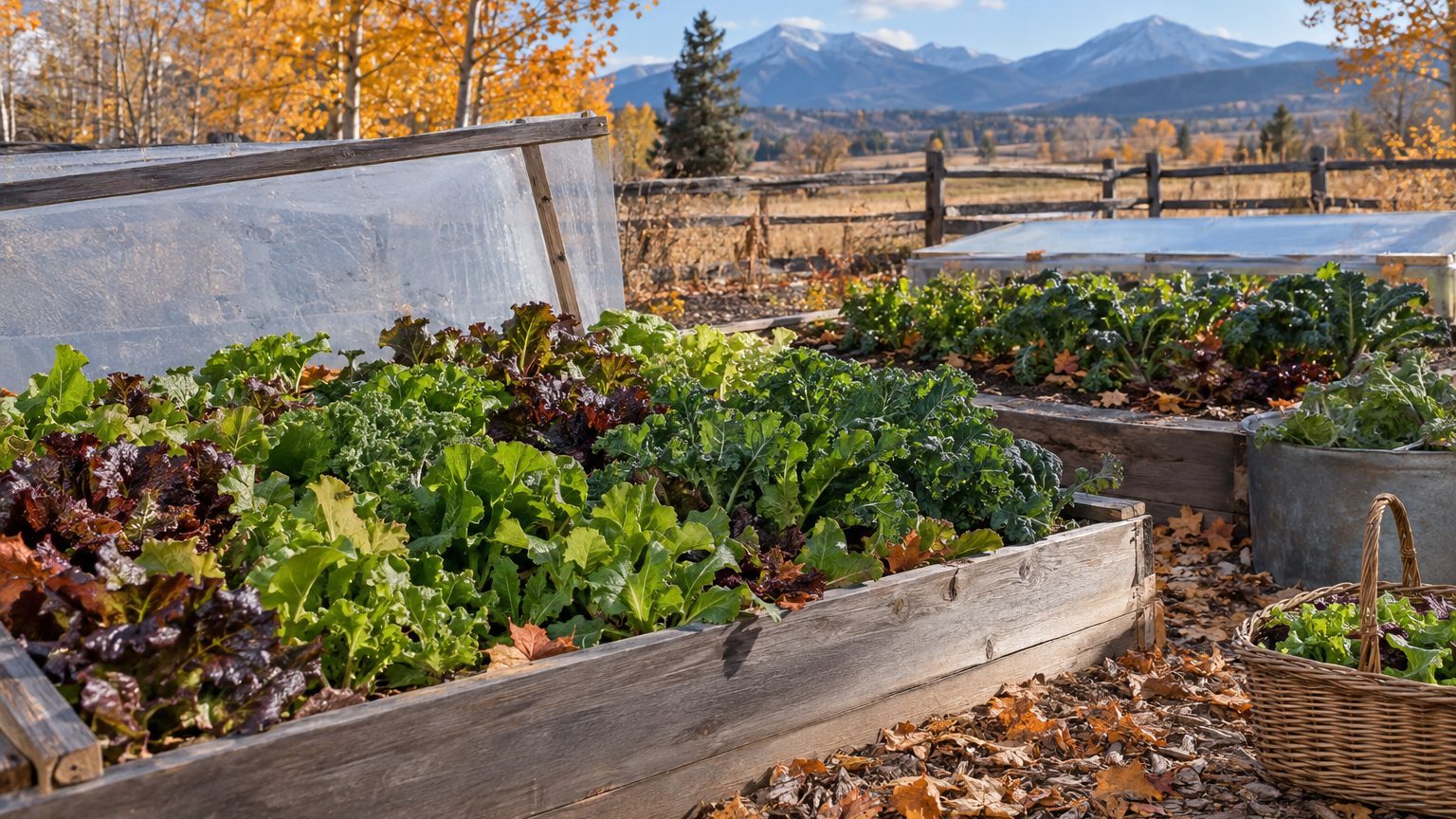

Arkansas winter salads do not grow all winter, whatever the mild weather suggests. Seed sown in December barely moves, so the leaves you cut in January come from a sowing made in early fall, while the soil was still warm and the days were long enough to build size. Plants that already have roots and leaf when the cold arrives will hold and keep giving.
Sow your main batch in early fall, and use a soil thermometer rather than the calendar to decide when the bed is ready.
When the soil is warm enough in Arkansas

The date most gardeners reach for first is the last spring frost. NOAA’s 1991-2020 climate normals for Little Rock (NCEI station USW00013963) put the last 32 F freeze between March 12 and March 28. Those are the dates on which the chance of another freeze sits between 30 and 70 percent. It is a probability, not a promise, and other parts of Arkansas differ, with the northern hills later than Little Rock and the south earlier.
Frost is only a proxy. It describes the air on a clear night, and winter salads respond to the soil. Soil warms after the last freeze, not with it. A bed can sit cold and wet for weeks after the final frost, and seed sown into it rots or sulks.
Spring sowing
Hardy types such as spinach, mizuna, kale and corn salad take a light freeze once they are up, so you do not have to wait for the end of that March band. What you wait for is a bed that crumbles rather than smears. Squeeze a handful. If it holds as a wet lump, leave it another week. A soil thermometer pushed in a few inches at mid-morning tells you more than any date, and the seed packet gives the minimum germination temperature for each crop.
Spring is the short end of the winter-salad year here. Warmth arrives quickly and the plants bolt. Sow early, cut young leaves, and count the spring bed as a bonus.
Fall sowing
In fall the problem reverses. The soil is too warm, not too cold. Lettuce seed in hot ground often refuses to germinate, and spinach behaves much the same. Cool the bed instead of waiting. Water the row before sowing, sow in the evening, and lay a board or a length of shade cloth over the row until the first seedlings show. Arugula and the mustard-family greens tolerate warm ground better, which is why they usually go in first.
The basics that hold in every state, such as bed preparation and spacing, are on Winter Salads: What Grows When Lettuce Will Not. Everything assumes seed you bought and sowed yourself.
How long the season lasts here
The frost-free stretch is long in central Arkansas, and the length is worth working out because it decides how many sowings you can fit. Both sets of dates below are for Little Rock. Gardeners in the northern hills should expect a shorter window and those in the south a longer one.
The two sets of dates
| Threshold | Last spring | First fall | Source |
|---|---|---|---|
| 32 F freeze (30-70% band) | March 12 to March 28 | November 7 to November 20 | NOAA NCEI 1991-2020 normals, Little Rock |
| 36 F light frost | April 3 | October 31 | NWS Little Rock |
Count from the latest spring date to the earliest fall date, March 28 to November 7, and you get about 224 days. Count from the earliest spring date to the latest fall date, March 12 to November 20, and you get about 253. So NOAA’s 32 F figures give a window somewhere between roughly 32 and 36 weeks. At the 36 F threshold, April 3 to October 31 is about 211 days, or 30 weeks. Use the shorter figure for anything tender, since the NWS Little Rock dates are the ones that matter to a plant that cannot take a light frost.
The USDA Plant Hardiness Zone Map (2023) spans zones 6b to 8a across the state. That tells you Arkansas is several climates, but it is built on the lowest winter temperature, so it says little about when to sow salad.
What that length allows
A window this long means you are not limited to one sowing. If the first fall batch is checked by heat, a bad week of rain or a rabbit, there is time to sow again two or three weeks later and still reach a useful size well before November. Stagger batches so a whole bed does not mature in a single week.
It also changes whether transplanting is worth it. Where the season is short, the root check from moving a seedling can cost you the crop. Here you can afford it, and in a hot fall it often pays. Lettuce started in a shaded flat or a cool room, then set out once the seedlings are sturdy, skips the germination problem in warm soil. Direct-sow the crops that dislike being moved, such as arugula and the mustards, because they grow quickly enough not to need help.
Heat and water in Arkansas

Look both up in NOAA’s climate normals for your nearest station. What you can plan around without the numbers is the pattern. Summers are hot and humid, the heat lingers into the early fall sowing season, and rain can arrive in heavy bursts.
That matters because everything here is decided by the cold in the end, and the summer only decides how you get to the cold. Warm, wet soil in September rots seed, and hot afternoons scorch seedlings. Water new rows lightly and often until they are up, then less often and more deeply. A thin mulch of straw or shredded leaves keeps the surface from crusting and the roots cooler.
What the winter low decides
NOAA’s 1991-2020 normals for Little Rock put the mean daily minimum of the coldest month at 30.9 F. The average night in midwinter therefore bottoms out just under freezing. That is a mean, not a record low, so individual nights go colder, and the northern part of the state is colder still. Sort your crops by how they handle it:
- Stand uncovered: kale, collards, spinach, mizuna, corn salad, claytonia.
- Need a cover in hard freezes: lettuce, arugula, escarole and other tender leaves.
- Cannot manage: basil, tomatoes and cucumbers, which end at the 36 F date of October 31 from NWS Little Rock.
A cover here means floating row cover, a low tunnel or a cold frame. Its job is to keep frozen, wet leaves from collapsing, so the plant stays edible rather than just alive. Open it on mild afternoons.
How late is too late
NOAA puts the first fall freeze at Little Rock between November 7 and November 20. Plants do not grow at full speed right up to that date. Days shorten from September onward, and growth slows long before the first freeze. A seedling that is still tiny when the light fails simply holds at that size until spring. Take the days to maturity on the packet, count back from the early end of the freeze range, and add a generous margin for slow autumn growth.
Winter rain adds one more risk. Cool, damp, still air is where downy mildew and gray mold spread on lettuce. Wide spacing, raised beds and watering in the morning keep leaves dry.
Which winter salads suit Arkansas
Three tests, in order
Start with disease resistance. In a humid state, a type or variety that shrugs off downy mildew will outperform a more tender one every time. Read the seed description for resistance codes and choose against the diseases that show up in your own beds.
Next comes heat tolerance at sowing. In a warm fall, look for types described as slow to bolt and reliable in warm soil. Then match cold tolerance to the tiers above. If you want a bed you never cover, build it from the hardy leaf types. If you are willing to lay a cover on the coldest nights, tender lettuces and endive widen the choice.
Airflow and root shade help every type. Give leaf crops room, and keep the soil surface shaded or mulched in early fall so the roots stay cool.
Which varieties do well here
The varieties that do well here are the ones trialled in Arkansas soil, humidity and freeze patterns. The University of Arkansas Cooperative Extension Service is the place to ask, and your county office can tell you what has worked where you live, which may differ from Little Rock.
If you want to compare how another humid southern state handles the same crop, Winter Salads for Alabama Gardens is a useful read. The opposite problem, dry air and big temperature swings, is covered in Winter Salads for New Mexico Gardens.
Common questions
Can I grow winter salads in Arkansas without any cover?
Yes, if you stick to the hardy leaf types such as kale, spinach, mizuna and corn salad. They stand through an average Little Rock winter. Lettuce and other tender leaves are the ones that need a cover on the hardest nights.
Why do my winter salads bolt in spring?
Lengthening days and rising warmth trigger flowering, and nothing you do to the bed stops it. Cut the plants young, sow early, and pull them once the centers stretch and the leaves turn bitter. A bolt-tolerant type helps, and your county extension office can tell you which perform locally.
Will winter salads grow in containers?
They will, and containers suit lettuce and cut-and-come-again greens well. Pots lose heat faster than the ground, so the roots freeze sooner. Set them against a south-facing wall in winter, or move them under cover on the coldest nights.
Can I add wild greens I find to my winter salad?
Gathering wild plants is a separate matter from growing salad. Several plants that resemble young salad leaves are seriously toxic, and wild watercress from water that livestock have grazed can carry liver fluke.