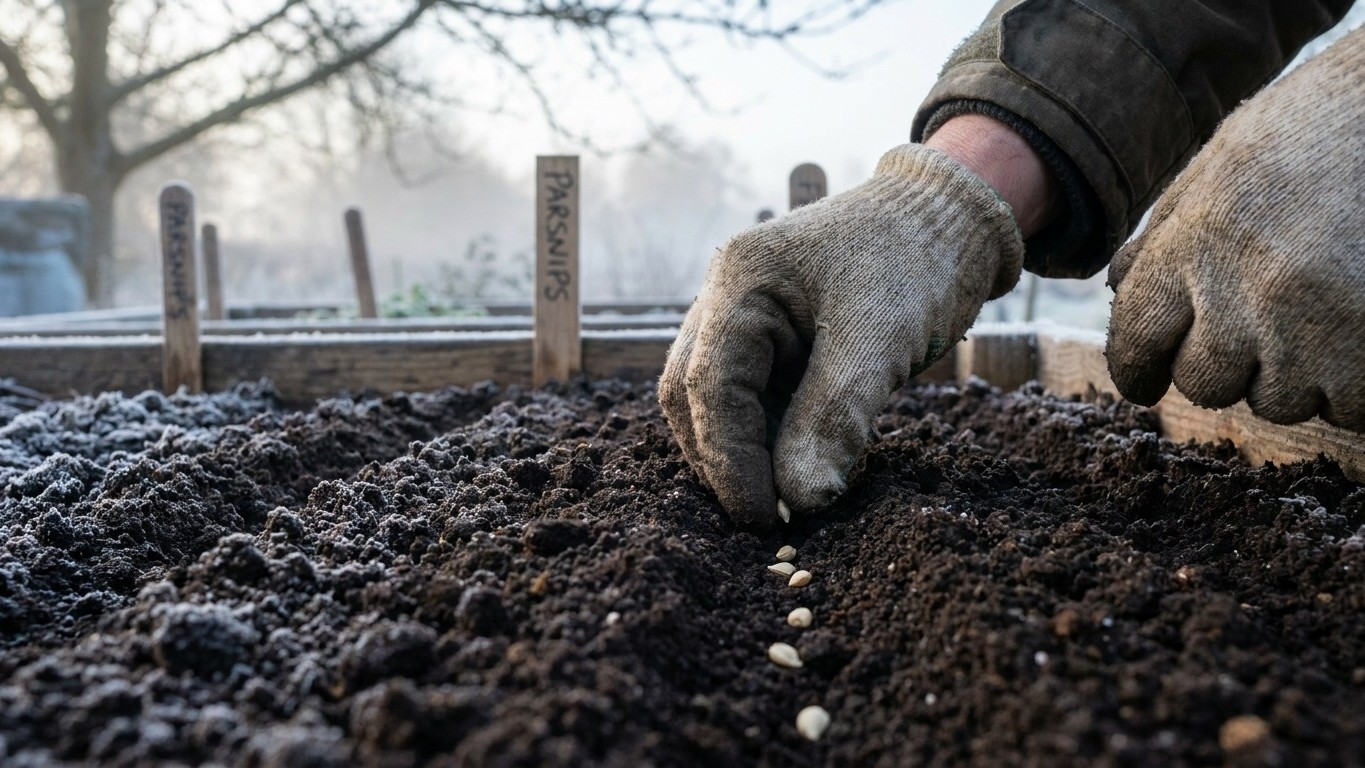

In Arkansas, sow parsnip seed directly in the garden from late February through mid-March, roughly two to three weeks ahead of the state’s last spring frost. The seed is slow to wake up: expect two to three weeks before the first sprouts break the surface. Once up, the roots need 100 to 120 days to size up, and the real payoff comes after fall’s first hard frosts, when cold nights turn stored starch into sugar.
The short answer
Does Arkansas hand a parsnip crop several weeks of frosty nights, or does it just avoid killing the plant outright? That distinction decides whether you end up with a sweet, nutty root or a merely edible one. The reference station at Little Rock puts the mean daily minimum of the coldest month at 30.9°F, according to NOAA’s 1991-2020 climate normals. That figure sits well below the 32°F freezing mark, not hovering right at it, which matters more than it might seem.
A mean minimum barely under freezing would mean some nights dip below 32°F and others don’t, an unreliable pattern for triggering the starch-to-sugar conversion parsnips need. A mean minimum of 30.9°F is different: it tells you that across the whole coldest month, the average night lands solidly in freezing territory, with plenty of nights colder still. That’s the repeated, sustained cold exposure the crop is built for, not a one-off dip that thaws by noon.
So the plain answer: a parsnip left in Arkansas ground through the cold season will sweeten, not just grow. It won’t happen in a week. Utah State University Extension notes the conversion takes several weeks of cool, frosty conditions, and Arkansas’s winter delivers that stretch reliably enough to count on it most years.
One caveat worth naming here rather than burying: Little Rock is one station, and Arkansas runs from Ozark ridges to Delta lowland. A backyard in the highlands likely sees colder, more consistent freezes than this figure suggests; a garden near the Mississippi lowlands may run a touch milder. Treat 30.9°F as the state’s central benchmark, not a guarantee for every zip code, and watch your own thermometer once frost season arrives rather than trusting the average alone.
Does the season fit?
Parsnips are sown in place, straight into garden soil, and the 100 to 120 days USU Extension cites run from the day seed goes in the ground, not from when a seedling appears. Lining that number up against Arkansas’s frost calendar shows exactly how much room there is to work with.
- Start with the sowing window: seed goes in two to three weeks before the last spring frost, which falls between March 12 and March 28 in this region. That places sowing somewhere from late February to mid-March.
- Add germination time. Parsnip seed is notoriously slow, taking 14 to 21 days to sprout. A gardener who sows March 1 shouldn’t expect visible seedlings until somewhere around March 15 to March 22.
- Count forward the 100 to 120 days of growth from the seeding date itself. From a March 1 sowing, 100 days lands near June 9, and 120 days lands near June 29.
- Compare that maturity window against the first fall frost, which arrives between November 7 and November 20. The gap between late June and early-to-mid November runs roughly four and a half to five months.
- That gap is the slack in the system. Roots that finish sizing up in June don’t need pulling right away; they can sit in the ground through summer and into fall, waiting for the frosty weeks that convert their starch to sugar.
The upshot is a season that fits comfortably, not tightly. Arkansas’s frost-free stretch runs long enough that a March sowing leaves months of buffer before the first freeze even arrives, and that buffer is exactly what lets a gardener time the harvest around frost exposure instead of around a hard calendar deadline.
What goes wrong here
- Forked roots in heavy or rocky ground. Delta clay and stony Ozark soils force a growing taproot to split around obstacles instead of driving straight down. Double dig the bed 12 to 15 inches deep before sowing, pull out stones and clumps, and work in aged compost so the root has clear, loose ground the whole way down. Utah State University Extension points to deep sandy soil as the ideal, with heavy soil needing that double-digging treatment before seed ever goes in.
- Forked roots from overwatering. This is a separate cause from bad soil, and it happens even in decent ground: a dry spell followed by a heavy soaking makes the root grow unevenly and split. Water on a steady, moderate schedule instead of letting the bed dry out and then flooding it to compensate.
- A season that quietly runs out. The frost window here is generous, but the 14 to 21 day germination lag trips people up. Gardeners assume the seed failed, tear up the row, and resow two or three weeks late. That delay can push root maturity into the hottest stretch of Arkansas summer, when growth slows and quality suffers. Mark the sowing date, wait out the full germination period, and resist resowing early.
- Cold that never quite settles in. A mean minimum of 30.9°F is a solid average, but individual winters run warmer than average. In a mild year, a gardener who harvests strictly by the calendar might pull roots before enough frosty nights have actually passed. Wait for the ground to confirm several hard-frost nights before digging, rather than trusting a fixed date on paper.
Common questions
Can I start parsnip seeds indoors in Arkansas?
No. Parsnips are sown directly in the garden bed. The taproot doesn’t take well to transplanting, so seed goes straight into the soil two to three weeks before the last spring frost rather than into trays.
How long does parsnip seed take to sprout?
Between 14 and 21 days. It’s normal for the row to look bare for two to three weeks after sowing; resist the urge to dig it up and start over during that stretch.
Should I dig parsnips before the first fall frost hits?
Better to leave them in place. The sweetening that makes parsnips worth growing happens after several weeks of frosty weather, and Arkansas’s first fall frost typically lands between November 7 and November 20, giving roots time to sit through the cold before harvest.
What kind of soil does a parsnip need here?
Deep sandy soil is the preference, according to Utah State University Extension. Where Arkansas ground runs heavier, clay in the Delta or rocky patches in the Ozarks, double digging the bed before sowing is the fix, loosening and clearing at least 12 inches down so the taproot isn’t forced to fork.