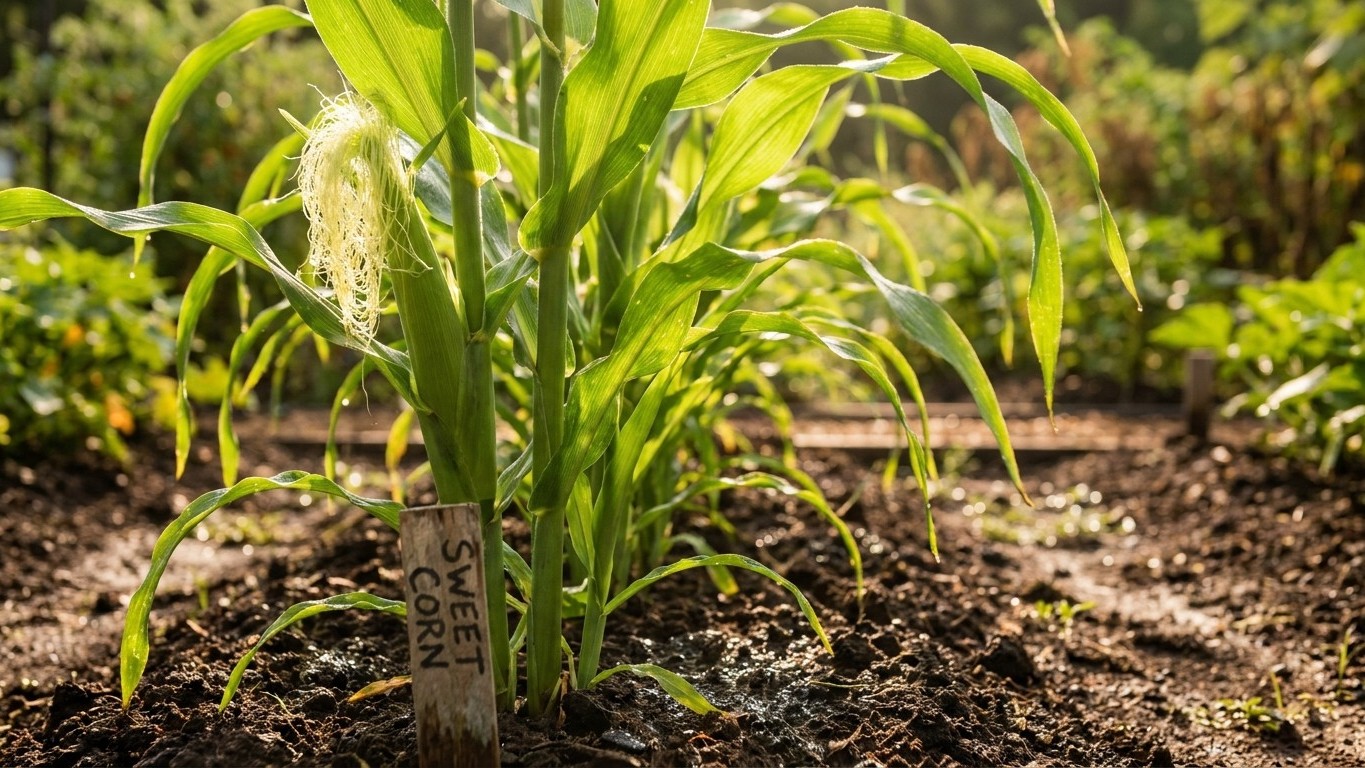

Yes, sweet corn ripens well across Arkansas in a typical year. The frost-free stretch that matters here runs from the last spring freeze in mid to late March through the first hard freeze in November, plenty of room for a crop that needs 60 to 90 days from planting to harvest. The real timing question isn’t the frost calendar, though. It’s the soil, and the soil answers on its own schedule.
The short answer
The last spring frost at the reference station tracked by NOAA lands somewhere between March 12 and March 28, depending on the year. That date tells you when the risk of a killing freeze to tender seedlings drops off. It does not tell you when the ground is ready for corn seed. Soil temperature runs on a separate clock, and it lags well behind air temperature, sometimes by three or four weeks. Sweet corn needs soil above 60 F to germinate without rotting, and in this part of the country that threshold usually shows up in April, occasionally sliding into early May in a cool, wet spring.
That gap between the last frost and the 60 F soil mark is the part gardeners most often miss. Someone plants the week after the frost date, assuming the ground has caught up, and ends up with seed sitting in cold, damp soil for a week or two before it germinates unevenly, if it germinates at all. The frost date and the planting date are not the same day here, and treating them as one is the single most common miscalculation with sweet corn in this state.
Once the soil does hit 60 F, the math works strongly in the gardener’s favor. The first fall frost arrives between November 7 and November 20 at the same reference station, which means the stretch of usable growing time between a realistic soil-warm date and the first freeze runs well past six months. A crop that needs 60 to 90 days from planting fits inside that stretch with room to spare, even accounting for a slow, cool spring that pushes soil-warm-up into early May.
The heat load during summer is the other piece of the picture, and it’s less about whether the crop finishes and more about how well it pollinates while doing so. The Little Rock reference station averages 69.2 days a year at 90 F or hotter. That’s a heavy dose of summer heat stress, and it lands right in the window when most sweet corn plantings are silking and tasseling. Heat that intense can shorten silk viability and stress the plant during pollen shed, which is a separate concern from whether the season is long enough. The season here is long enough. What the heat load changes is how much water and attention the crop needs while it’s setting ears.
Does a late variety fit here?
A 60-day variety
A shorter maturing type has no trouble at all. Even with a delayed start, say soil not reaching 60 F until late April, a 60-day corn reaches harvest by late June or early July. That leaves months of frost-free time in reserve before the first fall freeze arrives in early to mid November. Gardeners who want a second planting for a fall harvest, or who want to stagger pickings across the summer, have plenty of margin to work with using a variety in this maturity class.
A 90-day variety
The slower end of the sweet corn range fits here too, which isn’t true everywhere. Even planting as late as early May, a 90-day type ripens by early August, still three months clear of the first fall frost. The frost-free window in Arkansas, roughly seven months between the last spring freeze and the first fall freeze, comfortably covers the slowest maturity class sold as sweet corn. This is one case where the late variety does fit, plainly, and the limiting factor for a gardener here isn’t running out of season. It’s managing that stretch of 90-plus-degree days that falls during pollination, which affects yield and kernel fill more than it affects whether the plant has time to finish.
What goes wrong here
- Soil sown too cold. Seed planted before the ground reaches 60 F germinates slowly, unevenly, or rots outright in cool, wet soil. The fix is patience: check soil temperature directly with a thermometer rather than counting days from the last frost, and hold off until the ground itself confirms it’s warm enough, even if that means waiting into late April.
- A variety chosen for the wrong window. Arkansas’s season is long enough for both quick and slow maturing sweet corn, but a gardener who plants late in an already-delayed spring and then chooses the slowest maturity class available narrows the margin unnecessarily. Matching a shorter maturity class to a late start keeps harvest well clear of the first fall frost instead of running it close.
- Sweetness lost because two types tasseled at the same time. Standard (su), sugary enhanced (se), and supersweet (sh2) sweet corn cross-pollinate freely, and when their tassels shed pollen in the same window, the sweeter type’s flavor and texture suffer, kernel by kernel, on whichever ears get crossed. There’s no published isolation distance for home gardens to rely on; what matters is timing, not feet of separation. Stagger planting dates so the types tassel weeks apart instead of together, or grow only one type in a season. Regardless of type, plant in blocks of three or more rows rather than a single long row, since that shape is what gives each plant enough neighboring pollen sources for full, well-filled ears.
Common questions
When should sweet corn go in the ground in Arkansas?
Once soil temperature reads above 60 F, not on the last frost date itself. That threshold typically arrives in April here, sometimes later after a cool, wet spring, and it’s a separate measurement from air temperature or frost risk.
How do I check if the soil is actually warm enough?
A simple soil thermometer pushed a few inches into the planting bed, checked over a few consecutive mornings, is more reliable than counting weeks from the frost date. Waiting an extra week or two for consistent 60 F readings costs far less than replanting rotted seed.
How do I know the ears are actually ripe?
Check three signs together, not just one: silks that have turned dry and brown, husks that are still moist and green, and milky (not clear, not chalky) juice from a punctured kernel. This picking window generally falls 17 to 24 days after silk emergence, which is a separate clock from the 60-to-90-day planting-to-maturity figure. One tells you if the season fits at all; the other tells you which week to walk out and check the ears.
Can I grow a sweet, low-effort variety next to a supersweet one?
Not without managing timing carefully. If their tassels shed pollen in the same window, cross-pollination degrades the sweeter type’s flavor and texture. Stagger the planting dates so tasseling happens at different times, or dedicate the season to a single type instead of growing two side by side.