
In British Columbia, winter salads are decided by cold and wet far more than by heat. At the Vancouver International Airport station, the average last spring frost falls on March 18 and the average first fall frost on November 10. That leaves a generous window on the coast and a much shorter one inland and uphill. Pick hardy types, give them airflow, and be ready to cover them when a cold snap arrives.
When the soil is warm enough in British Columbia

Start from March 18. That is the average last spring frost at the VANCOUVER INT’L A station, from Environment and Climate Change Canada’s Canadian Climate Normals for 1981-2010. Because it is an average, the last frost lands later than March 18 in one year out of two. Treat it as the middle of a window and never as a safe date. Districts farther north and up in the hills run weeks behind the airport, and the interior keeps its own calendar. Canadian normals cover 1981-2010, while the U.S. figures cover 1991-2020, so compare across the border with a little care.
A frost date tells you when freezing nights stop. Salad seed wants warm soil, and the soil warms after the frost risk ends, sometimes by weeks. On the coast, March ground is often cold and saturated long after the last frost has passed. Seed sown into it sits, rots, or comes up thin and patchy. Gardeners who sow the day the calendar says go and gardeners who sow when the bed is ready end up with very different stands.
Spring sowing gives the early cuttings of baby leaves. A second round in late summer carries the beds through the cold months, and that round counts back from the first fall frost instead of forward from the last spring one.
How can you tell the soil is ready for salad seed?
Push a soil thermometer in to seed depth on several mornings running and watch the trend. Readings that climb and hold are worth more than one warm afternoon. Without a thermometer, squeeze a handful of soil. If it crumbles when you poke it, the bed is workable. If it smears or drips, wait a few more days.
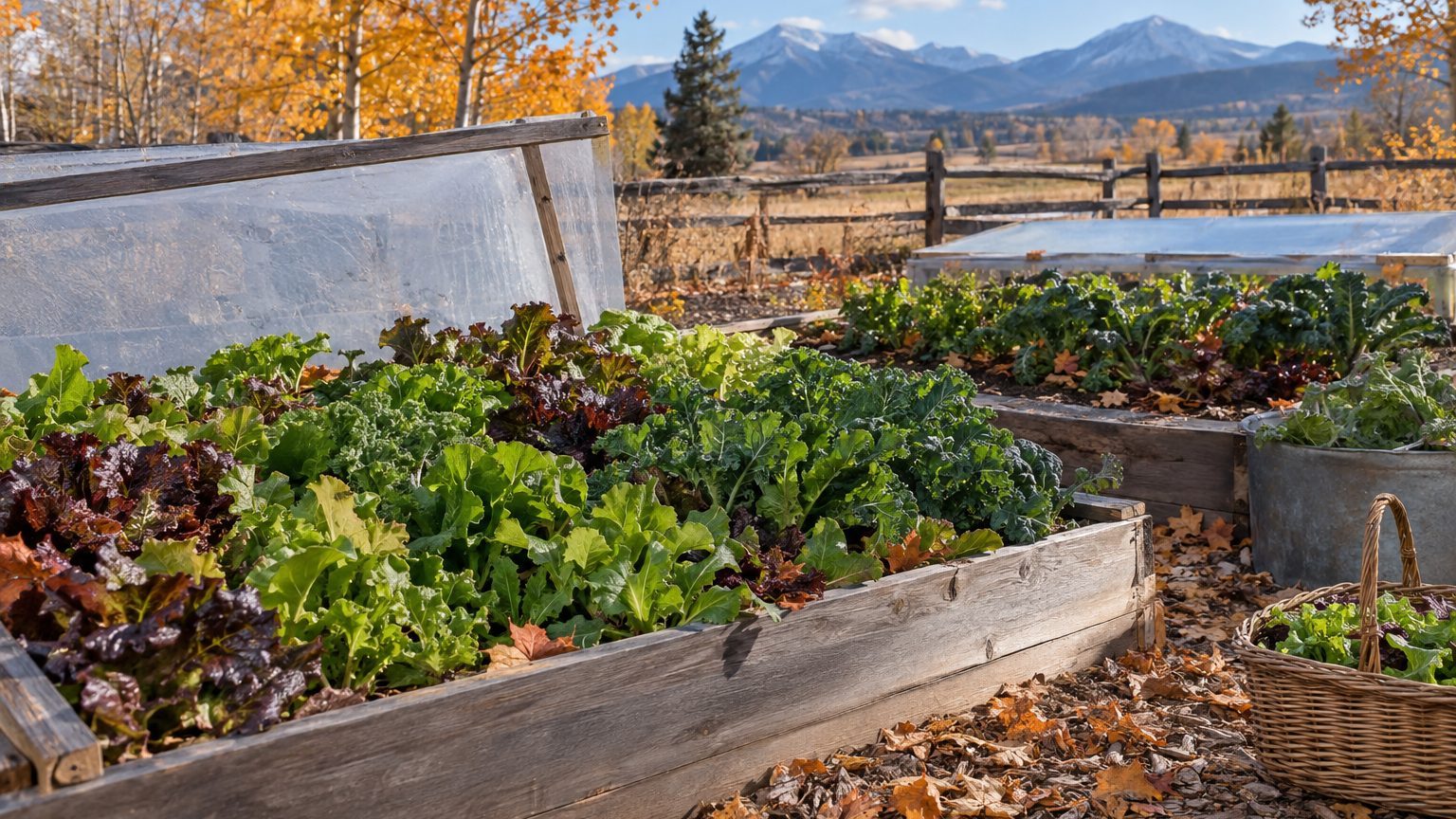
Raised beds drain and warm sooner than beds at ground level. A clear cloche or low tunnel set over the bed for a week or two before sowing takes the chill off the top few inches. Everything is grown in beds, cold frames and containers, which makes that kind of soil management easy.
How long the season lasts here
The reference station has a mean last spring frost on March 18 and a mean first fall frost on November 10, but these are midpoints of a window, not safe dates. Both dates are averages. In one year out of two the first frost arrives before November 10, so the end of the window is as soft as the start.
That length allows more than a single sowing. A window this long fits a spring sowing, a midsummer sowing, and a late-summer sowing meant to stand through winter. Spacing those sowings a few weeks apart keeps the table supplied with young leaves instead of one glut. Transplanting also makes sense on the coast. A seedling started in a tray loses some root when it moves, but with this much season left it has time to recover and still beat a direct sowing to harvest.
Natural Resources Canada places the reference city in Canadian hardiness zone 9a. That number comes from the Canadian system, which weighs seven climate variables, and it does not translate to a USDA zone. It describes the city and says little about a hillside two hours north.
Move inland or uphill and the picture changes. A shorter window makes the first sowing the main one. It also makes transplanting a gamble, because a seedling that stalls after its root check may not catch up before autumn. In those districts, direct sowing of quick, early types usually pays off better.
Late sowings run out of light before they run out of frost. Days shorten fast through October, and leaves sown too late stop growing well before the mean first frost on November 10. Count back from that date and sow early enough for plants to reach cutting size while the light still helps. The Winter Salads: What Grows When Lettuce Will Not guide lays out how to stagger those sowings. For a colder contrast, Winter Salads for Manitoba Gardens shows what a continental winter does to the same plan.
Heat and water in British Columbia

Heat rarely sets the calendar for winter salads here. Hot spells on the coast are short, and the reference station sits at the airport near salt water, so it describes the Lower Mainland and not the hot interior valleys. Those valleys have hotter summers and far colder winters, and gardeners there should plan accordingly. On the coast, summers run mild and fairly dry. Late-summer sowings need regular watering to germinate, and the wet season then arrives in fall and stays through winter.
Where summer heat is modest, the trouble comes from cool, damp weather instead. Mildew spreads on crowded leaves, growth slows when nights turn chilly, and slugs work the beds all winter. Wide spacing, raised beds, and watering at the base of the plant in the morning keep leaves dry and diseases down. Ventilate any cover on mild, humid days so it does not become a damp box.
Do winter salads need protection from the cold in British Columbia?
Everything here is decided by the cold. The mean daily minimum of the coldest month at the Vancouver reference station is 0.8 °C (33.5 °F). That is close to freezing on an average night, and individual nights go lower. The winter low sorts the crops into three groups.
- Stand uncovered on the coast: the hardiest greens, such as corn salad, spinach, hardy mustards, and chicories.
- Need a cover to stay edible: tender lettuces and delicate baby leaves, which turn mushy or brown in a hard freeze without a cloche, row cover or cold frame.
- Cannot manage at all: warm-season salad crops like cucumbers and basil, which stop at the first chill.
Inland, the same sorting shifts a full step colder. Crops that stand uncovered at the coast may need a cover in the interior, and some covered crops there need a heated or well-insulated frame.
The first frost sets how late a sowing can still reach useful size. The mean date is November 10, but in one year out of two it comes earlier, and in the hills it comes earlier still. Sow late and the plants stay small and tender when the cold arrives. Sow on time and they grow big enough to stand a hard night or two.
Which winter salads suit British Columbia
Choose by type, and let the local climate decide which type comes first. In a short season, which means upland, northern and many interior districts, favor the earliest types. Quick baby-leaf greens and fast cut-and-come-again mixes give a harvest before the window closes. A hot summer, as in the interior valleys, calls for types that tolerate warmth without bolting, planted with airflow between plants and shade or mulch over the roots. A humid, damp climate like the coast makes disease resistance the first criterion. Look for mildew resistance on the seed packet, and favor open, upright leaf forms over tight heads that hold water.
For the coast, the hardy end of the range is the safest bet: corn salad, spinach, hardy mustards, and chicories grown as leaves. They stand through a mild winter with little help. Tender lettuces and delicate greens work too, if a cold frame or tunnel is ready for the first hard freeze. Gardeners comparing climates may also find Winter Salads for New York Gardens useful, since humidity and frost pull the choice in different directions there.
Variety names are best taken from local trials. British Columbia covers the coast, the Fraser Valley, the Okanagan, the Kootenays and the north, and a variety that thrives in one can fail in another. The only recommendation worth following comes from trials run near you. For that, start with the B.C. government’s agriculture and seafood pages, then ask local garden clubs and seed suppliers that sell to your region what has worked in your own ground.
A last practical step: sow a small test strip of two or three types in the same bed and note which ones stand the first cold snap and which sulk. That result is worth more than any list.
Common questions
When should I sow winter salads in British Columbia?
Sow in spring once the bed is workable and the soil has warmed, not on the date of the last frost. At the Vancouver airport station, the average last frost is March 18, and in one year out of two it falls later. For winter harvest, sow in late summer and count back from the average first frost, November 10 at the same station. Inland and upland districts run weeks behind.
Do winter salads survive a British Columbia winter without cover?
On the coast, the hardiest types usually do. The mean daily minimum of the coldest month is 0.8 °C (33.5 °F) at the reference station. Tender lettuces and delicate leaves need a cloche, row cover or cold frame to stay edible, and inland gardeners should expect to cover more.
Is hardiness zone 9a the same as USDA zone 9a?
No. The Canadian system used by Natural Resources Canada draws on seven climate variables, while the USDA system uses one. The two do not convert, and a Canadian zone can overlap several USDA zones. Zone 9a applies to the reference city, so check your own municipality’s listing.
Which varieties should I plant?
Ask the people who have trialled them near you. British Columbia’s regions differ too much for one list to hold up, so start with the provincial agriculture and seafood pages and local seed suppliers, and choose by type: early for a short season, heat-tolerant with shaded roots for hot summers, and mildew-resistant where it is damp.