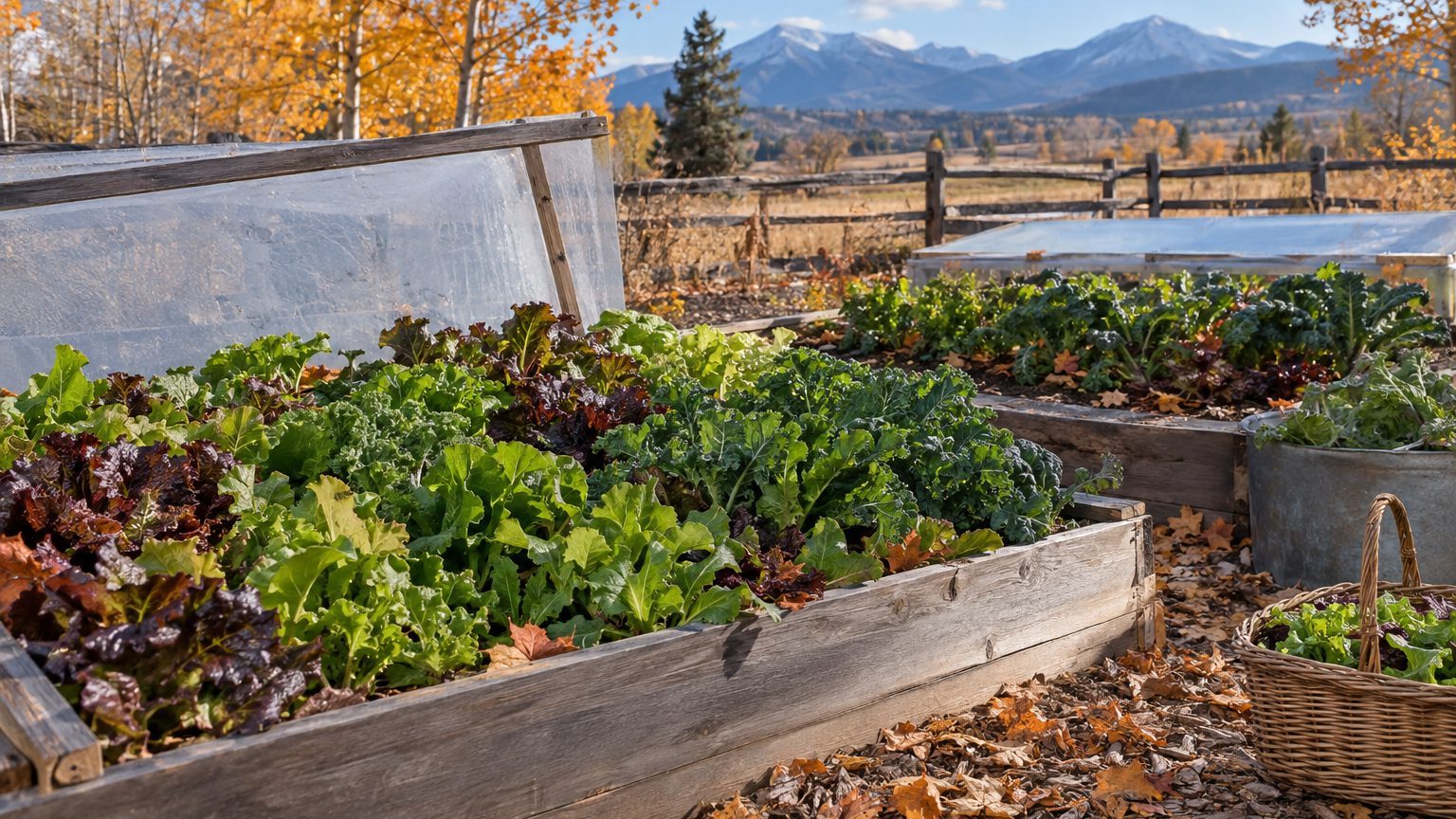

Winter salads can be grown in Manitoba, but the cold sets the rules, not the summer heat. Hardy greens sown in the right window give you cut leaves well into fall, and a cold frame or low tunnel stretches that further. Open ground alone will not carry a salad through a Manitoba January. Here is when to sow, how long the season runs, and which types earn bed space.
When the soil is warm enough in Manitoba
What the frost date tells you, and what it doesn’t
At the Winnipeg Richardson Int’l A station, the last spring frost falls on average on May 23. That figure comes from Environment and Climate Change Canada’s Canadian Climate Normals for 1981-2010. A mean date is a probability, not a promise: in one year out of two, the last frost arrives later. Treat May 23 as the middle of a window, not the opening bell.
Winnipeg is also a single point on a very large map. Northern and upland districts run weeks behind it, so a garden far from the Red River Valley should shift every date in this article later. And because these are 1981-2010 normals, they should not be lined up against the 1991-2020 figures used on the US pages of this site.
Why the soil, not the calendar, makes the call
A frost date is a proxy. What a seed actually answers to is the temperature of the soil around it, and soil lags behind the air. It warms after the frost risk ends, not alongside it. A mild week in mid-May can still leave the top few inches cold and sodden, and seed sown into that either sits and rots or comes up unevenly.
Hardy leaf crops forgive more than tender ones. Spinach, mâche and similar greens will germinate in cool ground, so they can go into a bed as soon as it has thawed and drained. Head lettuce and other tender types should wait until the frost risk has truly passed and the soil has caught up with the air.
Skip the guesswork. Push a soil thermometer into the root zone in the morning, when the reading is at its lowest. Squeeze a handful from the bed: if it crumbles, it is ready, and if it holds a greasy clump, wait. The seed packet states the minimum soil temperature for each crop, and that number beats any calendar date.
The soil question flips in late summer. Sowing for fall and winter harvest happens in the warmest ground of the year, and some greens, lettuce especially, sulk in hot soil. Water the bed before sowing, keep the seed row moist, and give it afternoon shade until the seedlings are up. For which varieties have been trialled in your part of the province, the right source is Manitoba Agriculture, and this page does not try to replace it.
How long the season lasts here
Count from the average last spring frost on May 23 to the average first fall frost on September 22, both at the Winnipeg Richardson Int’l A station. That leaves 122 days, a little over 17 weeks. Both are mean dates, so in any given year the window can open late or close early, and a gardener who sows on the assumption of a full 122 days is borrowing from the calendar.
What does 122 days allow? A window this size is long enough for fast baby-leaf crops to be sown, cut and followed by a second sowing in the same bed, then a third placed for the cold season. It is not long enough to be casual about it. Each sowing has to be on time, because there is no extra month in the autumn to make up a late start. Where a window runs well past 150 days, a missed sowing is a small setback; here it can mean a bed that never reaches cutting size.
The window also changes the transplanting question. Every transplant takes a root check, a few days when the plant puts energy into recovering rather than growing. For quick greens that germinate easily where they stand, direct sowing wins, since the days are better spent growing. For slower crops such as kale or the chicories, starting seedlings indoors and moving them out buys back more time than the check costs. That trade tilts the other way if the seedlings have been sitting in small cells too long and are root-bound by the time they go out.
Frost-free days are not the whole story for winter salads. Hardy greens keep producing after the first frost, which is the reason to grow them at all. The September 22 date marks the end of the tender crops, not the end of the harvest. What cuts the season short for hardy types is the fading light of late fall, a limit that comes slightly after the frost and doesn’t come with a date attached.
For the intervals between sowings, the succession sowing guide on this site lays out the rhythm. For the broader picture of which crops carry on when lettuce quits, start with Winter Salads: What Grows When Lettuce Will Not. A gardener on the Pacific side will find a very different logic in Winter Salads for British Columbia Gardens, where the cold is not the main constraint.
Heat and water in Manitoba
What this page does not have
The verified figures behind this page include no count of days above 90 °F (32 °C) and no summer rainfall total, so neither appears here. Inventing them would be worse than leaving them out. What is measured is the cold, and the cold is what decides almost everything about this crop in Manitoba. Summer heat and moisture matter mainly at the edges: a hot spell can make lettuce bolt or stall germination in a late-summer bed, and a cool, damp summer brings its own trouble, with powdery and downy mildew on leaves, slow ripening of everything in the garden, and root and crown disease in beds that stay wet.
The practical answer to both is the same: space plants so air moves through them, water the soil rather than the leaves, and mulch to keep the root zone steady. Shade cloth over a late-summer sowing handles the heat side, and a bed that drains well handles the wet side.
What the cold decides
At the reference station in Winnipeg, the mean daily minimum of the coldest month is -21.4 °C (-6.6 °F). That is an average of nights, so plenty of nights run colder. The city sits in zone 3b of the Canadian plant hardiness system, which is built on seven climate variables and does not convert to a USDA zone. Natural Resources Canada says as much on its hardiness site.
Against that backdrop, salad crops sort into three groups:
- Stand uncovered, for a while. The hardiest leaf crops take light and moderate frost in stride and keep being cut through October and into November. Spinach sown late can sit as a small plant under snow and restart in spring, though that is a bonus, not a plan.
- Need a cover to stay edible. Mâche, claytonia, kale and the chicories hold up much longer under a cold frame or a low tunnel with a second layer of fabric inside. Snow is itself good insulation, so a snow-covered frame is warmer than a bare one.
- Cannot manage. Tender head lettuce and most soft salad leaves are done at the first hard frost, covered or not, once the nights reach the depths normal for a Manitoba winter.
Even a well-covered frame holds plants in January rather than growing them. Days are short, and growth slows to a near stop, so winter harvest is mostly leaves that reached size before the light failed. That makes the first fall frost, September 22 on average, a planning anchor: a sowing has to be far enough along by then to be worth protecting. Count back from that date, allow extra for slower weeks, and treat a sowing that is already late as a candidate for the cold frame from day one.
Which winter salads suit Manitoba
Choose by type, and let three facts guide the choice: a short window favors the earliest types, a cold winter favors the hardiest, and a cool, damp stretch makes disease resistance the first thing to check on the seed packet.
| Type | Where it fits in Manitoba | What it needs |
|---|---|---|
| Mâche and claytonia | Among the hardiest salad greens, suited to cold frames and tunnels | Cool soil, cover in deep cold |
| Spinach | Spring sowing, fall cutting, and a late sowing that may overwinter small | Early sowing, snow or mulch cover |
| Kale and mustard greens | Take frost well and keep producing into late fall | Airflow, steady moisture |
| Chicories | Slower, but good frost tolerance with some cover | Early start, ideally indoors |
| Lettuce | Spring and early fall only; not a winter crop here | Shade and cool soil in summer |
A short season pushes toward early-maturing types and toward direct sowing. A damp summer means a variety bred for mildew resistance beats a prettier one, and if any bed stays wet, raise it or improve drainage before anything else. Shade at the root, from mulch or a taller neighbor crop, helps lettuce through the hot weeks.
This page names no varieties, and the reason is simple. A variety recommendation only means something if it has been grown and compared in conditions like yours, and this page does not have those trial results. Manitoba Agriculture is the right place to ask what has done well in the province. Local seed growers and garden clubs often hold the same knowledge at neighborhood scale.
Everything above is for beds, containers and frames you plant yourself. Wild plants gathered from ditches and streams are a different matter altogether: wild watercress in grazed water can carry liver fluke, and several plants that look like young salad leaves are seriously toxic. Grow it, then cut it.
Common questions
Can I grow salad outdoors all winter in Manitoba?
Not in open ground. With a mean daily minimum of -21.4 °C (-6.6 °F) in the coldest month at Winnipeg, even hardy greens need a cold frame or tunnel to stay edible, and under cover they hold more than they grow. Plan on harvesting what reached size before the light faded.
When should I sow winter salads?
There is no single date. Spring sowings follow the soil, not the May 23 mean last frost. Late-summer sowings are counted back from the September 22 mean first frost so that plants have size before the cold arrives. Check your own garden’s soil and local frost record, since both dates are for the Winnipeg station only.
Do the Winnipeg dates apply to my garden?
Only if you garden near Winnipeg. Northern and upland districts run weeks behind that station, and a sheltered city lot may run ahead. Use the dates as a starting point and keep your own notes for a few seasons.
Is Canadian zone 3b the same as a USDA zone?
No. The Canadian system uses seven climate variables, and Natural Resources Canada states there are no simple conversions to USDA zones. Gardeners comparing notes across the border can read Winter Salads for South Dakota Gardens for ideas, but the zone numbers do not transfer.