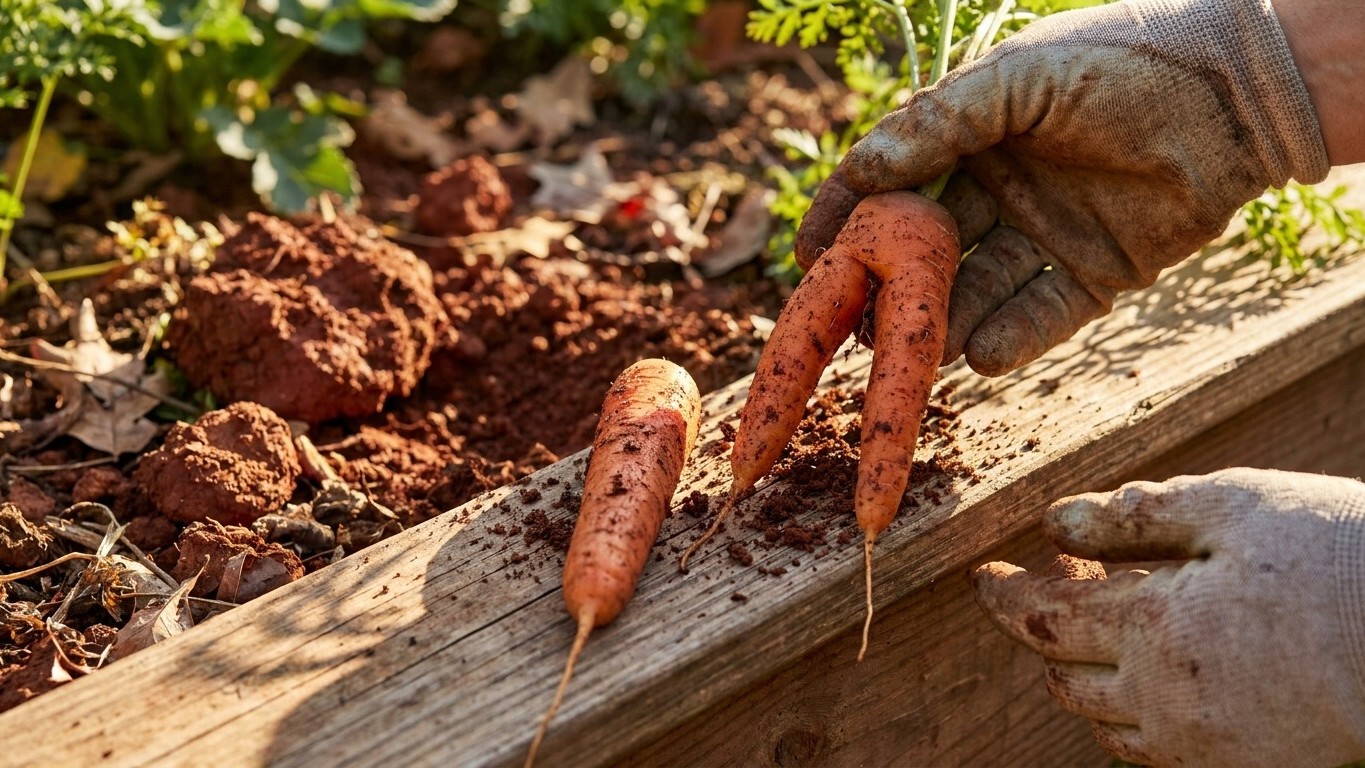

Connecticut’s representative soil, the Windsor series, runs 82 percent sand and just 2 percent clay, and it’s classified as excessively drained. That’s close to what a carrot actually wants: loose, deep ground with little clay to squeeze against. So the state average leans toward straight roots, not forked ones. But averages don’t dig your bed. A pocket of clay, a buried rock, or compacted fill near a foundation can turn any carrot row into a forking mess, no matter what the statewide soil survey says the region tends to do.
The short answer
USDA lists the Windsor series as the soil representing Connecticut. It’s an Entisol, which is soil science shorthand for young ground with almost no layered profile development, meaning what you’d dig into near the surface is close to what’s actually there, without much buildup of distinct horizons underneath. The surface texture runs 82 percent sand, 2 percent clay, and 16 percent silt, and the drainage class is excessively drained. Surface pH sits around 5.1, which is strongly acid.
Utah State University Extension is blunt about what carrots need: deep, sandy, well-drained soil rich in organic matter. Heavy or rocky ground is what forks a taproot, and the fix for that is plenty of compost worked in along with double digging. Windsor’s texture, sitting at 82 percent sand with almost no clay, is not the heavy, sticky ground that typically forks carrots. On texture alone, this representative soil leans in the carrot’s favor rather than against it.
Two numbers on the Windsor record deserve a second look before anyone gets too comfortable. The organic matter figure runs near 95 percent, which is not something a worked garden bed carries. A figure that high on a mapped surface horizon usually means a natural organic layer, peat, muck, or forest litter, sitting where the survey took its sample, not a tilled vegetable bed. And that pH of 5.1 describes the mapped soil series, not necessarily the dirt under your tomato cage. Compost, lime, and years of garden amendments shift a bed’s pH and organic content away from whatever the county survey recorded for undisturbed ground.
So the honest short answer is: on texture alone, Connecticut’s representative soil is not the forking kind, but that’s a statewide label, not a diagnosis of your yard. A single state can span hundreds of distinct soil series, and river bottoms, hillside gravel, and anything a builder has scraped, filled, or graded will look nothing like the Windsor profile. Where the real risk shows up is drainage. Excessively drained sandy ground dries out fast between waterings, and that unevenness, not clay, is what tends to crack or stunt roots in soil like this. The remedy Utah State points to for heavy or rocky ground, compost and double digging, or a raised bed built with a loose, stone-free mix, still applies wherever your own soil turns out to be the sticky, obstructed kind instead.
The test that settles it in your own garden
Nothing on a state soil map replaces five minutes with a shovel in the exact spot where you plan to sow. Here’s how to find out what you’re actually working with.
- Dig a test hole where you intend to plant, going down as deep as you’d want a full-size carrot root to reach. This tells you whether the loose, workable layer runs deep enough or gives way quickly to something harder.
- Look at what comes up on the shovel. Note where you hit rocks, gravel, or a dense compacted layer, and roughly how far down that obstruction sits. Anything blocking a straight root within the first several inches is a red flag for forking.
- Feel the texture between your fingers. Rub a damp handful of soil: gritty and loose means sand, sticky and moldable when squeezed means clay, smooth and slippery without much stickiness usually means silt. Most garden soil is some blend of the three.
- Check the color and smell. Dark, crumbly, earthy-smelling soil usually carries decent organic matter. Pale, dense, odorless soil generally doesn’t, and that’s a sign compost needs to go in before you sow.
- Watch how water moves through it. Pour water into the test hole and pay attention to how it behaves: water that lingers on the surface for a long stretch points to poor drainage, while water that vanishes almost immediately points to fast-draining, sandy ground that will need more frequent watering to keep roots from drying out and splitting.
Run this test in more than one spot if your yard has any variation at all, since a few feet can be the difference between a bed that grows straight carrots and one that doesn’t.
What goes wrong here
- Forking in heavy, compacted, or rocky ground. Even where the region’s representative soil leans sandy, plenty of Connecticut yards sit on glacial till, clay pockets, or construction fill packed down by equipment. Roots hit resistance and split around it. Utah State’s fix is straightforward: work in generous compost and double dig the bed to loosen the obstruction, or skip the fight entirely and build a raised bed filled with a loose, stone-free mix.
- Poor germination during a hot, dry spell. Carrot seed is tiny and sits shallow, so it needs the surface to stay consistently damp to sprout at all. A hot stretch can bake and crust the top of a bed low in organic matter before seedlings ever break through. Light, frequent watering that keeps the top layer damp, rather than one deep soak, gets seedlings up reliably.
- Splitting from uneven watering. This is the real risk in ground like Connecticut’s representative Windsor soil, which drains excessively fast. Roots that dry out and then get suddenly soaked swell unevenly and crack along the length of the taproot. Regular, even watering and a layer of mulch to slow moisture loss between waterings fixes this without changing anything about the soil’s texture.
- Stunted or forked roots from buried debris in disturbed or filled ground. Yards near new construction, driveways, or old foundations often have a shallow “good” layer sitting over rubble, brick fragments, or compacted subsoil left behind by grading. Carrots hit that layer and fork or simply stop growing. Clearing and sifting the top working layer, or again, building up rather than digging down with a raised bed, sidesteps the problem entirely.
Common questions
Does Connecticut’s official soil mean my carrots won’t fork?
Not automatically. It means the soil USDA uses to represent the state, the Windsor series, leans sandy and drains fast, and that texture is close to what carrots want rather than the heavy, rocky ground that typically forks them. Your own bed’s texture, checked by hand, decides the actual outcome, not the state-level label.
What actually causes carrots to fork besides heavy soil?
Utah State University Extension identifies heavy or rocky soil as the driver of forking. A taproot growing straight down hits an obstruction, whether that’s dense clay, a stone, or compacted fill, and splits around it rather than pushing through.
How many days does a carrot take from seeding to harvest?
Utah State University Extension puts it at 70 to 100 days, and that count starts at seeding. Carrots are sown directly where they’ll grow and are never transplanted, so there’s no separate transplant date to track, just the day the seed goes into the ground.
Should I build a raised bed if my soil turns out to be heavy clay?
If your own test shows sticky, clay-heavy, or rocky ground, yes. Utah State’s remedy for that kind of soil is compost worked in with double digging, or a raised bed filled with a loose, stone-free mix, and either approach solves forking regardless of what the surrounding native soil looks like.