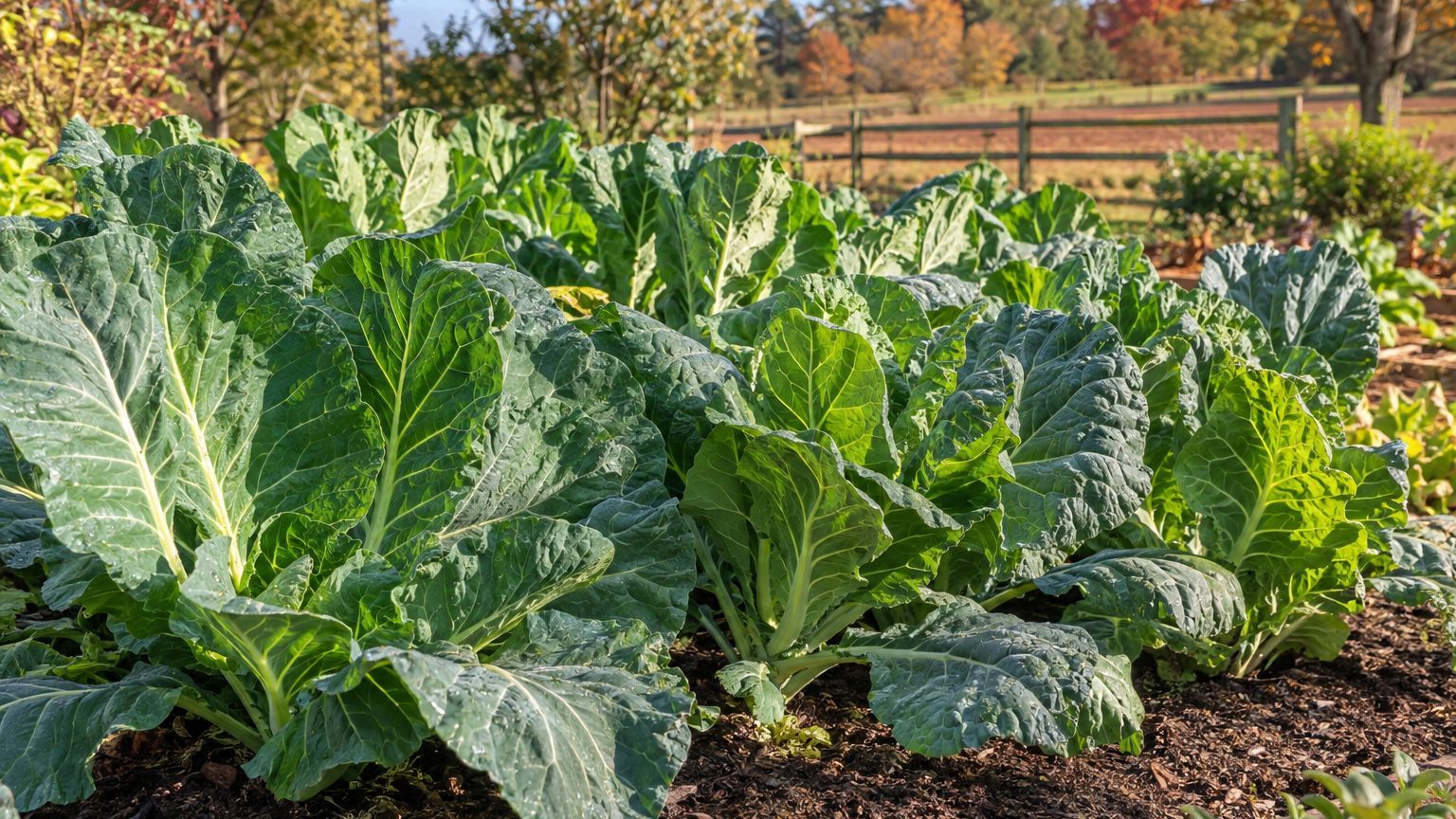

Connecticut’s short, humid growing season rules out slow-maturing heirloom collards for most gardeners. Quick-to-mature hybrid types like Champion and Top Bunch, along with fast greens like Georgia Southern for late plantings, handle the state’s freeze windows better than old-line varieties such as Morris Heading, which need more warm days than most Connecticut counties reliably offer.
The short answer for Connecticut
Connecticut works with roughly six and a half months between last and first frost at its mildest, coastal edge, and less than that inland. That’s not a lot of slack for a green that traditionally takes its time. The practical fix is sorting collards by days-to-maturity rather than by tradition. Fast hybrids bred for compact harvest windows, such as Champion and Flash, mature in the 50 to 60 day range and fit comfortably into either a spring slot or a fall slot bookended by the state’s frost dates. Georgia Southern and similar loose-leaf types run a bit longer but still land inside a single Connecticut season if started on time.
Heirloom types like Morris Heading and Vates deserve a place in the garden too, but they’re a fall-only bet here. Their flavor improves with cold exposure, and Connecticut’s frost pattern, arriving October 28 to November 10 depending on location, gives them just enough of a chill window before hard freezes shut things down. Spring planting of these slower varieties is the riskier move, since summer heat arrives before they’ve had a chance to bulk up.
Kale and mustard greens, close cousins in the same brassica family, follow the same logic but with even shorter maturity windows, which is why many Connecticut gardeners lean on them to fill the gap between a spring collard harvest and the fall collard planting. The short version: choose fast hybrids for spring, save the slow heirlooms for fall, and treat days-to-maturity as the single most important number on the seed packet.
What will not work here

Slow heirloom collards planted in spring are the most common failure story in Connecticut gardens. A variety needing 80 or more days to reach full size, started after the last frost window of April 2 to April 12, runs straight into July heat before it’s finished growing. The plant survives, but it bolts, turns bitter, and stops producing usable leaves right when the gardener expected a harvest. This isn’t a soil problem or a watering problem. It’s a mismatch between the variety’s clock and the calendar.
Southern-bred varieties selected for long, mild autumns also struggle here, not because of cold tolerance but because Connecticut’s fall frost arrives weeks earlier than what those varieties expect. A collard bred for a Georgia or South Carolina fall season, where frost might not show up until December, gets caught mid-cycle when Connecticut’s first freeze lands in late October or early November. The plant hasn’t finished sizing up, and a hard freeze on unhardened tissue can damage or kill it outright, rather than just sweetening the leaves the way a light frost does.
Watering habits that backfire
Weekly watering, common advice in drier climates, doesn’t translate well to Connecticut’s humid summers. Collards want consistent soil moisture, but the combination of humidity and infrequent deep watering here tends to produce fungal leaf spot rather than drought stress. The greens that struggle most are exactly the tight, dense-headed types, since crowded leaves trap moisture against each other and take longer to dry after a summer thunderstorm.
Overly tight spacing compounds this. Recommendations built for drier regions, where airflow around a plant matters less, don’t account for Connecticut’s muggy August stretches. Crowded rows of any collard variety, fast or slow, become breeding ground for downy mildew and other leaf diseases once the humidity climbs, regardless of how well-suited the variety’s maturity date is to the season.
What changes across Connecticut
Connecticut isn’t one climate. The USDA hardiness zone range for the state runs from 6a to 7b, a spread wide enough that a variety timeline built for one corner of the state can be off by a week or two somewhere else. That range reflects the average extreme minimum winter temperature, and coastal areas near Long Island Sound sit at the milder end while inland and northwest Connecticut, including higher elevations, sit at the colder end.
The frost data backing this article comes from a Bridgeport station, which sits on the Sound and represents the mildest conditions the state offers. Inland gardeners should expect their last spring frost to land later than Bridgeport’s window, and their first fall frost to arrive earlier. In practice, that means fast hybrid collards become even more important away from the coast, since the safe growing window shrinks the further inland or the higher in elevation a garden sits.
Fall planting dates for slow heirloom types need the same adjustment. A gardener near the coast might sow a Morris Heading type in mid-summer and still get a decent harvest before a November frost. A gardener in the northwest hills working with an earlier fall frost has less room for error and should either shift to an earlier sowing date or switch to a faster variety altogether. There’s no single date that works for the whole state, which is exactly why this range exists on the hardiness map in the first place.
Given that spread, nobody should treat a statewide frost date as their personal planting date. The right move is checking a local reference point, not assuming the coastal numbers apply to a garden forty miles inland.
Where to check this for your own county
The University of Connecticut’s Cooperative Extension System publishes county-level guidance that accounts for the zone differences described above, and it’s the resource to check before locking in a planting date or a variety list. Find it at extension.uconn.edu.
Two things are worth looking for once there. First, a local planting calendar specific to your county or region of the state, since UConn Extension offices often adjust recommended sowing windows for inland cold pockets versus the milder shoreline strip. Second, look for any variety trial results or recommended cultivar lists put out by county agents, since these reflect real performance in Connecticut soil and Connecticut summers rather than a generic seed-catalog description written for a national audience.
A state-level article like this one is built to cover the range from Bridgeport’s mild coastline to the colder inland hills, which means it necessarily paints in broad strokes. A county extension recommendation narrows that down to actual local frost data and actual local pest and disease pressure, and it will beat this page every time there’s a conflict between the two. Treat this article as the starting framework and the county office as the fine-tuning step, especially if a planting date here doesn’t quite match what a gardener two towns over swears by.
The UConn Extension site is also the place to ask about newer hybrid releases that haven’t made it into general gardening literature yet, since county agents typically test new varieties a season or two before they show up in mainstream seed catalogs.
Checking this against your own garden
No planting calendar beats what’s actually happening in a specific patch of dirt. Soil warmth is the first check, and it’s a simple hand test: press a finger a couple inches into the bed in early spring, and if it feels cool and damp rather than cold, collard seed will typically germinate within the week. Cold, wet soil that feels closer to refrigerator temperature means waiting a bit longer regardless of the calendar date.
The second signal is the plant’s own behavior once it’s growing. Watch for the first flush of tall flower stalks with small yellow blooms, a sign the plant is bolting rather than continuing to produce harvestable leaves. This shows up faster in a warm microclimate, like a bed against a south-facing wall that traps heat, than it does in an open, shaded spot. A gardener seeing early bolting on a fast hybrid has learned something useful about that bed’s heat exposure, information no state-level date can give them.
Third, check the first true leaves that appear after the initial seed leaves. Slow, small true leaves in a bed that should be warm enough suggest either compacted soil or a nutrient gap, not a wrong planting date. Fast, broad true leaves within two weeks of sprouting is the sign a bed is performing well and that the chosen variety is on track for its expected maturity date. These three observations, taken together, tell a gardener more about their own patch of Connecticut than any regional average ever could.
For readers building out a fuller season plan, related guidance on Growing Collards in Connecticut and When to Plant Collards in Connecticut covers the sowing windows and care details that pair with the variety choices above.