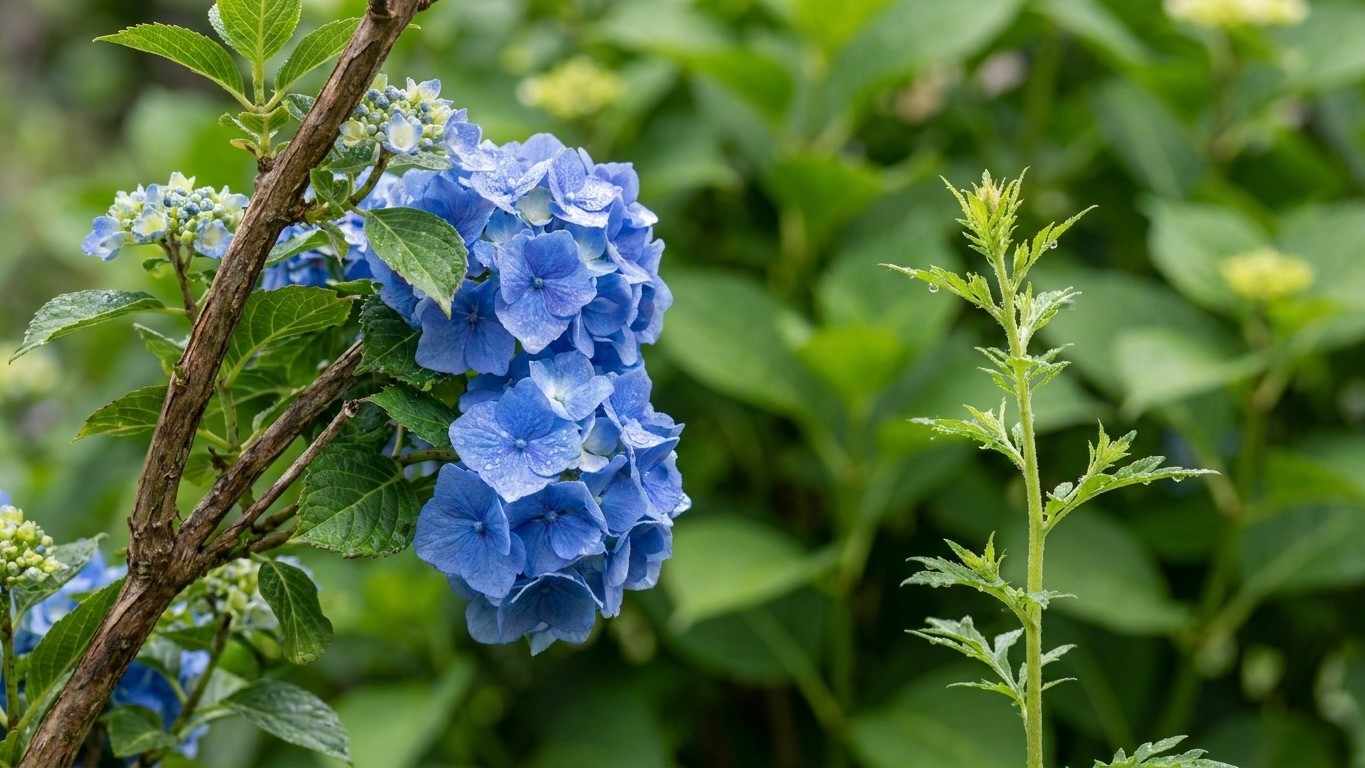

Yes, hydrangeas can grow in the Northwest Territories, but only the right kinds. Panicle (Hydrangea paniculata) and smooth (Hydrangea arborescens) types flower on new wood. A winter that kills their stems back still leaves them able to bloom that summer. Bigleaf types carry next year’s buds on old stems and mostly fail here. With an average of 115 frost-free days at Yellowknife A, a container-grown panicle planted on time has room to flower. Timing, site and winter protection decide the rest.
When to plant Hydrangeas in Northwest Territories
Environment and Climate Change Canada puts the average last spring frost at the Yellowknife A station on May 25. That is a mean date, not a safe one. In one year out of two, the last frost lands later. Treat May 25 as the middle of a window and the earliest sensible day to think about planting, not the day to dig.
Yellowknife is the reference city here, and the figure belongs to that one station. The territory is enormous. Northern communities such as Inuvik and higher-elevation sites run weeks behind it, while pockets south of Great Slave Lake may come in earlier. One more wrinkle: Canadian normals cover 1981-2010, while the US figures elsewhere on this site cover 1991-2020, so the two sets of dates are not strictly comparable. Check your own district before you commit.
For most gardeners, “starting indoors” means buying a container shrub and keeping it somewhere bright and cool until the weather allows. Growing from seed is possible but rarely worth it. Named cultivars do not come true from seed, and seedlings take years to flower. If you want to try anyway, the count-back goes like this:
- Target transplant date: about June 1, a week past the mean last frost, which gives you a margin for a late cold snap.
- Hardening off: 10 days, so outdoor exposure begins around May 22.
- Seed sowing: roughly 16 weeks before transplant, which lands in the second week of February. Sow on the surface, keep it moist and warm, and give the seedlings strong light.
Hardening off is the step people skip, and it matters more for a shrub that has spent weeks behind glass. Start with an hour or two in shade, out of the wind. Add an hour or so each day, then introduce morning sun. Bring pots inside on any night that threatens frost.
Transplant on an overcast afternoon. Set the root ball at the same depth it sat in the pot, firm the soil, and water slowly until the whole hole is saturated. After that, count forward. A June 1 planting leaves about 109 days until the September 18 mean first fall frost. A plant set in the ground by the end of June still gets most of the season to root and grow. Fall planting is a gamble this far north, because roots have little time to anchor before the ground freezes and heaves.
The parent guide, How to Grow Hydrangeas: The Complete Guide, covers the general biology. This page sticks to what changes when the season is short.
Soil and site preparation
Light first. In a short northern season, panicle hydrangeas do best with six or more hours of direct sun, and the long June days help. Smooth hydrangeas tolerate more shade but flower less heavily in it. Afternoon shade matters in hot southern climates. Here, a spot that catches full morning light and some wind shelter is worth more than any amount of shade.
Wind and snow matter nearly as much as sun. A site along the south or east side of a house or solid fence blocks desiccating winter wind. It also catches drifting snow, which is the best insulation a shrub can have. An exposed ridge scours snow away and leaves stems bare to the coldest air.
Soil in northern gardens varies enormously. Many yards are built on thin mineral soil over rock, on sand, or on organic material, and raised beds are common for that reason. Hydrangeas want moist but well-drained ground with plenty of organic matter. A simple drainage test tells you more than guessing: dig a hole about a foot deep, fill it with water, let it drain, then fill it again. If the second fill is still standing after several hours, build up a raised bed or mound instead of digging deeper.
Spend the weeks before planting on the soil, not just the day itself:
- Four weeks out: arrange a soil test through your local agriculture office or a lab, so you know the pH before you amend.
- Two to three weeks out: work 2 to 3 inches of finished compost into the top 8 to 12 inches of soil across an area two to three times the width of the root ball.
- Planting week: dig the hole twice as wide as the container but no deeper, and loosen the sides so roots can move out.
Spacing depends on the cultivar. Compact panicles want about 3 to 4 feet of room, while large ones and smooth hydrangeas need 5 to 6 feet to avoid crowding. Crowded shrubs hold moisture on their leaves and trap cold air, which invites mildew. If you cannot test the soil, a neutral to slightly acidic result suits most panicle and smooth types. Raising or lowering pH matters mostly for bigleaf colour, which is a separate question below.
Varieties that suit Northwest Territories
The trait that matters most is where the flower buds form. Cultivars that bloom on new wood, meaning stems grown this season, are the dependable choice for a territory where winter dieback is routine. Cold hardiness comes second, and bloom timing third: early-blooming types finish before the autumn chill.
Most nurseries rate paniculata and arborescens types to USDA zone 3. Winters in much of the territory sit at or beyond the edge of those ratings, so a zone number is a starting point, not a promise. Snow cover and site choice make up the difference.
| Type and cultivar | Blooms on | Good for |
|---|---|---|
| Panicle, ‘Limelight’ | New wood | Sturdy stems, big lime-to-pink flower heads, a dependable all-rounder |
| Panicle, ‘Quick Fire’ | New wood | One of the earliest panicles to bloom, helpful when the season is short |
| Panicle, ‘Bobo’ | New wood | Compact size for small beds, borders and containers |
| Smooth, ‘Annabelle’ | New wood | Large white mopheads, but stems flop in rain |
| Smooth, ‘Incrediball’ | New wood | Annabelle-style flowers on stronger stems |
| Bigleaf (e.g. ‘Endless Summer’) | Old and new wood | Marginal here; plan on winter protection and expect fewer flowers |
Panicles are the strongest bet. ‘Quick Fire’ earns its place when the autumn comes early, because it opens ahead of most others. ‘Limelight’ and ‘Bobo’ are easy to find and cope with a range of sites. Late-blooming panicles such as ‘Tardiva’ risk opening just as the frost arrives. Smooth hydrangeas are the backup plan: even if the top growth dies, they regrow from the base and flower the same year.
Soil pH changes flower colour only in bigleaf types, which turn bluer in acidic soil with available aluminum and pinker in neutral to alkaline soil. Panicle and smooth hydrangeas do not respond to pH. Panicles fade from white or lime to pink or burgundy as nights cool, and in a northern autumn that change can be cut short by frost. Smooth hydrangeas stay white or pale green.
For comparison, the neighbouring guides show how much the answer shifts with climate: Growing Hydrangeas in Nunavut: Types, Colour and Winter deals with a shorter season still, while Growing Hydrangeas in Colorado: Types, Colour and Winter covers a much longer one.
What to plant alongside
Good neighbours do three jobs: shade the roots, cover bare soil, and bring in pollinators. Hostas, ferns, astilbe, bergenia and hardy geraniums (cranesbill) all suit that role, and most are far hardier than any hydrangea. Planted at the base, they keep soil cooler and slow evaporation, which helps a shrub that wilts in dry spells. Spring bulbs and early perennials fill the gap before hydrangeas leaf out.
What to keep away is mostly about roots. Shallow-rooted trees such as birch, willow and spruce pull moisture from the same top few inches and leave little for a young hydrangea. Plant at least a few feet beyond the drip line, or choose a different site. Crowding is also a problem: shrubs jammed against a fence with no air movement hold humidity, and mildew follows. Keep cabbage-family beds a little apart as well, since root maggots attack those crops.
Watering, feeding and support
Hydrangeas take their name from “water vessel,” and they do show stress in dry weather. The goal is deep, infrequent watering rather than frequent sprinkles. New plants need about 1 inch of water per week during the first season, delivered in two or three slow soakings, with extra on hot or windy days. Established shrubs need less, but a dry July can still leave the leaves limp. A leaf that droops at midday and recovers by evening is fine. One that stays limp in the morning needs water now.
Mulch holds the moisture in. Spread 2 to 3 inches of shredded bark, leaves or compost over the root zone, keeping it an inch or two from the stems so the bark does not stay wet.
Feed once, early. A balanced slow-release fertilizer or a layer of compost when the soil thaws in spring is plenty. Stop by midsummer. Late nitrogen pushes soft growth that has no time to harden before frost, and soft tips die back first. This reasoning is the reverse of southern advice, where you can feed into late summer.
Support is a size and weather problem. Smooth hydrangeas such as ‘Annabelle’ produce heavy flower heads that flop after rain. Install a peony ring or a few stakes with twine in spring before the stems get tall, because forcing sprawling stems upright later breaks them. Panicles with sturdy stems usually do not need help.
Pruning follows the new-wood rule. Panicle and smooth types can be cut in early spring, once buds swell and you can see what survived. Remove dead wood first, then cut back remaining stems by about a third, or harder on smooth hydrangeas to encourage strong growth. Do not prune in fall, because open cuts invite winter damage.
Common problems
The most common complaint here is a shrub that leafs out but never flowers. Usually the culprit is winter. A bigleaf type lost its buds, or a panicle was pruned too late. Too much shade and too much nitrogen, which makes leaves at the expense of flowers, are the other usual causes. Match the symptom to the cause before changing anything.
Reading leaves and stems
Brown, crisped leaf edges point to wind, sun scorch or dry soil. Check moisture first, then consider a windbreak. Yellow leaves with green veins suggest iron chlorosis, common where soil is alkaline. Blackened new growth after a cold night is frost damage, which looks alarming but usually regrows from lower buds. Persistent wilting even when the soil is wet can mean root trouble from poor drainage, so test the soil’s drainage rather than adding more water.
White powdery patches are mildew. It thrives in humid, crowded spots and rarely kills the plant. Thin out nearby growth, water at the base rather than overhead, and clean up fallen leaves in autumn.
Pests
The pests below come from the list published by UAF Cooperative Extension in Alaska. No Canadian province or territory publishes an equivalent home-garden list, so this is a neighbouring jurisdiction’s documentation: the biology crosses the border, but the calendar does not always. Nothing here proves a pest is absent from the territory. For positive identification, take a sample to the territorial agriculture office.
- Aphids: clusters on new growth, curled leaves and sticky honeydew. A hard spray of water, repeated every few days, handles most outbreaks.
- Cutworms: chew young stems at soil level, which kills new transplants overnight. A collar of cardboard or a tin can pressed into the soil protects each plant.
- Slugs: ragged holes in leaves, worse in wet weather. Remove hiding places and handpick at dusk.
- Root maggots: mainly a vegetable-bed pest. Keep cabbage-family crops apart from your shrubs.
Where hares and voles are around, a wire cylinder around young stems prevents winter browsing and girdling under the snow.
Ripening before the frost comes back
Hydrangeas do not produce fruit to ripen, so the real question is different: do the flowers open and the stems harden before the first hard frost? Soft, unhardened wood is what winter kills first. The arithmetic below frames the answer.
Start with the 115 frost-free days average at Yellowknife A. Subtract about 7 days if you wait a week past the May 25 mean to plant, leaving roughly 108 days. Then reserve about 30 days at the end of the season for stems to harden. That figure is a working allowance, not a published number. It leaves roughly 78 days of real growth and bloom time. Early-blooming panicles such as ‘Quick Fire’ fit comfortably in that window. Late bloomers may open only as nights turn cold, and smooth hydrangeas, which flower on new growth each year, land in the middle.
To redo the arithmetic for your district, take your local frost-free days, subtract the days you wait after the last spring frost, then subtract the hardening allowance. If less than about 70 days remains, stick to the earliest-blooming cultivars. Remember that a territory is not one climate: Yellowknife A is one data point, and Inuvik or an upland site may leave you far fewer days.
Harvest and end of season
Flower harvest means cutting stems for bouquets or drying. For fresh arrangements, cut in the morning when the heads are fully open, and plunge stems into water at once. For drying, wait until the blooms feel papery and have taken on their late-season colour, then strip the leaves and hang the stems upside down in a dry, dark spot with good airflow. Flowers do not ripen off the plant, so cut at the stage you want.
The mean first fall frost at Yellowknife A is September 18. As with spring, that is a midpoint: in one year out of two, the first frost arrives earlier. Watch the forecast from late August rather than waiting for the date. If frost threatens while flowers are still open, throw a sheet or row cover over the shrub for the night.
Winter preparation matters as much as summer care. Stop feeding by midsummer, and water deeply through autumn until the ground freezes. Do not prune. Once the ground begins to freeze, mound 6 to 8 inches of leaves, straw or shredded bark over the crown. Putting it down earlier invites rodents to nest. For extra protection, build a wire cage around the shrub, fill it with leaves, and wrap the outside with burlap as a windscreen. Leave the dried flower heads on through winter. They catch snow and offer some bud protection.
Pots are risky because roots freeze solid above ground. Plant in the ground, where snow insulates the roots.
Local help
County-level frost dates, soil testing and pest identification are best sourced locally. The Government of the Northwest Territories’ Industry, Tourism and Investment agriculture services can point you to guidance for your district. More regional background is gathered in our Northwest Territories guides.
Common questions
Can bigleaf hydrangeas survive in the Northwest Territories?
Rarely as dependable flowering shrubs. Bigleaf types carry next year’s buds on old wood, and a hard northern winter usually kills those buds. They may leaf out and look fine yet never bloom. If you want to try, give them a sheltered spot, deep mulch and a cage, and expect occasional flowers at best.
Which hydrangea is the safest choice for a short season?
A panicle type that blooms early, such as ‘Quick Fire’, is the strongest bet because it flowers on new wood and opens ahead of most others. ‘Bobo’ and ‘Limelight’ are also widely available. Smooth hydrangeas such as ‘Incrediball’ are a good second choice.
When should I prune?
In early spring, once buds swell and you can see which stems survived the winter. Panicle and smooth types flower on new wood, so this timing does no harm. Avoid fall pruning, because fresh cuts are vulnerable to winter damage.
Can I change flower colour with soil amendments?
Only on bigleaf hydrangeas. Acidic soil with available aluminum pushes them toward blue, and neutral to alkaline soil toward pink. Panicle and smooth hydrangeas do not respond to pH. Their colour shifts come from flower age and cool autumn nights.
Is it too late to plant if I miss June?
Not necessarily, but the margin narrows. A shrub set out by early July still gets weeks to root, though with less time to harden before frost. Plant a larger container specimen rather than a small one, water carefully, and mulch generously before the ground freezes.