
In Connecticut, February rarely offers open ground worth planting. The state’s last spring frost typically falls between April 2 and April 12, so this month sits eight to ten weeks ahead of that window, with soil that’s often frozen or waterlogged. The real answer isn’t “nothing to do”, it’s dormant plantings, cold frames, seed starting under cover, and the pruning and planning work that sets up everything else.
What goes in the ground in February

Nothing goes into open, unprotected garden soil in Connecticut this month, and it’s worth saying that plainly instead of padding a list with crops that would freeze within days. With the last spring frost running April 2 to April 12 across the state (NOAA’s 1991-2020 Climate Normals, based on the Bridgeport station), February sits too far ahead of that window for direct-sown vegetables to have any realistic shot. Soil temperature, not the calendar, decides this, and in most of Connecticut the ground is either frozen solid or so saturated from thaw-and-freeze cycles that working it does more harm than good.
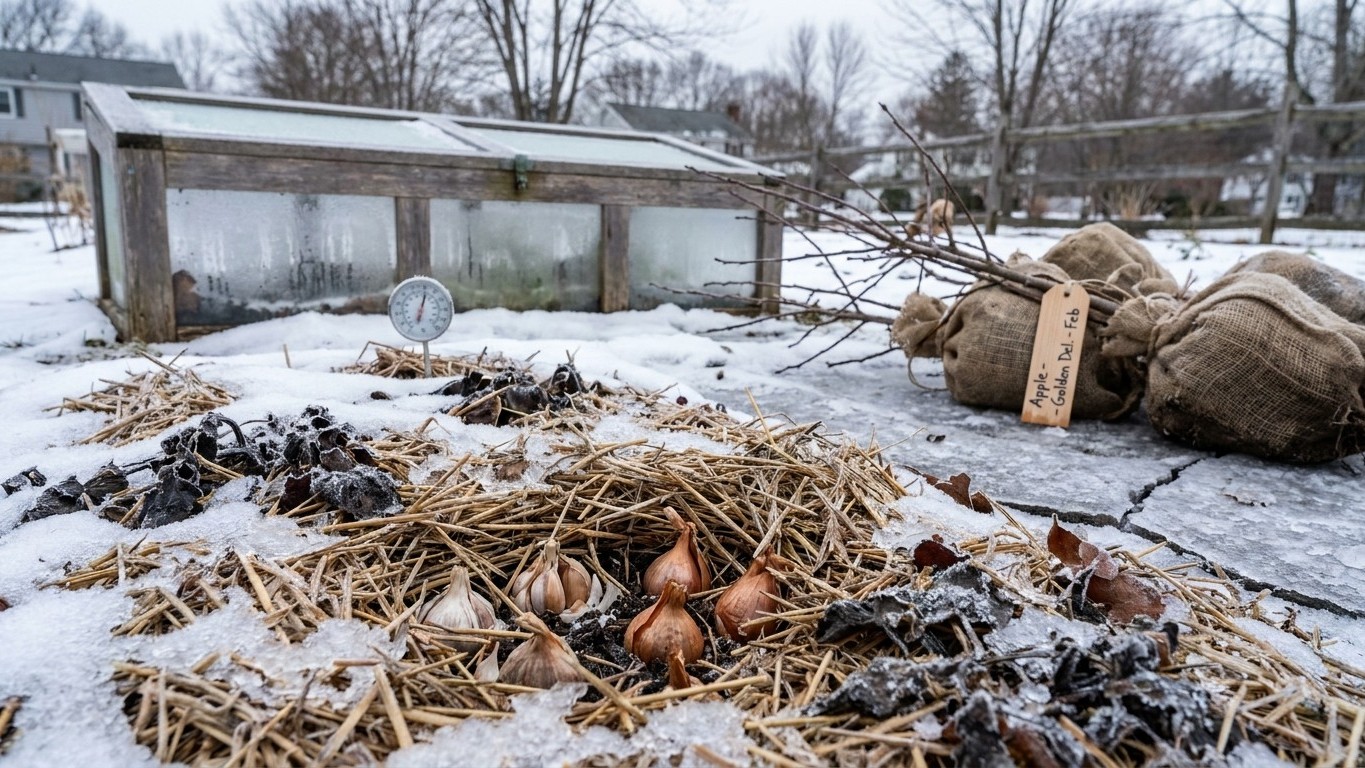
That doesn’t mean the garden is idle. Garlic and shallots planted the previous fall are already in the ground, quietly building root systems under a layer of mulch, and there’s nothing to do there except make sure that mulch hasn’t blown off. Bare-root fruit trees, berry canes, and asparagus crowns can go in during any stretch where the ground has actually thawed and drains well, though in most of the state that window doesn’t open until closer to March. Cold frames and low tunnels are the one place where real planting happens this month: spinach, mâche, and claytonia can be sown under cover where the frame has kept soil temperatures above freezing.
Forcing is the other February trick worth knowing. Rhubarb crowns lifted and brought into a dark, cool space will push tender stalks within weeks, and Belgian endive or chicory roots dug in fall can be forced into blanched chicons indoors. Neither needs garden soil at all, which makes them the closest thing to a February harvest this state offers.
What to start under cover
Seed starting this month works backward from the frost window, not forward from a date on a calendar. With the last spring frost landing April 2 to April 12, counting back eight to ten weeks lands squarely in February, which is exactly why this is the month for the slowest-growing transplants: onions, leeks, and celery. These crops are notoriously slow from seed to a transplant-ready size, and starting them any later often means setting out stunted plants that never catch up during the growing season.
Peppers and eggplant, which typically need six to eight weeks under lights before they go outside, can also start in late February in the warmer, coastal end of the state, though gardeners farther inland or at higher elevation should hold off until early March given their later frost-free date. The arithmetic is simple to redo for any county: take the local last-frost estimate, subtract the number of weeks a given crop needs before transplanting, and that’s the sowing date.
The two ways this goes wrong are mirror images of each other. Start too early and tomatoes or peppers turn into rootbound, leggy stems reaching for light long before it’s safe to plant them out, and they rarely recover their vigor once transplanted. Start too late, particularly with onions and leeks, and the plants simply run out of growing season to bulk up before the ground warms and daylight triggers bulbing. A heat mat and a bright grow light setup matter more this month than any other, since natural daylight in February is still short and weak across the entire state.
What is ready to pick
Almost nothing comes out of an open Connecticut garden bed in February, and there’s no point dressing that up. But a well-planned fall garden is still paying dividends. Kale, and sometimes leeks, that were left in the ground under a thick mulch or a blanket of snow are often still harvestable, since both crops tolerate hard freezes and actually sweeten after repeated cold exposure. Digging them out requires patience and sometimes a mattock if the ground has locked up hard, but the flavor reward is real.
Cold frames extend this further. Spinach, mâche, and other cold-hardy greens sown the previous fall often sit in a holding pattern through the coldest weeks, ready to be cut a few leaves at a time whenever the frame is opened on a mild day. Indoors, sprouts and microgreens fill the gap for households wanting something fresh and fast, since both go from seed to harvest in a week or two under nothing more than a windowsill or a shelf light.
The other job this month is inspecting what’s already stored. Winter squash, potatoes, and onions tucked away in the fall need a check-over: soft spots on squash, green sprouting on potatoes, or a sour smell from an onion all mean that item needs to be used or composted before it spreads rot to its neighbors. Losing a bin of stored potatoes to one overlooked soft spot is a common and avoidable February disappointment.
The jobs that matter this month
February is a working month even though it’s not a planting one, and the tasks done now have real deadlines attached. Dormant pruning tops the list: apple, pear, and stone fruit trees, along with raspberry and blackberry canes, are best cut back while they’re fully leafless and the plant’s energy is stored safely in the roots. Pruning after buds swell risks cutting away fruiting wood and stresses the plant at the worst possible moment.
Seed ordering belongs here too, and it’s easy to underestimate how quickly popular varieties sell out. Waiting until March to order a specific tomato or pepper variety often means finding it already out of stock, especially for the smaller seed companies that print limited runs. Pairing that order with a rotation plan for where tomatoes, brassicas, and legumes will go this season avoids repeating the same family in the same bed, which is one of the simplest ways to head off soil-borne disease buildup.
Soil deserves attention now as well. A basic soil test, sent through UConn’s extension service, gives a clear read on pH and nutrient levels while there’s still time to amend before spring planting. Turning a compost pile on a mild February day keeps the microbial activity from stalling completely, and cleaning and sharpening pruners, loppers, and hoes now means no scrambling for a sharp blade once the ground finally opens up. Fencing and raised bed repairs are easier to spot and fix while nothing’s growing yet, and stored crops still need that periodic check for rot mentioned above, since one missed spot in a squash bin can spread through the whole batch by March.
What not to do in February
The most common February mistake in Connecticut is trusting a warm afternoon over the actual soil temperature. A 55-degree day in mid-February feels like spring, but the ground underneath is often still near freezing, and any warm-season seedling set out in that gap will sit stalled or simply die once the next cold front rolls through. Air temperature and soil temperature are not the same measurement, and only the second one matters for planting decisions.
A close cousin of that mistake is pulling mulch off garlic beds or perennial crowns after a mild stretch, assuming winter is done. With the first fall frost running October 28 to November 10 and the last spring frost not arriving until April 2 to April 12, there’s a long stretch left where a hard freeze can still hit exposed roots and crowns that had settled in comfortably under their winter cover. Leave the mulch in place until there’s real, sustained warmth, not just one nice weekend.
Fertilizing is the third trap. Dormant trees, shrubs, and perennials aren’t actively taking up nutrients yet, and a dose of nitrogen applied now either washes away in the next thaw or, worse, sits ready to push a burst of tender new growth the moment temperatures rise, growth that then gets hammered by the next cold snap. Save the feeding for when plants are visibly breaking dormancy, not before. And working wet or partially frozen soil, whether digging a bed or driving a stake, compacts the structure in a way that’s hard to undo once the growing season starts.
Checking this against your own county
Every figure above comes from one coastal weather station, and Connecticut is not one climate. The Long Island Sound shoreline runs milder than the rest of the state, while the northwest hills and inland river valleys freeze earlier in fall and thaw later in spring, sometimes by several weeks. Elevation and distance from the water both shift these windows in ways a single statewide date can’t capture.
| Region | Position in the 6a-7b hardiness range | Frost timing relative to the Bridgeport figures cited above |
|---|---|---|
| Coastal shoreline (near Long Island Sound) | Milder end of the range | Closest to the April 2-12 / October 28-November 10 window cited here |
| Inland valleys and northwest hills | Colder end of the range | Likely later last frost and earlier first frost, not quantified here |
Before acting on any date in this article, check it against the UConn extension service, which tracks local conditions county by county.
Common questions
Can I plant peas outdoors in Connecticut in February?
No. Peas tolerate cold better than most vegetables, but the state’s last frost doesn’t arrive until April 2 to April 12, and February soil is typically still frozen or too wet to work. Peas are better sown directly outdoors closer to that frost window, not two months ahead of it.
Is it too early to start tomato seeds in February?
For most of Connecticut, yes. Tomatoes generally need six to eight weeks indoors before transplanting, and starting them in February, well ahead of the April frost window, risks leggy, rootbound plants by the time it’s safe to set them outside. Onions and leeks, which grow much slower, are the better February choice for indoor starts.
Why is my garlic bed heaving out of the ground in February?
Repeated freeze-thaw cycles push soil upward and can lift shallow-rooted garlic cloves partway out of the ground. A thick mulch layer helps buffer the soil against those swings, and any exposed cloves should be gently pressed back down and re-covered rather than left to dry out.
Should I remove row covers during a warm February stretch?
Not until the risk of a hard freeze has genuinely passed. A mild weekend doesn’t change the fact that the state’s frost window runs into mid-April, and pulling covers early exposes cold-hardy crops to a freeze they were otherwise protected from.