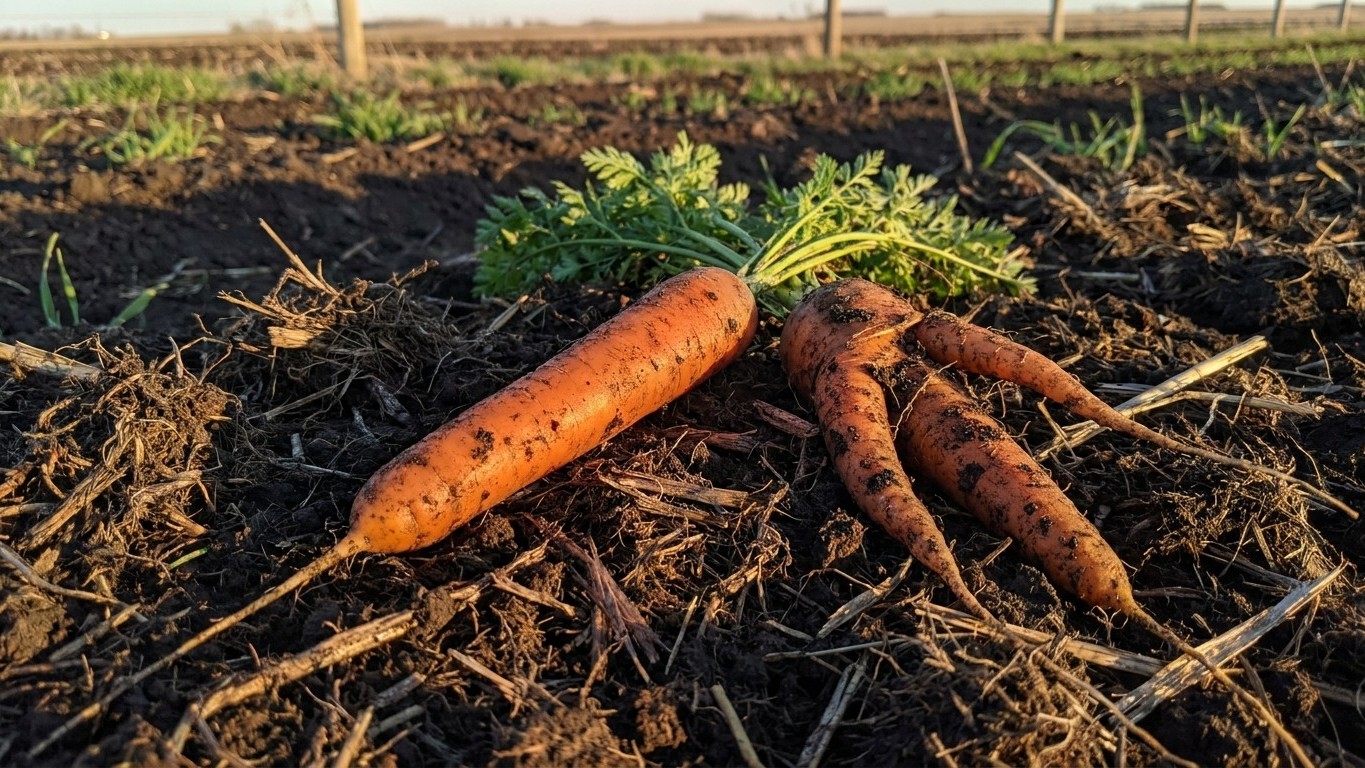

According to University of Delaware Cooperative Extension, none of the nine insect species it documents for the state’s vegetable gardens actually feed on carrot. The list covers tomatoes, squash, beans and cabbage-family crops instead. That gap is useful information on its own, and it changes how you should read any damage you find in a carrot bed.
Which pests attack carrot in Delaware

University of Delaware Cooperative Extension documents nine insect species for vegetable gardens in this territory: Colorado potato beetle, cucumber beetles (spotted and striped), harlequin bug, imported cabbageworm, Mexican bean beetle, squash beetle, squash bug, squash vine borer, and tomato hornworm. That is the full list this source carries for the state, and the service does not document more than that here.
Run each one against carrot and the pattern is clear. Colorado potato beetle and tomato hornworm both feed on nightshade-family foliage, potato, tomato and eggplant, and carrot is not a nightshade. Cucumber beetles, squash beetle, squash bug and squash vine borer all target cucurbits, meaning squash, cucumbers and melons; four separate species, one shared host family, and none of it is carrot. Harlequin bug and imported cabbageworm work the cabbage family, feeding on the leaves of broccoli, kale and cabbage. Mexican bean beetle sticks to beans. That accounts for all nine.
None of the nine species documented for this territory feed on carrot roots or foliage. That is not a small gap in the record; it means the extension service’s published pest pressure for Delaware gardens is organized around other crops entirely, and a carrot bed planted on its own, away from tomatoes, squash, beans and brassicas, has no documented insect threat listed for it here.
That does not mean carrot is immune to every insect anywhere. It means this particular source, for this particular territory, has not published a carrot-specific pest on its list. If you see chewed carrot foliage or damaged roots, the cause is more likely to be something outside this list, or something that is not an insect at all, which is the subject of the next two sections.
When each one shows up, and what it does first
Since none of the nine documented species change their host to carrot, the useful calendar here is about your other plantings, not your carrot rows. Early in the season, as tomato and pepper transplants go in, Colorado potato beetle adults and later tomato hornworm start working nightshade foliage. As cucurbit seedlings emerge, cucumber beetles move in first, followed by squash bug, squash beetle and squash vine borer as the vines run and set fruit. Brassica transplants draw harlequin bug and imported cabbageworm to their leaves, and once beans are up, Mexican bean beetle follows.
Carrots run 70 to 100 days from seeding to harvest, and across that entire span none of these nine species change their host. That is worth holding onto if your carrot rows sit next to tomatoes or squash: you may watch potato beetles or squash bugs build up in the next row over a full season, and it tells you nothing about what is happening in the carrot bed itself.
What that means practically is that a gardener growing carrot inside a mixed vegetable plot should expect visible insect activity nearby, sometimes heavy activity, without it ever crossing into the carrot foliage. If you find chewed carrot tops or gnawed roots, the first move is not to match it against this list, because nothing on it fits. The first move is to look at what else could be responsible, starting with soil and moisture rather than insects.
This also affects how you plan a garden layout. Rotating nightshades, cucurbits, brassicas and beans away from each other each season limits how these nine species build up on their own preferred hosts. Carrot does not need to be part of that rotation plan for insect reasons, since it is not a host for any of them, though it still benefits from rotation for soil and disease reasons unrelated to this list.
Telling the damage apart from everything else
With no documented insect feeding on carrot in this territory, most root and foliage problems trace back to soil conditions or growing practices rather than pests. Carrots want deep, sandy, well-drained soil rich in organic matter, and heavy or rocky ground makes the root fork, according to Utah State University Extension. Delaware’s official state soil, the Greenwich series, gives a sense of what regional ground tends to do: it runs 48 percent sand, 9 percent clay and 43 percent silt at the surface, with organic matter around 1.7 percent and well-drained conditions. That is one mapped series representing the state, not a reading of your own bed, and a real garden a few miles away, or a yard where a builder graded and filled the soil, can differ completely.
| Symptom | Likely cause | What distinguishes it |
|---|---|---|
| Forked, split or twisted roots | Heavy, compacted or rocky soil | Dig a test hole; roots forking uniformly across a row points to structure, not an isolated pest |
| Pale, stunted foliage | Nutrient deficiency or poor drainage | A soil test settles nutrient levels; standing water after rain points to drainage |
| Chewed leaf tops | Mechanical damage, hail, foot traffic, or animal browsing | Ragged, irregular tears with no insects present on the plant itself |
| Cracked roots | Irregular watering, dry spells followed by heavy rain | Cracking runs lengthwise and tracks with recent rainfall patterns |
None of this is a diagnosis you can make from a description alone. The soil test, not a guess from a photo, is what separates a texture problem from a nutrient problem. If you want a confirmed cause, that test and a look at your own county’s extension office are the next steps, not this article.
What actually works here, and what is a waste of time
Given that carrot has no documented insect pest in this territory, the effort that pays off is soil preparation, not pest control. Heavy or rocky ground needs plenty of compost worked in, and double digging or building a raised bed before sowing addresses forking at the root, literally. Fix the bed before you sow, not after the roots have already started forking, since a misshapen carrot cannot be corrected once it has grown that way.
Row covers and other physical barriers still have a place in a mixed garden, just not over the carrot rows. They earn their keep over tomato and eggplant transplants against Colorado potato beetle, over cucurbit seedlings against cucumber beetles and squash vine borer, and over brassica transplants against harlequin bug and imported cabbageworm. Timing those barriers to go on when transplants first go in, before adults find the plants, matters more than which barrier you buy.
What is a waste of time is treating carrot foliage for any of the nine species on this list. Since carrot is not a host for Colorado potato beetle, cucumber beetles, harlequin bug, imported cabbageworm, Mexican bean beetle, squash beetle, squash bug, squash vine borer or tomato hornworm, spraying or trapping around carrot for these insects addresses a problem that is not there, while doing nothing for the soil issues that actually cause most carrot trouble. This site does not recommend specific products or active ingredients regardless, since what is labeled and legal to use varies by state and changes over time; that question belongs with your local extension office.
Where to check this for your own county
Everything above comes from a statewide list published by University of Delaware Cooperative Extension. A statewide list describes what has been documented across the territory as a whole, and pest presence still varies from one county to the next, and often from one yard to the next within the same county. A pest being absent from the statewide record does not guarantee it is absent from a specific garden, and the reverse is also true.
The soil test and a call to your county extension office settle what a statewide record cannot. University of Delaware Cooperative Extension maintains county offices that handle plant identification, soil testing referrals and pest questions specific to local conditions, including things this statewide list does not cover.
If you are dealing with damaged carrots right now, the next step is straightforward: pull a soil sample from the actual bed, and if you still see something that looks like insect feeding, bring a sample of the damage, ideally with the insect if you can find one, to your county extension office rather than trying to match it against a list built for other crops.
Common questions
Does anything actually eat carrot roots in Delaware gardens?
University of Delaware Cooperative Extension’s documented list for the state’s vegetable gardens does not include a carrot feeder. Root damage in carrot is more often traced to soil texture, moisture swings or mechanical causes than to an insect from this list.
Why does the extension’s pest list skip carrot?
The nine species this source documents for the territory each target a different host family, nightshades, cucurbits, brassicas and beans, and carrot does not belong to any of those families, which is why it does not appear as a host for any of them.
What causes forked or split carrots if it’s not a pest?
Heavy, compacted or rocky soil is the usual cause, according to Utah State University Extension. Working in compost and loosening the bed with double digging or a raised bed before sowing addresses it; a soil test on your own bed confirms what you are working with.
Should I still rotate carrot away from tomatoes and squash?
Rotation still helps with soil health and disease management, but it is not necessary for insect reasons specific to this list, since carrot is not a host for any of the nine species documented here.