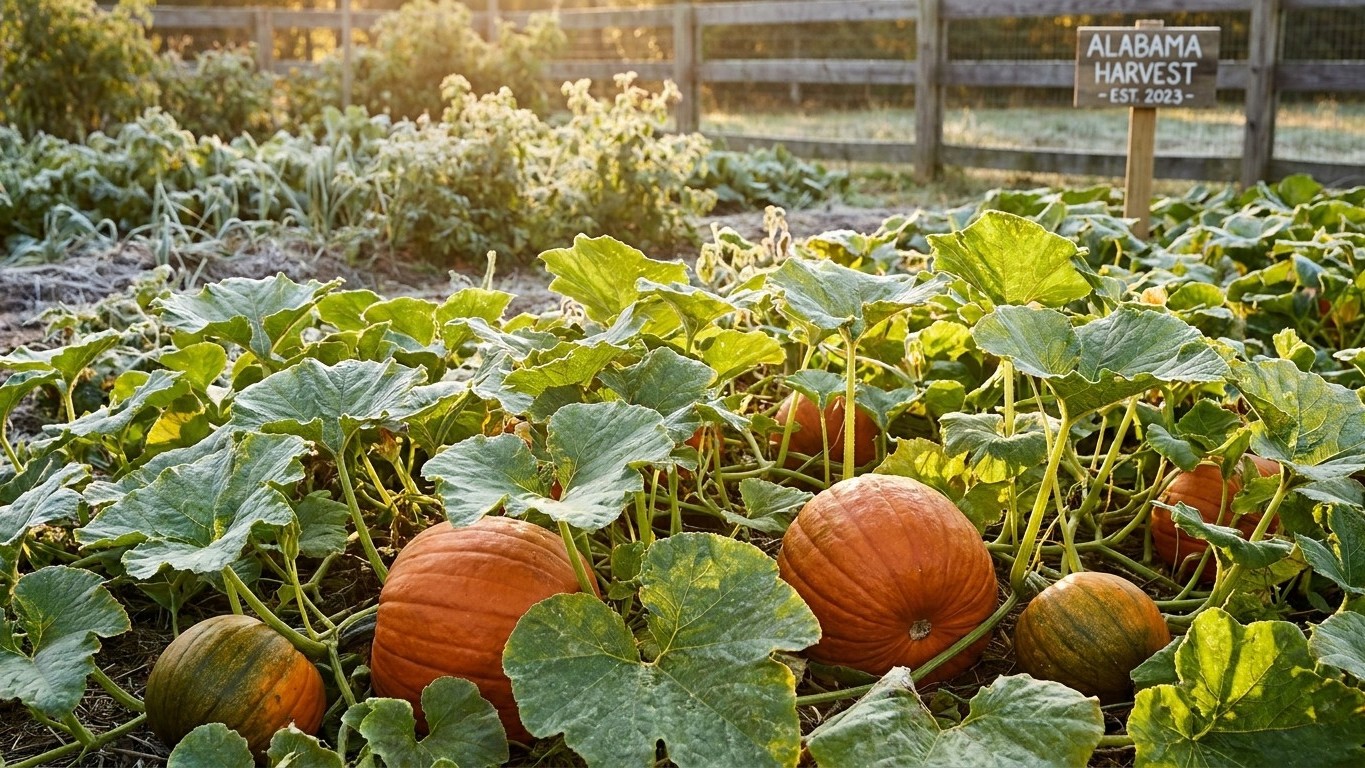

Yes, but the margin is tight. Delaware gardeners get a last spring frost between April 3 and April 14, and a first fall frost between October 26 and November 7. That gives roughly six and a half months of growing season, but pumpkins only need part of that window to matter: the 45 to 55 days after the flower opens, not after the seed goes in the ground. Miss that flowering window and frost wins.
The short answer
Start with the frost date, not the seed packet. Delaware’s first fall frost lands somewhere between October 26 and November 7, based on 1991-2020 climate normals from the NOAA weather station used for this region. That’s a window, not a single date, and it matters because pumpkins need 45 to 55 days after flowering, not after sowing, to reach full color and a hardened rind.
Work backward from the earlier end of that frost window first, since that’s the riskier scenario. If frost could arrive as early as October 26, then a flower needs to open no later than roughly September 1 to September 11 to leave enough runway for the fruit to mature. Push the calendar to the later end of the frost window, November 7, and a flower has until roughly September 13 to September 23 before it’s cutting things close. That’s the real spread: somewhere between the first and third week of September is when the last productive flowers on a Delaware pumpkin vine need to open.
Here’s the part growers miss. A vine can look loaded with blossoms in late September and still produce nothing but green fruit, because those flowers opened too late to finish the 45 to 55 day clock before frost. The flowering date, not the planting date, is the number that decides whether a pumpkin turns orange or stays green on the vine.
This also means the frost window itself carries real uncertainty for anyone gardening away from the reference weather station. That October 26 to November 7 range comes from an airport-based monitoring station, and suburban yards, low spots, and rural gardens in Delaware often see frost arrive earlier than an open, paved site does, sometimes by a week or two. A garden tucked in a valley or shaded by tree cover should treat the earlier end of that window, late October, as the more realistic planning target rather than assuming the full six weeks of margin.
The safest approach treats mid-September as the last acceptable flowering date for anyone who wants real certainty, and treats the back half of September as a gamble that depends on the fall staying mild. Growers who’ve had female flowers open in the last week of September have sometimes gotten lucky with a late frost, but luck isn’t a planting plan.
When to sow here
The instinct is to use the last spring frost date, April 3 to April 14, as the green light for planting. That’s a mistake with pumpkins. Seeds and transplants need soil that has warmed to 65 F, and soil temperature lags well behind air temperature, often taking weeks longer to climb than the frost calendar suggests. Cold, wet soil right after the last frost date will rot pumpkin seed before it ever germinates.
- Mark the last frost window. April 3 to April 14 tells you when the air stops freezing, nothing more.
- Wait for the soil, not the air. Soil temperature climbs gradually through spring and typically doesn’t reach the 65 F pumpkins need until well past that April frost window, sometimes by several weeks, since bare ground releases heat slowly compared to open air.
- Check with a soil thermometer at planting depth rather than guessing from the calendar. A cheap probe thermometer pushed a couple inches into the row removes the guesswork entirely.
- Use row covers to buy time if soil is borderline. Clear plastic or fabric row covers trap solar heat and can advance soil warming by roughly two weeks, letting a grower start earlier without gambling on a cold snap killing young seedlings.
- Count forward from the actual sowing date to estimate when flowering, and therefore the harvest clock, is likely to begin. Pumpkins don’t flower the week they’re sown, there’s a vegetative growth stage first, so build in that lag when penciling out whether flowers will open before the mid-September cutoff described above.
Growers who plant the moment the last frost passes, without checking soil temperature, often see stalled germination or seedlings that sit still for weeks. That lost time at the front end is exactly what pushes flowering past the safe window in September, which is the real reason early sowing sometimes backfires.
What goes wrong here
- A late flower that never colors. When the last productive blossoms open after the mid-to-late September window, the 45 to 55 day clock runs out after frost arrives, leaving a fruit that’s full size but still green or pale. The remedy is pinching off new flowers and small fruit by early September so the plant channels its remaining energy into the pumpkins already set and likely to finish on time.
- A fruit caught by frost before harvest. Even a pumpkin that’s technically colored up can suffer skin damage or soft spots if it sits in the field through a hard freeze. Harvest with the stem attached as soon as the rind has hardened and color is complete, rather than waiting for a “perfect” fall day that risks an overnight freeze.
- A vine that dies back before the skin hardens. Powdery mildew, vine borers, or an early cold snap can kill the foliage while fruit is still soft-skinned. Without leaves to keep photosynthesizing, the pumpkin stops maturing where it sits. Watching for wilting vines in late summer and addressing pest pressure early, including issues covered on this site’s squash bugs in Delaware and cucumber beetles in Delaware pages, helps keep the vine alive long enough to finish the job.
- Fruit stored improperly after a rushed harvest. Pumpkins pulled early to beat a frost still need somewhere frost-free to finish curing. The only guidance available here is to keep harvested pumpkins where they will not freeze; no specific storage temperature or humidity figure is published for this crop, so treat “frost-free” as the working rule rather than assuming a refrigerator-style setting.
Common questions
Can I still plant pumpkins in July in Delaware?
It’s risky. Working backward from the flowering-to-frost math, a July sowing needs to reach flowering within roughly six to eight weeks to hit the safe mid-September window, which is achievable for fast-establishing plants in warm soil but leaves little room for setbacks like transplant shock or a cool stretch of weather.
Does the frost date change much across Delaware?
The October 26 to November 7 window comes from a single reference weather station, and gardens in low-lying or rural spots often see frost arrive earlier, sometimes by a week or two, than that station shows. Treat the earlier end of the window as the safer planning assumption unless local experience says otherwise.
What if my pumpkin is still green when frost is forecast?
Harvest it with the stem attached and move it somewhere it won’t freeze. A partially colored pumpkin won’t necessarily finish ripening off the vine the way a tomato does, but protecting it from a hard freeze at least preserves what coloring has already occurred and avoids soft rot from frozen tissue.
How do I know if a flower is early enough to produce a ripe pumpkin?
Count forward 45 to 55 days from the date a female flower opens (the ones with a small swollen bulge behind the petals) and compare that to Delaware’s first fall frost window of October 26 to November 7. If the math lands comfortably before the earlier end of that window, the fruit has a realistic shot at finishing.