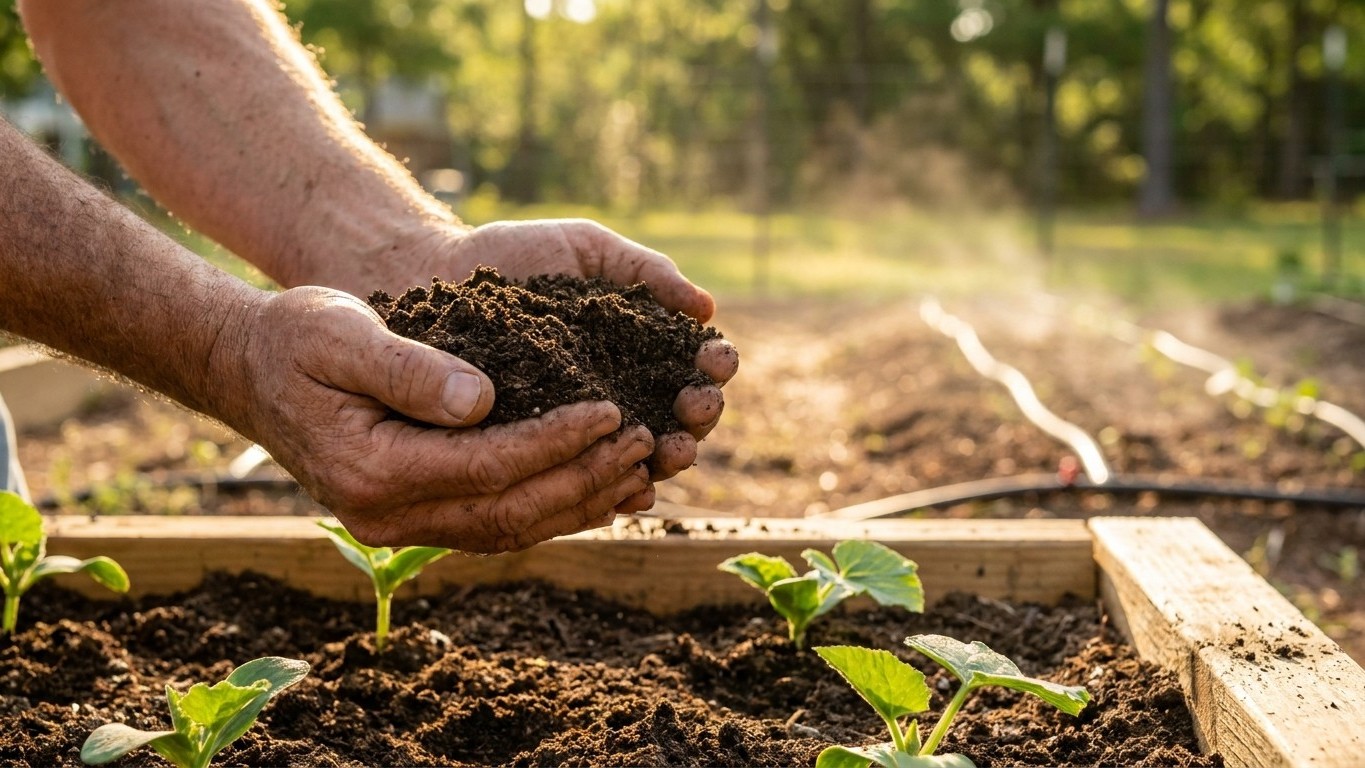

Summer squash goes into Delaware soil once the last spring frost risk has passed, typically between April 3 and April 14 at the Wilmington reference station, and once nightly lows hold reliably above 50°F. That frost window is a starting point, not a guarantee, and the real signal is soil temperature, which lags behind the calendar by a week or two depending on your county.
When the soil is warm enough in Delaware
The frost date everyone quotes, April 3 to April 14 at station USW00013781 (NOAA NCEI 1991-2020 Climate Normals), tells you when the 30 to 70 percent freeze probability band closes at that airport station. It doesn’t tell you when the soil is ready for squash seed. Summer squash germinates poorly and sits sullenly in cold ground, and the plant doesn’t care what the calendar says about frost. It cares whether the top few inches of soil have climbed past roughly 60°F, which in Delaware usually happens one to two weeks after that spring frost window closes.
That gap matters more than gardeners think. A grower who plants squash seed the day after the “official” frost date, expecting a head start, often watches the seed rot in cool, damp soil rather than sprout. Squash is not cold-hardy in any stage. The seed coat swells, takes on water, and if the soil hasn’t warmed, fungal rot sets in before a root ever forms.
Here’s the other wrinkle: that April 3 to April 14 window comes from an airport weather station, and airports tend to run warmer than the surrounding countryside because of pavement and open exposure. Suburban yards and rural fields in Delaware typically see their last spring frost run later than the station figure, sometimes by a week or two, and more if you’re gardening at any elevation or in a low-lying frost pocket. If you garden in a valley or near a creek bottom, add days, not subtract them.
A practical way to judge readiness
Rather than counting days from a frost date, many experienced growers push a soil thermometer two inches down at midmorning for several days running. Consistent readings in the low 60s, paired with lows that no longer threaten frost, are a better green light than any date on a seed packet. Direct-seeding into soil that’s still in the 50s is the single most common reason home gardeners think their squash seed was bad when it wasn’t.
Transplants shift the equation somewhat. Starting squash indoors three to four weeks ahead and hardening off young plants lets you get a jump on the season, but transplanting doesn’t erase the soil-temperature requirement. A transplant set into cold ground simply stalls instead of rotting; growth stops until the soil catches up, which can erase whatever head start you thought you’d gained. For most home gardens in Delaware, direct seeding after the soil has genuinely warmed produces sturdier plants with less transplant shock, though transplants remain the better choice for gardeners chasing an early first harvest or working with a short usable window.
Whichever route you choose, treat the April frost dates as the outer boundary, not the target. Waiting an extra week for real soil warmth costs you almost nothing given how fast squash grows once conditions are right, and it spares you the frustration of reseeding a bed that never should have been planted in the first place.
How long the season lasts here
Delaware’s frost-free window, running from the spring frost period of April 3 to April 14 through the fall frost period of October 26 to November 7 (both from NOAA NCEI 1991-2020 Climate Normals at station USW00013781), gives a growing season on the order of six and a half to seven months at that reference station. That’s a genuinely generous window by East Coast standards, and it changes what’s worth planning for.
A season this long isn’t just about squeezing in one planting and hoping it survives. It’s long enough to support a second, even a third, sowing of summer squash through the summer, replacing plants that have slowed down or succumbed to vine borers and powdery mildew with fresh seedlings that will crop into early fall. Squash plants tend to decline in productivity after six to eight weeks of heavy bearing, and Delaware’s calendar gives you room to restart rather than nurse a tired, disease-prone plant through August hoping for the best.
This is where succession sowing earns its keep. Rather than one long, increasingly ragged planting, gardeners here can stagger sowings from late spring into midsummer, timing the last one so the fruit has enough weeks to mature before the fall frost risk climbs back into that 30 to 70 percent band in late October. If you want the specific spacing and timing logic for staggering plantings through a season like Delaware’s, the succession sowing guide on this site walks through how to count backward from your local fall frost window.
What a shorter window would have changed
In territories where the frost-free stretch runs closer to four months, the first sowing is often the only sowing, and every decision, including whether to transplant instead of direct-seed, gets weighted toward speed. Delaware doesn’t force that compromise. There’s enough calendar here that a failed first planting, from a late cold snap or a seed batch that rotted in still-cool soil, isn’t a lost season. It’s a setback you can replant around, provided you don’t wait too long into summer to make the call.
Remember that the fall end of this window carries the same station caution as the spring end: suburban and rural gardens tend to see their first fall frost arrive earlier than the airport figure suggests, so gardeners planning a late-summer sowing should build in a buffer rather than planting right up to November 7 on paper.
Heat and water in Delaware
Wilmington averages 17.6 days a year at or above 90°F (NOAA NCEI Climate Normals, 1991-2020), a moderate heat load rather than an extreme one. That’s a meaningful number for squash, because pollen viability drops off once daytime temperatures push into the high 90s for stretches, leaving flowers that open, look fine, and simply fail to set fruit. At under 18 days a year, most Delaware summers won’t hit that ceiling often or for long, so heat-driven pollination failure is an occasional problem here, not a defining one.
Rainfall tells a more complicated story. Summer rain totals about 13.1 inches across June, July and August, with June at 4.67 inches, July at 4.41, and August the driest at 3.98, against 45.3 inches for the year (NOAA NCEI Monthly Climate Normals, station USW00013781). That’s a reasonably wet summer by national standards, and it means Delaware gardeners aren’t fighting the kind of parching drought stress that squash growers in the Southwest or the Plains deal with every July.
But summer rain that arrives as thunderstorms tends to run off rather than soak in, especially on compacted or sandy soil, and squash roots sit shallow, which makes them quick to feel a dry stretch even when the monthly total looks generous on paper. A week without rain in early August, the driest month on average, can stress a squash plant well before the soil looks visibly parched, particularly since the plant’s broad leaves are losing water to the air faster than that shallow root system can pull it back in.
What this combination means for the actual garden
The moderate heat load and decent rainfall together point toward a different set of problems than the ones hot, dry territories deal with. Instead of worrying primarily about scorched fruit and pollen failure, Delaware gardeners are more likely to run into the flip side: humidity and periodic wet soil that favor powdery mildew, downy mildew, and other fungal issues on squash leaves, especially late in summer when nights stay warm and foliage stays damp longer. Spacing plants generously for airflow and watering at the soil line rather than overhead does more good here than obsessing over shade cloth.
Because these figures are averages at a single reference station, a raised bed on fast-draining soil in a Delaware backyard can still dry out between storms even in a “wet” month like June, while a low, clay-heavy plot might hold water long enough to invite root rot after the same rain. A simple rain gauge on your own property, checked against these normals, tells you far more about what your particular squash bed needs than the regional average ever will.
Which summer squash suit Delaware
Given a long frost-free window, moderate heat, and summers wet enough to invite fungal disease, the types of summer squash that tend to do well here share a few traits rather than a single name. Earlier-maturing types make the most of that first sowing before disease pressure builds, and since Delaware’s season is long enough for succession planting anyway, there’s little reason to gamble on a slow-to-mature type when a faster one lets you replant a fresh, healthy plant partway through summer.
Types bred or selected for airflow, meaning more open, less bushy growth habits, tend to shrug off the humidity better than dense, sprawling plants that trap moisture against the leaves. And in a territory where powdery mildew is the more realistic threat rather than heat scorch, disease resistance, particularly to powdery mildew and mosaic viruses, deserves to be the first thing you check on a seed packet or plant tag, ahead of yield claims or fruit shape.
This is deliberately where this page stops short of naming a specific cultivar. Seed catalogs and garden centers rotate their offerings every year, breeding programs release new disease-resistant lines regularly, and a variety that performed well in a University of Delaware trial plot two seasons ago may already have been replaced by something better suited to the state’s particular blend of humidity and moderate heat. Naming one here risks sending you looking for something outdated, or worse, something never actually trialed under Delaware conditions at all.
Where to get a real answer
The Delaware Cooperative Extension service, run through the University of Delaware’s College of Agriculture and Natural Resources, tests vegetable varieties under the state’s actual growing conditions and publishes recommendations based on those trials rather than marketing copy. You can reach their program directly at udel.edu/academics/colleges/canr/cooperative-extension. That’s the source that knows which specific squash types held up against last summer’s mildew pressure in New Castle County versus Sussex, information no general gardening guide, this one included, can responsibly claim to have.
Given Delaware’s USDA hardiness zone range of 7a to 8a, based on extreme winter minimum temperatures rather than summer performance, that classification has limited bearing on squash variety choice anyway, since squash is a tender annual killed by any real frost regardless of zone. The zone matters for perennials and fruit trees far more than for a crop you’ll be replanting from seed each season.